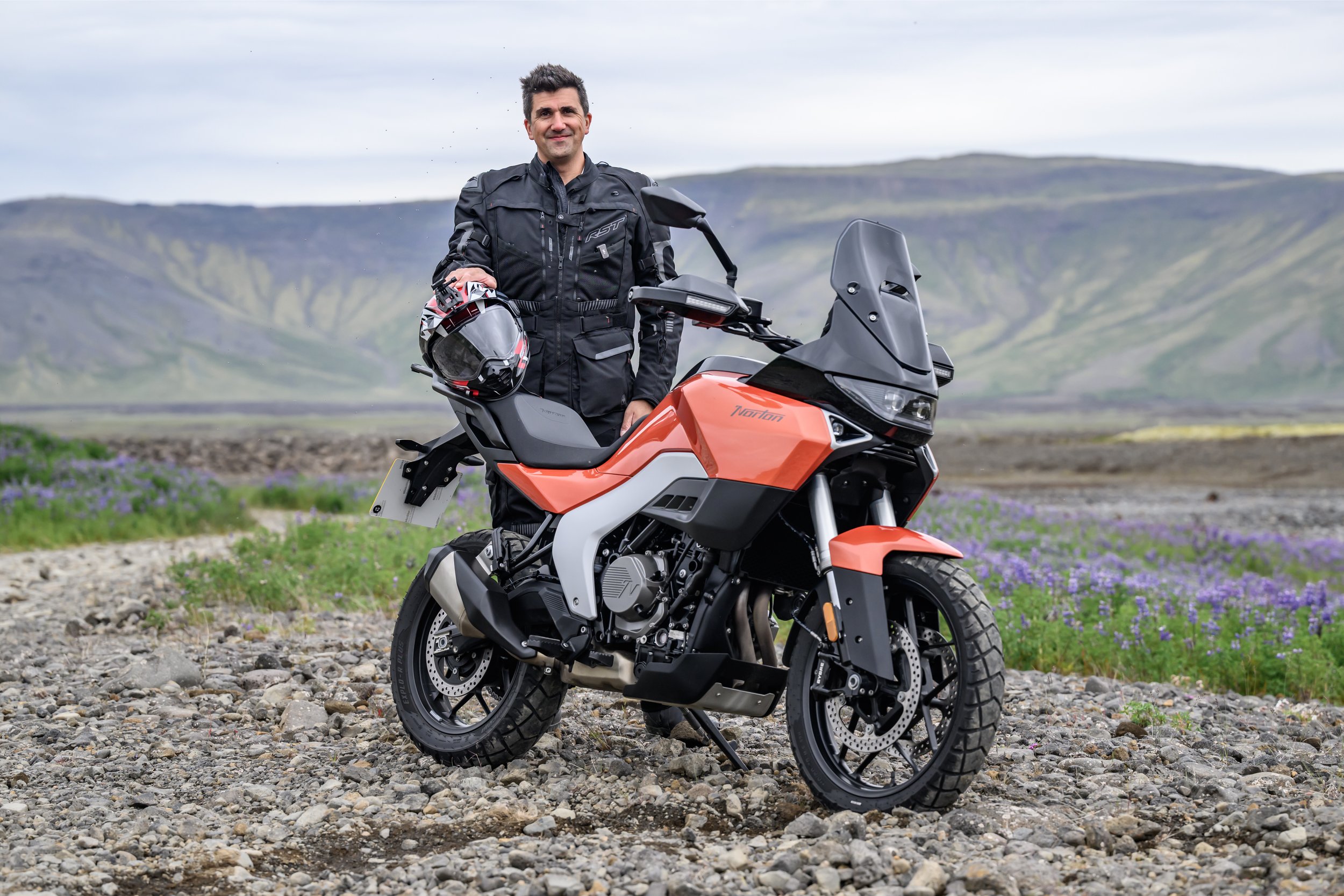
2026 Norton Atlas Review: The Adventure Bike That Dares to Be Different
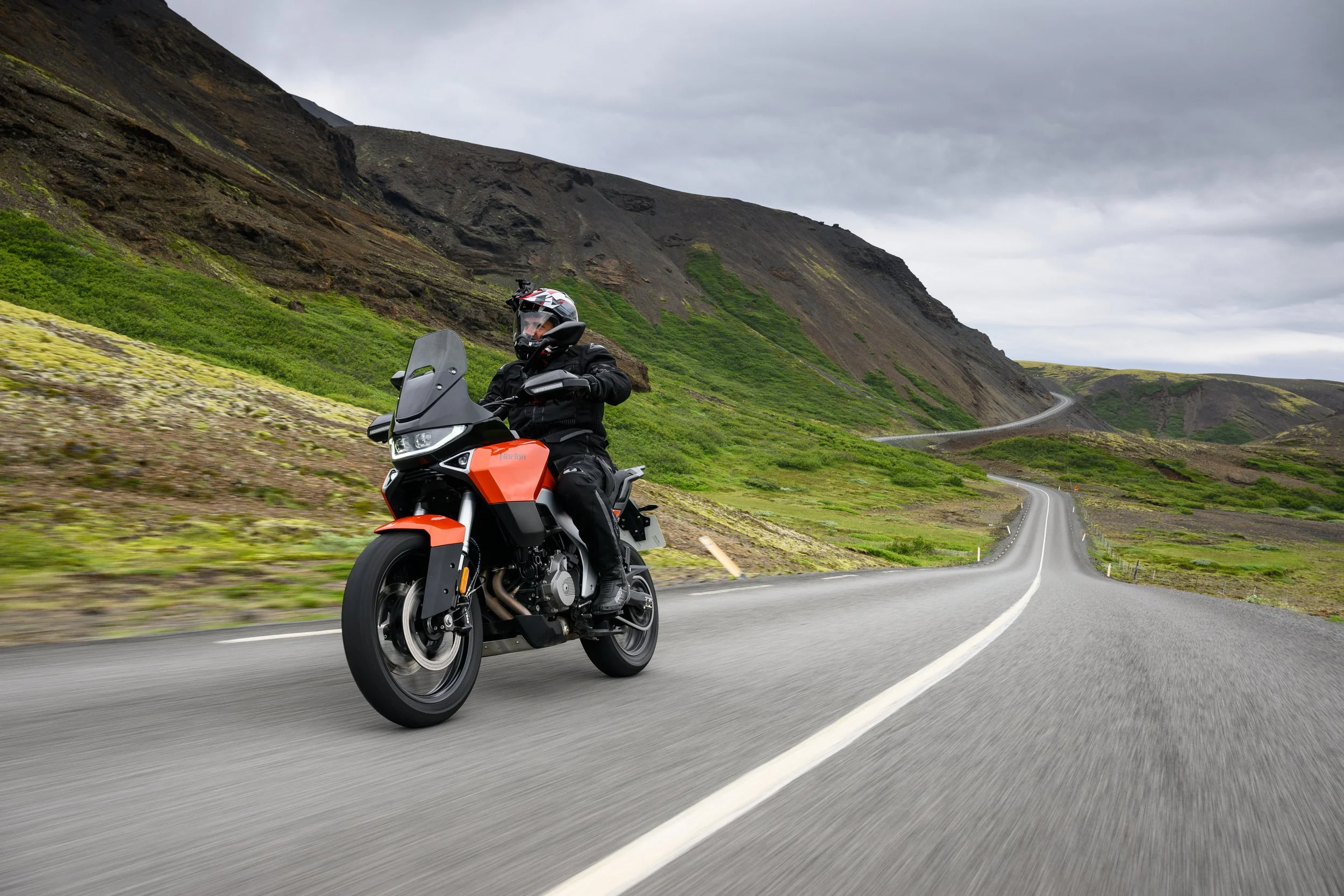
The second Norton since the brand's resurgence has arrived, and this time it's the adventure-ready Atlas. John Marcar has been riding the new model among the dramatic landscapes of Iceland ahead of its arrival in UK showrooms.
The Resurgence Continued
I've been glued to the Norton resurgence now since October last year, when I flew to India to meet TVS, the company that has, so far, invested over £200 million into making the next chapter of Norton as brilliant as it can be. In November, just a few weeks after my trip to India, 3 new Norton models were unveiled at EICMA. The Manx R got the headlines as the new flagship; the Manx turned heads as an equally striking sports bike in streetfighter form, and the third bike released was the Atlas, an adventure bike with a smaller-capacity engine but a far more ambitious use case.
Last month, I sampled the Manx R in Spain and was blown away by its capability on both road and track thanks to the mesmerising V4 engine and exceptionally compliant chassis.
The Atlas is different to the Manx R in more ways than the obvious visuals. The Manx R (just like the Manx that follows soon) is a 1200cc V4-powered superbike made in Solihull, England. The Atlas, despite being designed and engineered in Solihull, is built entirely in the TVS factory in Bangalore, and is powered by a parallel twin 585cc engine. The Atlas is also less about out-and-out performance and more about accomplishing a bit of everything both on road and off - and so, I flew out to the dramatic landscapes of Iceland to spend a day getting to grips with the new model in a collection of different riding environments.
Atlas vs Atlas Apex
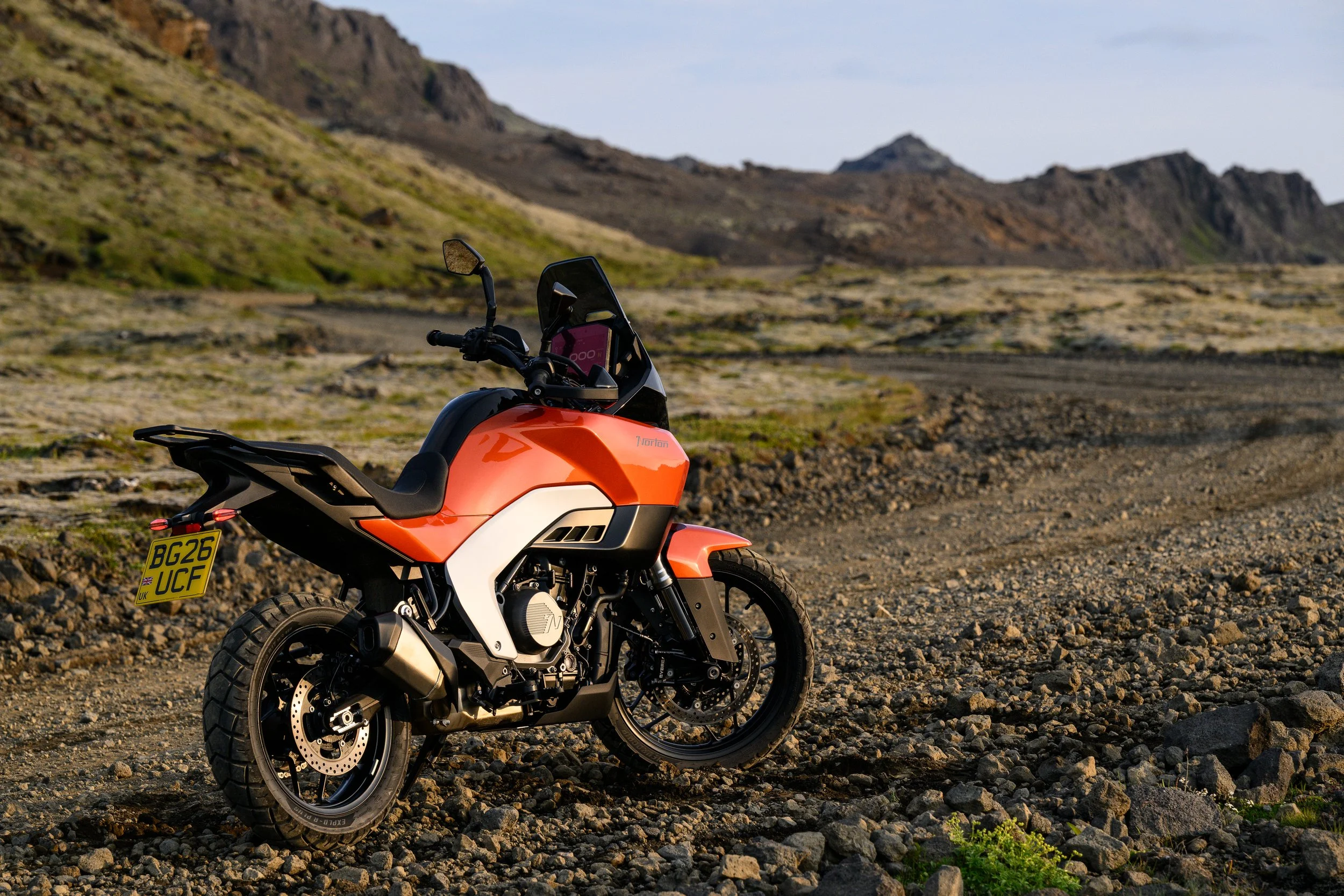
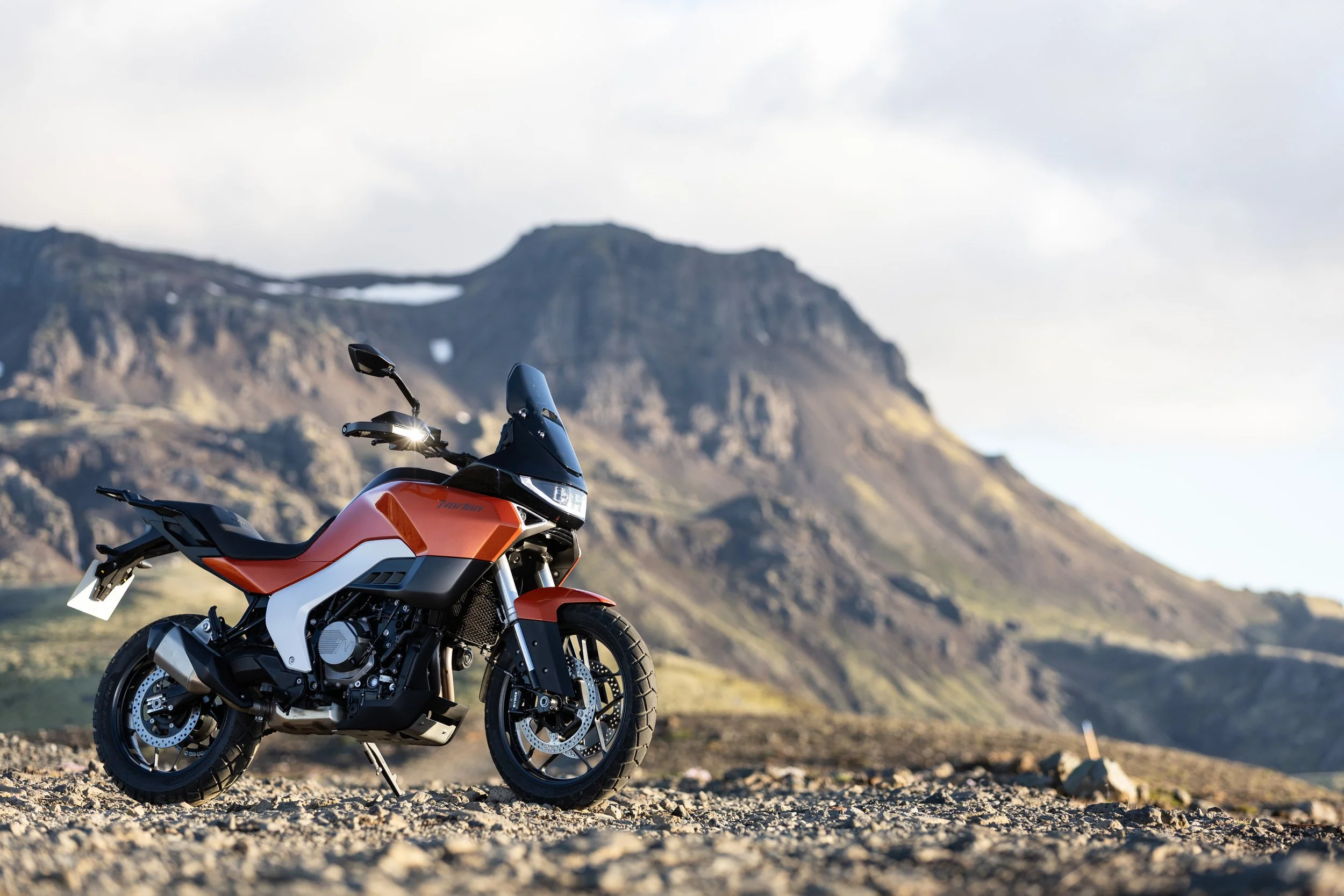
At the time of launch, the Atlas is available in two trim levels: 'Atlas' and 'Atlas Apex'. Atlas, priced from £8,250, is the entry-level trim level, offering a 6-axis internal measurement unit to assist with rider aids such as ABS and traction control, dynamic LED lighting, an 8" TFT touchscreen, keyless access, a quickshifter, adjustable levers, a plastic bashplate/sump guard and a USB-C charging port located just above the screen.
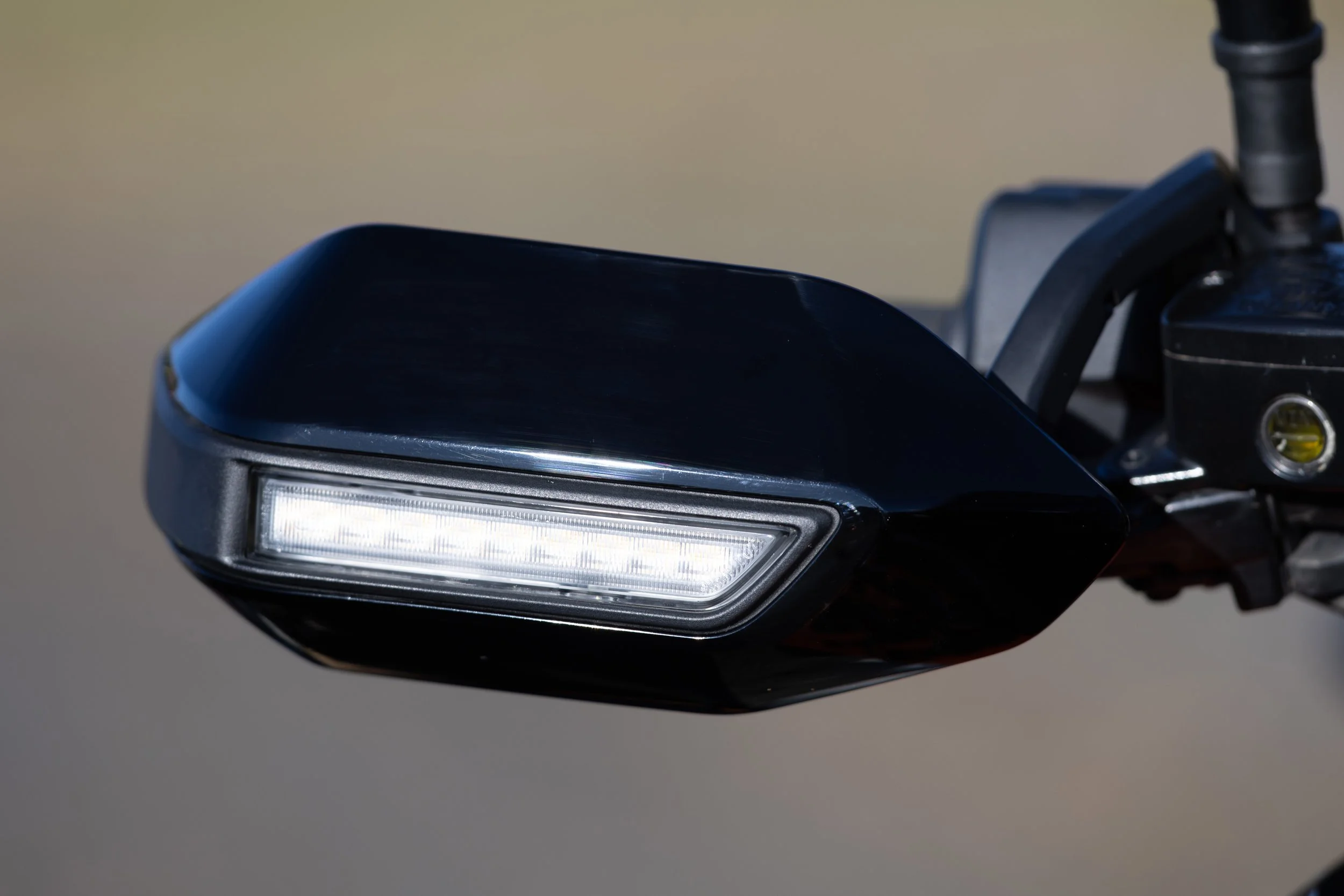
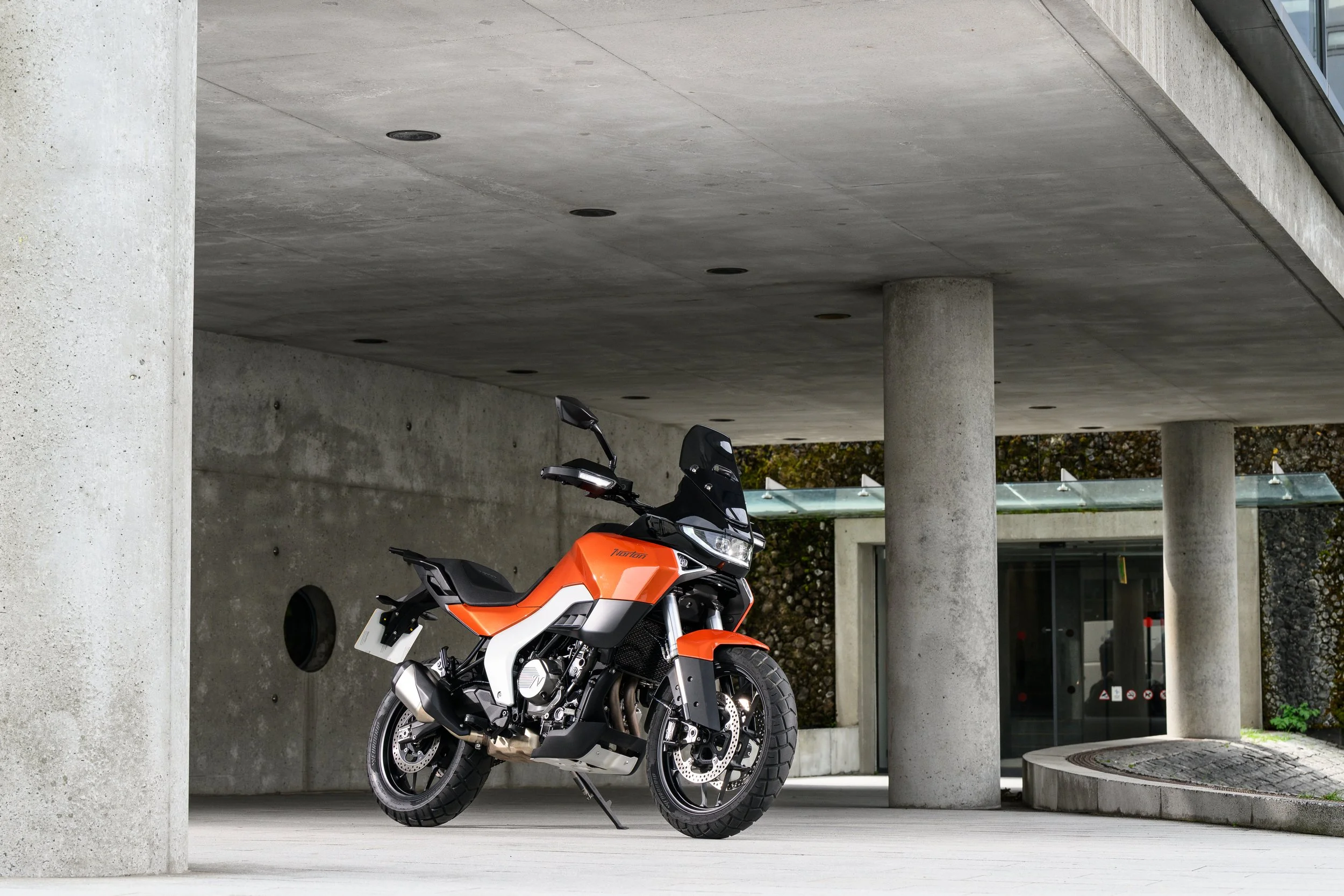
Atlas in Apex trim is priced from £9,450 and offers a handful of extras, including an upgraded ABS module for combined front-and-rear braking and hill hold, additional LED lighting features including cornering lights and a puddle light on the left side, an intergrated storage rack behind the pillion seat, an adjusatble windscreen, an upgraded aluminium bash plate, TPMS monitoring for the tyres and access to additional colours including Verona Green and Sinopia Orange.
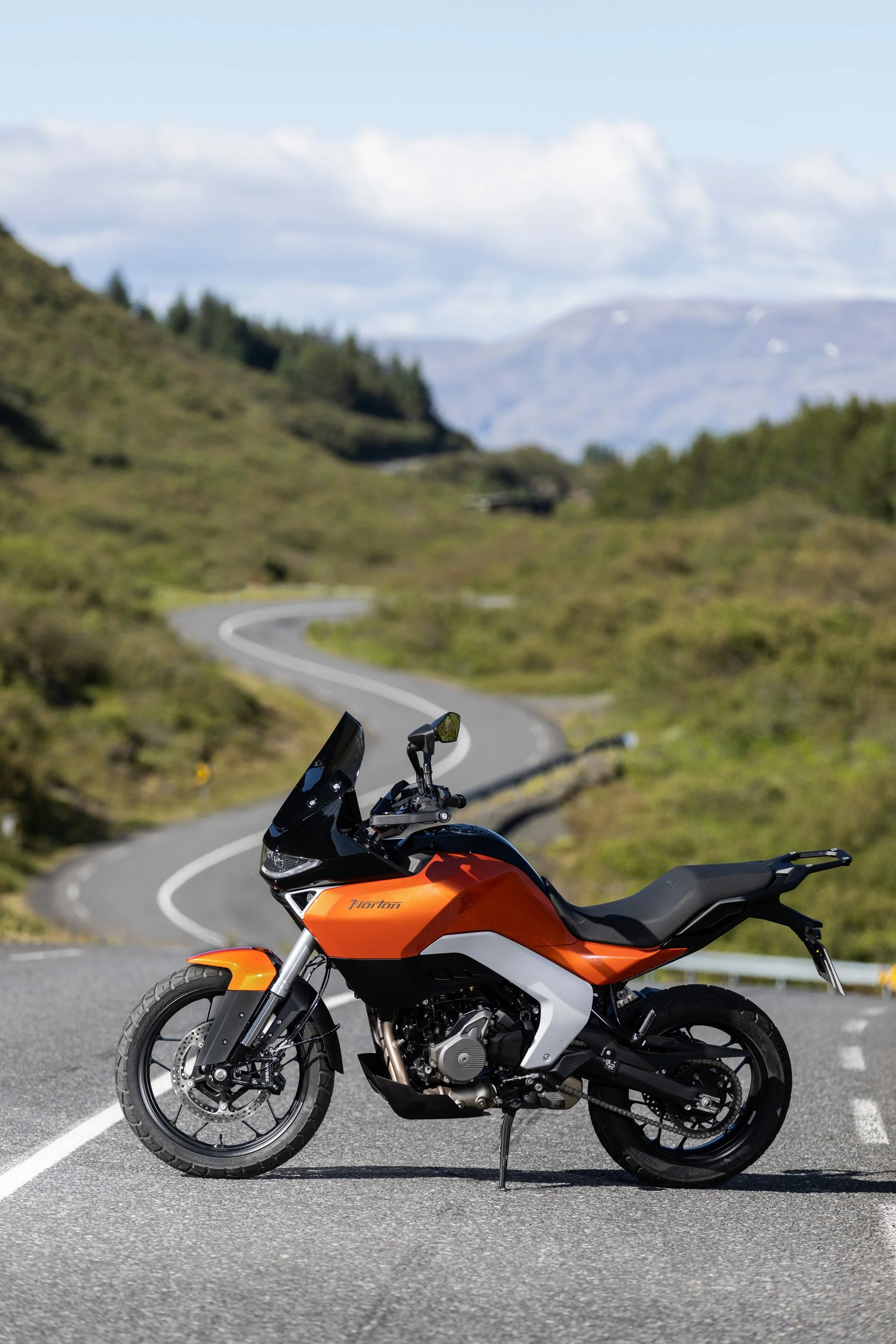
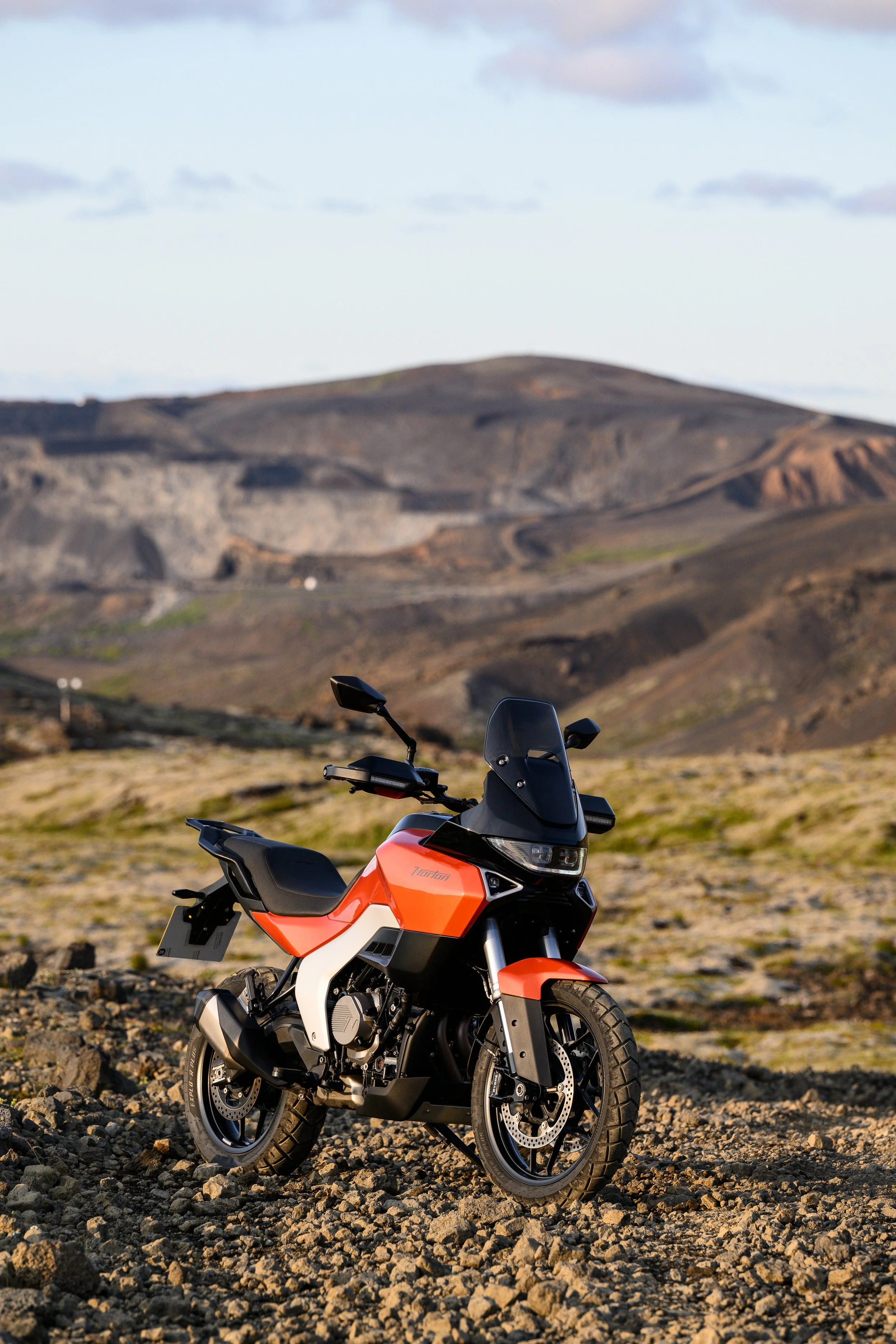
Like the Manx R trim variants, you need to look closely to find the visual differences between the Atlas and Atlas Apex. The obvious standout features, beyond the colours, are the luggage rack and front cornering lights.
Coming later this year is the Atlas GT, tipped to be a more road-focused version with the upgrades seen on the Apex and a slightly lower riding position.
Shaking up the Adventure Bike Category
Just like it did with the Manx R and the superbike category, Norton is keen to offer its own interpretation of the adventure bike category too. The Manx R was less about top-end performance, and more about offering usable power in a broader torque band. The Manx R has the visuals of a racing bike, but is actually far more usable and enjoyable on the road.
In the same ilk, the Atlas is not designed or developed to be the best of the best off-road - we almost certainly won't see a Norton Atlas team entering the 2027 Dakar, and that's okay, because what Norton is focusing on is overall usability. The brand's own term of 'Nortoness' is less about boasting one particular skill set or feature, and more about doing a bit of everything brilliantly without compromising comfort or usability elsewhere.
Engine and power figures
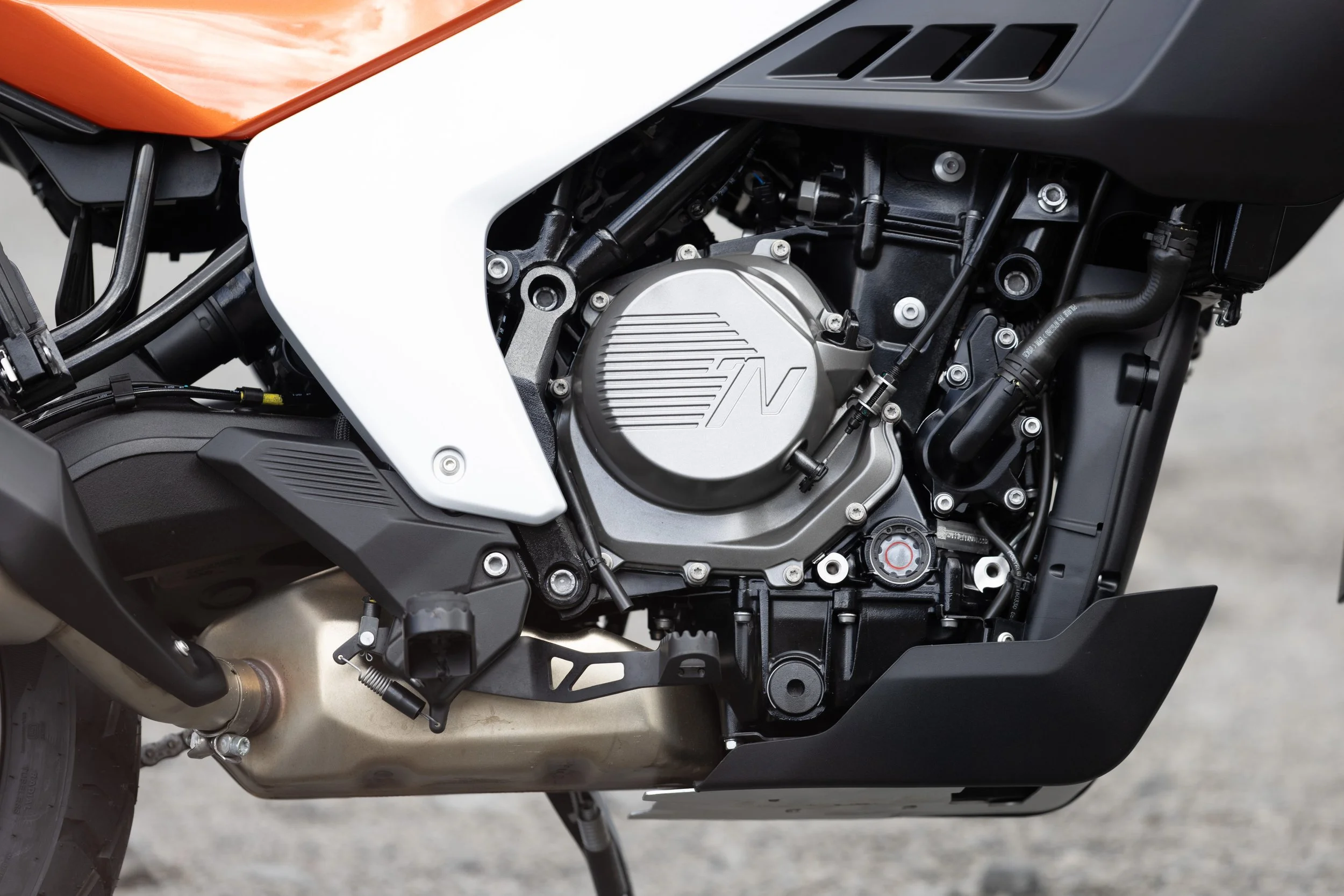
Powering the Atlas is Norton's own 585cc liquid-cooled parallel twin engine. The engine produces 69 bhp at 9,300 rpm and 57Nm of peak torque (7,500 rpm). The well-read will be all too aware that there are two other similarly sized bikes being built simultaneously in the TVS factories, one destined for BMW dealerships and the other for TVS showrooms in India. What sets the Norton aside from both is the engine and tech, both of which are completely unique to the Atlas.
To quote Norton's term of 'Nortoness' once more - the Atlas offers a very similar ethos to the Manx R concerning power and, crucially, control of the power delivery. The key word here is torque, and the powertrain engineers at Norton have once again focused on usability and accessible power at all speeds and RPMs. The 585cc engine has a 270-degree crank offset which maximises torque delivery. Both cylinders are plasma-coated, which allows for a lower unit weight, greater durability and, crucially, much lower friction with every stroke of the pistons, all of which helps deliver a smooth and linear torque band, ideal for riding on all surfaces.
Styling
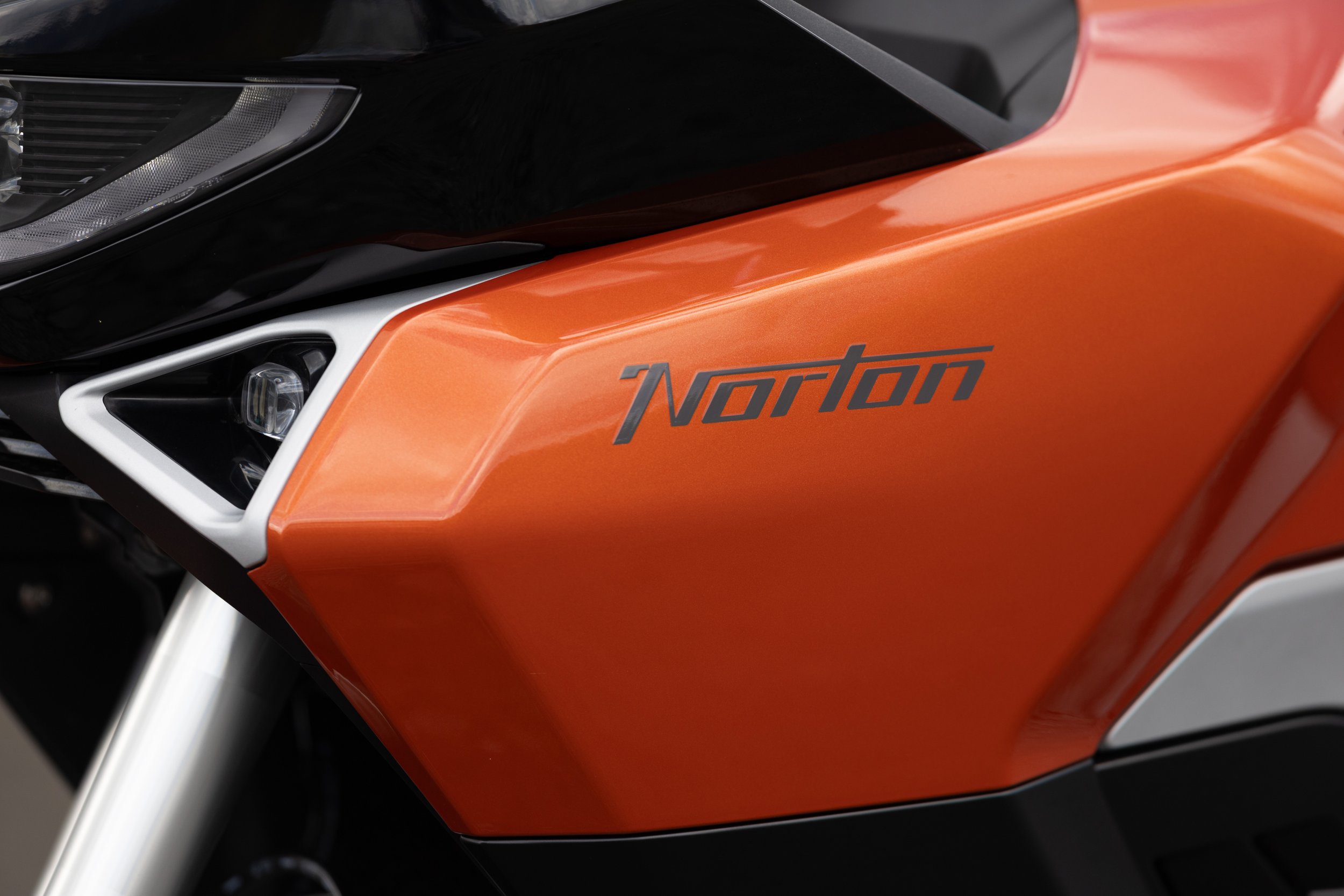
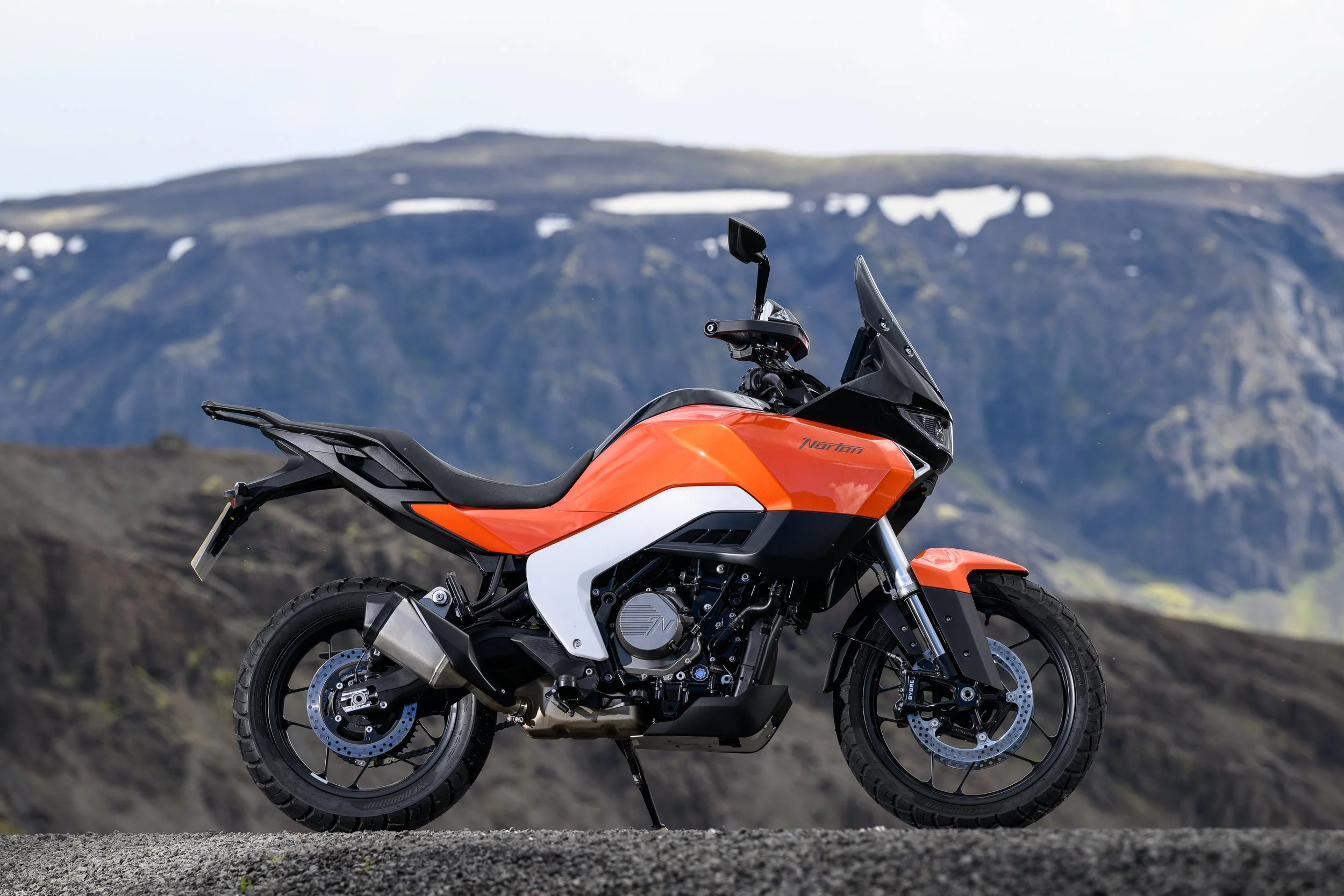
Another common theme we're seeing with Norton's new era is styling, and for that, we have Simon Skinner to thank. Simon and his team have succeeded in producing an adventure bike that is less about rugged lines and fierce angles and more about creating a modern design with sleek lines, balanced proportions and small details that make big differences to the overall visual appeal.
Design is, of course, subjective, but whether you like the way the Atlas looks or not, its likeness certainly can't be compared to many other adventure bikes on the market right now.
The design goes far beyond the aim of just making something pretty; aerodynamics has been a key focus for the team, with airflow being a key element to the riding experience. Every frontal surface of the bike has been designed to channel air around the rider with minimal turbulence to the helmet, shoulders, arms and legs.
Interface and Switch Gear
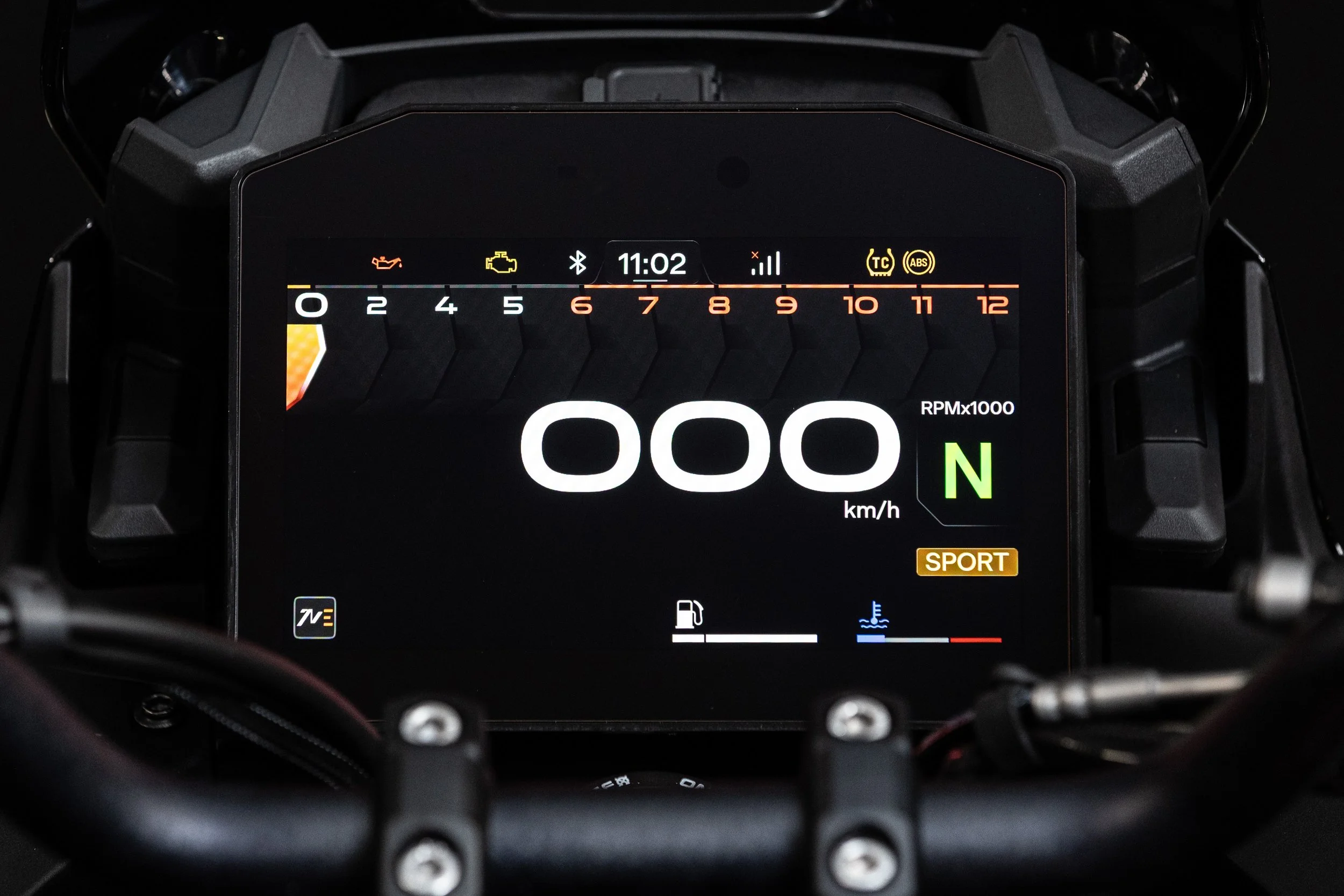
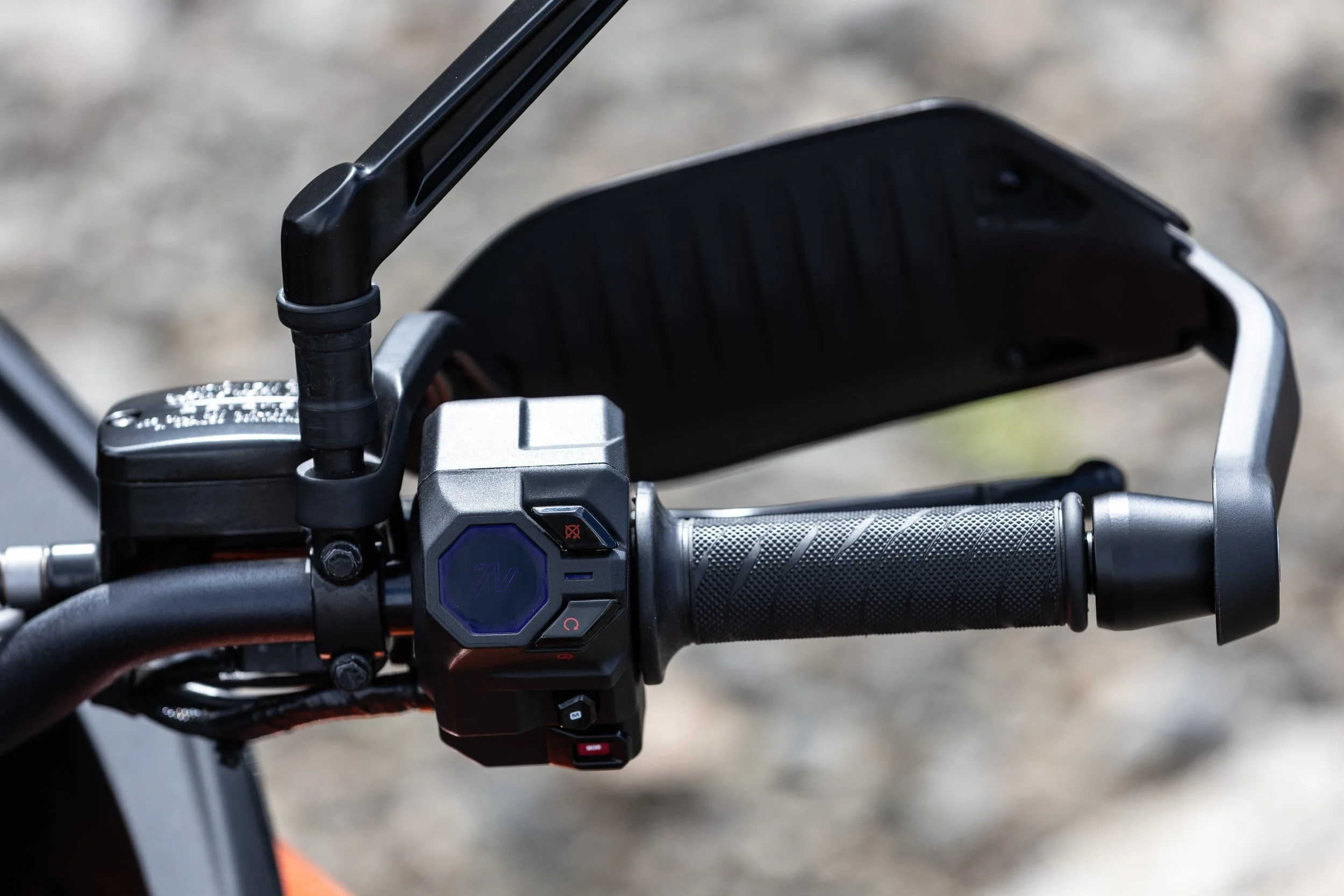
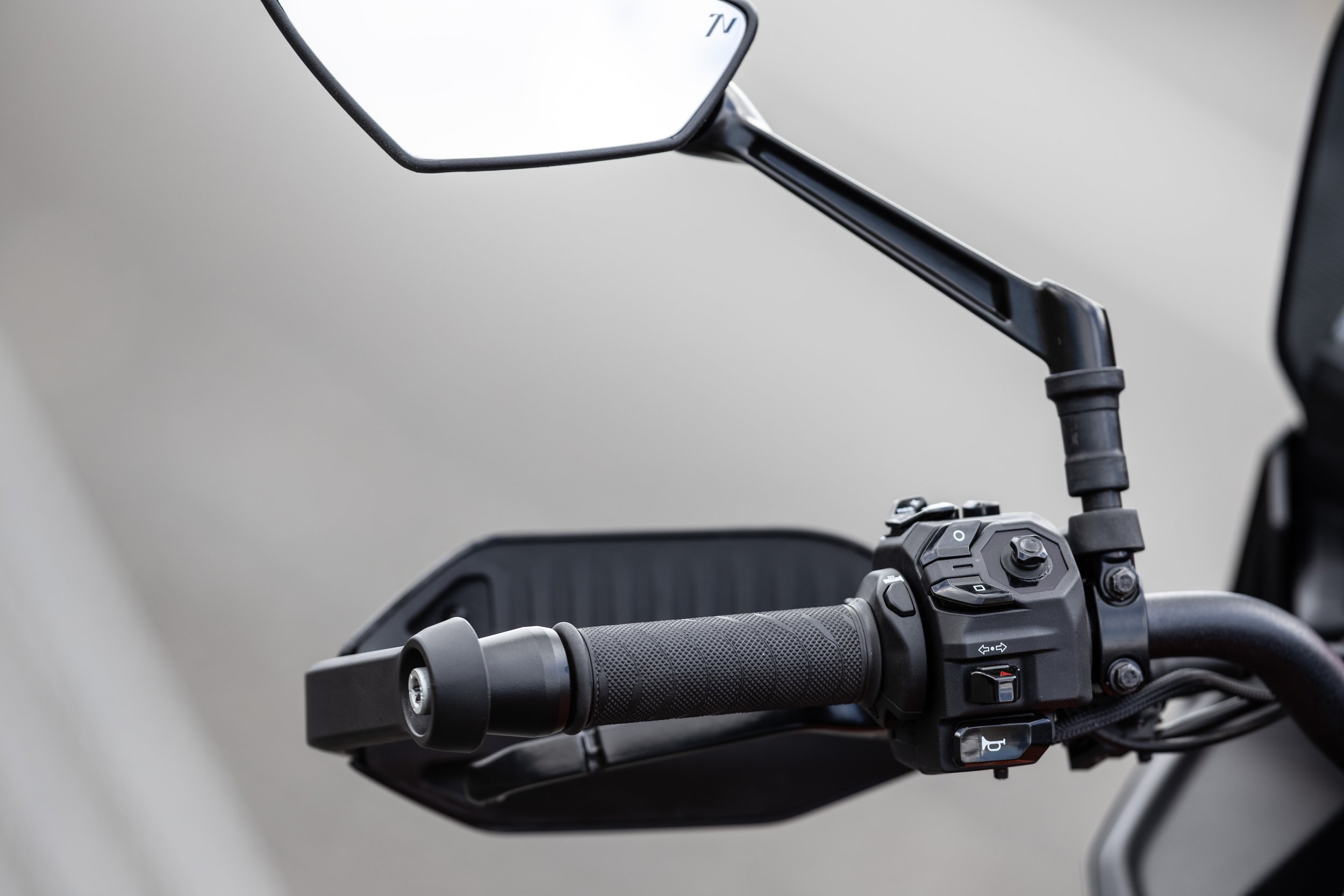
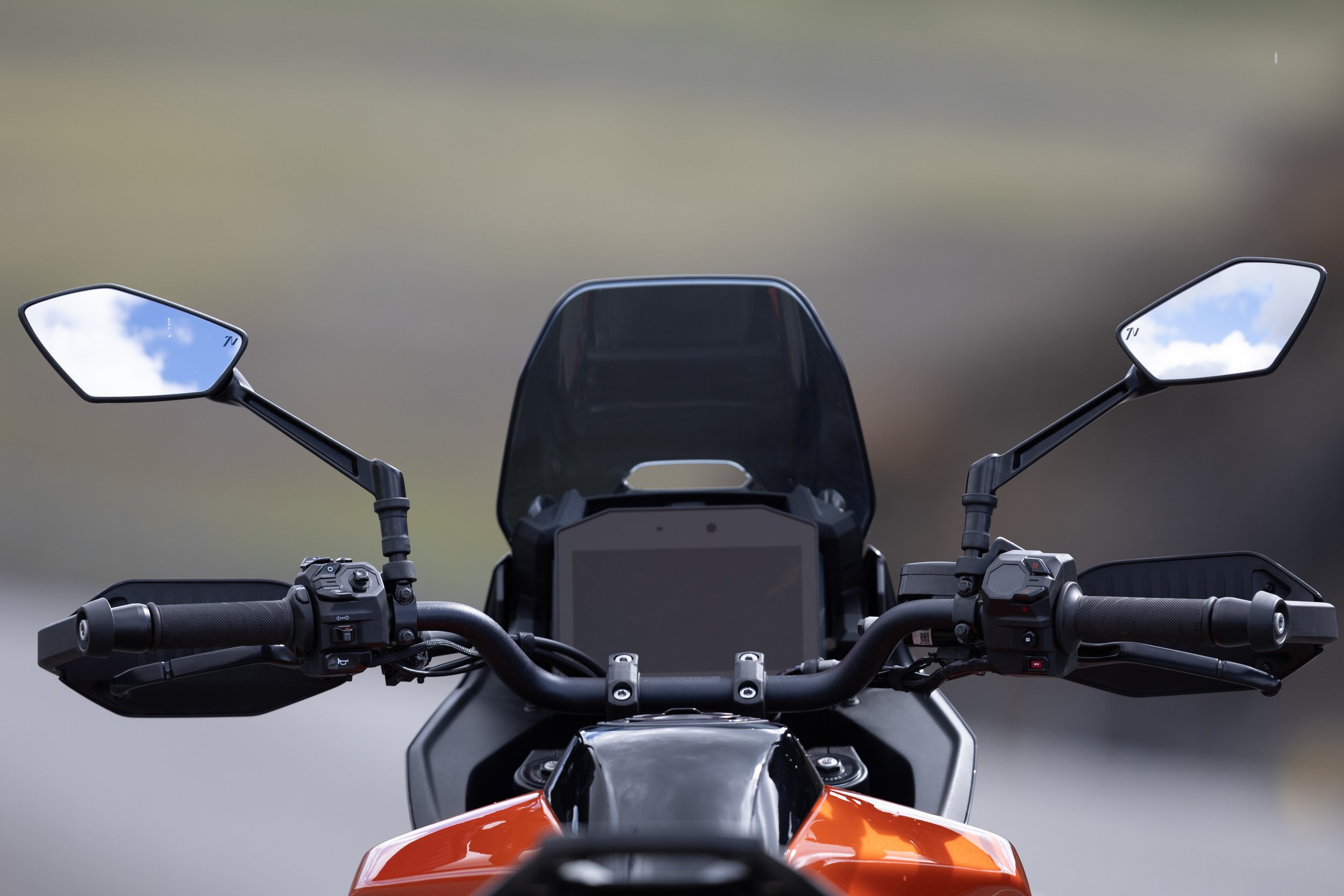
The Atlas is adorned with a very attractive collection of buttons and controls, all of which are simple to use on the fly. The TFT screen is a touchscreen interface, meaning more detailed adjustments can be made without having to repeatedly tap and toggle various buttons on the handlebars. Personally, I like touchscreens on a bike, though I know others struggle to see the point. Fortunately, using the touchscreen is entirely optional.
Riding the Atlas
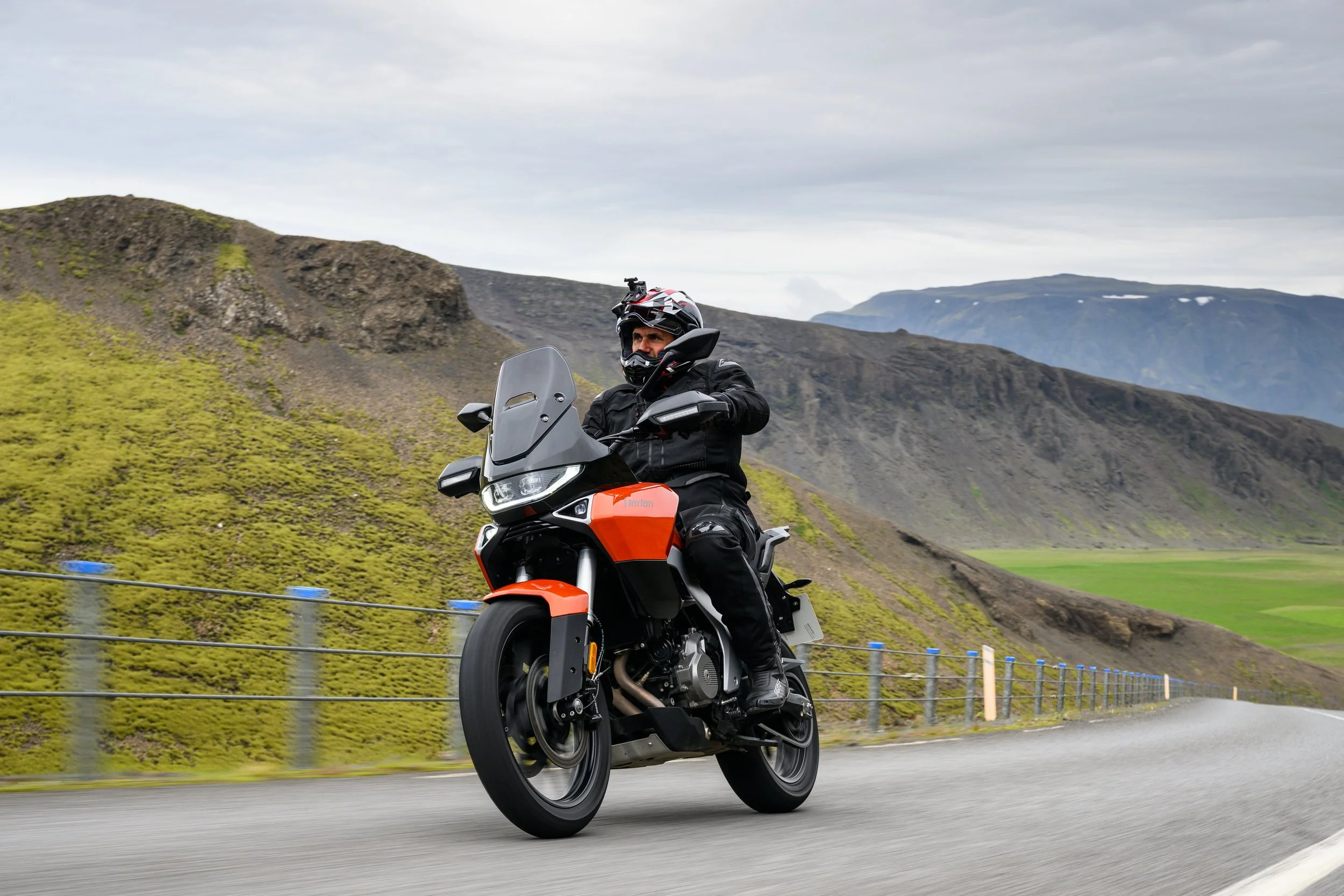
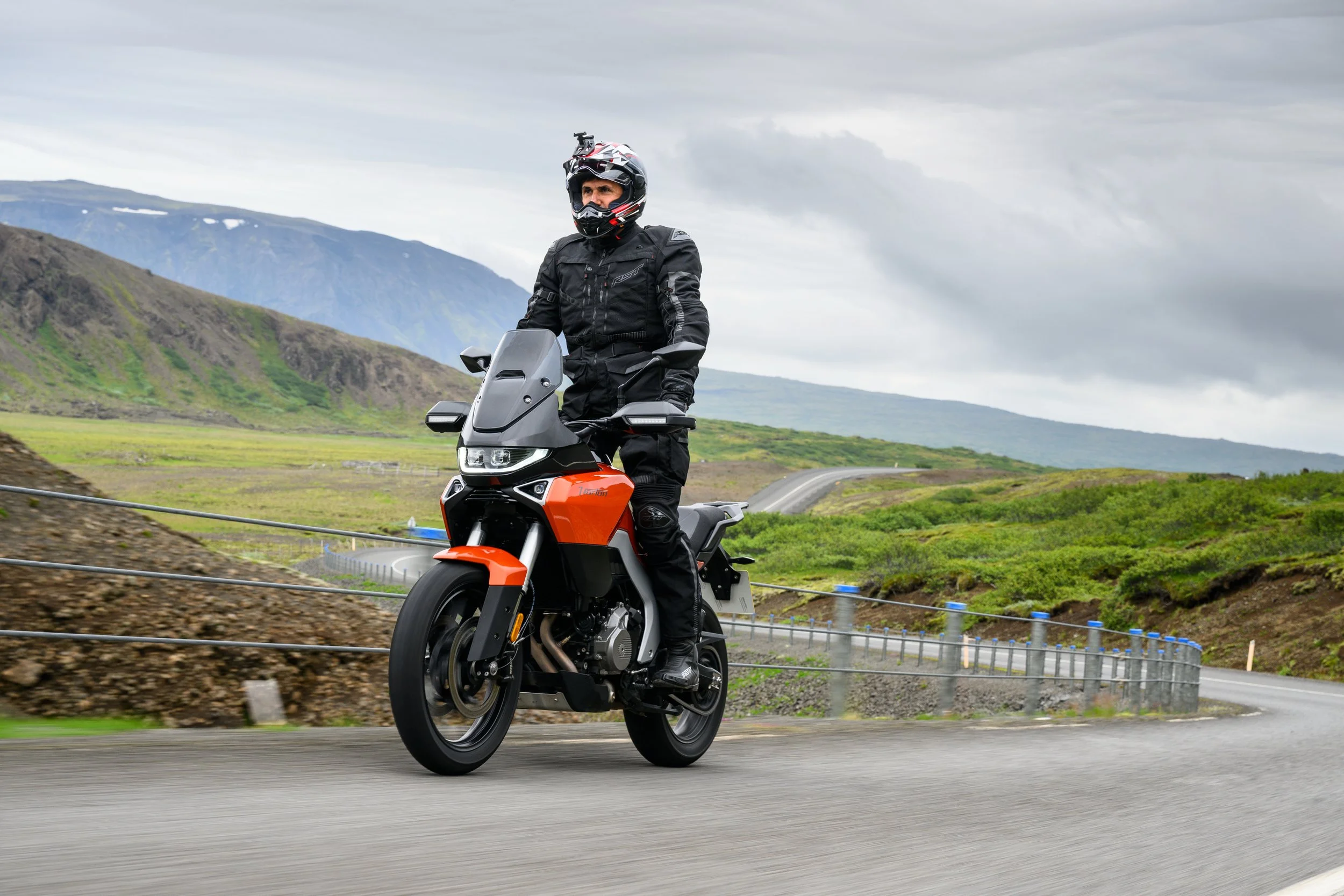
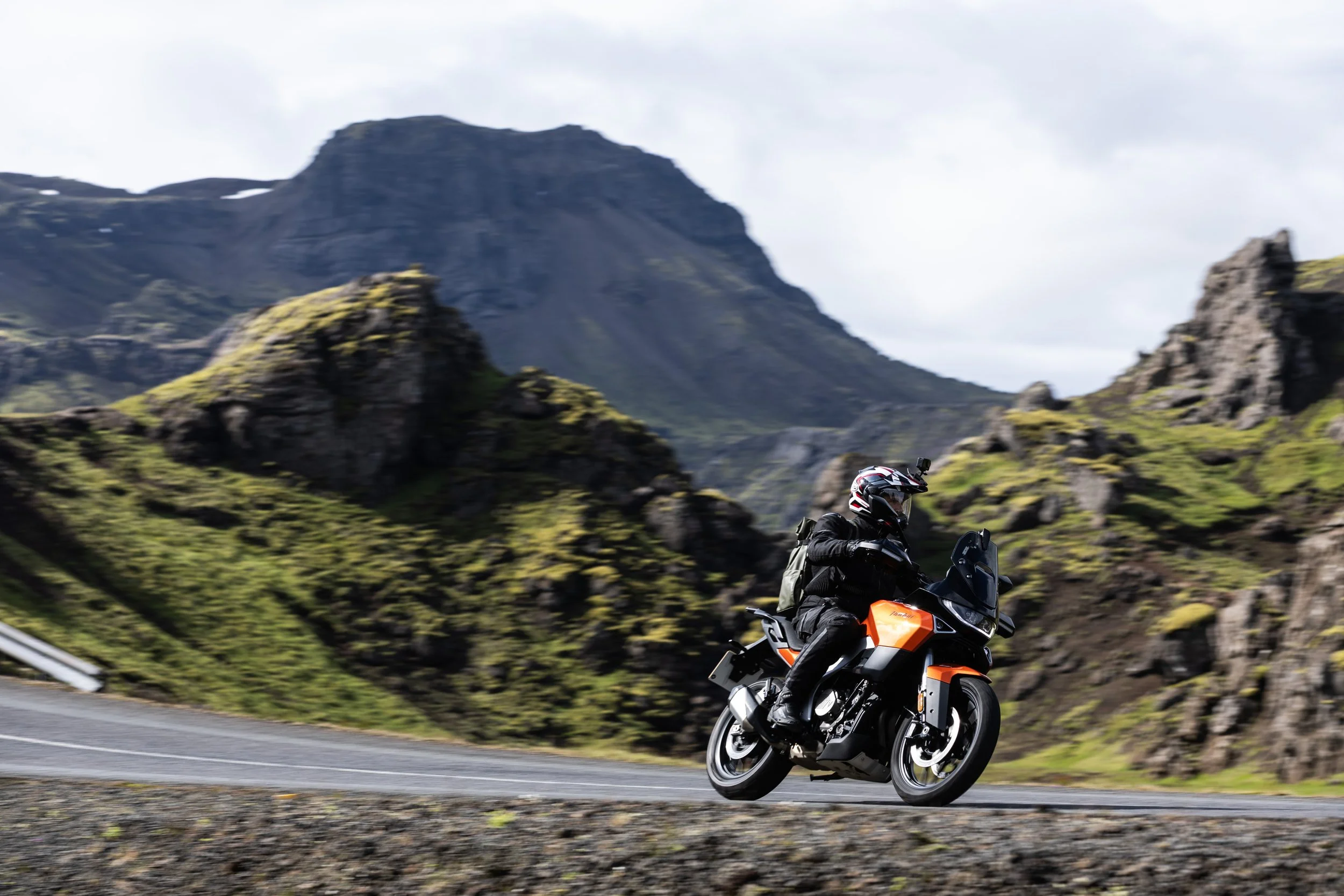
For my test, I'd be riding the Atlas Apex in Sinopia Orange to test the bike in a city centre at slow speeds, on faster carriageways at motorway speeds and by taking the bike onto some more challenging off-road terrain to see if the model is likely to get muddy in the real world.
Seat Height
When throwing my leg over the Atlas for the first time, at 6'1 / 186 cm, my first impression (and immediate minor concern) was that I was perhaps a little too tall for it.
As standard, the seat height is set at 845 mm, and fortunately a higher seat can be specified at the time of purchase, which grants an additional 20 mm; however, I didn't have the opportunity to test this.
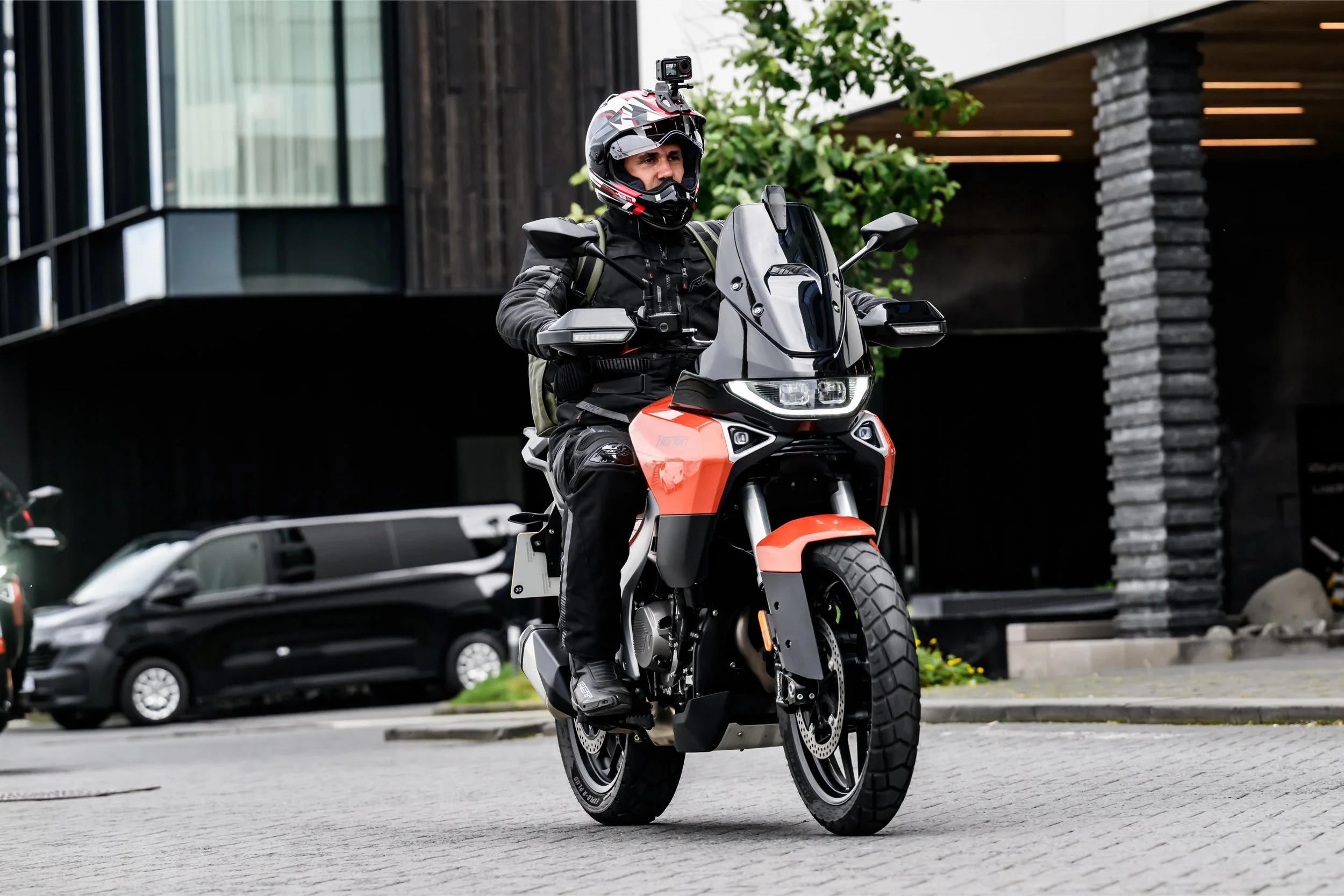
My riding day started in the Icelandic capital city centre of Reykjavík, where, despite the lower-than-preferred seat height, the ride was still reassuringly comfortable. The handlebars sit at an equally comfortable height for navigating the city streets and tight turns, and I was looking forward to spending the best part of 7 hours touring some of the most dramatic landscapes in the world.
Urban Riding
Seat height aside, the first impressions when riding the Atlas were good. The riding position is comfortable, visibility is excellent, and the bike is nicely balanced for sharp slow turns and tight manoeuvres thanks to its low centre of gravity. The 8" TFT screen offers a clear display of all necessary information along with a quick and easy sequence of buttons to cycle through rider modes, ABS settings and creature comforts such as heated grips.
Riding at Speed
Once out of the city and at up to highway speeds, the Atlas continued to impress. The windscreen offers good protection at the lower level, and there is very little turbulence on the arms and legs thanks to the clever aerodynamic design. One flaw in the adjustability of the windscreen is that to raise or lower its height, two hands are needed to press adjustment release buttons, which are located at the base of either side of the screen. This is fine if you're sat stationary at the lights and think to make the adjustment before setting off, but especially annoying when you're already moving, as there is no easy way to adjust the position safely until you've stopped again.
Dynamic Cornering and Suspension
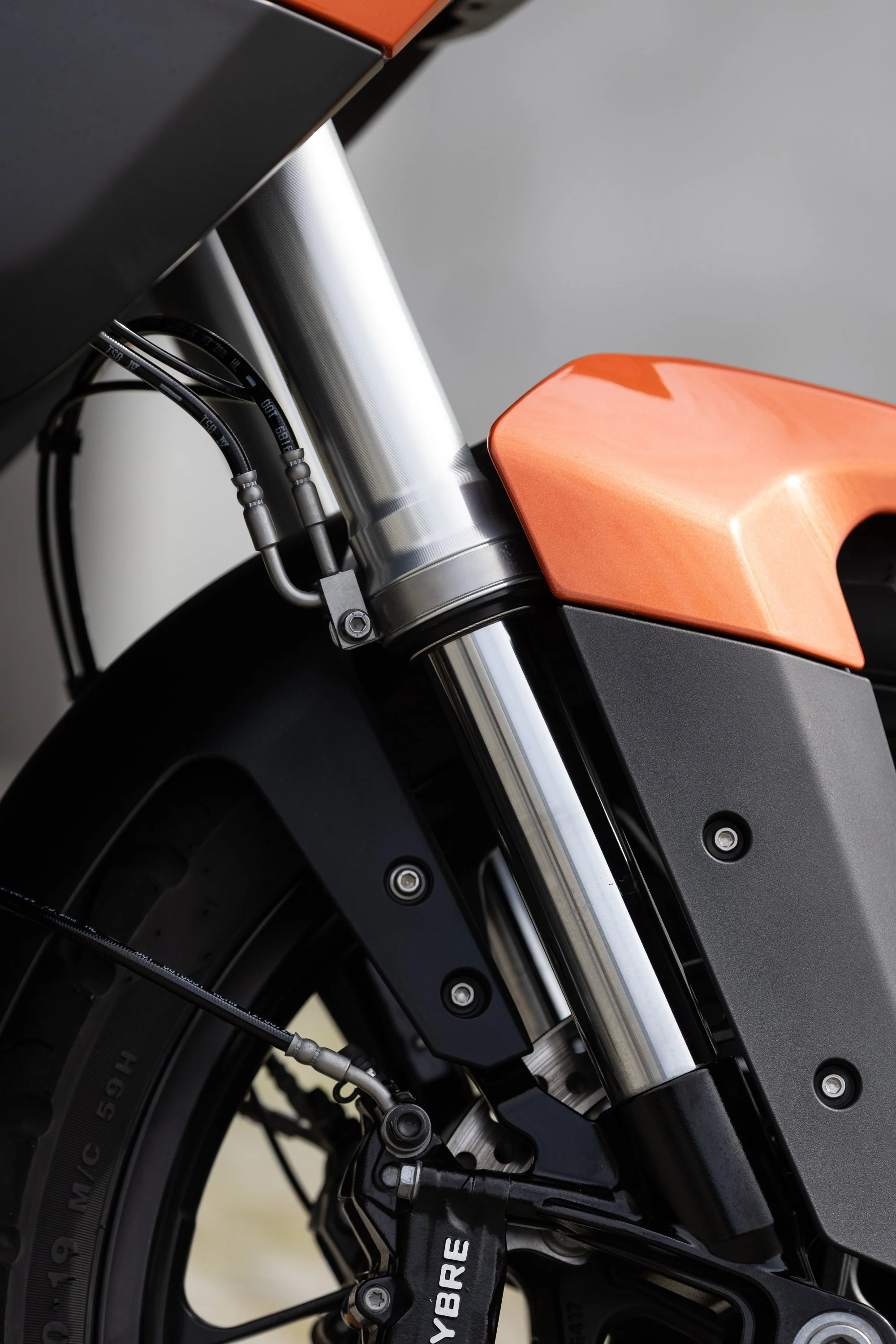
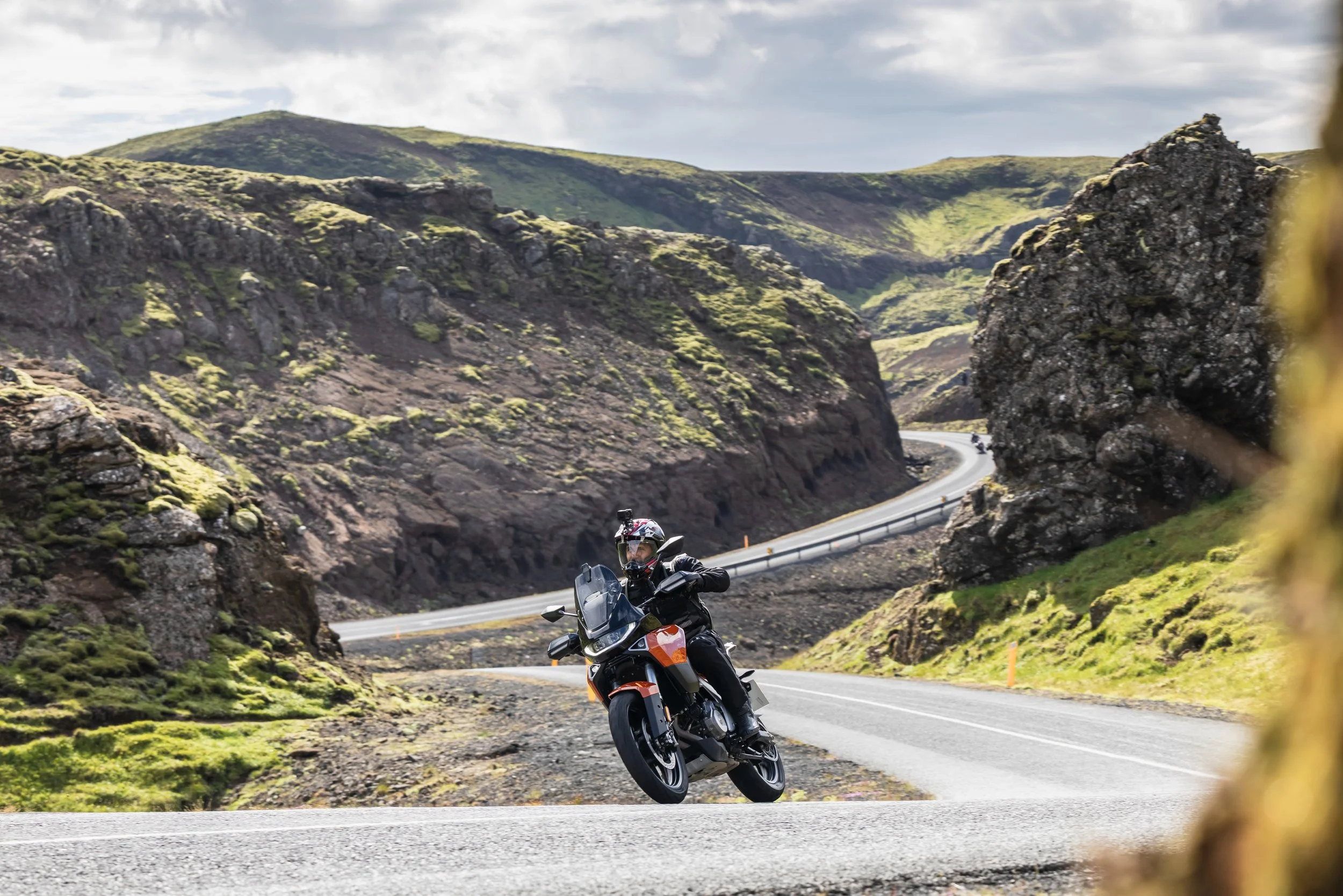
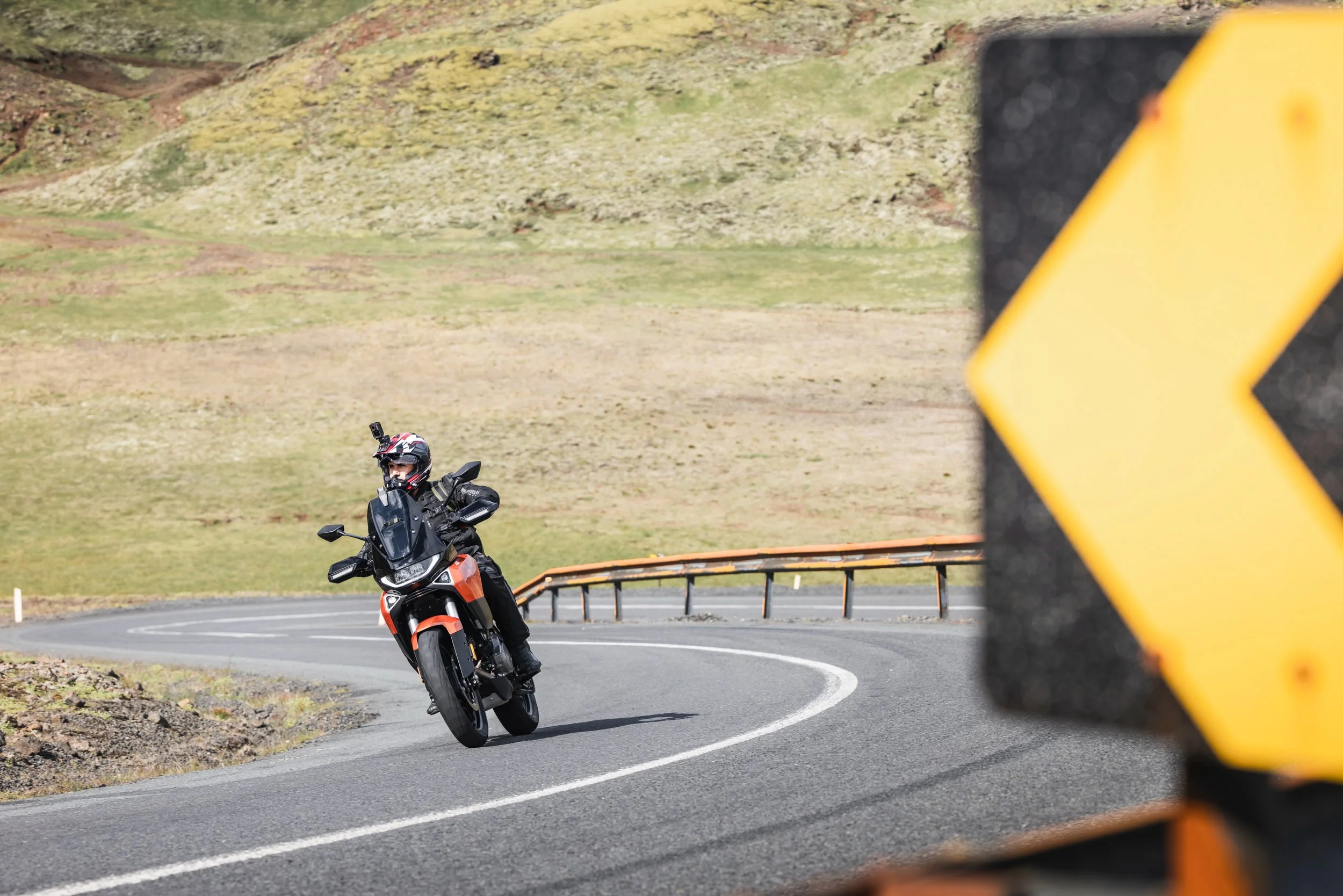
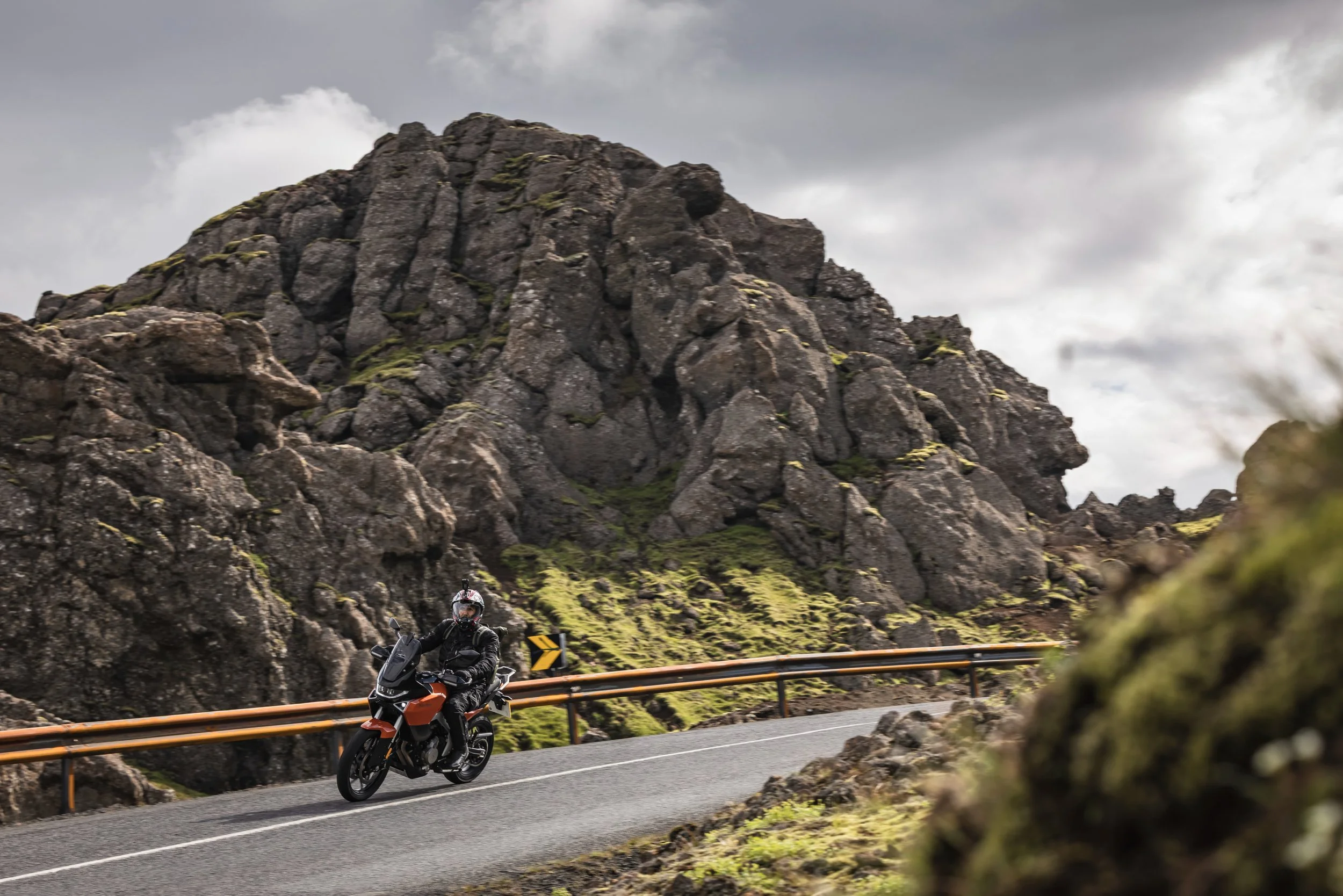
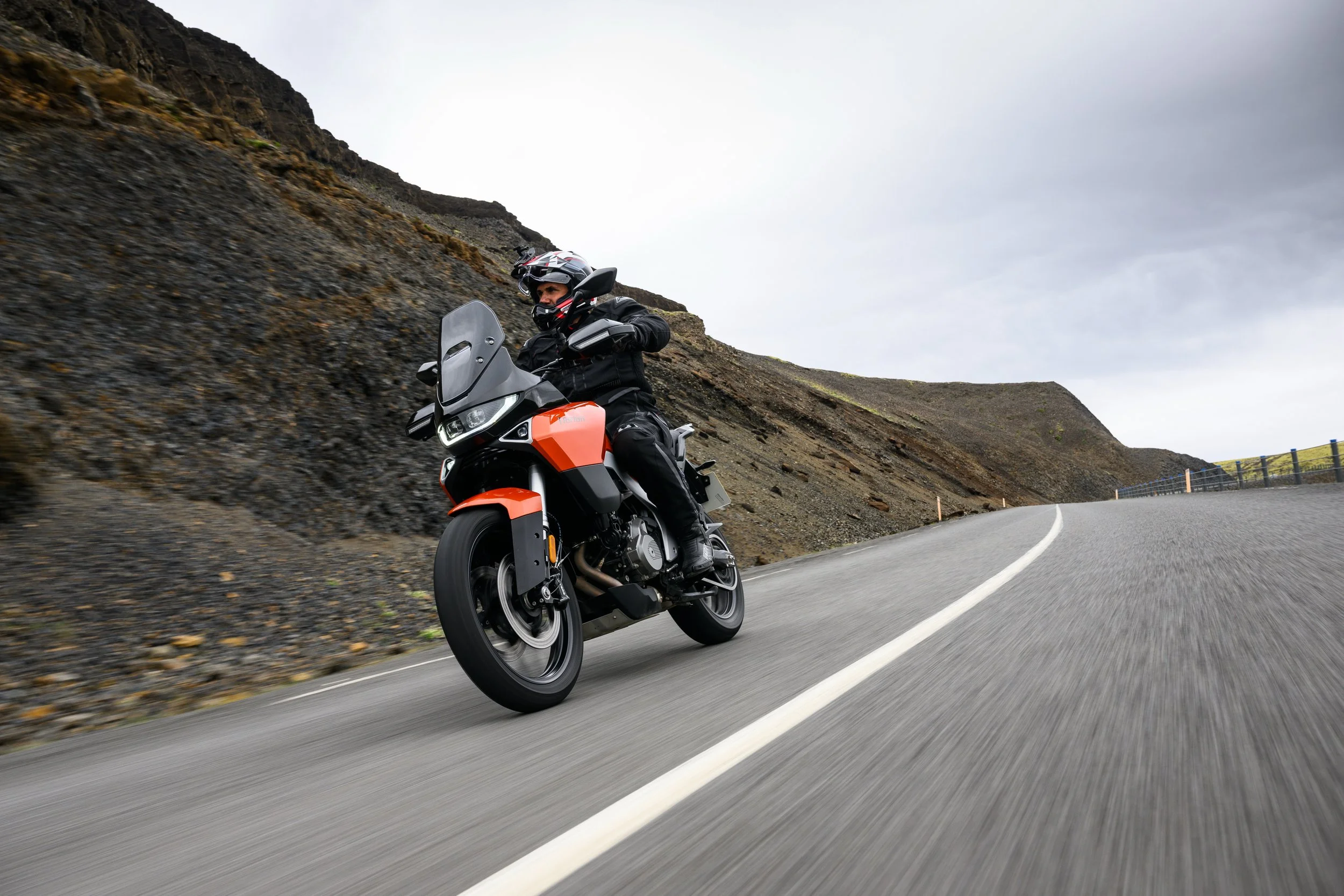
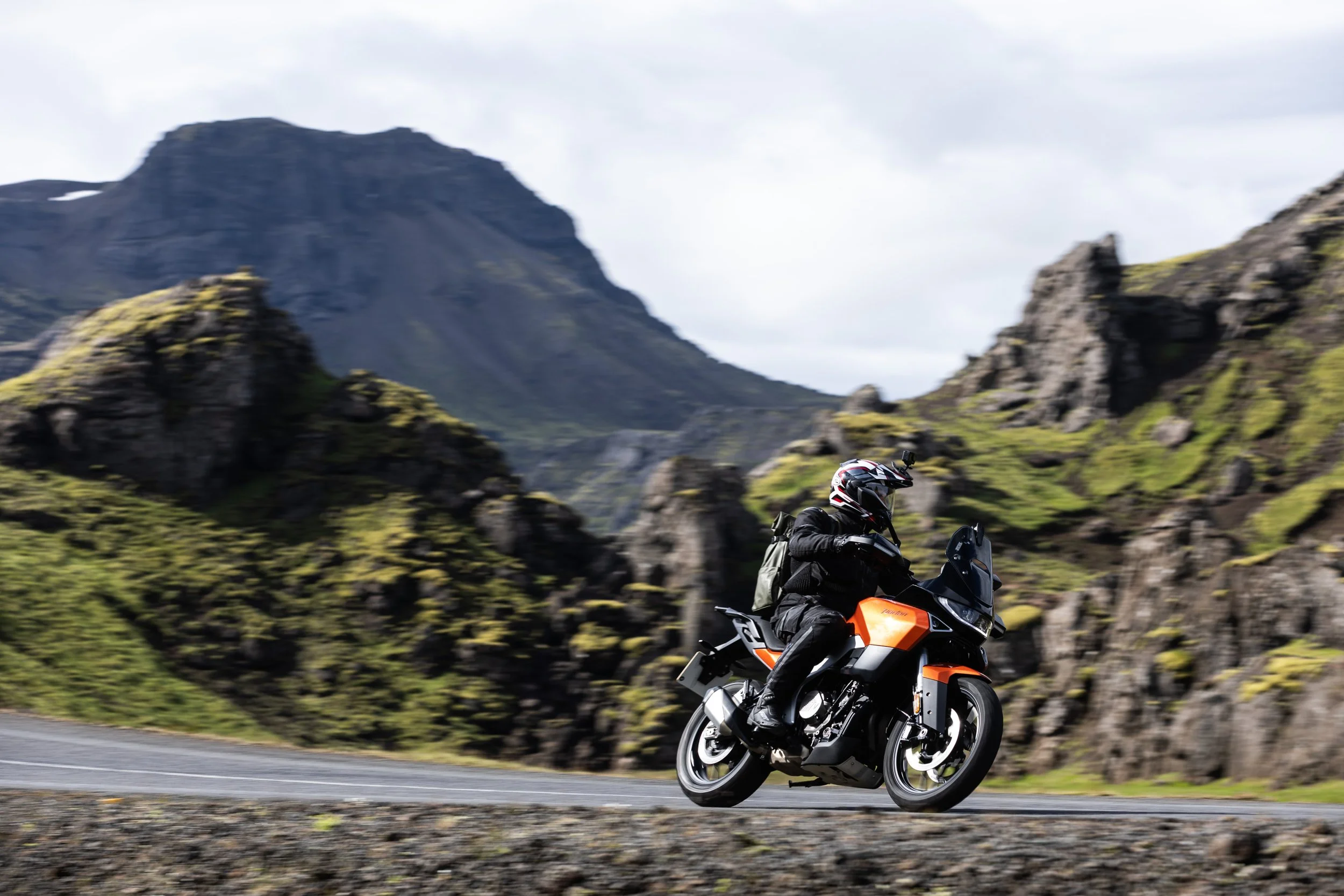
On the many sweeping and undulating roads outside of the city, the Atlas starts to make a lot of sense. The ByBre by Brembo brakes are unsurprisingly superb, and the KYB suspension in its standard set-up did enough to appease the majority of road surfaces. There were times when I felt the shocks might be a little under-sprung and over-damped, which made the bike feel unnecessarily sporty on some surfaces. For a longer test, I'd have been inclined to make some adjustments to the damping, something that the engineers from Norton were keen to assure me would be the fix for me and my riding style. Thanks to the 20-step adjustability on the 43mm forks, there is bound to be a happy setting for all.
Even with the standard settings, the Atlas turns brilliantly into corners and hunkers nicely into a lean with an occasional challenging lump and bump thrown in for good measure, and thanks to the torque-focused engine, the model pulls its way out of the corners with ease, making for a brilliantly fun riding experience.
This new torque-focused 'Nortoness' approach to power delivery is very refreshing for an adventure bike. Where some competitors might clumsily throw some low-end torque at the bottom of the rev range, leaving the big power for the top end, the Atlas just gets the job done. The 585cc engine will happily pull from 2-3,000 rpm in 2nd and 3rd gear without any uncomfortable fuss.
The Exhaust Soundtrack
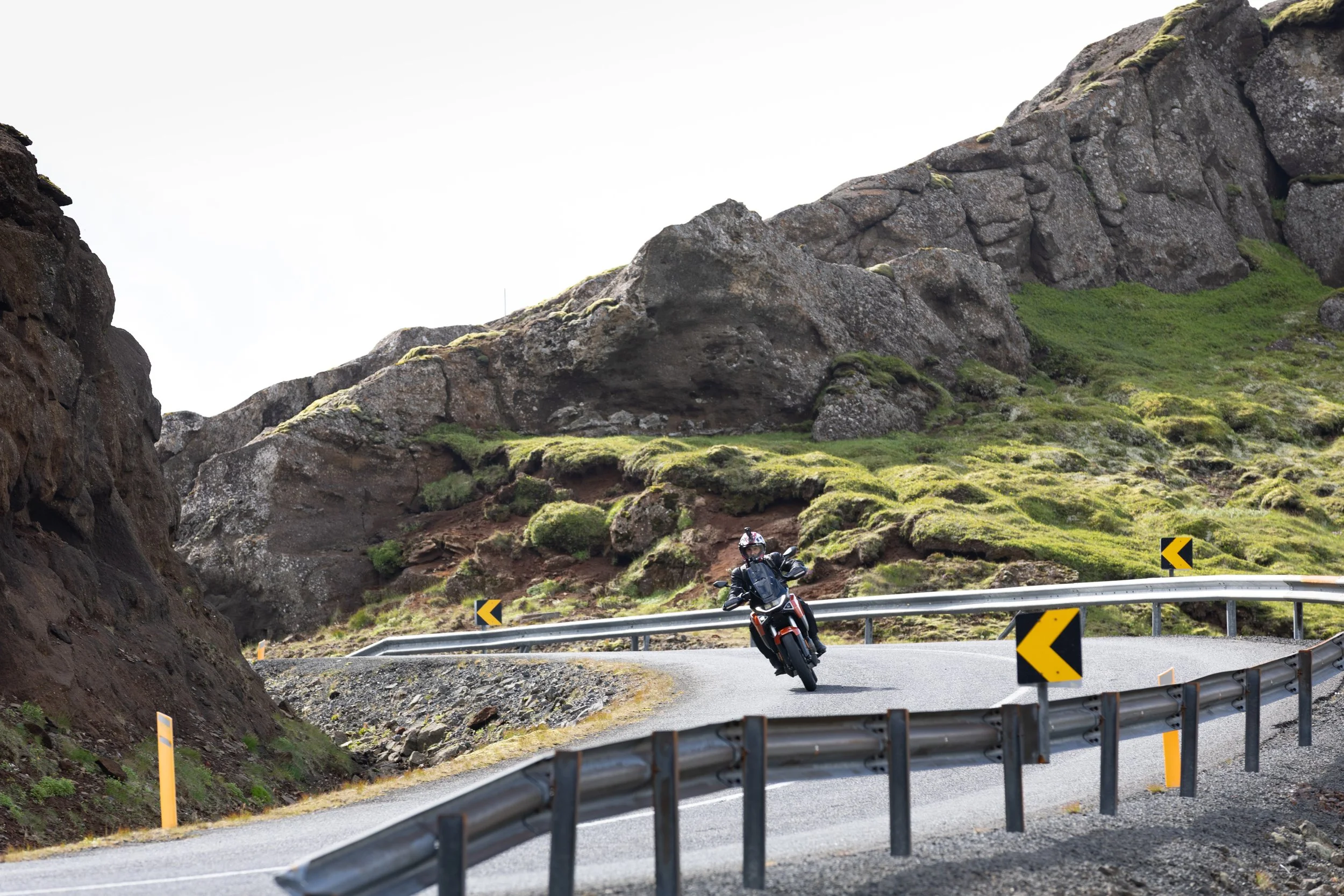
A pleasant bonus from the Atlas is the sound it makes. At the time of launch, there is no exhaust upgrade option available; however, most might think it's not needed at all. The exhaust system has been designed and engineered to help with torque delivery; a happy side effect of the work is a bassy and surprisingly sporty soundtrack.
Off-road riding
Norton has made it clear that the Atlas and Atlas Apex are bikes that have been developed to do a bit of everything, and riding off-road is included in this design brief.
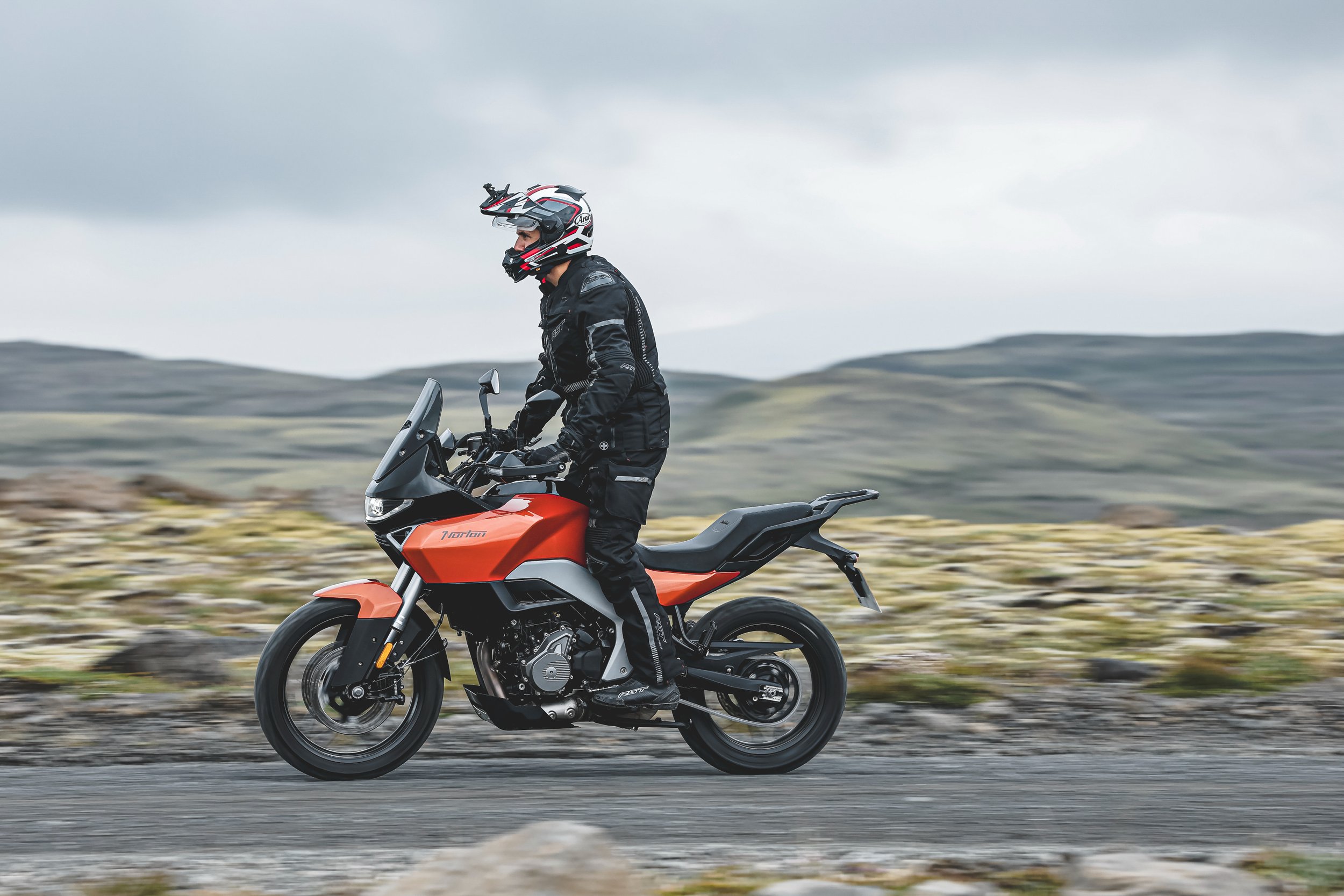
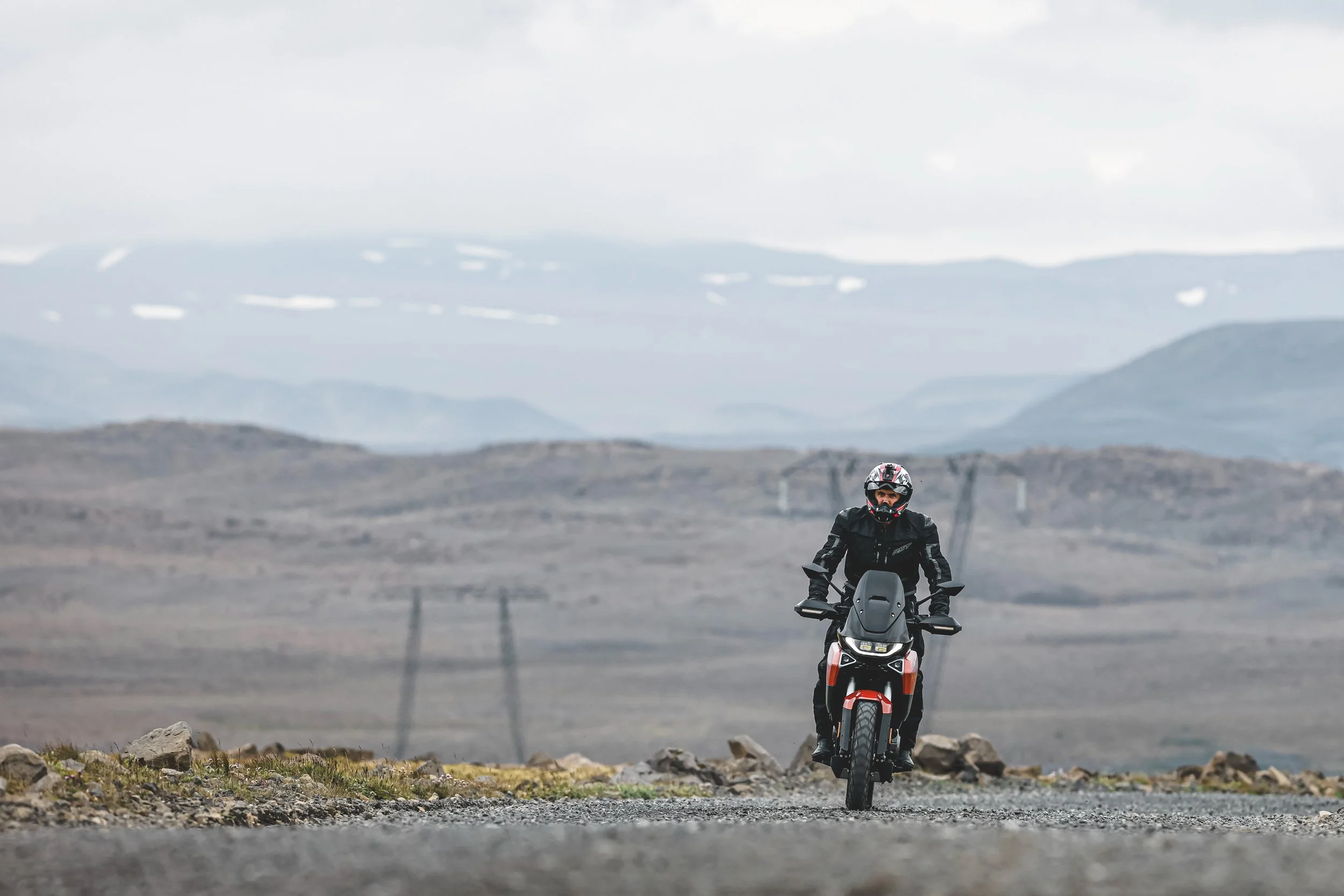
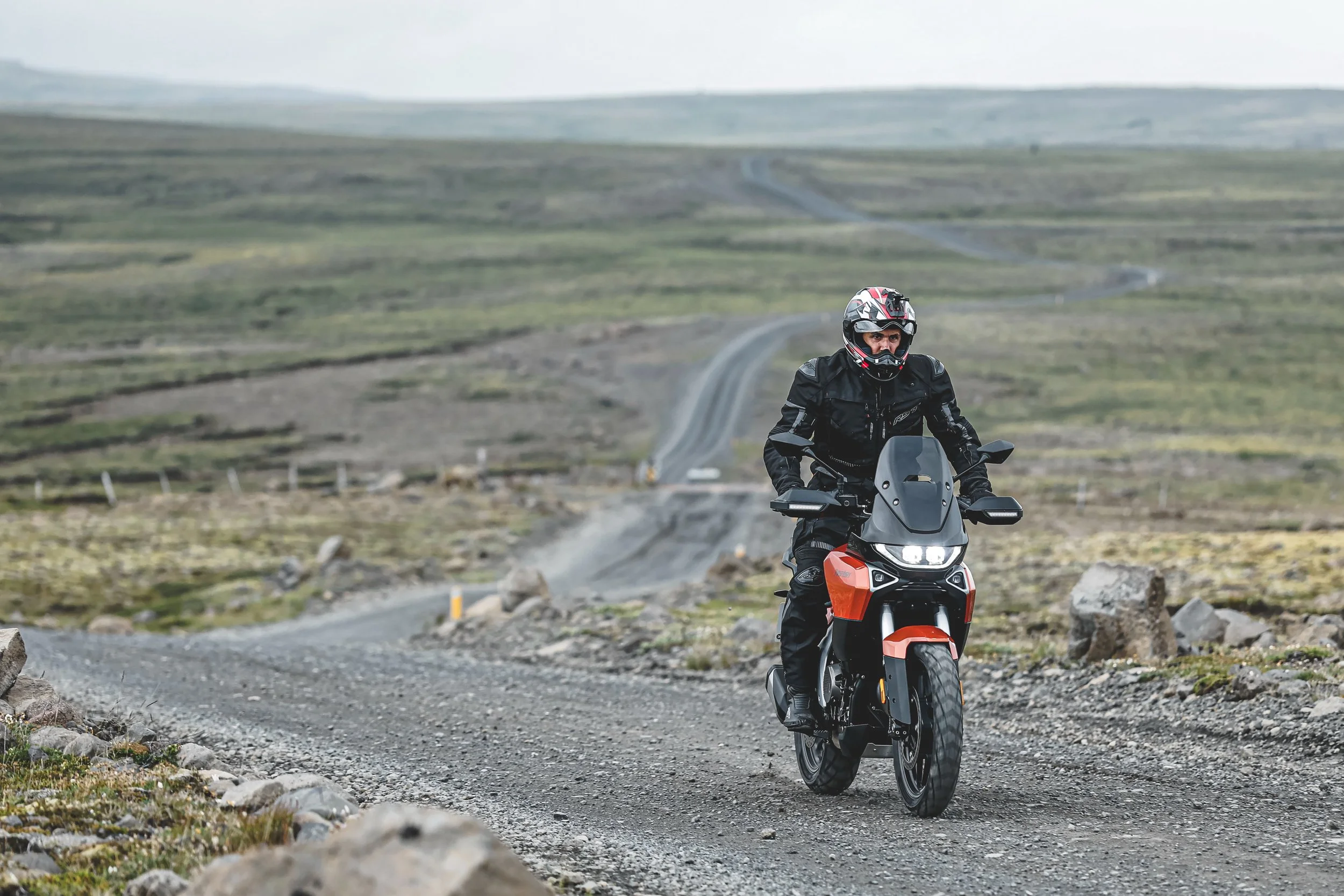
When venturing off the tarmac roads and onto the loose and dusty lava trails, there is an immediate reassurance that the Atlas feels just as at home on looser surfaces as it does on the roads. Switching to Enduro mode in the rider settings disables the rear ABS and reduces traction control to a level that allows for some rear wheel slip. Each setting can be individually tweaked if preferred, but I found the standard settings to be very intuitive.
The downside to the Norton's design when riding off-road is that there's not much to grip between your legs. This is something that can be fixed with aftermarket grip pads; however, by doing that, you're almost certainly going to be interrupting the sleek design. Riding off-road whilst standing is doable and enjoyable, but due to the lack of support, it doesn't feel as intuitive as it does on other bikes, and I found myself having to counter-balance with my weight on the pegs more so than I would on an Africa Twin or Multistrada V2.
It's worth remembering that the Atlas' capability is advertised by the engineers as being ideal for 'light off-road use' and with that in mind, the off-road performance is fine. Also, the Atlas weighs in at over 200kg with fuel. Add on a further 100kg of rider and gear and even the most seasoned off-road riders will find more than the occasional challenge on the rough stuff.
I'd be lying if I said the Atlas was the best off-road adventure bike I'd ridden this year, but that's not what the bike is designed to be. The Atlas is a bike that can do a bit of everything very well, including enjoying sliding around on some loose gravel and over an occasional small jump. I'd predict that like 90% of adventure bikes that ARE designed with an off-road capability focus, most won't see a terrain much more challenging than a local gravel carpark.
Riding Summary
After almost 8 hours on the Atlas, I learned to love it more as the day went on. Taller riders (over 6ft) will almost certainly want the higher seat; some may even hanker for a slightly taller ride height or lower footpegs, but I cannot deny that the Atlas in standard form is anything other than joyous to ride in all environments. The road is where it's happiest, though; sweeping corners, long straights, and technical bends are where the Atlas feels most enjoyable and most at home.
To Conclude
The Atlas is a second welcome addition to the Norton range and, like the Manx R, it deserves to sell well - I do, however, predict that it might be another slow burner for the brand.
The big challenge for Norton is going to be getting the Honda Africa Twin, Ducati Multistrada and BMW GS riders to throw a leg over an Atlas and have a go. At £10- 11,000 with a generous dose of optional extras, the Norton Atlas Apex is within range of some hot competition. Where it's likely to succeed is with buyers who are less fussed about lightweight off-road capability and more aligned with a bike that looks extra-special in the Caffeine & Machine car park. And there's nothing wrong with that.
words by John Marcar
photography by Norton