
Hyundai Santa Fe Hybrid Calligraphy - The perfect family SUV?
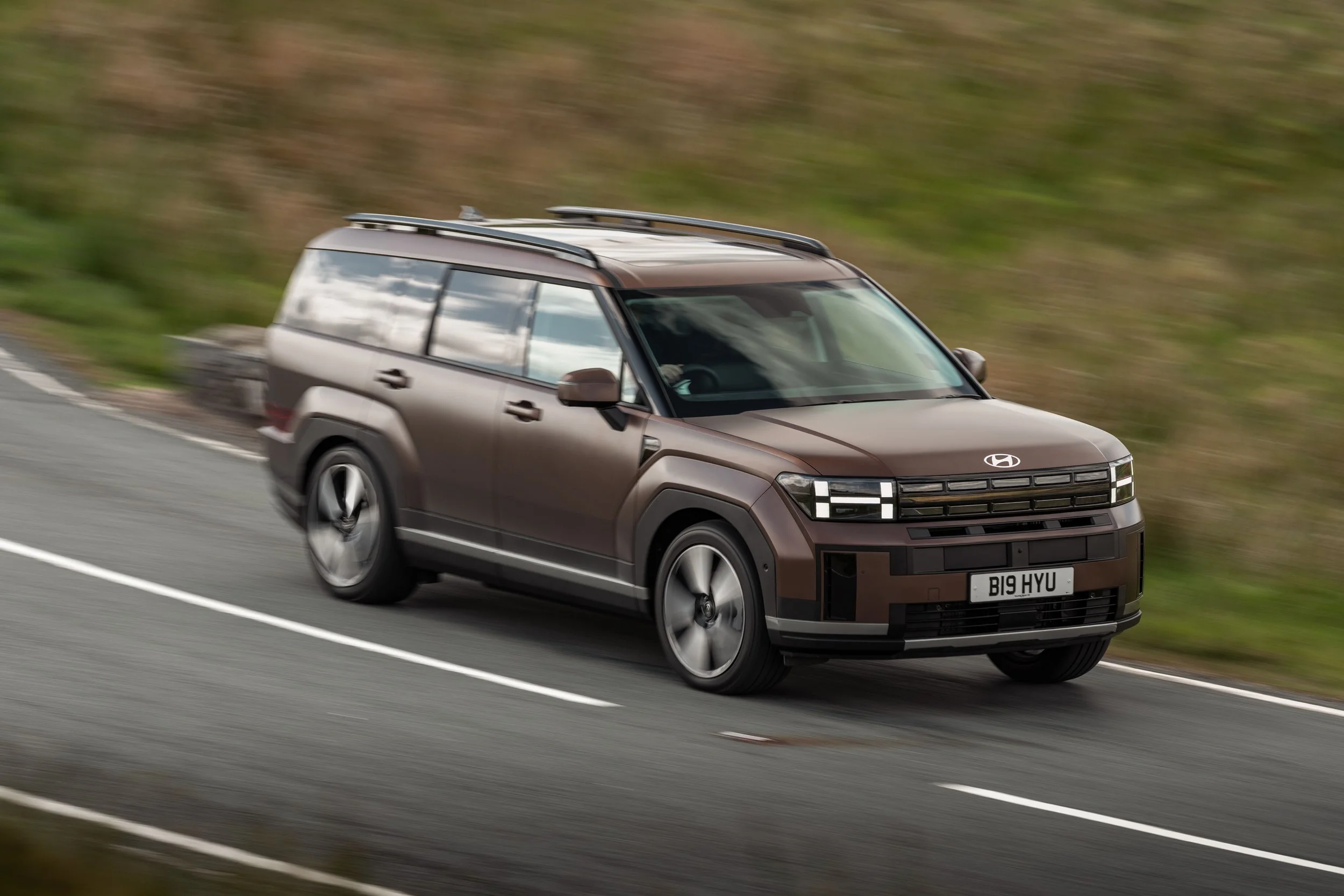
We're big fans of the Hyundai Santa Fe at Driven, and Sam Sheehan has been behind the wheel of the latest iteration of the top-of-the-line Calligraphy model.
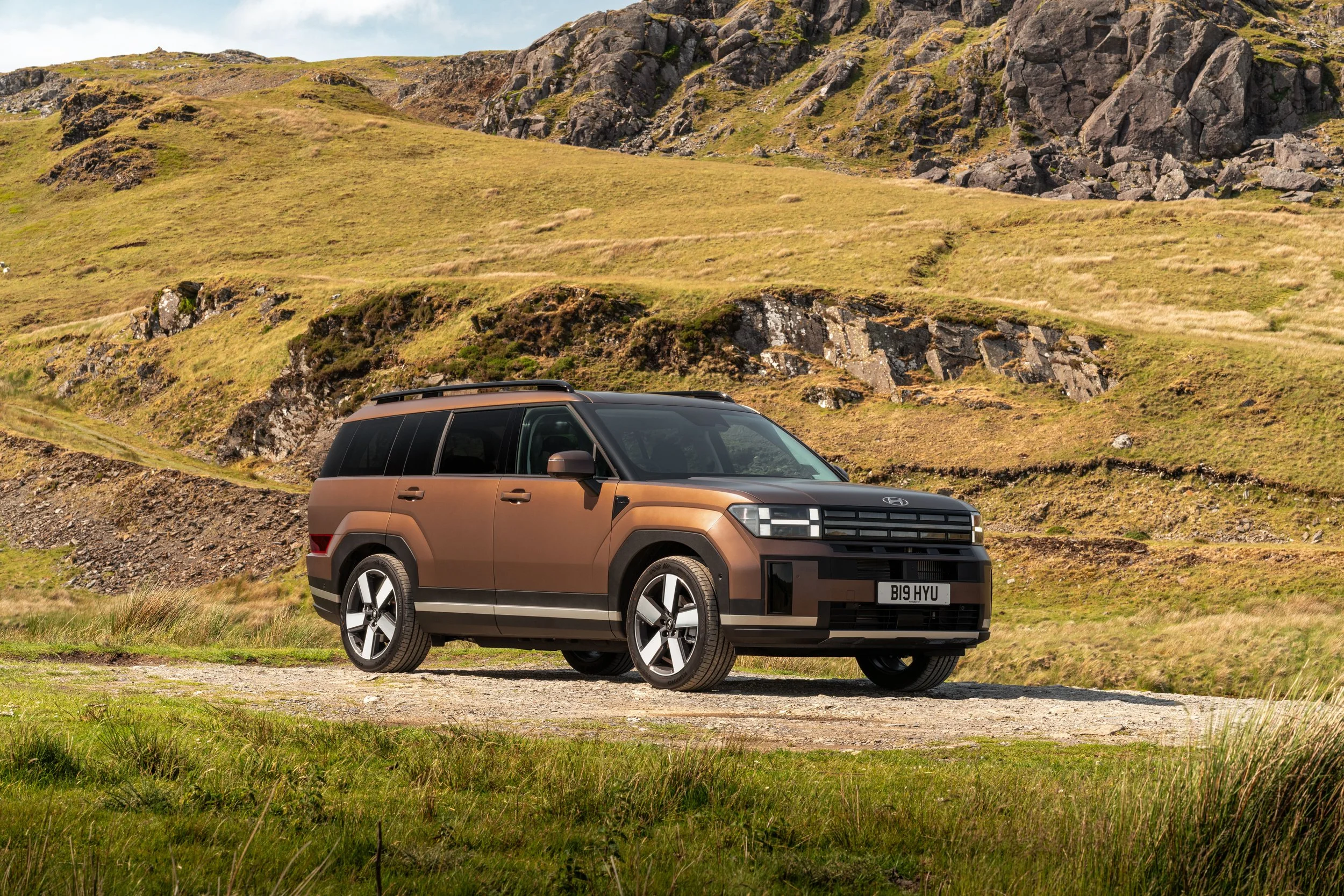
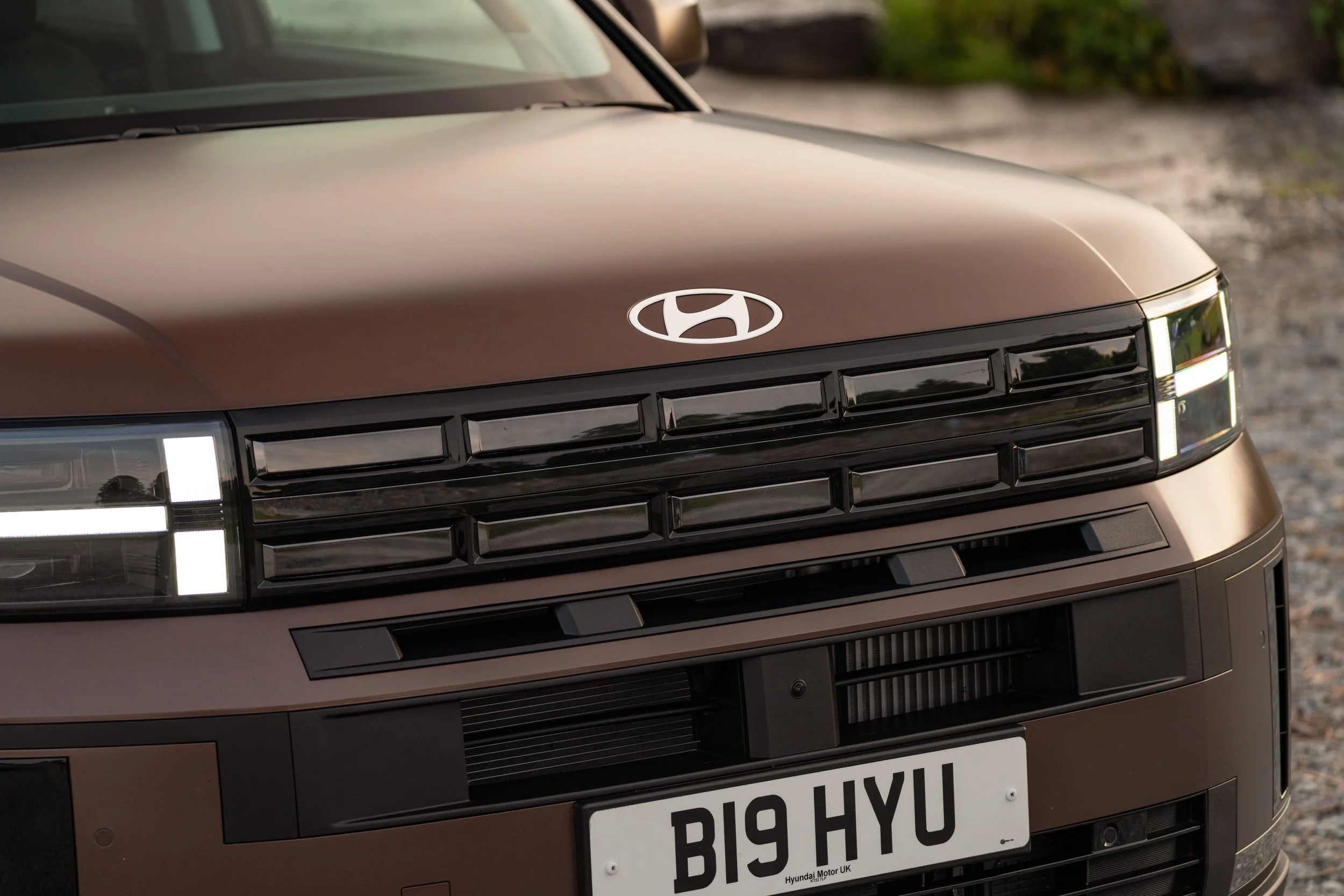
Does anyone else see a Land Rover Discovery 2 when they look at the front of the Santa Fe? Maybe it's just me, but from some angles - like the front-three quarters and the bonnet line - are very reminiscent of that handsome old Landy. The similarities are more than skin deep because the Santa Fe can also be had as a seven-seater, like the Disco, meaning it, too, targets growing families with active lifestyles. But in 2026, these families require far more than a butch design and interior space. They need tech. And thankfully, the Santa Fe has bagloads of the stuff not only inside, but also under the bonnet.
Calligraphy: Top of the Line
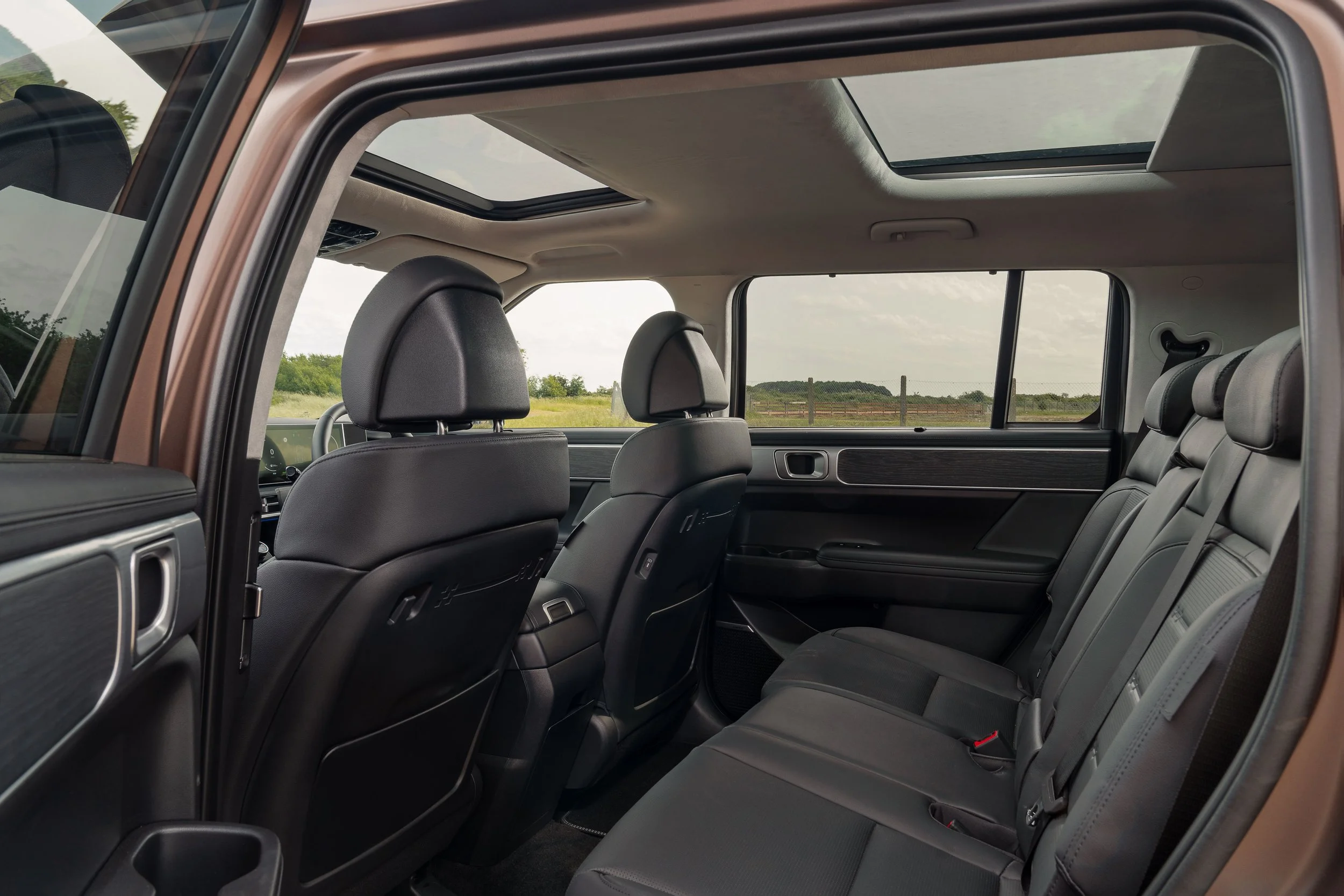
This is especially true if you go for the seven-seat Santa Fe Hybrid in top grade Calligraphy that we have here. Alright, you'll need to spend £55,090 for the privilege, and you can save yourself six grand by opting for the still not-badly-specced entry variant, the Premium, but doing so means you lose the Calligraphy's muscle-adding black add-ons to the car's lower sections, as well as Nappa leather inside. Oh, and you lose the mid-grade Ultimate's heated and ventilated seats, Bose sound system and dual wireless phone charging mat, as well as a dual panoramic sunroof and several other goodies.
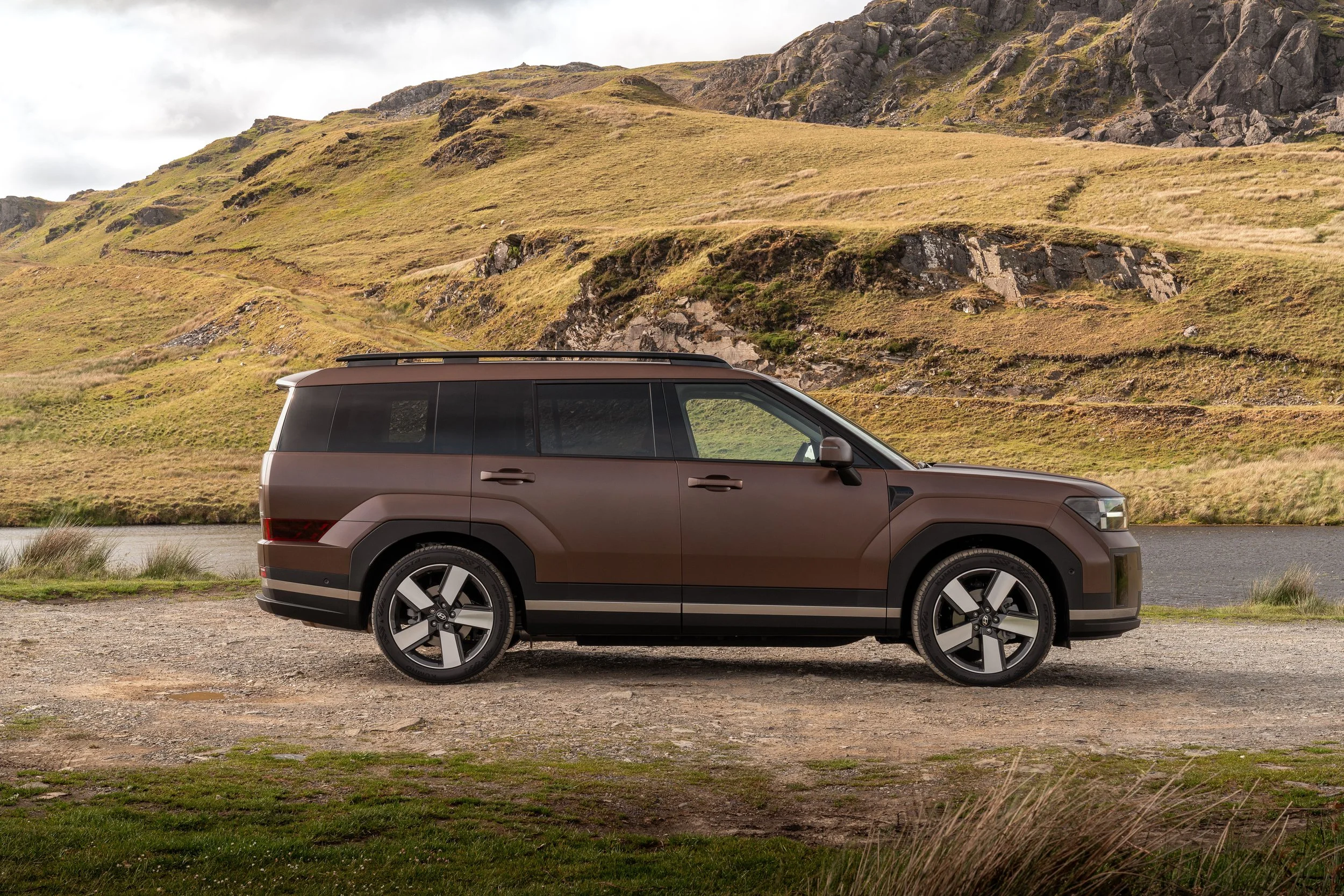
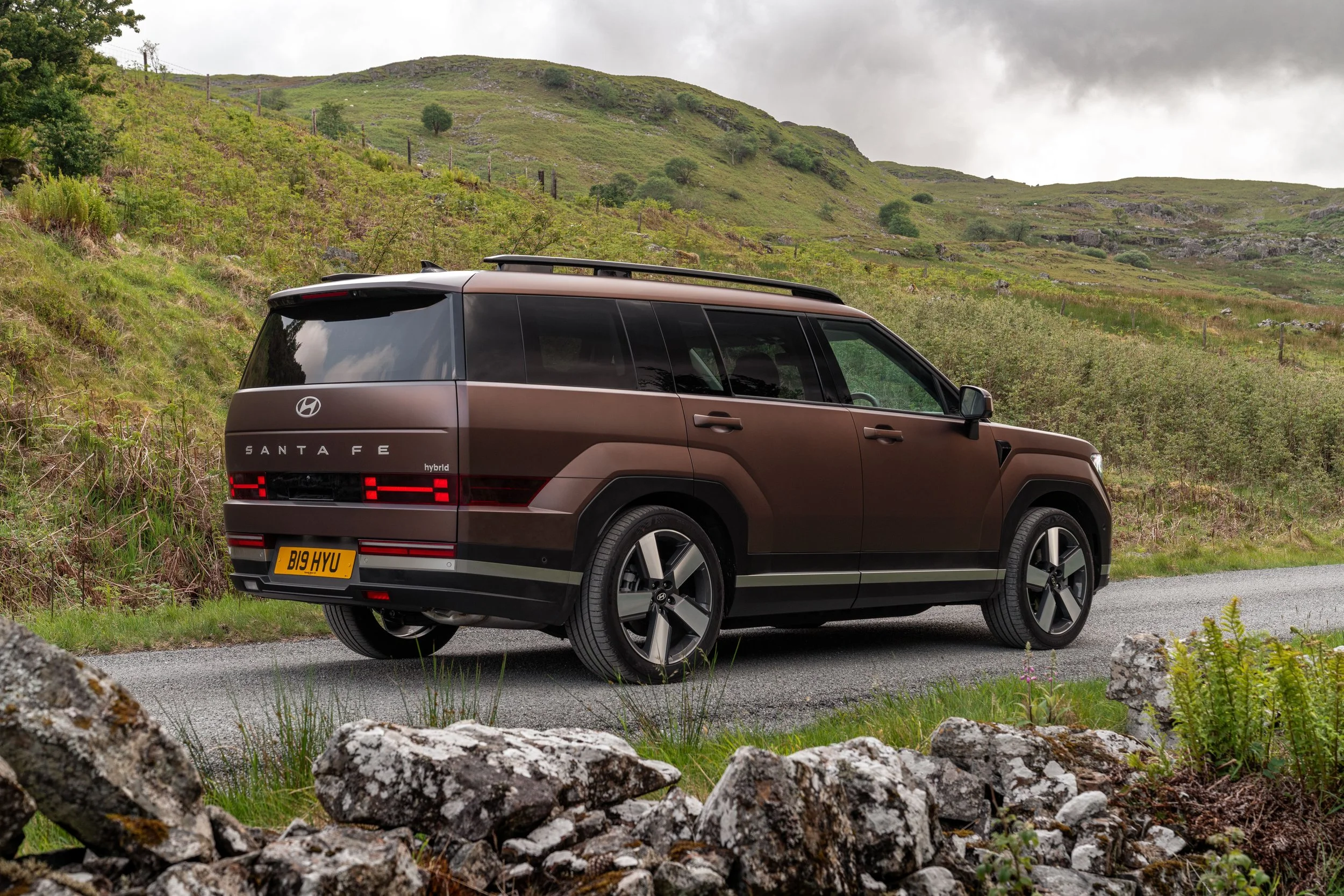
Whichever of the three trims you go for, you'll always get 20-inch alloy wheels wrapped in chunky road tyres (because unlike the Discovery, the Santa Fe is unashamedly road-focused), and you'll find nods to the car's maker all over it in the form of Hs, including the headlights, the rear lights and even the front bumper. It's big too, although at over 4.8 metres in length, the Santa Fe's more than 100mm shorter than the aforementioned Land Rover's present-day successor. Instead it measures closer to the Skoda Kodiaq and Peugeot 5008 it competes with - and if you're wondering, the incoming Jaecoo 8 will be almost identical in length.
Interior Space
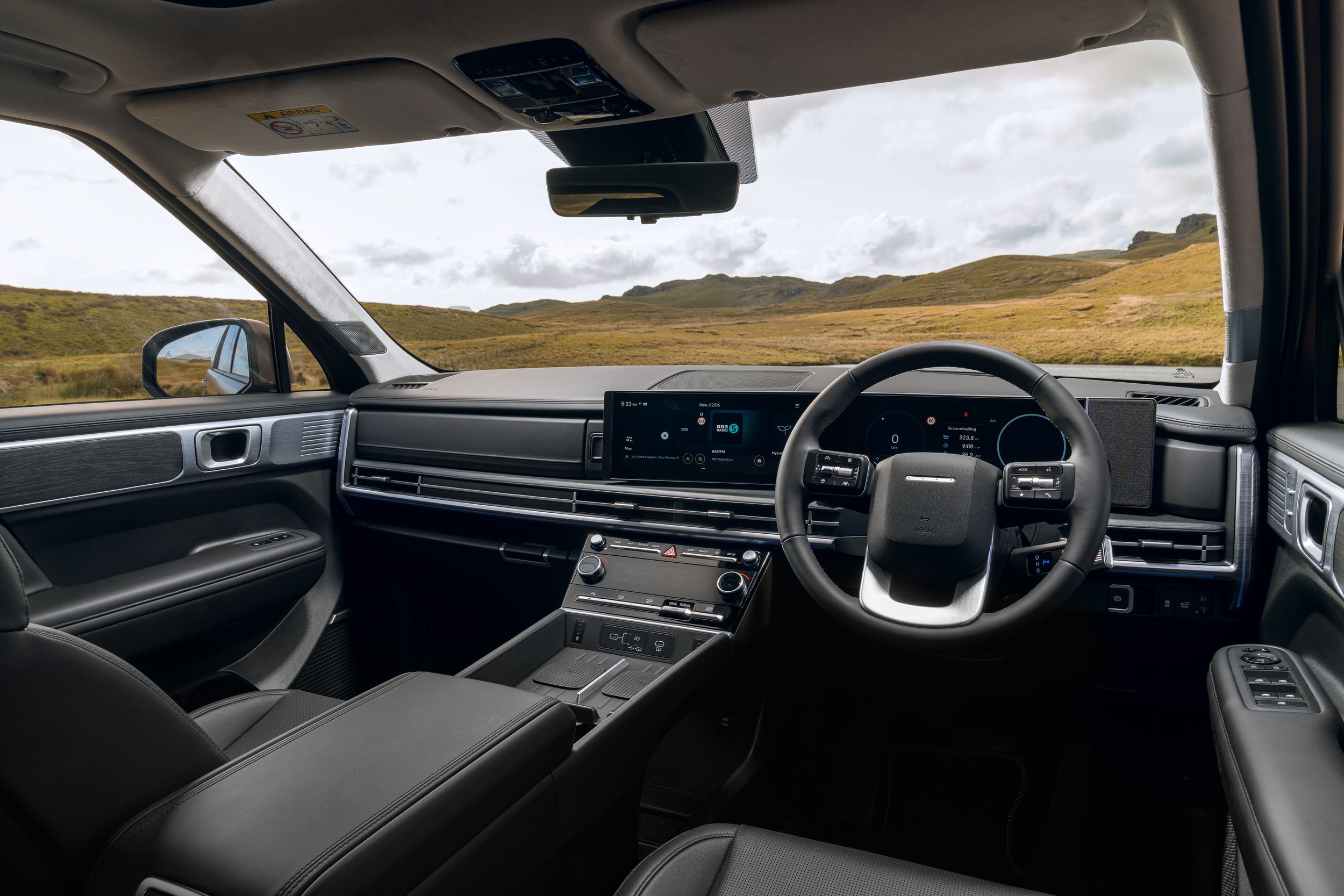
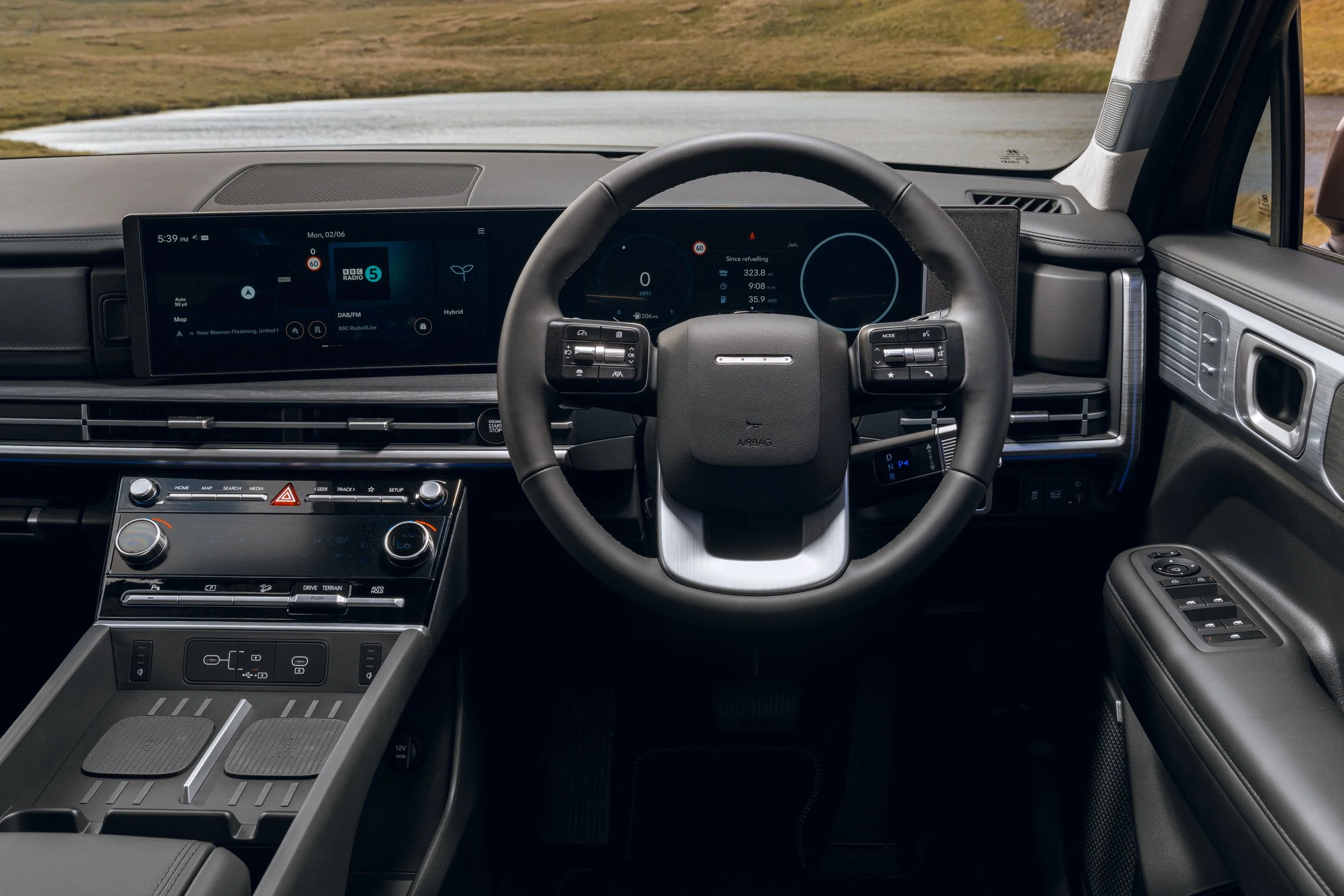
Inside, the space up front is generous, to say the least, with lots of headroom and even storage under the centre console, which isn't a given in engine-powered cars. The door pockets are generously wide and all of the controls feel butch and easy to use. Best of all, the car's wide screen infotainment system - a 12.3-inch touchscreen that sits beside a digital driver's instrument cluster of the same size - is joined by manual controls to adjust the heating and aircon. This means the Santa Fe is as ergonomic as it is practical, and that doesn't come at the cost of digital tech, because the touchscreen menus are simple and intuitive.
Rear seat legroom is decent, although you're aware that there are hybrid batteries under the floor as your feet don't sit quite as low as they would in a purely petrol car. This will be the case across the board as well because the Santa Fe's only available as a hybrid or plug-in hybrid. But you can still easily get comfortable, with enough room under the seats ahead to tuck your toes under them. Thanks to generous headroom and the flat, tunnelless floor, there's also no shortage of room for middle seat passengers to get comfortable in the seven seat model.
Your Choice of Seat Configurations
If you don't need seven seats you can opt for a six-seater, which ditches the rear bench and swaps it for two chairs like those in the front, maximising comfort in the middle row with armrests to boot. But since this six-seat Santa Fe is only available as a top-grade Calligraphy, its starting price is £56,090, which is a grand more than our seven-seat car.
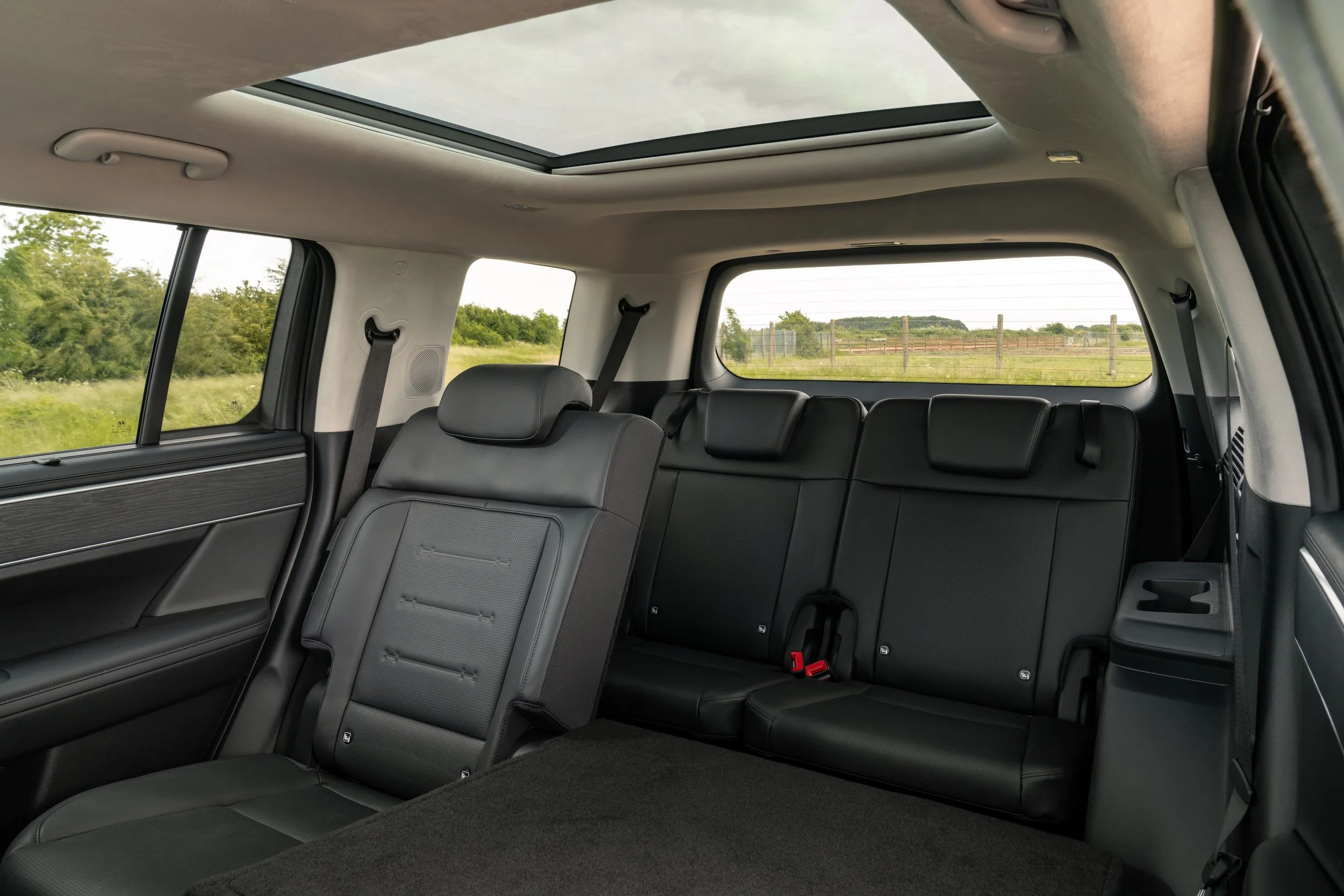
Whichever seat layout you go for though, you'll always find a pair of smaller spaces in the boot. These are for kids, so don't expect armchair-like comfort in them, although my near six-foot (182cm) frame can technically squeeze in. But surprisingly, given how sparse the setup around boot seats often is, there are climate controls, four (two for each seat) cup holders and USB-C charging ports to keep the little'uns hydrated and happy.
Boot Space and Storage
When the rearmost seats are up and in use, there is still a small amount of boot space remaining, with some underfloor compartments. But naturally, for maximum space, you'll need to fold the seats down to open up 628 litres of room, just 7 litres of which are sacrificed if you go for the PHEV model. It's clearly spacious, but it's actually a bit less roomy than the car's main rivals, so if you're brimming the boot on every trip, you may find this is a shortcoming that makes the Santa Fe's rivals more appealing.
Here's something the Santa Fe uniquely offers though, especially for the germaphobes. Before you hit the road in a car, you probably put your phone in the relevant storage position, right? Well, handily, the Calligraphy doesn't just get dual wireless charging mats, but also a UV-C compartment in the dash to clean your phones too. Using the same light-based tech that's also employed to disinfect air conditioning, healthcare items and even the latest swimming pools, the locking UV-C compartment takes just a few seconds to safely zap your phones or other small devices. It's the sort of thing you didn't think you needed but once you use it, it becomes second nature during the car's start up.
As does the switching off of unwanted driver assistance features, the menu page for which can thankfully be accessed via a shortcut button on the steering wheel. It still requires an additional few taps of the screen to switch off, say, speed limit alert and lane keep assist. But at least you're not faffing through menus first. Even simpler in operation than that is the hybrid system itself, because driving away in this self-charging car is no different to a regular automatic. You rotate the column-mounted drive selector into D, and pull away, usually in total electric silence.
Engine and powertrain
That's because the hybrid setup of our car mixes a turbocharged 1.6-litre petrol engine with an electric motor that drives directly into the automatic six-speed gearbox. The setup can handle purely electric low-speed driving, is good for 239hp and 195lb ft of torque, and, if you're towing, can lug 2,000kg of braked trailer. That's true in both front- and all-wheel drive variants, although naturally the latter will be better at lugging weight along a slippery surface, while the former - which we're testing - is the more efficient, with a claimed 41.8 miles per gallon combined possible. There's little reason to doubt that either, because of the way the hybrid works and recuperates energy.
How the hybrid system works
Under normal acceleration, the engine and electric motor work in tandem to minimise petrol usage, while under heavier acceleration the engine seems to spin up to help generate more energy for the hybrid system. This does mean it sounds thrashy, like a CVT gearbox car, when powering onto a motorway. But the delivery of torque is instant and linear, meaning cross-country progress can be swift. Alright, the quicker of the two drivelines, the front-drive setup, gets to 62mph just two-tenths quicker at nine seconds, which isn't exactly rapid. But rolling performance is genuinely strong enough to make the car feel effortless.
Similarly, the adjustable regenerative braking helps to reduce your workload from behind the wheel, with the highest setting not reaching one-pedal driving levels, but still doing enough to slow speed in moving traffic, and let you feed the hybrid system with energy during downhill coasts. Best of all, you can adjust the regen level on the fly using the paddles behind the steering wheel, which is a big plus for those wanting to maximise efficiency.
Ride quality
The ride is good with enough squish in the suspension to soak up bigger bumps, while potholes are handled with a toughness that makes the car feel sturdy. Body control is impressive as well, with a little lean that never becomes aloof or wallowy. But this is obviously not a performance SUV; it's planted and predictable, but it also deliberately isolates you from the road. This does mean it can't match a Kodiaq vRS for cornering kudos, but refinement is good, so long-distance driving needn't be much of a challenge.
To Conclude
There's no denying the Santa Fe Hybrid is a fantastic all-rounder that can help make family life on the road easier. It's not cheap, especially in Calligraphy form, but few cars offer such a broad range of talents across three rows. It can't go off-road like the Discovery it (to my eyes at least) takes some inspiration from, but how many Discos have actually ventured further from a road than the kerb side or village green? The Santa Fe does all it needs to for real-world family life and then some.
words by Sam Sheehan
photography thanks to Hyundai UK