
Hybrids of any sort are seriously popular with car buyers, appealing to those who aren’t quite ready to go fully electric, and to everyone who fancies the potential of excellent economy.
But hybrid assistance in something like a pick-up truck is a rarity, in fact, when it comes to the full works PHEV (plug-in hybrid electric vehicle), the choices are limited to a very short list.
One.
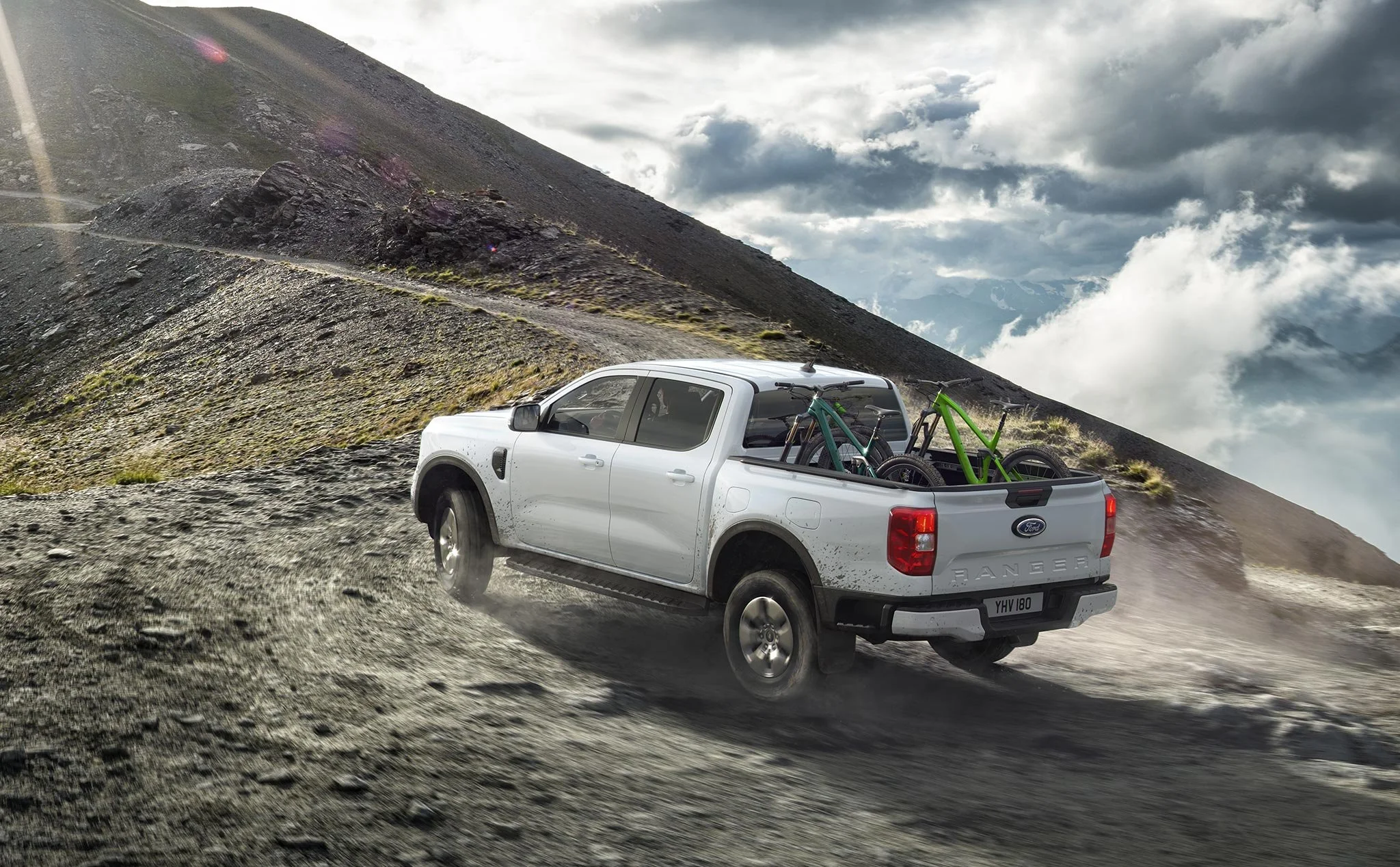
And here it is, the latest Ford Ranger PHEV, Europe’s only plug-in pick-up truck.
Who is it for?
It’ll appeal to anyone who needs to use the Ranger as a genuine workhorse tool, but also to those who see it as a lifestyle alternative and to make the move away from the mass of SUVs. The lower emissions will certainly appeal to business users. The government used to view the Ford Ranger as a commercial vehicle, but as pick-ups become more popular as leisure vehicles, it’s moved the goalposts. In other words, the pick-up is now seen as being a rather large car.
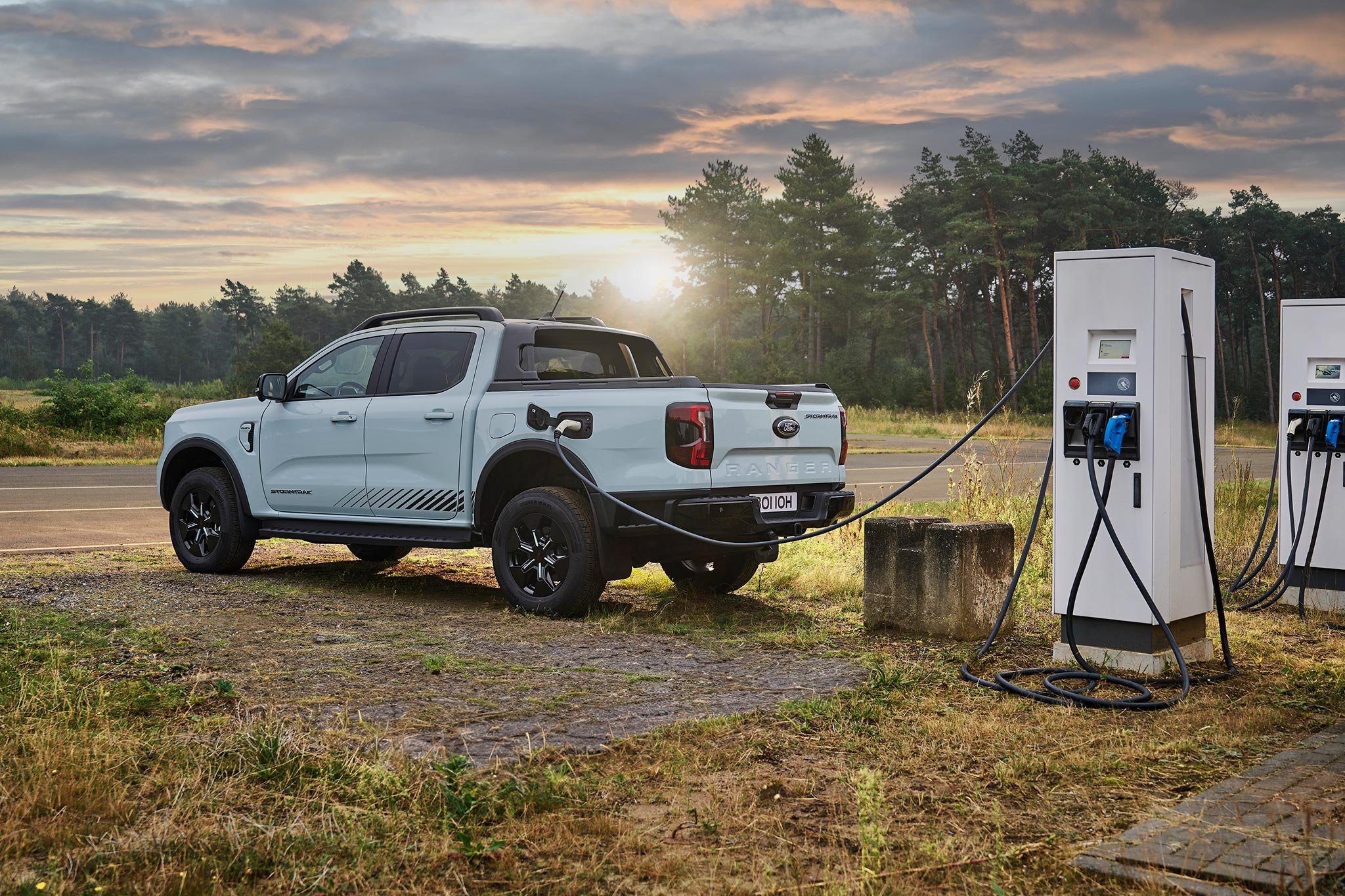
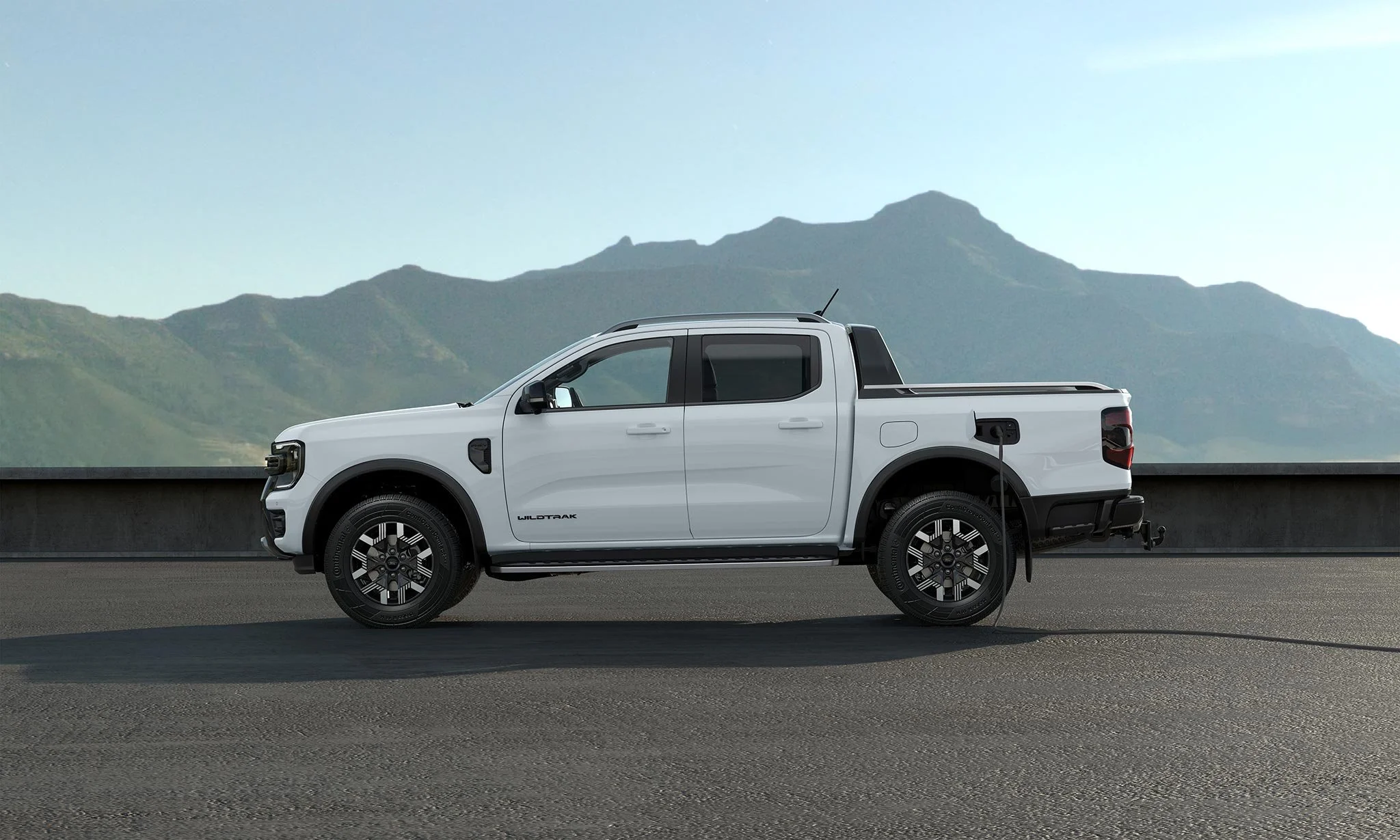
The PHEV version of the Ford Ranger looks just like the diesel model; the only clue is that the fuel filler flap is joined by a second flap, which hides the electrical charge socket.
Powertrain
Ford used to have various powertrains and body styles, but in terms of power, they’ve trimmed that to a 3.0-litre V6 diesel, a 3.0-litre V6 petrol Ranger Raptor, and this 276bhp 2.3-litre turbocharged 4-cylinder petrol PHEV. The double cab 4-door model is the only body style. You can have either five seats or the rear seats removed to create an extra load area. Surprisingly, the 2.3-litre petrol Ranger is more powerful than the 3.0 V6 diesel.
As for price, the diesel Ford Ranger is cheaper at £36,250 (ex VAT) while the petrol PHEV costs £40,830 (June 26) (May ‘26). The Raptor ups the ante to £47,800.
I’m concentrating on the PHEV model here because it’ll be the most popular for both private and business users.
What can it do?
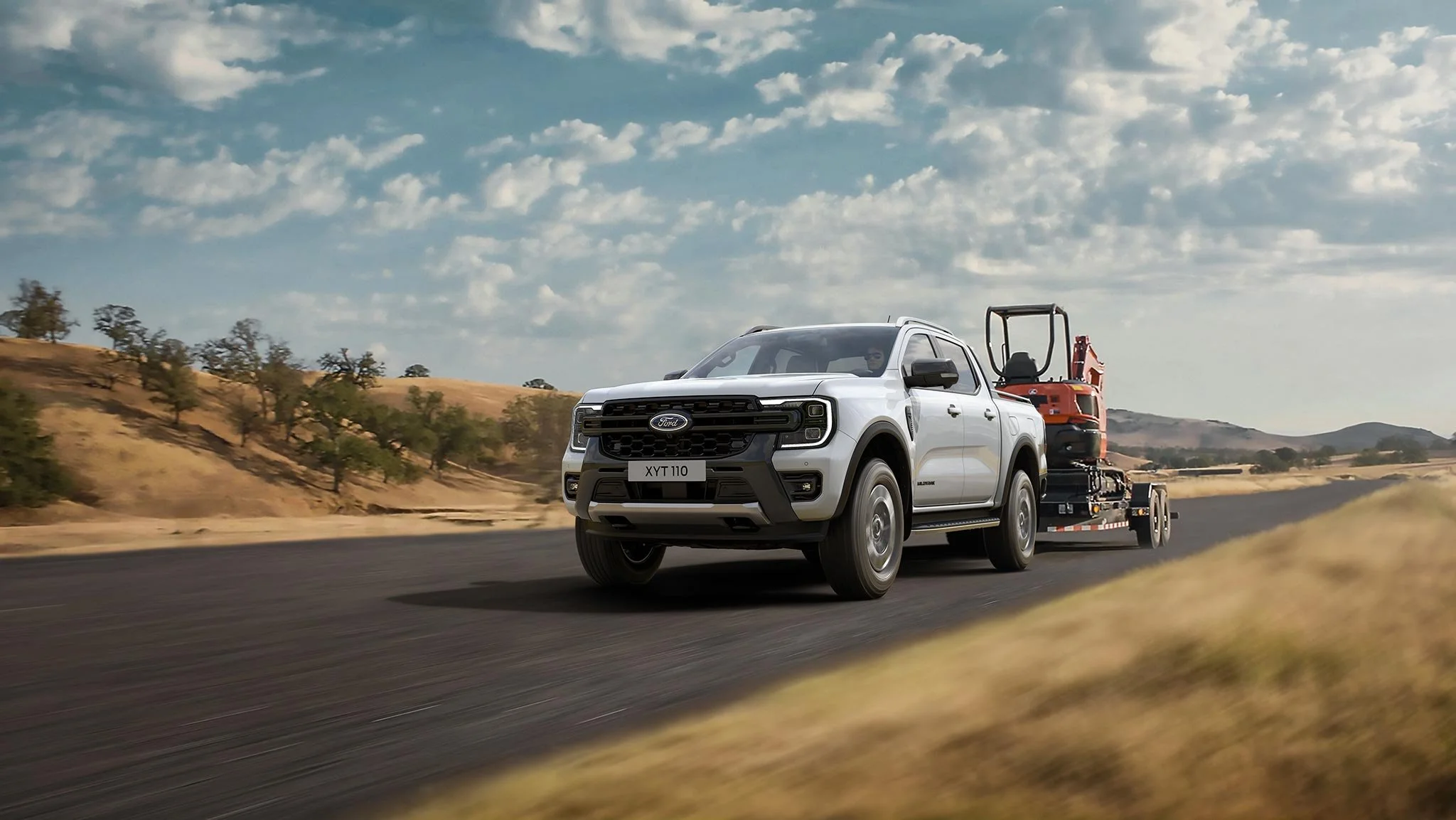
Pick-ups are invariably bought by businesses to do a job — farmers, builders, gardeners, etc. They need to carry a decent load in the back and often need to tow a trailer. Here are the two important figures: the Ford Ranger PHEV can tow a braked trailer load up to 3.5 tonnes and can carry just over a tonne in the load bay. These figures are almost identical to those offered by the 3.0-litre diesel Ranger. The load area is designed to accommodate a standard Euro Pallet.
Ford reckons the 3.0-litre diesel Ranger can manage 27.2mpg, while the PHEV model can achieve up to 91mpg — which you won’t get — but 50mpg should be achievable if you go steadily, make full use of the hybrid system and haven’t got it hauling a trailer or got it loaded to the gunwales. Once the battery is exhausted, you’ll then be looking at mid-30s mpg.
Electric Capability
You can switch between all-wheel drive and Rear Wheel Drive with everything going via a 10-speed automatic ‘box, or select various EV options, including an EV Now option where the battery powers the car until depleted. The EV Charge setting uses the engine to top-up the battery while EV Later means the Ranger only uses the petrol engine until, for example, you arrive in town traffic and can then switch to purely EV mode. Clever. Most owners will leave it in EV Auto, which is where the electric motor and 2.3-litre engine work in tandem. The Ranger can manage around 27 miles on battery power alone. Charging takes around 4 hours using a standard wallbox. Look around, as there are currently some deals out there which provide you with a free wallbox.
The Ranger also offers Pro Power where the pick-up can power most electric tools via a pair of 3-pin sockets. That’ll be handy if you use this Ranger PHEV for your family because you can use the socket to inflate the sort of thing kids like to play on / with. It also means that someone like a farmer can use an electric power tool when they’re miles from anywhere.
Trim Levels
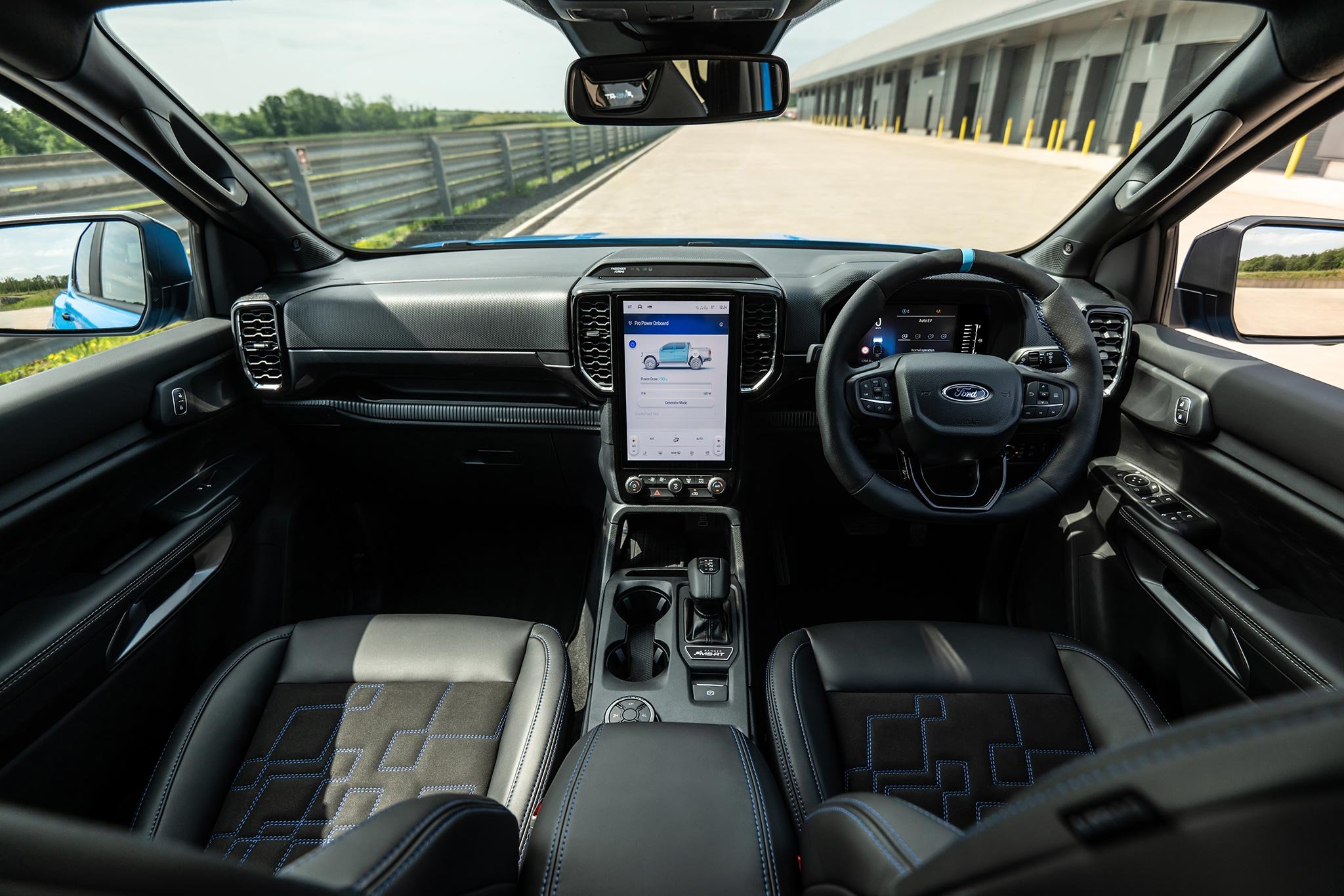
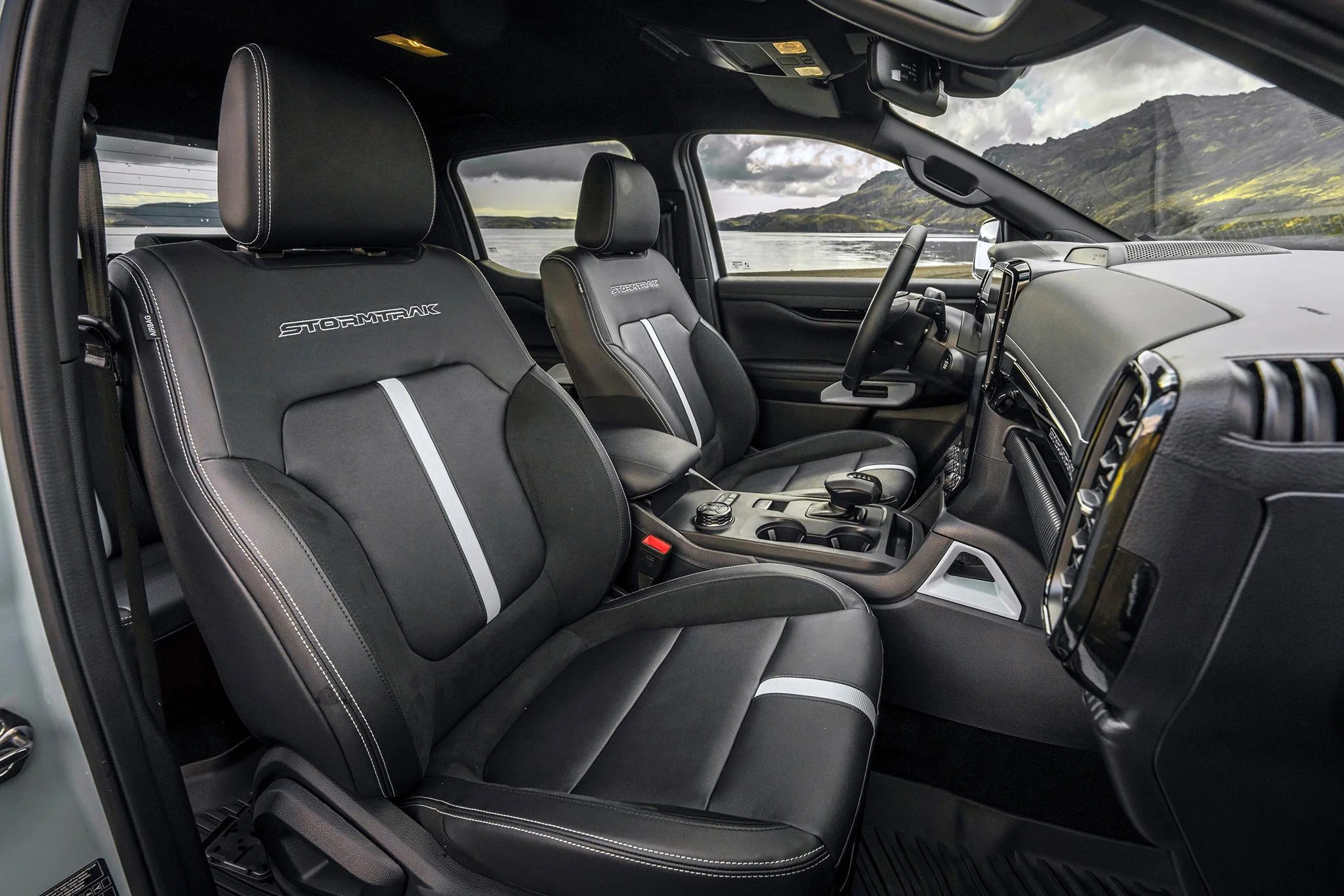
Four trims are available — XLT, Limited, Wildtrak and Platinum. The entry-level XLT gets a 12-inch multifunction display, rearview camera, powered front and rear windows, powered mirrors, heated windscreen (great in frosty weather), dual-zone air con, and adaptive cruise control. In other words, you get the essentials.
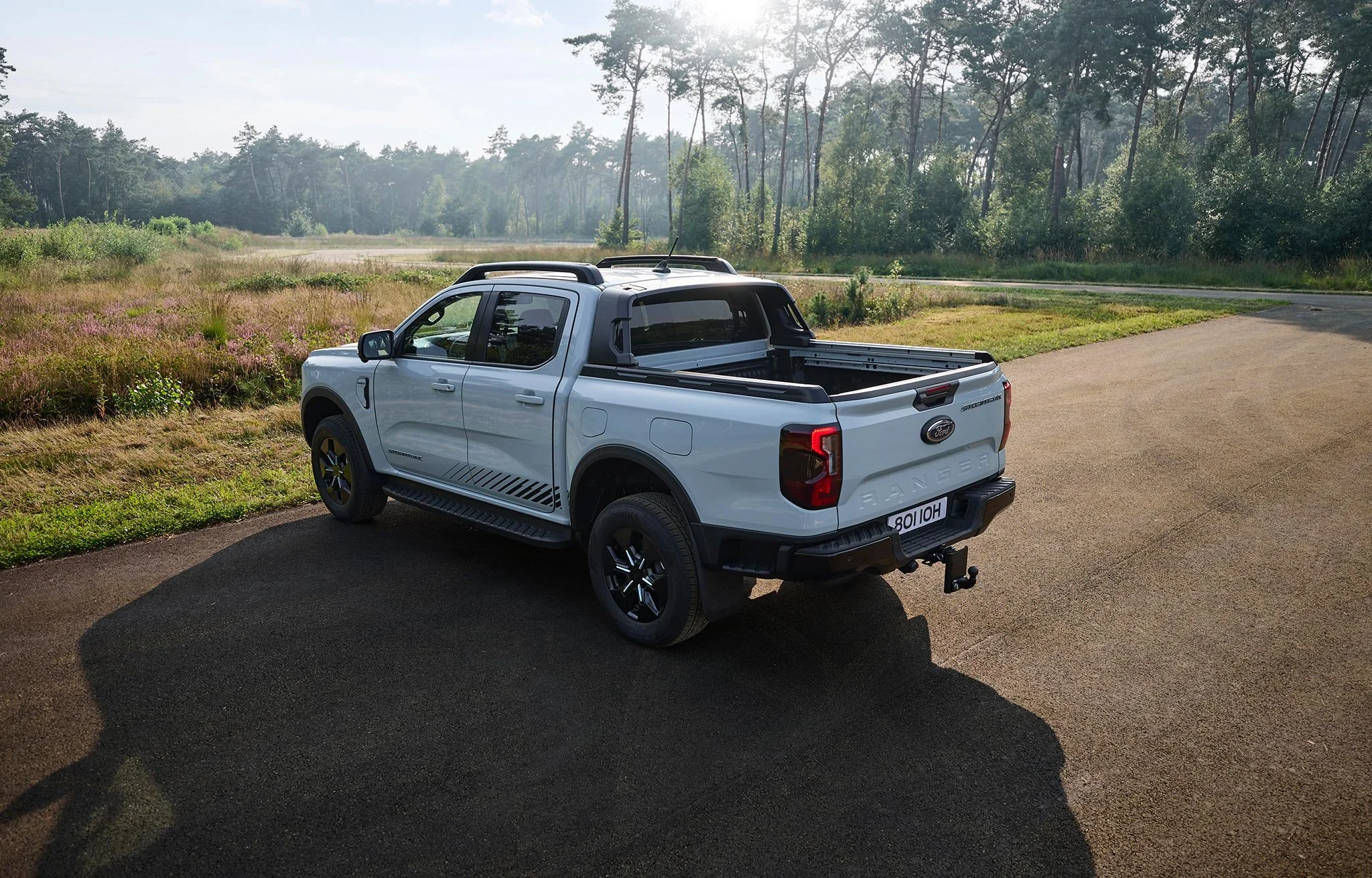
I like the Wildtrack model. Granted, this bumps up the price to £44,900 (June 26), but it makes the Ranger feel and look really smart. Farmers, builders, forestry workers etc probably won’t go for it, but for those of you who fancy the Ranger PHEV as an alternative to a standard car, it’s the one to go for. You get additional kit, inside and out, including a powered driver’s seat, a heated steering wheel, a 360-degree camera with trailer reversing guidelines, additional underbody protection, soft ride suspension, and some neat styling touches.
Driving Experience
The Ford Ranger has always been one of the better pick-ups on the road (and off-road), and the PHEV version is also good. The petrol engine doesn’t have the growl of a V6, but that means you have seriously refined motoring. Sprinting from 0-60mph takes 9.2 seconds. When it comes to handling, you know that this is a hefty vehicle — 2,560 tonnes — as it rolls slightly when cornering, but the plus side is that the ride is decently cushy.
And yes, it’s also extremely capable off-road. The all-wheel drive will get you through most rough stuff, and if things get really bad, you can engage a low-ratio box. The Ranger can even wade through 800mm of water.
Should you buy one?
Unless you’re desperate to have a Ford Ranger with V6 power, the 2.3-litre PHEV is the one to go for. It makes sense both for businesses and private customers. Good to drive, nicely equipped, hugely versatile, and economical (for a pick-up). Over half of all pick-up trucks sold in the UK last year were Ford Rangers. With the arrival of the PHEV version, that number will climb.
words: Graham Courtney
pictures: Ford
