
Range Rover Sport SV Review - Taming the Beast
It’s hard to believe that Land Rover’s Range Rover has been with us for almost 60 years. It was 1967 when the first trial models hit the road, although it wouldn’t be until 1970 that the finished article went on sale.
It was a 3-door model only - two doors and a hatchback - and is now referred to as the Range Rover Classic. It was Land Rover’s opening attempt to produce a car that had the ability to be a true off-roader whilst having car-like characteristics.
Fast forward to today and while the latest Range Rover still follows that tradition, it’s now a very different beast which, rather than ploughing its way along muddy tracks and soggy fields, is more likely to be seen doing the public school run, parked outside a Michelin star restaurant or being used as a limo for Hollywood A-listers, diplomats, company bosses and government ministers. To say it’s luxurious is an understatement.
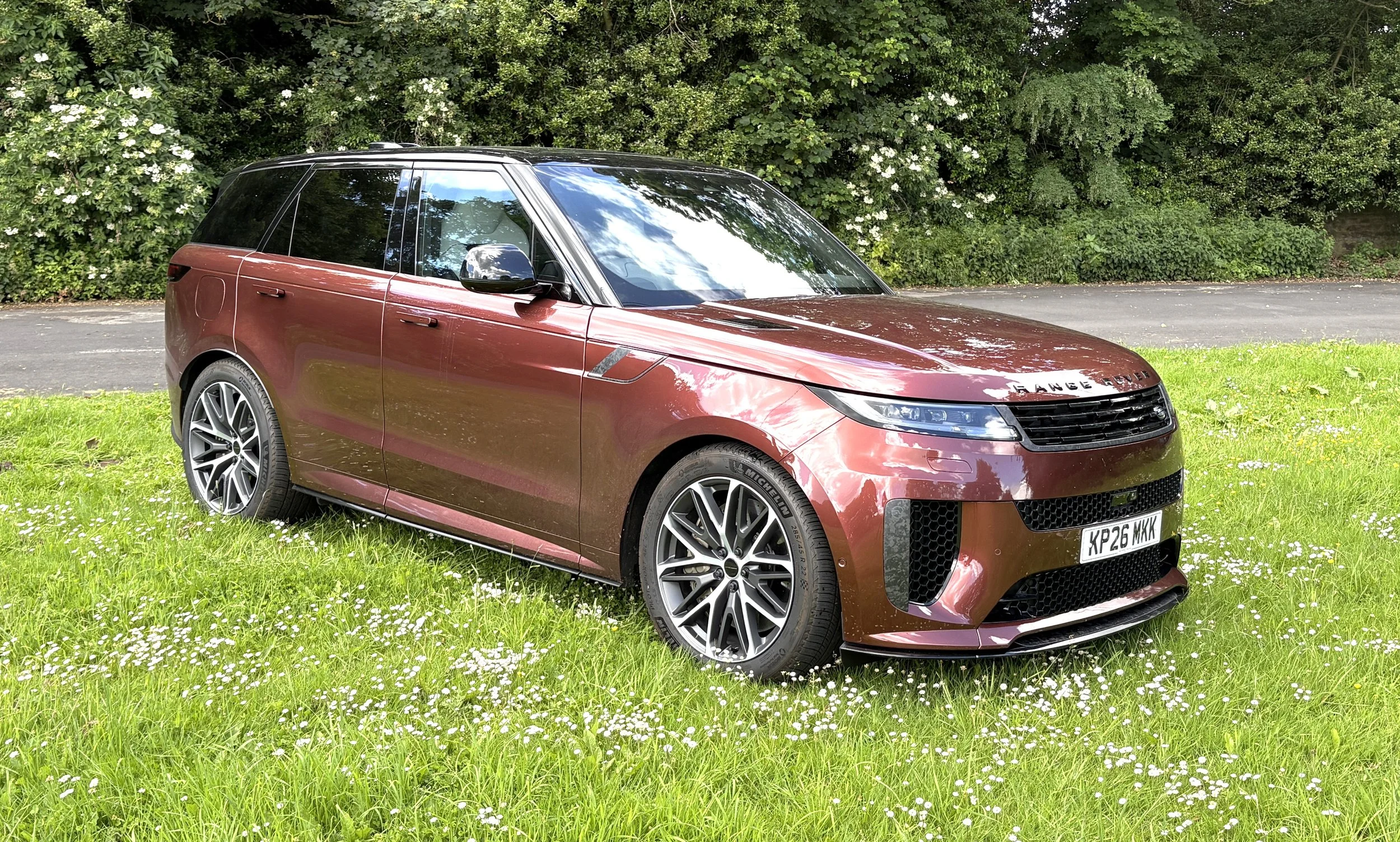
Few will ever sample the true abilities of a Range Rover, especially if it’s this one: the latest high-performance Range Rover Sport SV.
Powertrain & Performance
Let’s quickly go through the figures which show what an incredible piece of engineering this is, bearing in mind that it weighs over 2.5 tonnes.
Under the bonnet, a twin-turbo 4.4-litre V8 petrol engine provides the oomph. This replaces the supercharged 5.0-litre V8 lump from the predecessor known as the SVR, which invariably found itself painted in fluorescent blue. Land Rover skipped developing its own engine and has sourced this new unit from BMW. The power output is 626bhp and a 0-60mph sprint comes up in 3.6 seconds, while its top speed is 165mph. Yikes. Land Rover reckons you can get just under 24mpg, although the best I managed was 20.1mpg, and that was going steadily for the majority of the time. Everything goes via an 8-speed auto ‘box and, obviously, you get all-wheel drive.
Driving Experience
There’s also seriously clever four-wheel steering. I say clever because at lower speeds, the rear wheels turn in the opposite direction to the front wheels. This means this sizeable car is simple to park and negotiate tight spaces. You can feel the rear end tuck in. However, pile on the speed and the rear wheels now move in the same direction as the front pair, all of which means, despite its size, this SV Range Rover Sport is surprisingly agile on the quicker stuff. You can make full use of the performance and happily throw it around. The adaptive suspension lowers the car as you build speed. The bonus is that the ride is uncannily smooth, although you can stiffen everything (and sharpen the throttle response) by selecting Dynamic or SV modes. Land Rover refers to the suspension as 6D, which means the car’s computers control what engineering boffins refer to as the six movements that a car makes — pitch, yaw, vertical, longitudinal, lateral and roll. So now you know! Use it at the next pub quiz. It also helps when it comes to off-roading.
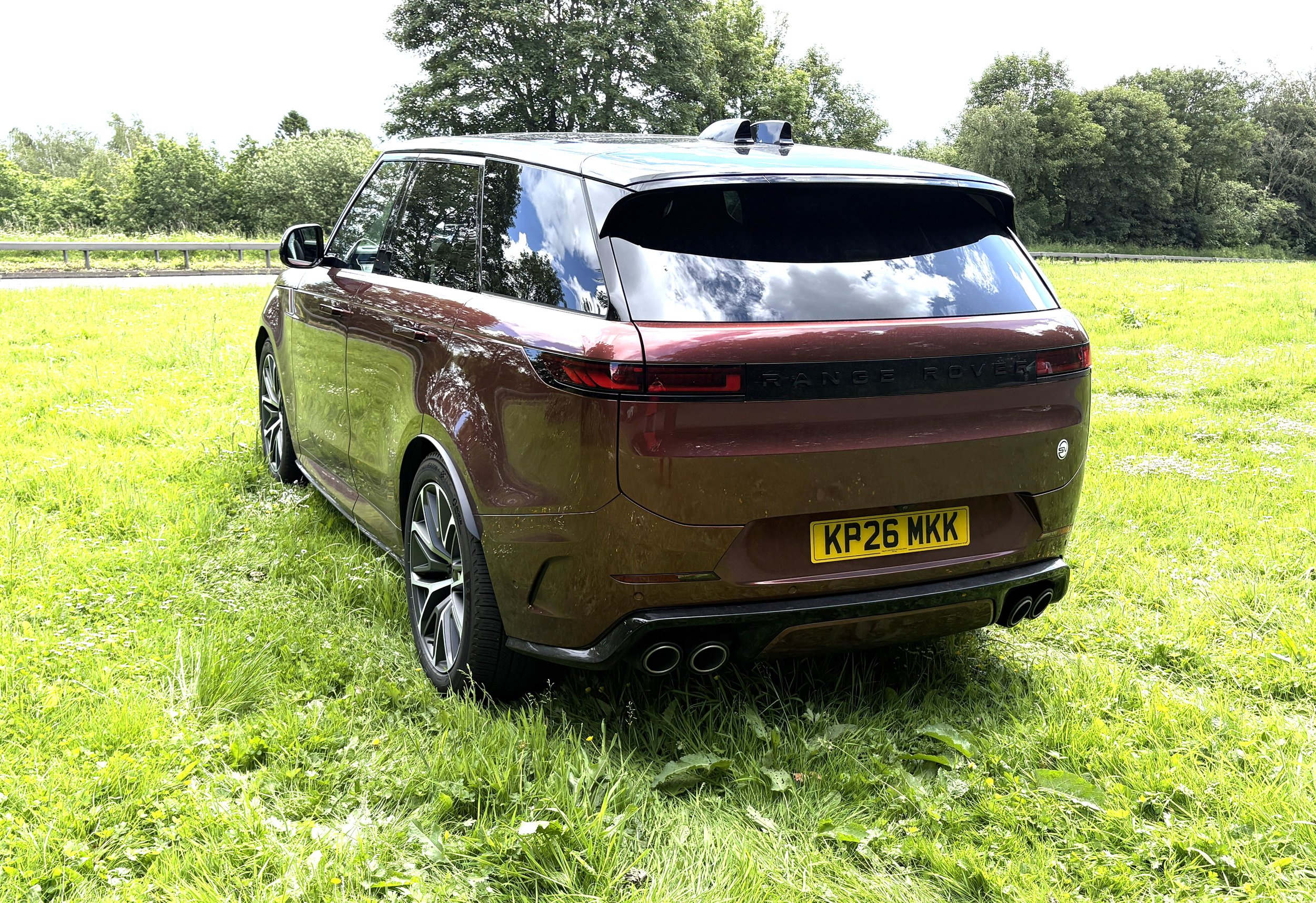
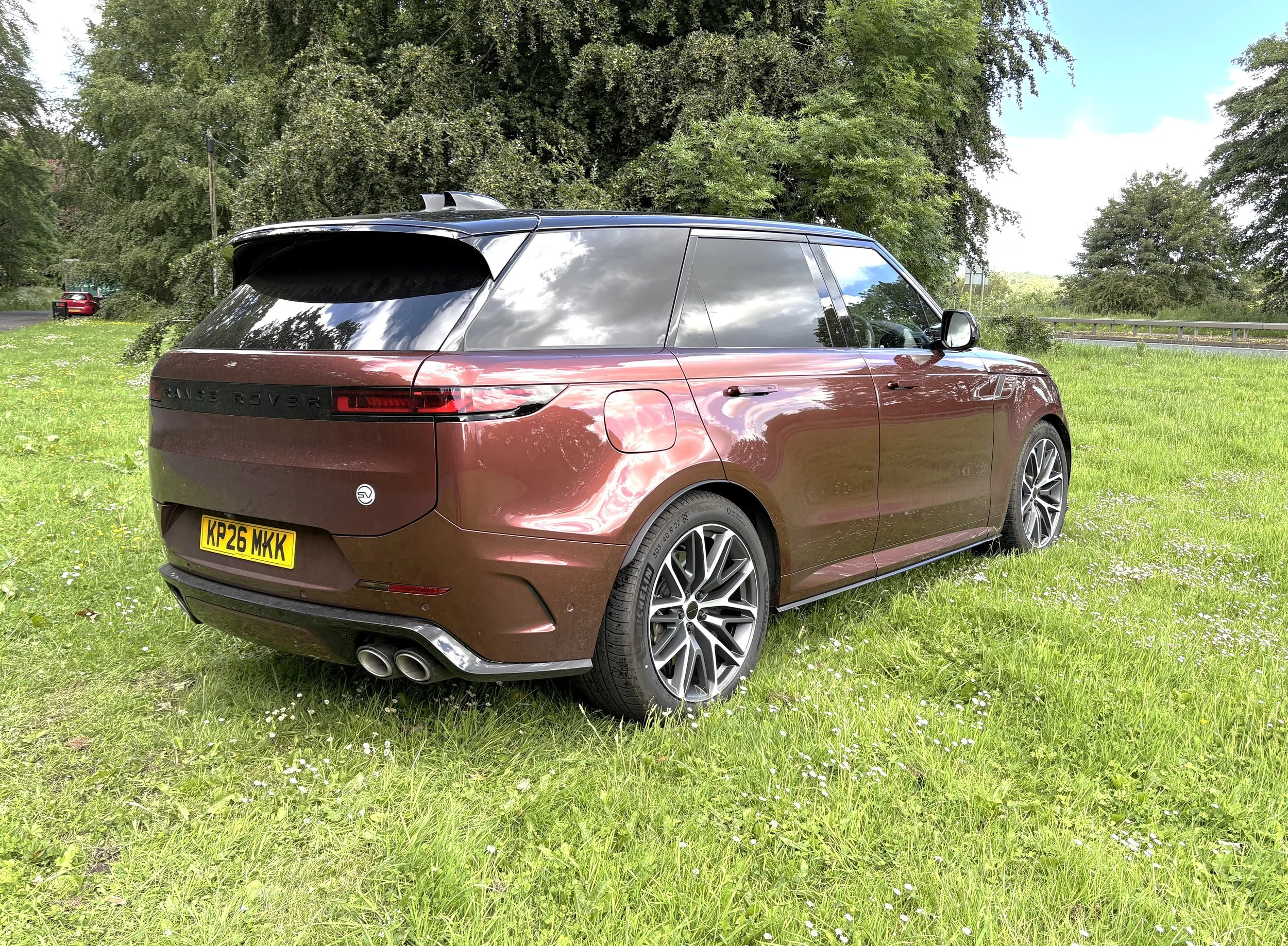
Oh, and the sound you get from the quad exhaust is lovely, although you can turn it down via the central touchscreen, which is something I imagine your neighbours will appreciate. You’ll soon turn it up again when hitting the main road. It’s not as rowdy as the old SVR, something that new owners will either appreciate…or sadly miss.
This sort of sums up this new performance Range Rover Sport SV. The SVR model was a hooligan and could be a bit of a handful. Land Rover has softened this SV model. It drifts along at town speeds using the very mild hybrid set-up, and everything is so hushed that you don’t notice when the V8 bursts into life.
Floor the throttle, the V8 takes a deep breath, and you hurtle to the horizon, accompanied by a glorious soundtrack. In fact, this hefty SUV will show a clean pair of heels to most performance cars, and it’ll leave many of them standing on a twisty mountain road.
Exterior
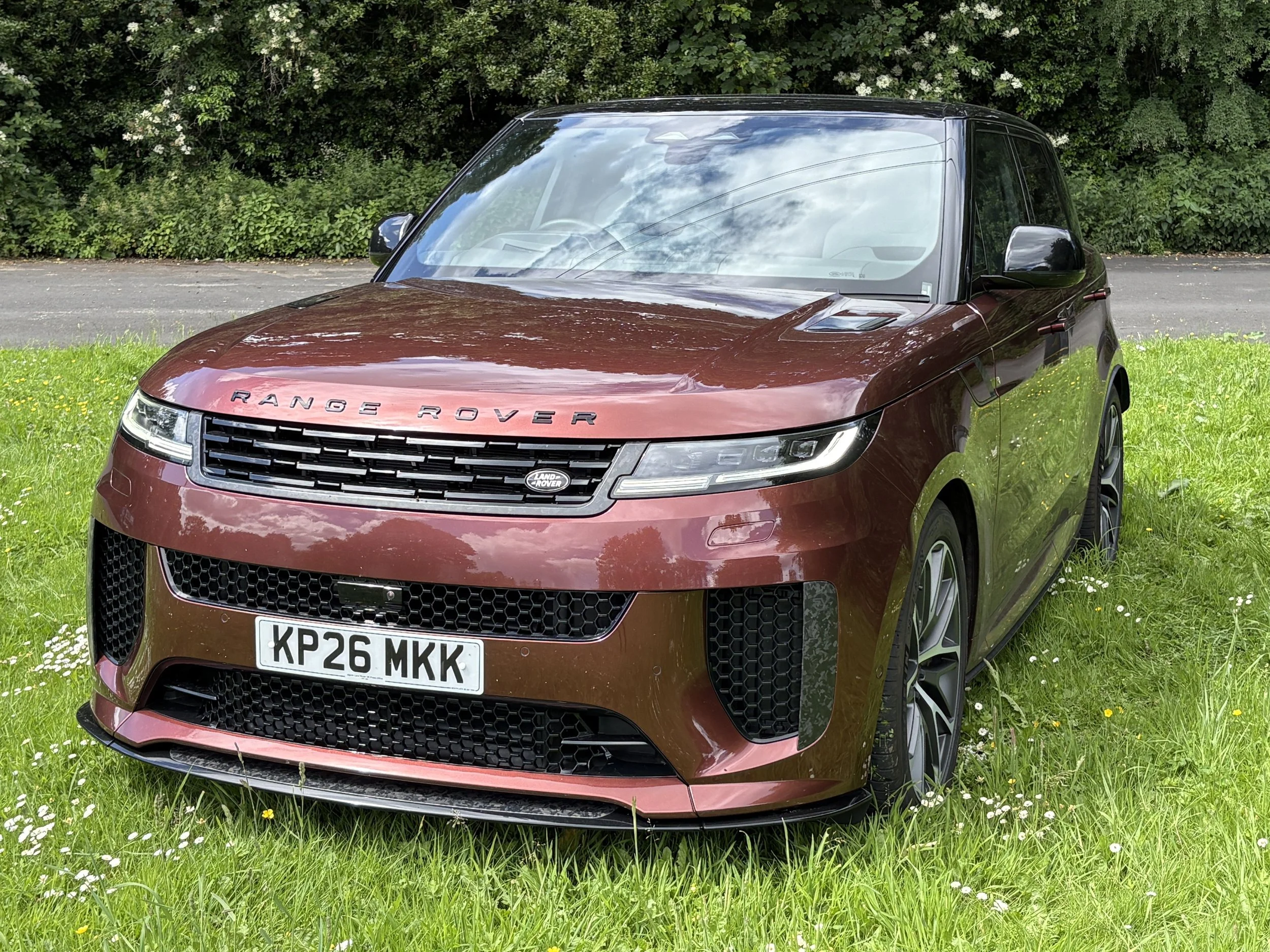
Outwardly, the SV version of the Range Rover Sport looks very much the same as other models in the line-up. But look carefully, and you’ll notice the front spoiler is deeper, there’s a larger rear spoiler, and the rear wheel arches are pushed out to accommodate the enormous 22 or 23-inch alloys. Still looks super stylish though.
Interior
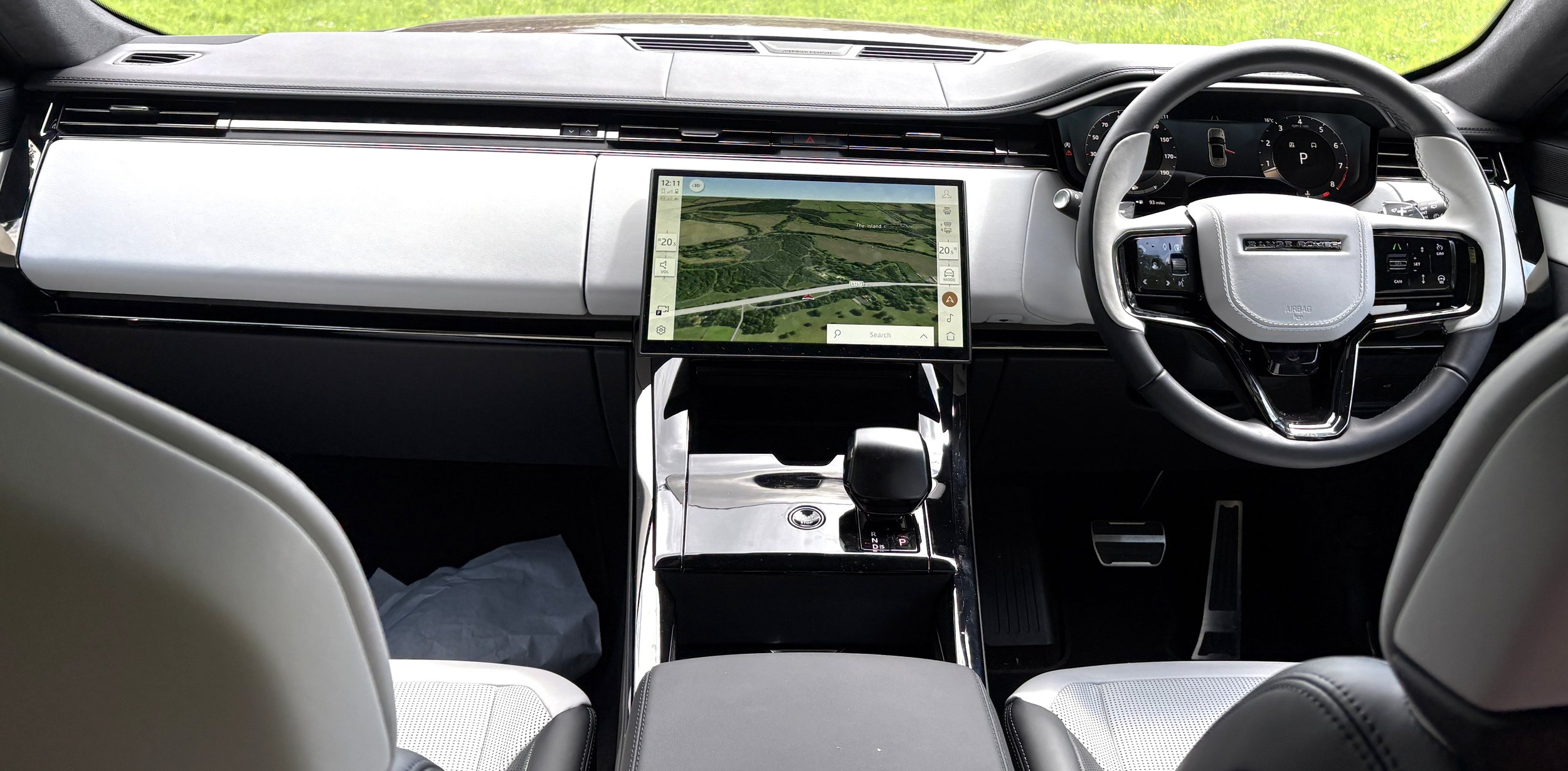
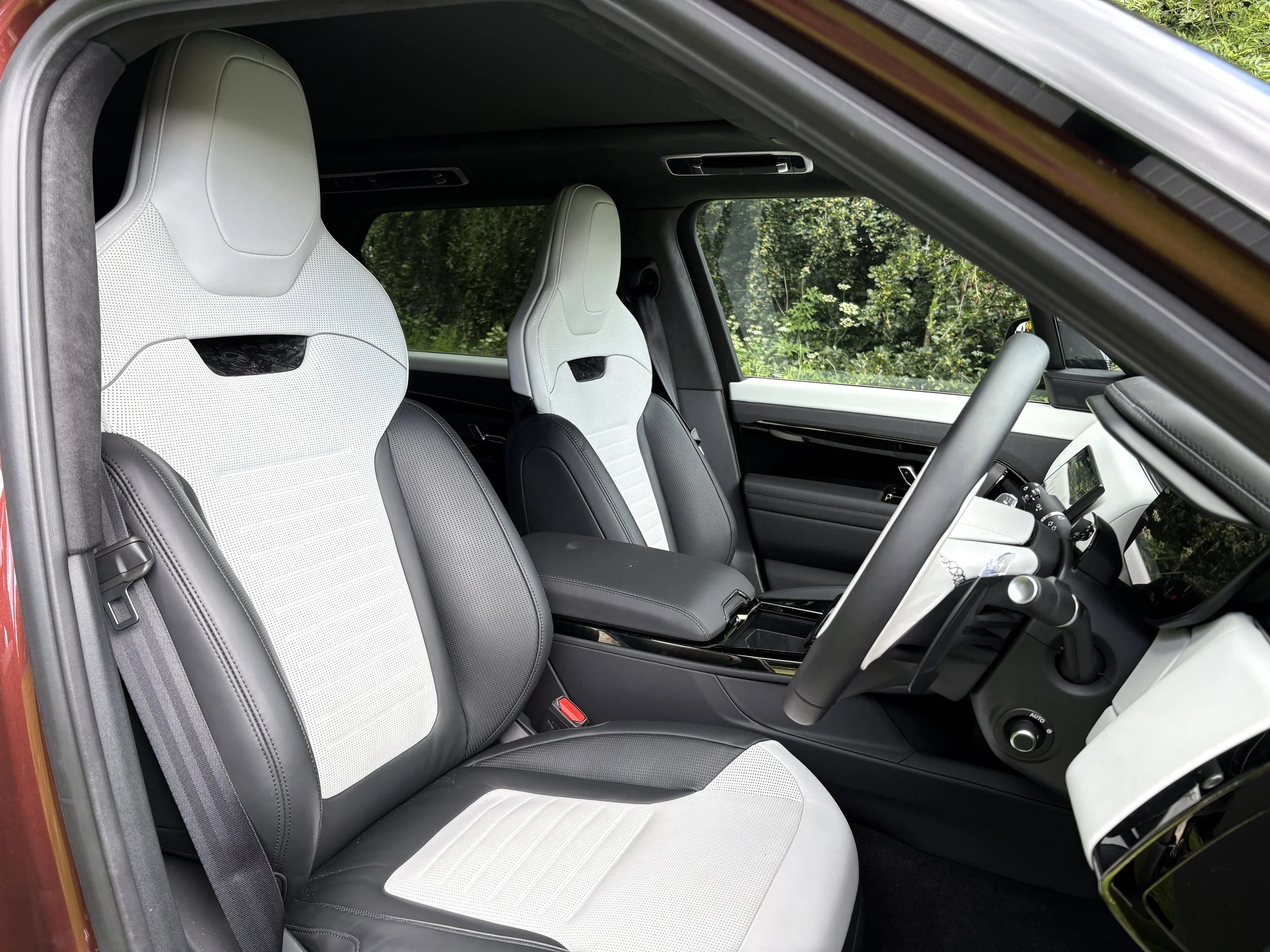
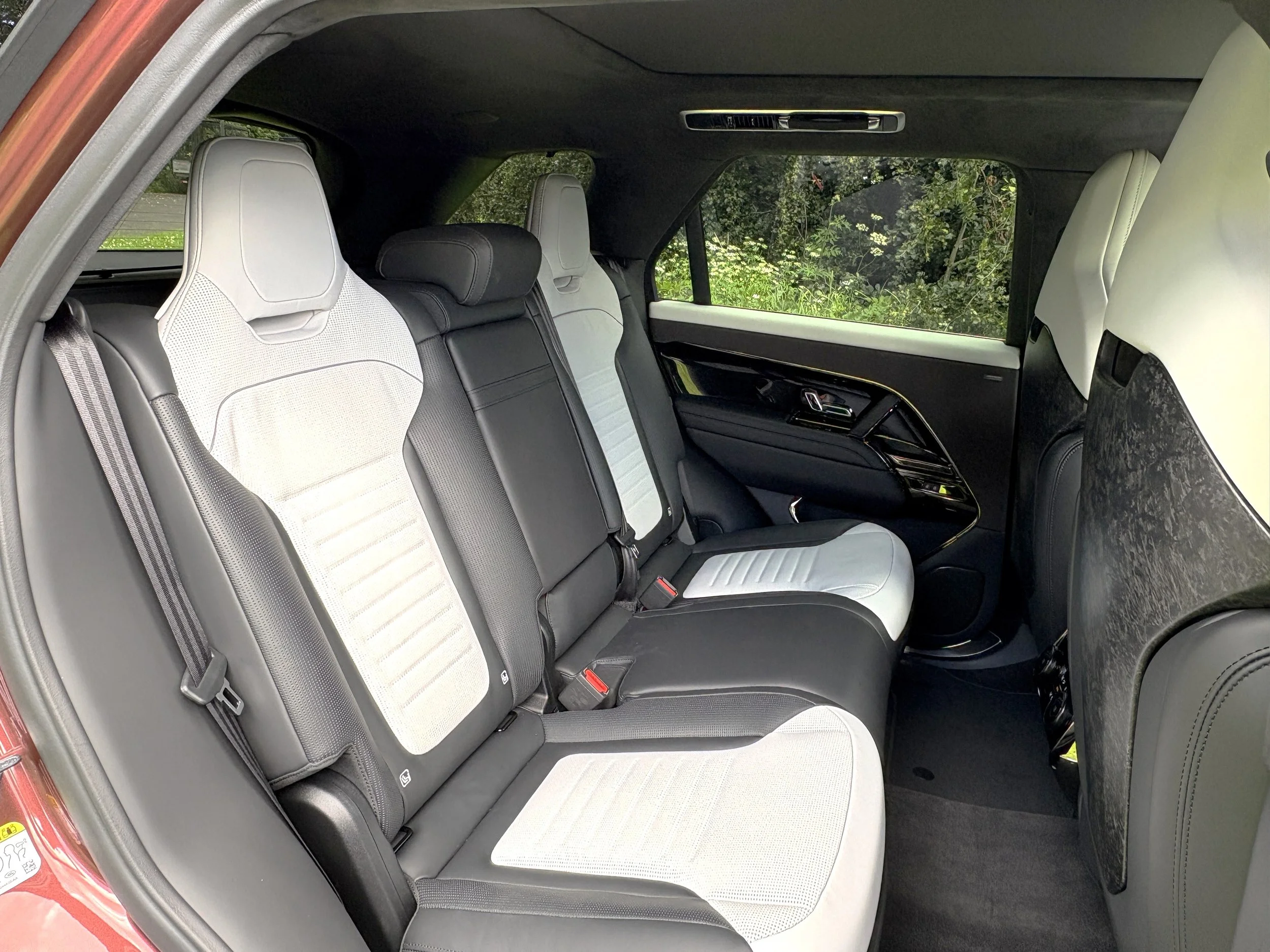
Hop inside and it’s like entering a boardroom. Understated elegance. If you were expecting seven seats, you’ll be disappointed. The benefit is that the boot capacity is a useful 647 litres. The rear seats will easily cope with three adults.
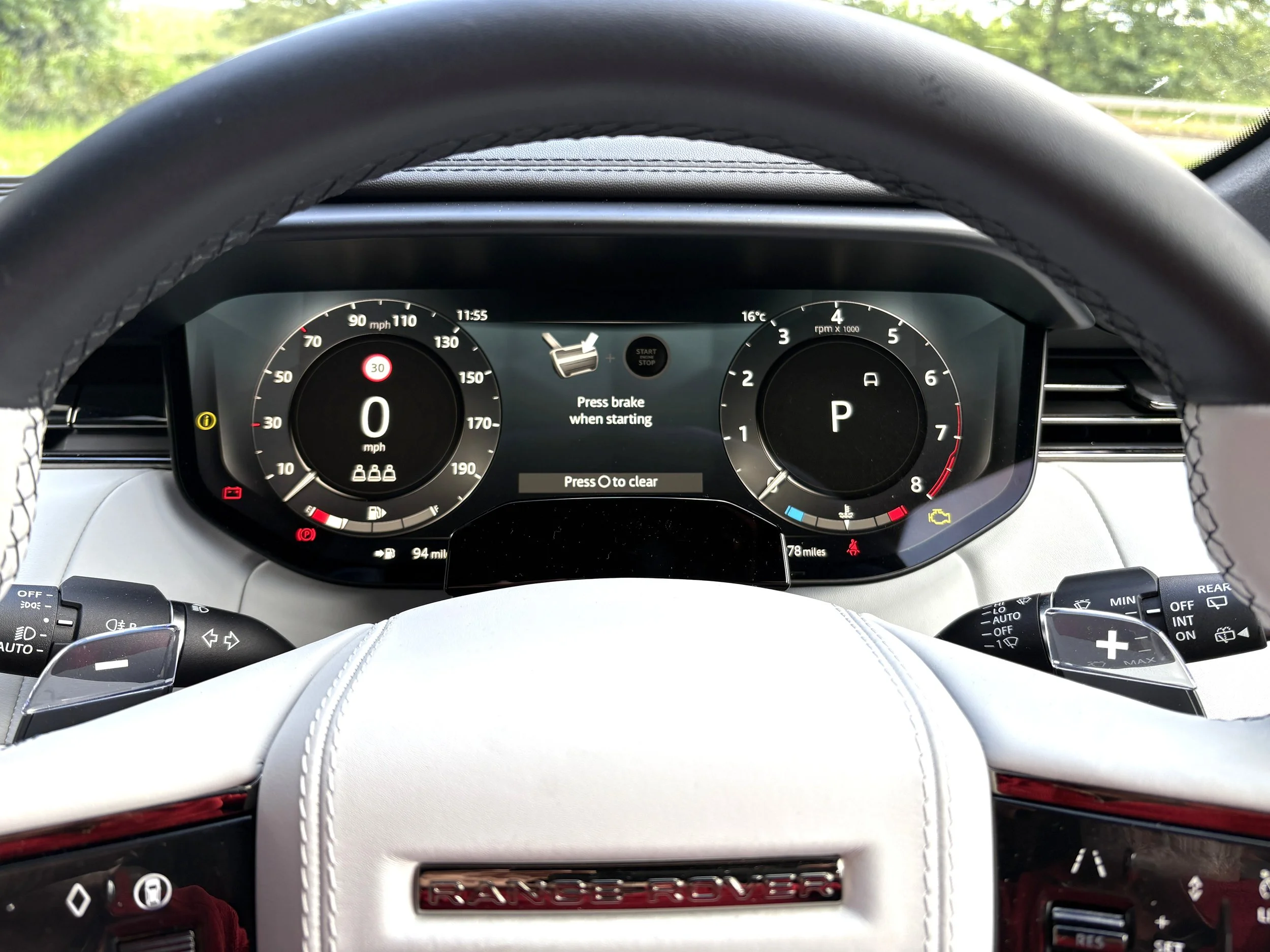
In terms of kit, you get everything that you’d expect at this level, including a 13.1-inch Pivi Pro central touchscreen. It’s slick, looks good and has plenty of shortcut tabs down the side. Pity there aren’t more proper buttons. The Meridian sound system is terrific.
Trim Levels & Prices
There are three SV Rangies available. There’s an entry-level SV model followed by Black SV, and at the top end there’s the Carbon SV. I had the ‘standard’ SV, which has a starting price of around £140,000 (June ’26). It’s very easy to load on the options and the expense. My particular model was fitted with ceramic brakes at an added cost of £7,000. Then there was the Sunrise Copper paint finish (£7000), carbon fibre exterior bits and pieces (£4100), front seats with a carbon fibre rear (£1590), sliding panoramic roof (£1400), etc. In fact, by the time Land Rover had finished loading on the goodies, the price had soared to £163,715. Wow. Go for the Carbon model and you’ll kick off at £165,000. This is one expensive Range Rover Sport. You can even get a bit of kit called Body and Soul Seat (BASS) technology. Pump some of your favourite tunes through the audio system and you’ll get haptic feedback through the seats and floor coverings. Land Rover encourages passengers to slip off their shoes and feel the vibrations through the deep carpets. As you do. Blimey.
Quick word about the ceramic brakes. If you are in the market for this Range Rover Sport SV, I’d try to ensure that you get a test drive in one with ceramic brakes and one without. I haven’t tried the latter, but while I have no doubt the ceramic brakes will swiftly bring this 2.5-tonne monster to a halt, they are rather grabby. You need to feather the brake pedal at town speeds; otherwise, when you initially press the pedal, you can feel a judder as the brakes take hold.
Concluding Thoughts
The bottom line is that this is one of the best cars Land Rover has ever built…and they’ve had some beauties in their time. Few cars can match the blend of performance, luxury and go-anywhere ability of the Range Rover Sport SV. But it’s also a pussy cat when you want to take your time and enjoy the scenery or pootle around town. Resist the temptation to use the available performance and it feels just like the rest of the Range Rover Sport models. It really is that good.
words: Graham Courtney
pictures: Land Rover
