A New Abarth 500 Could Return as a Petrol-Powered Hybrid Hot Hatch
The launch of Fiat's new mild hybrid 500 could be followed by the reintroduction of a petrol-powered Abarth variant, but there's a big technical challenge to overcome first. Sam Sheehan has been talking to Gaetano Thorel, the head of Fiat/Abarth Europe, to find out more.
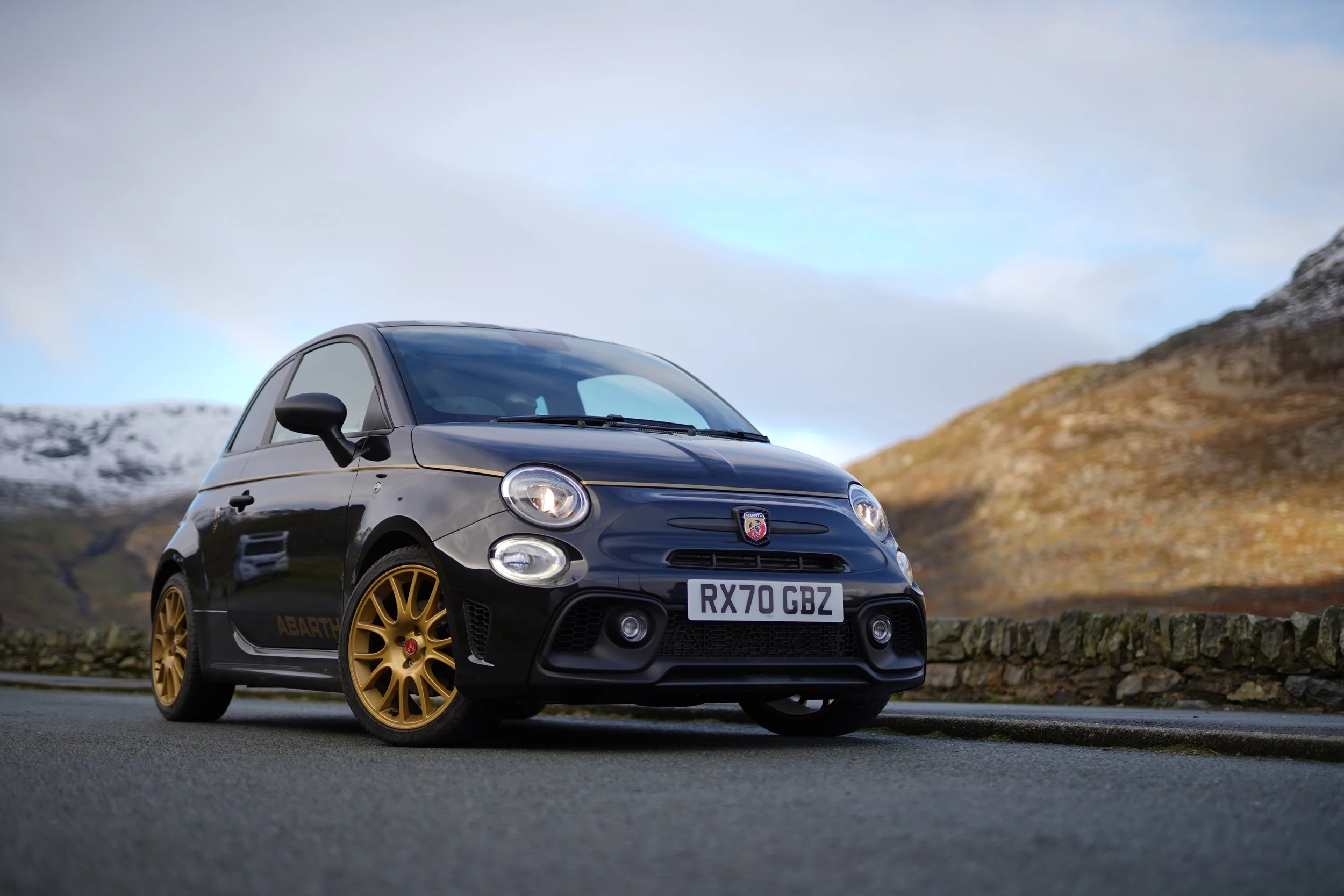
Abarth is seeking to bring the petrol-powered 500 hot hatch back into production using the reworked base of the new Fiat 500 Hybrid and a tuned-up version of the 1.2-litre three-cylinder found in other Stellantis group products. Speaking to Driven at the launch of Fiat's 2026 supermini, Head of Fiat/Abarth Europe, Gaetano Thorel, said his team was "studying if [it] can find a way to fit a proper engine in the 500, and make it a true Abarth". That'll be music to the ears of Abarth fans still not yet over the brand's previous commitment to go all-electric.
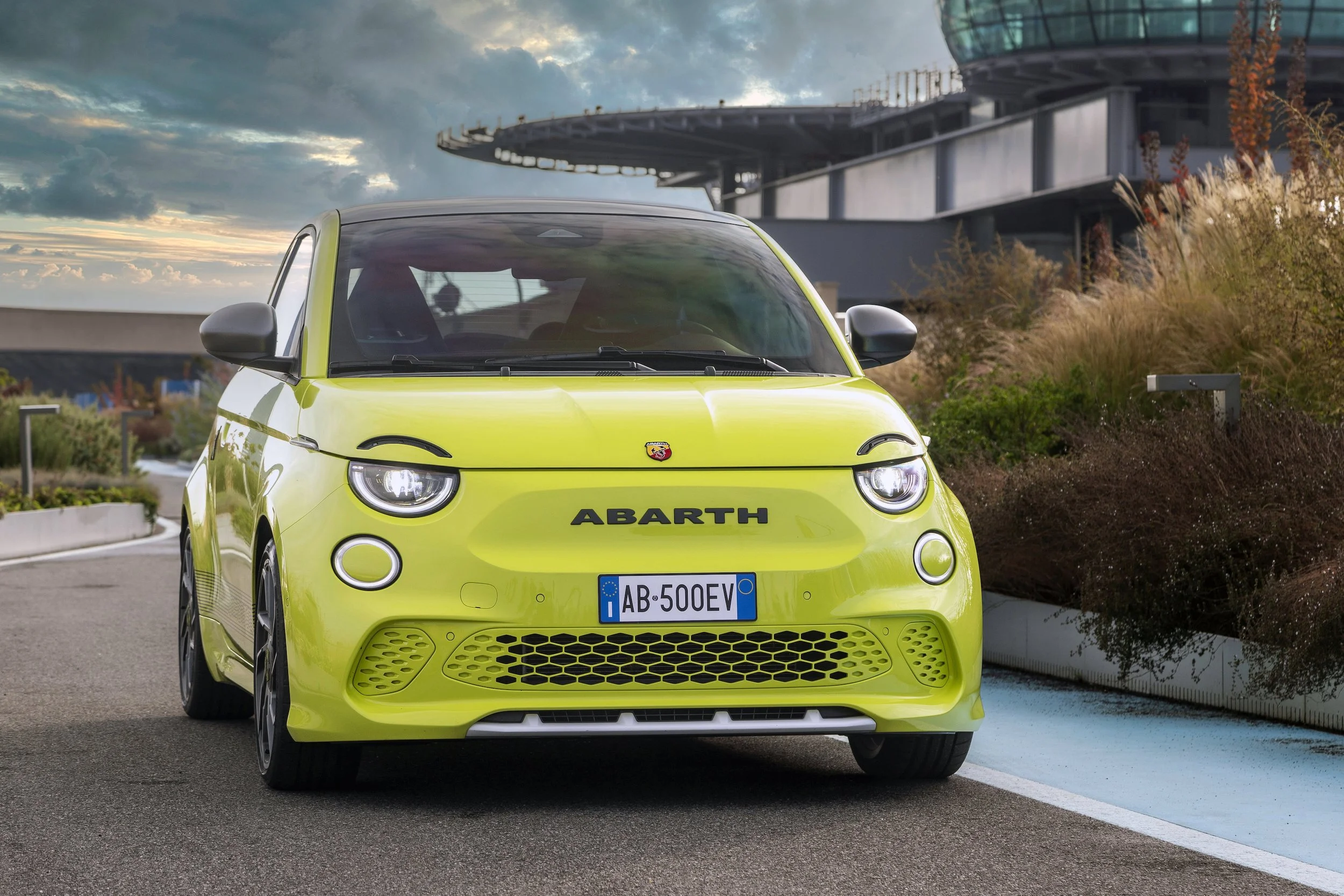
"It's a study [at the moment] because unless we find a way to fit a proper engine that can deliver a real Abarth experience, then we may manage to do it," Thorel said. "But if we don't find a technical solution first, we can't commit. If we don't, we will not do it."
When pressed on what engine could fit into the 2026 500's reworked bodyshell, Thorel suggested the options were very limited, not least because the previous Abarth model's 1.4-litre turbocharged engine is too large for the new shell. It's probably too' dirty' as well, in a CO2 sense, meaning a three-cylinder is likely to be the only option. But the 1.0-litre triple aboard the new Fiat 500 Hybrid - which itself is a reworked version of Fiat's 500e, created in response to slower-than-anticipated electric vehicle demand and a delaying of EU and UK restrictions on new petrol models - probably won't do the job.
"It has to be an engine that delivers the power enough for an Abarth," said Thorel dismissively when I asked whether the 1.0-litre could be tuned up in an Abarth. "We are trying, we are studying."
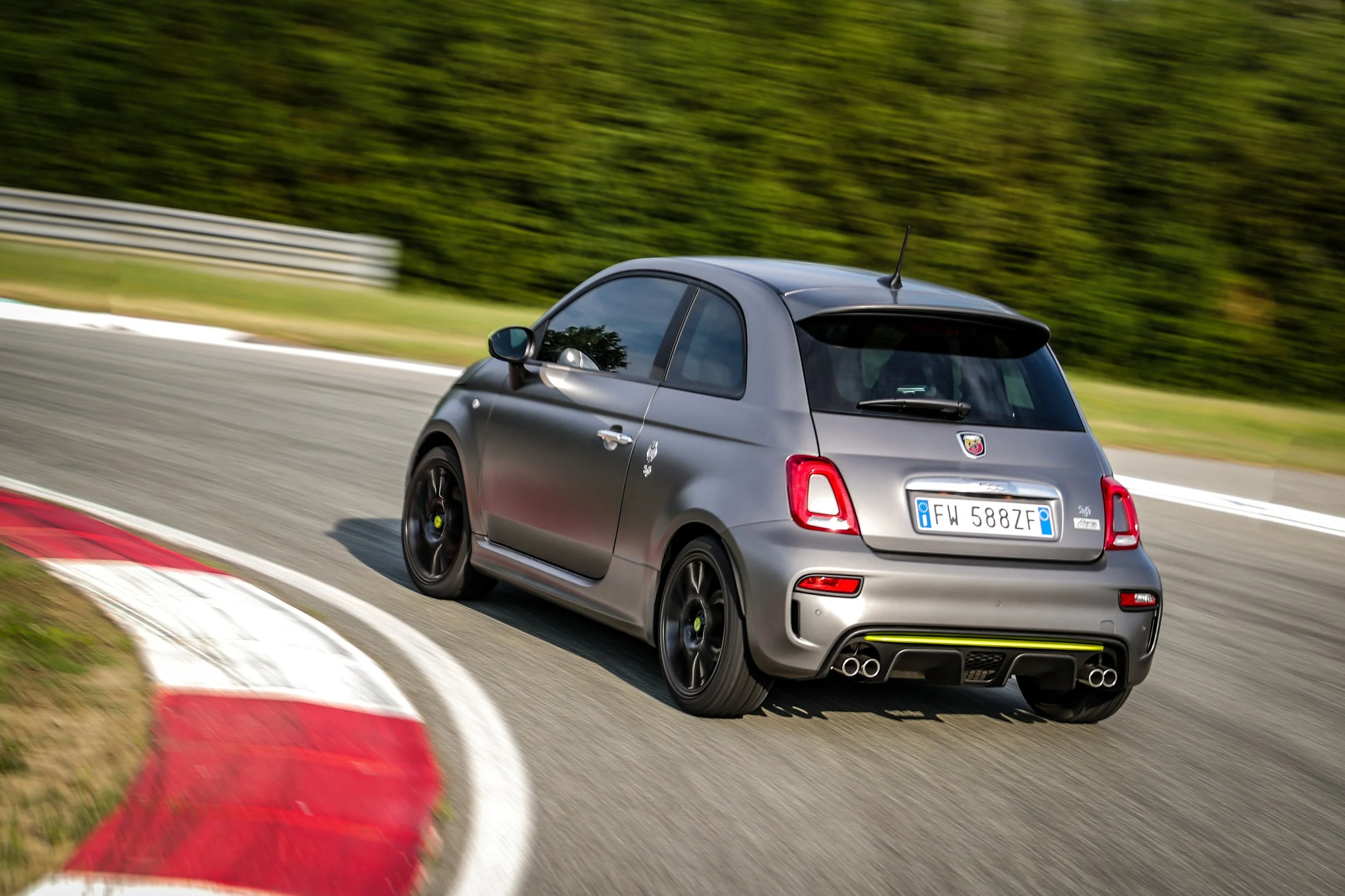
The most obvious next answer is the 1.2-litre three-cylinder petrol engine found in Stellantis group cars like the slightly larger Peugeot 208 and Fiat 600, where it produces 136hp and comes with a six-speed auto. A more performance-focused version of this 48-volt electrified triple, be it via engine or integrated starter-generator enhancements, could give Thorel and his team a mechanical setup with muscle to match that of former Abarth 500 models. These came with 145hp and 160hp respectively, and sat below the range-topping 180hp 695 variants.
Thorel was happy to hint that the 1.2 mild-hybrid option was already being lined up for his team's Abarth 500 feasibility study, stating that "it'd be great", before adding that "it depends if it fits". In answer to my question of whether it'd need more power, his response was an honest: "Ideally, yes".
Consider that the old entry-level Abarth 500 had just 10hp more than Stellantis's 1.2-litre mild hybrid, and it's easy to imagine a few tweaks, like clever breathing and exhaust modifications, along with a tweaked map, could raise the 1.2 setup to, or even beyond, 145hp. Emissions, miles per gallon and reliability would all have to be factored in, but Abarth's engineers know a thing or two about extracting more performance from a mechanical setup.
Clearly, the space issue is the bigger challenge, because while the new 500 base is 60mm longer than the old platform, the fact that it was never originally designed to use an internal combustion engine means front-end packaging is slightly compromised. Fiat's engineers managed to make it work with the naturally aspirated, 12-volt mild-hybrid-powered new 500, giving it a different underside that swaps a battery pack for a floor that holds new wiring, pipework, and an exhaust system. But all these components are pretty compact on Fiat's 64hp and 1,055kg model.

An Abarth variant with close to 100hp more would naturally need extra space cleared for bigger components, which is something the platform - complete with its more spacious, higher-tech interior - can't offer much more of. But if it could be made to work, and - special request from me, Abarth - if it could come with the Torsen limited-slip differential that's used very effectively by the fully-electric 600e, we could have ourselves one heck of a driver's car again. Sure, old Abarth owners might miss the gruff note and boosty punch of the former model's turbo 1.4, but an electrified triple can be effective enough. It certainly gives the 208 plenty of character.
Abarth has good reason to think its efforts will be more than worthwhile too, as sales of the 500e in both its performance and also Fiat's non-performance variants have so far represented such a drop off in demand (more than 80% for the Abarth!) compared to the old petrol cars, that production at the Mirafiori plant in Turin has substantially slowed. On the 500 Hybrid launch, Thorel was keen to report that Fiat's biggest factory would be returning to full speed again with the reintroduction of the hybrid petrol 500, lifting output to 100,000 units per year again. Given how popular the old Abarth versions were, you can imagine how keen execs must be to achieve another boost to productivity with a combustion-engined hot hatch. Here's hoping the engineers can find a way to make it work.
words by Sam Sheehan
photography Fiat/Abarth