

Is bigger better?
On the other side of the pond in the land of Donald Trump, that seems to be the case. It certainly applies when it comes to their cars. The Ford F-Series pick-up truck has been the USA’s top selling vehicle for 41 years. The most popular engines are a 3.5-litre V6 petrol and a 3.0-litre V6 diesel.
And Trump wonders why we don’t buy cars like that here in Blighty. We don’t buy fuel guzzlers in big numbers, and cars of that size wouldn’t fit our cramped streets.
But hang on, latest figures show that bigger might not be better because the Ford F-Series is about to be dethroned by the Toyota RAV 4.
So why has Volkswagen decided to relaunch the Tiguan Allspace as a standalone vehicle? Please welcome the Tayron, pronounced tie-ron.
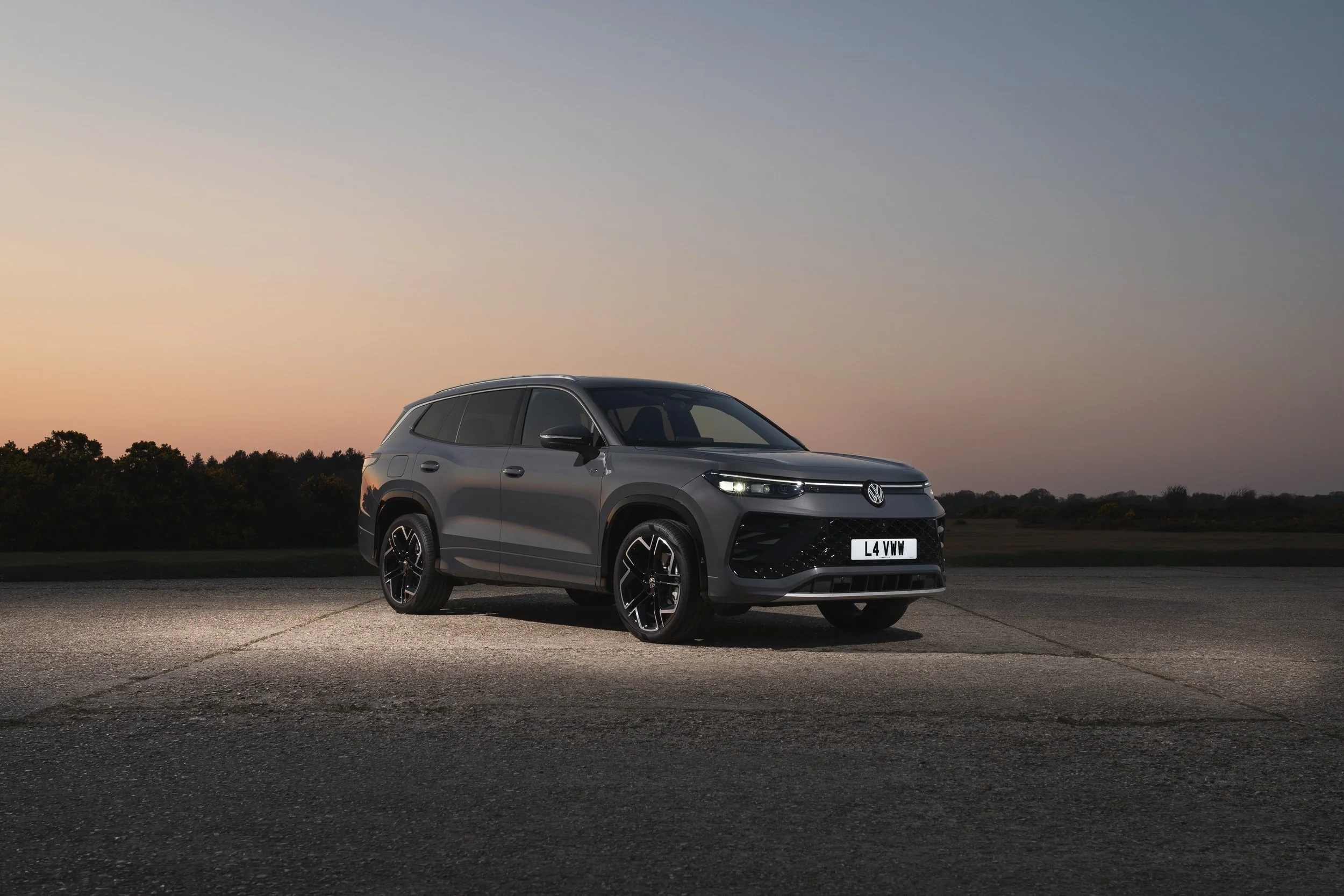

This is wider, taller and longer than a Tiguan, and can carry seven people
When you compare it to the Tiguan, which is one of VW’s best sellers, it’s higher, wider and longer. Okay, the height and width increases are marginal, but the extra 25cm in length, shared between the wheelbase and the extended bodywork, means a third row of seats can be squeezed into the boot space, plus there’s additional knee room for everyone.
So, in a nutshell, it’s a stretched Tiguan which slots in nicely between the standard 5-seater model and the Touareg.
The only drawback to the range is that if you go for the PHEV plug-in hybrids, you lose the third row. The battery simply takes up too much space.
Powertrain choices
As well as offering a choice of five or seven seats, you also get a cracking choice of powertrains including petrol, mild-hybrid, PHEV and (shock) diesel. A 1.5-litre 147bhp eTSi engine gets the range underway, while there’s certainly a place for the diesel powertrain for those of you who intend to travel with a decent load or seven occupants regularly. There’s a choice of 147bhp or 190bhp engines.
The top end of the Tayron range is reserved for a 2.0-litre petrol unit with either 201bhp or 262bhp outputs - both get AWD. They’re the quickest of the Tayrons with the 262bhp model hitting 60mph in 6.1 seconds.
If you do a fair amount of urban driving, I’d point you in the direction of the two plug-in hybrid (PHEV) models because they’ll manage a shade over 70 miles using battery power alone. This is handy, especially if you have access to cheap electricity or a free charger at work. Both have a rechargeable battery powering an electric motor mated to a 1.5-litre petrol engine, which when added together, gives you either 201bhp or 268bhp, depending on the one you go for. VW predict that the smaller of the PHEVs will be the biggest seller in the UK.

Trim levels & driving experience
Five trim levels are available depending on which engine you go for - Life, Match, Elegance, R-Line and R-Line Edition.
The 1.5-litre eTSI petrol model in 7-seat guise kicks things off with a starting price of £40,130 (July 25). It’s probably a bit underpowered if you want to use all seven seats. I had the 201bhp eHybrid PHEV model, which adds a fair lump to the price (£44,015), so you need to do your maths as to whether the improved mileage (a laughable 733.1mpg according to Volkswagen, why do they do that?) will work out cheaper than the extra dosh. VW say the entry-level 1.5 should manage 46.5mpg while the PHEV model we had got very close to 100mpg with some steady driving and making the most of the electric motor. Go find the abacus.
It's worth noting, as I mentioned earlier, that if you do a high mileage and with a decent load, the 2.0 litre TDI is worth a look. It’s around a grand more than the cheapest petrol Tayron, yet will easily crack 50mpg. The 0-60mph time of 9.2 seconds is only a shade slower than the 201bhp PHEV, which manages the sprint in 8.6 seconds.
Out on the road, the Tayron feels really planted. It may be a big car, but it can easily cope with being chucked around. There’s very little body roll if you do some quicker cornering. Motorway journeys are seriously relaxing and it’s worth noting that the cabin is eerily quiet. The unflustered way in which the Tayron goes about its business makes it feel quicker than the figures suggest. Effortless cruising is a forté.
Interior & kit
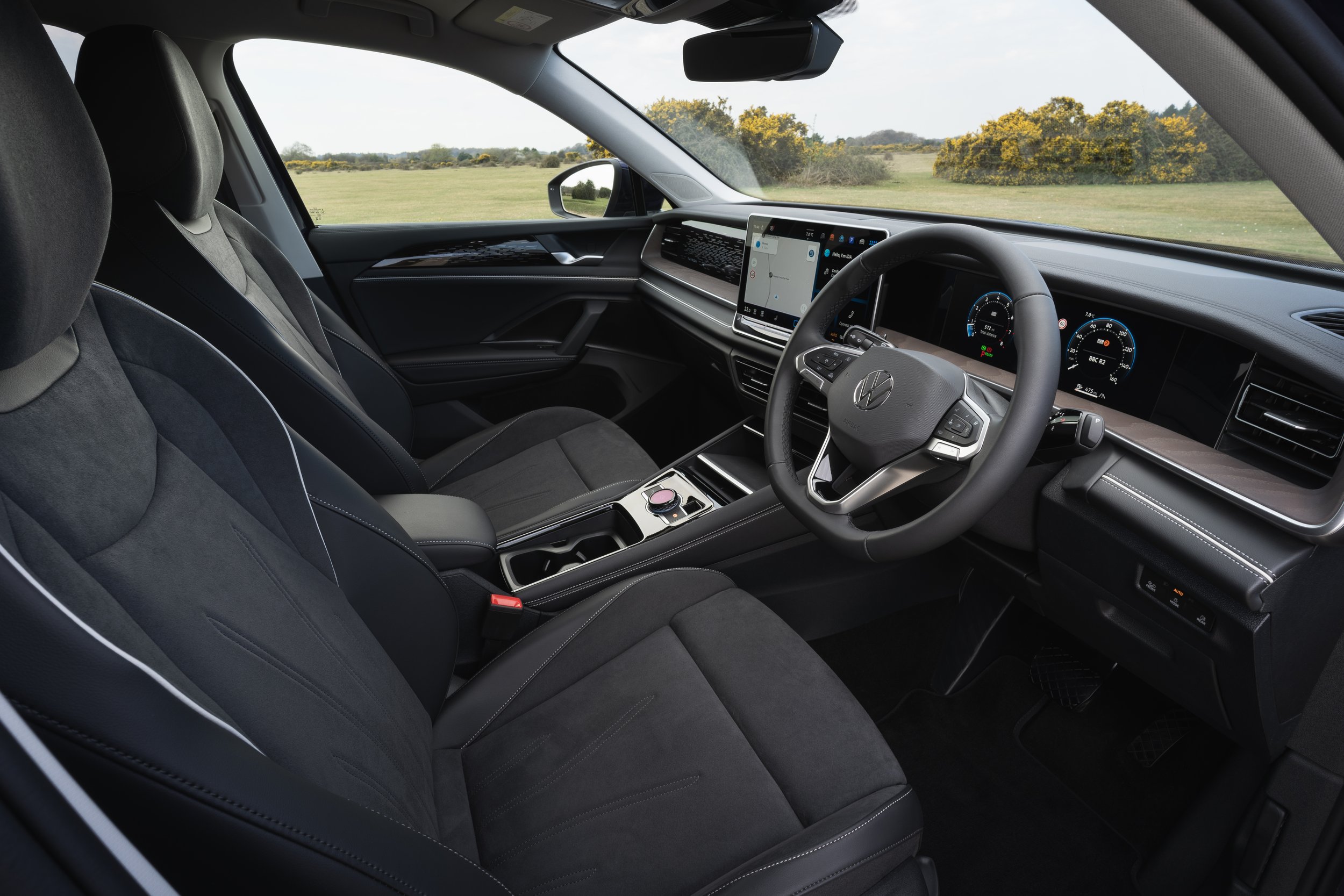
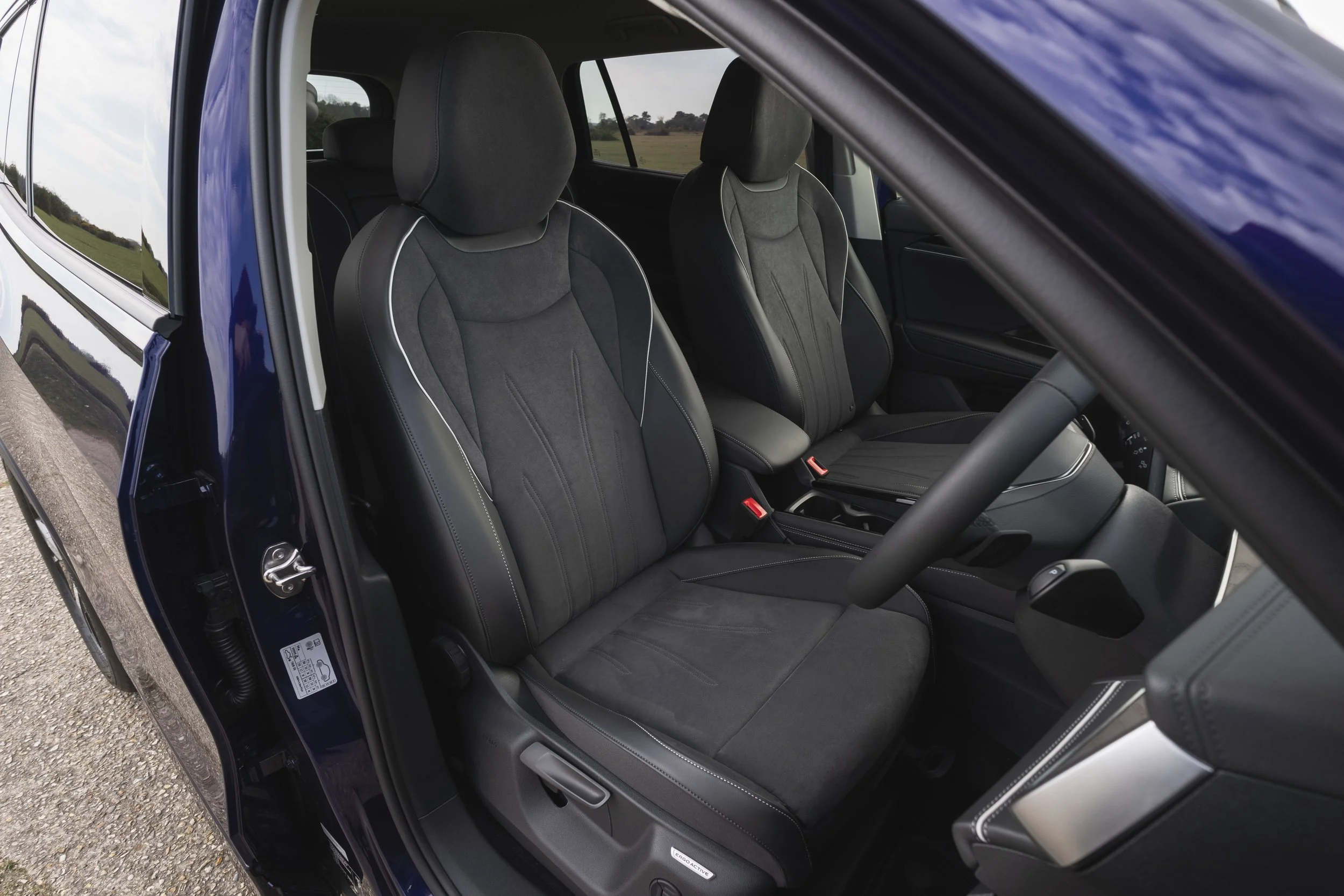
In terms of kit, every Volkswagen now comes with the essentials. Ours was the R-Line version, which tipped the scales at £46,990 (July ’25). I reckon it’s worth the additional outlay because you get chunkier, black alloys which look seriously smart; R-line trim, sports seats in the front which are heated and have a massage function; heated steering wheel, LED headlights, 12.9-inch centre display, sat nav, DAB radio, and a stack of safety gubbins.
Volkswagen has fitted the Tayron with its latest infotainment, which has made the central touchscreen less confusing. You no longer need to burrow through loads of sub-menus to adjust just about everything. The haptic touch pads on the steering wheel have been replaced by buttons, which are easier and safer to use and less likely to be swiped by accident.
The build quality is excellent, and all of the materials feel good and should be hard wearing. I wouldn’t describe the interior as particularly stylish. I’d say it is more functional, without being over the top, but I don’t mind that in a car like this. Perhaps the various ambient lighting options make up for that somewhat.

Concluding thoughts
So, which engine should you go for? The PHEVs make sense as decent all-rounders, but you only get five seats. On the plus side, the PHEV boot is enormous, space for rear passengers is very impressive, and the potential economy figures are excellent. If you really must have seven seats, go for the 2.0 litre petrol models or one of the diesels because they’ll not struggle with a hefty load.
Is bigger better? Go for the same trim and powertrain in the Volkswagen Tiguan as I had in the Tayron and you’ll pay £45,760, so you’re paying an extra £1,230 for the additional space. Want a third row of seats? The Tayron is for you.
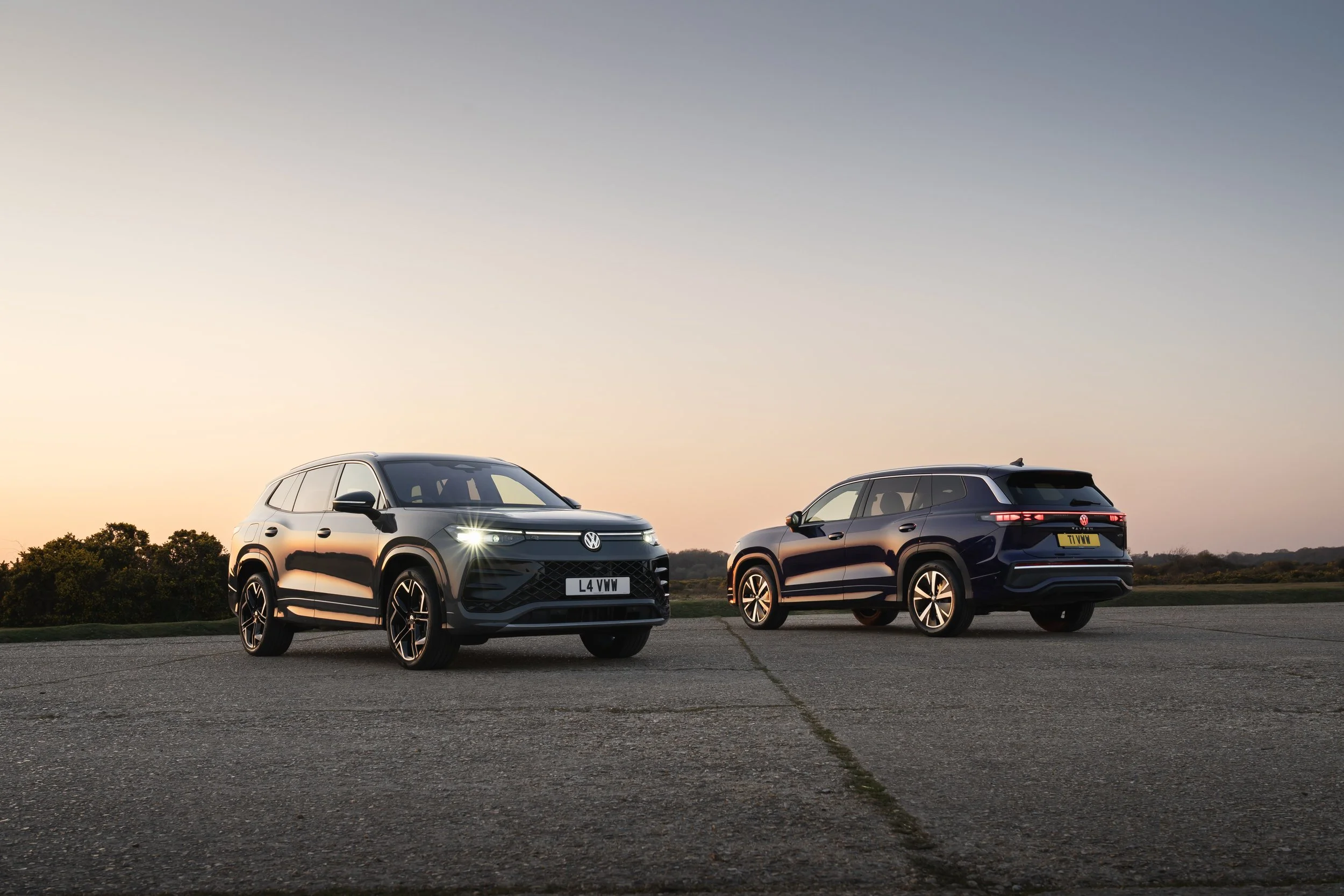
The Volkswagen Tayron is a welcome addition to the range, replacing the Tiguan Allspace. It gives buyers another option in a limited marketplace when it comes to cars that can carry seven people.
words: Graham Courtney
pictures: Volkswagen
