
Lexus UX 300h - Premium Hybrid Motoring
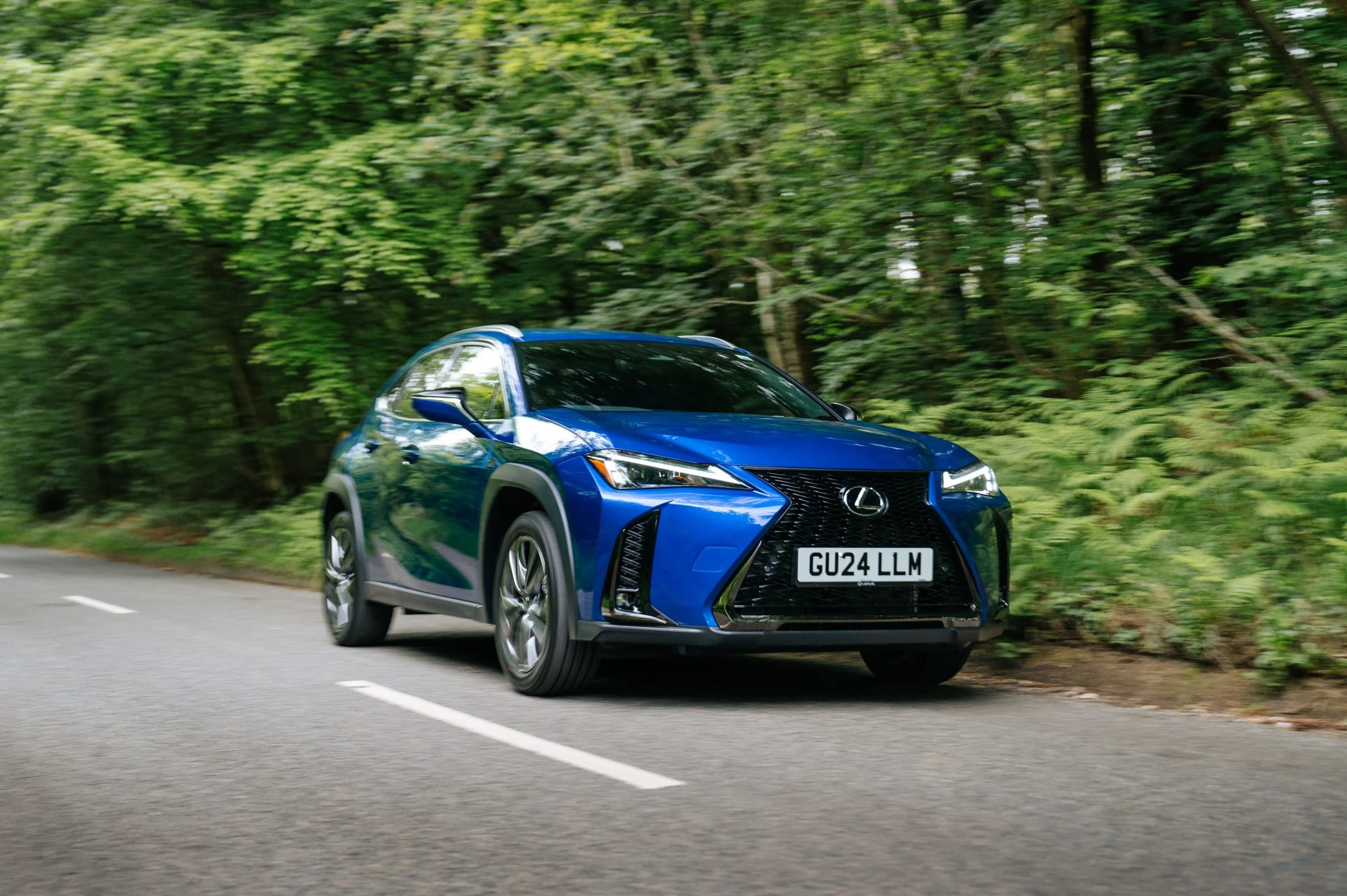
King of reliability present the second generation UX
Certain car manufacturers market their cars by focusing on a particular reason why you should buy one of their products; Rolls-Royce for the epitome of luxury, Bentley for its heritage and British engineering, Aston Martin for performance, Land Rover for off-road prowess, etc.
Lexus is fortunate in that it can tick several boxes, but arguably the most important one is reliability. They win reliability surveys with what has become boring regularity. It’s probably one of the main reasons why they are top performers when it comes to retaining their value, which, of course, is another reason.
Another is that if you fancy a hybrid of any sort, then Lexus — and its parent company, Toyota — are the masters. They’ve been building cars with battery assistance for donkey’s years.
And here’s one of their latest offerings - the second-generation Lexus UX. It’s now called the UX 300h, and it replaces the outgoing 250h.
Design, numbers & price
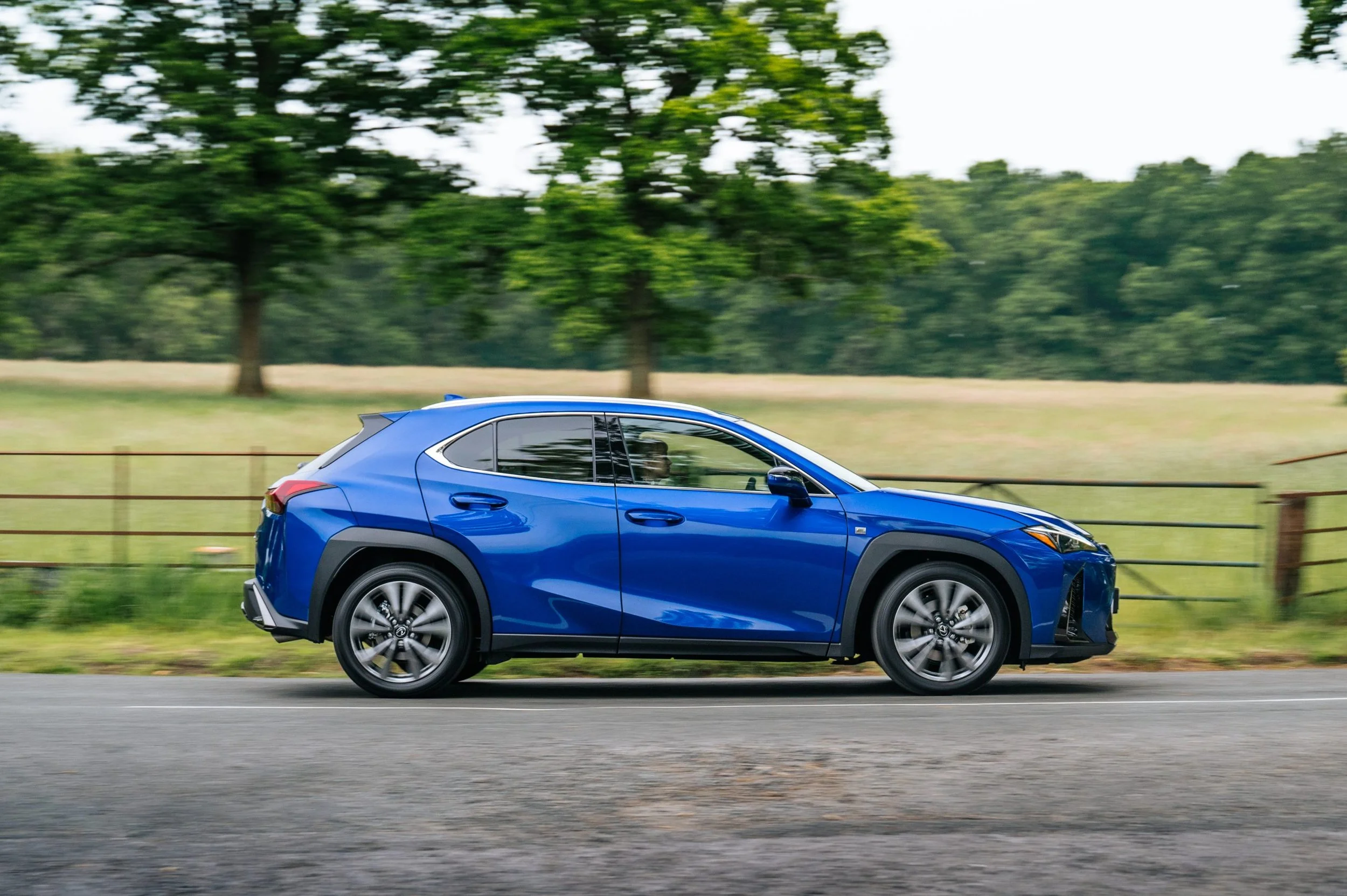
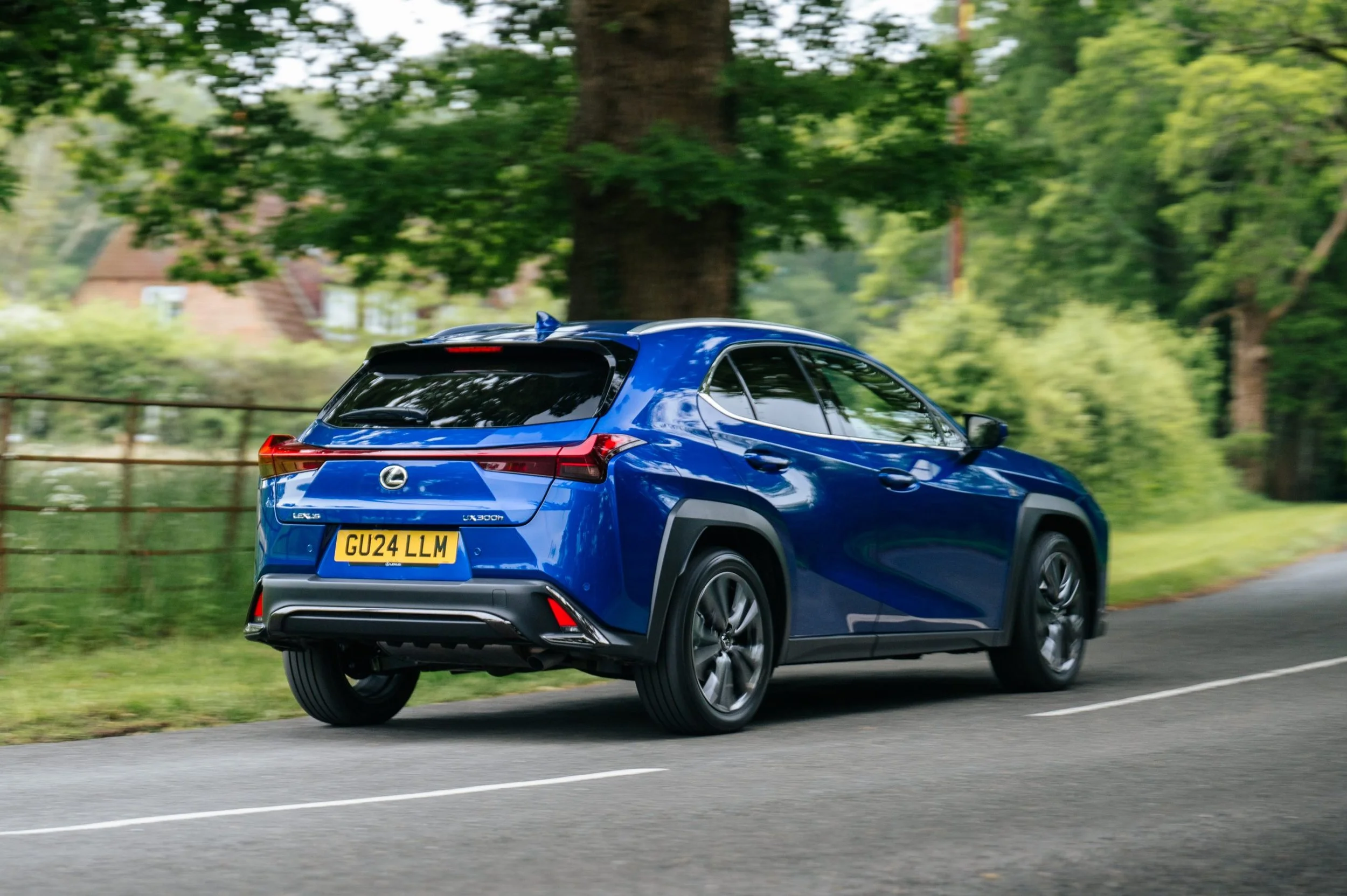
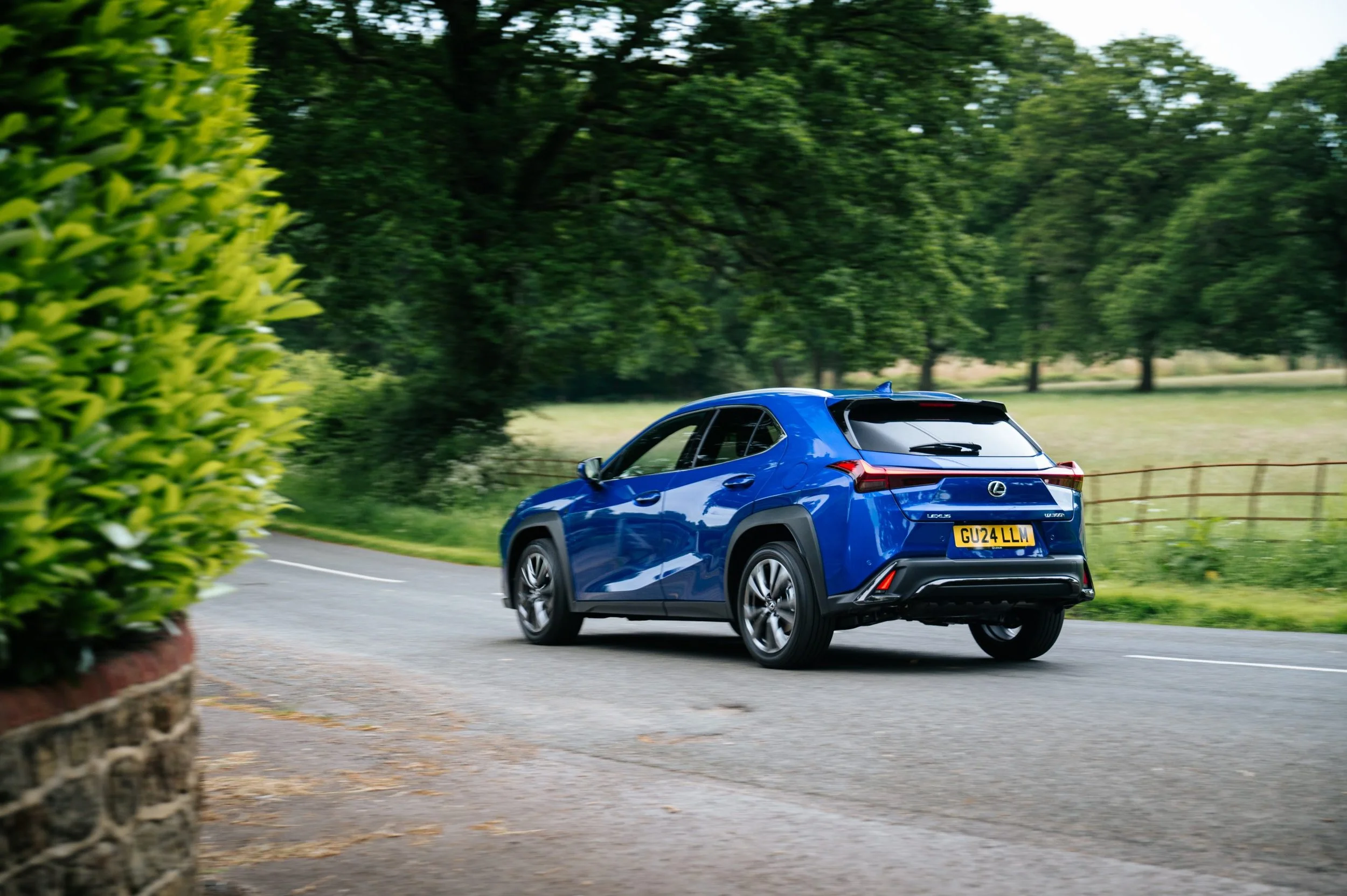
The only body style available is a swooping mix between a standard SUV and coupé SUV. It works well here. In terms of size, it sits above the recently launched LBX but below the larger NX and RX…remember when cars had memorable names?
Two versions are available in the form of a self-charging hybrid and a fully electric model. Under the bonnet of the hybrid model, which we’re looking at here, you’ll find a 2.0 litre 196 bhp petrol engine. The 250h developed a lesser 180bhp. Everything goes via a CVT gearbox, which feeds the front wheels. Accelerating from 0-60mph takes 8.1 seconds, and Lexus reckons you’ll manage up to 54.3mpg, which, to be fair, was pretty close to the figure I saw.
It’s a pity there’s no PHEV because you’d then have the chance for some serious battery driving (the larger Lexus NX PHEV can manage around 70 miles before the engine cuts in.) As it stands, the UX can let you trundle for short distances around town on battery power alone or when moving away from traffic lights, but you won’t get far.
As for pricing, the hybrid models are called 300h and kick off at £37,245 (Oct ’25), whereas the all-electric models (300e) start from £40,065.
Trim levels
In terms of trim, the 300h range starts with Premium, followed by F-Sport Design, F Sport Design Tech, F-Sport, and is topped out with the Lexus luxury brand called Takumi, which comes in at £48,845. Don’t be confused by the Lexus use of Sport in the UX 300h - there’s no serious performance model - F-Sport is a trim category with a couple of tweaks.
It also looks cool. So many cars are starting to look very similar (it’s what happens when you design a car in a wind tunnel), but the Lexus UX is distinctive. The grille is a Lexus trademark and you’d easily recognise one in your rear-view mirror.
Driving experience
Lexus refers to the UX as an urban crossover and it succeeds in being a very capable car, either around town or on the quicker stuff, although you’d never call it a fun car to drive. Lexus hasn’t gone down that route. They’re aiming this car at folk who want a bit of comfort and refined motoring. It’s a cushy ride and pretty quiet too, apart from when you call for some power and acceleration. As with nearly every CVT car I’ve driven, when you floor the throttle, the revs go through the roof and so does the noise…which isn’t very pleasant. But it soon settles, and you get back to gentile driving.
There are driver mode choices - Eco, Normal and Sport - and if you go for F Sport models, you’ll get adaptive suspension and a couple of additional modes. After finding out what Sport mode did, I soon went back to Normal and Eco as it’s what the Lexus UX does best.
Interior
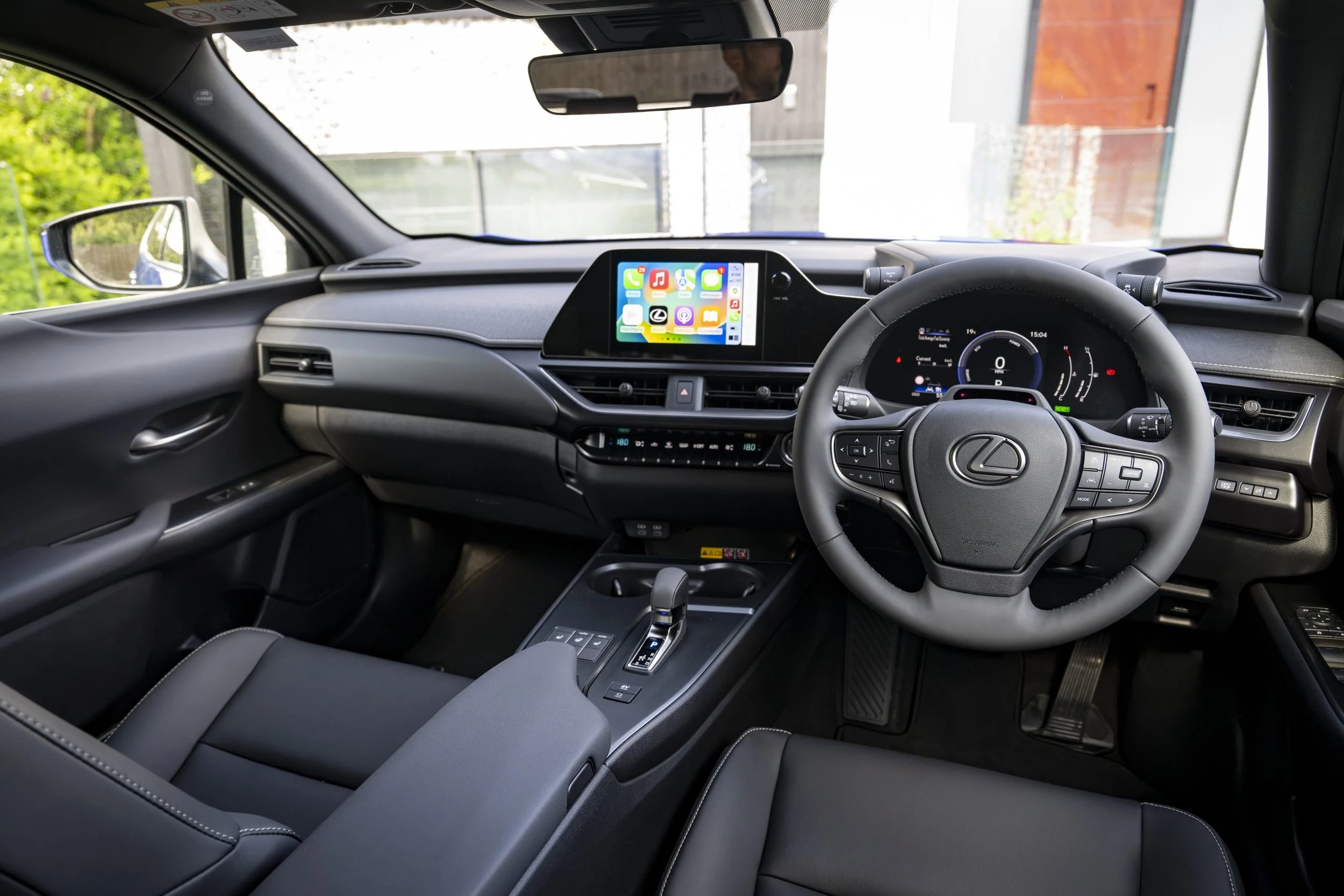
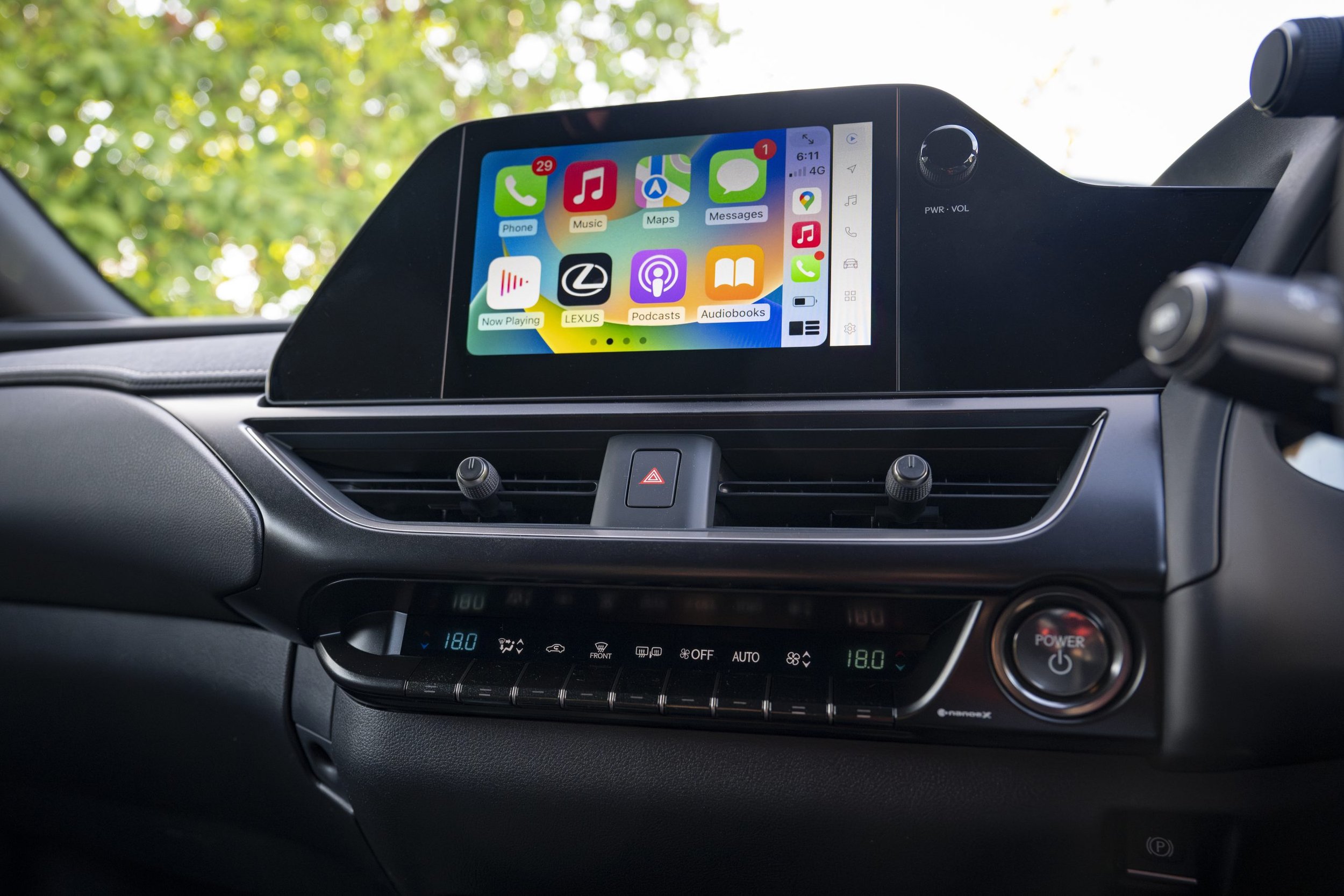
Lexus is also a master at build quality. Everything feels solid and looks good. If you fancy a flashy, whiz-bang interior, you’d probably be better off looking elsewhere. Lexus keeps things simple and unpretentious. Go for the higher trim models and you’ll have a 12.3-inch central touchscreen which has crisp graphics and works well. You also have a row of buttons down the side, which are easy to prod while on the move. The climate control is a row of buttons below the screen. It’s interesting to see that the trend for putting everything into the touchscreen seems to be fading. The techy designers have finally realised that for those of us who actually drive their cars, it’s easier and safer to have some good old-fashioned knobs and buttons.
Standard kit & owner perks
Every UX is well equipped. Even the entry level Premium trim gets stuff like LED headlights, front and rear parking sensors and a heated steering wheel. I like the F Sport Design Tech trim (£39,575) because you now get wireless smartphone charging, 18-inch alloys, rear privacy glass, climate control, electrically adjustable steering column, powered tailgate, powered and heated front seats, sat nav and a DAB radio.
It’s also worth noting that, because Lexus is so confident about the reliability of its cars that they can offer you a 10-year / 100,000-mile warranty. There’s the usual 3-year warranty, but you can extend it by having your car serviced at a Lexus dealer. For those of you who tend to keep your cars for longer stretches, this could be a handy addition.
If reliability, economy, build quality, and a car which looks different from the masses is something you fancy, this Lexus UX should be on your list of test drives.
words: Graham Courtney
pictures: Lexus
