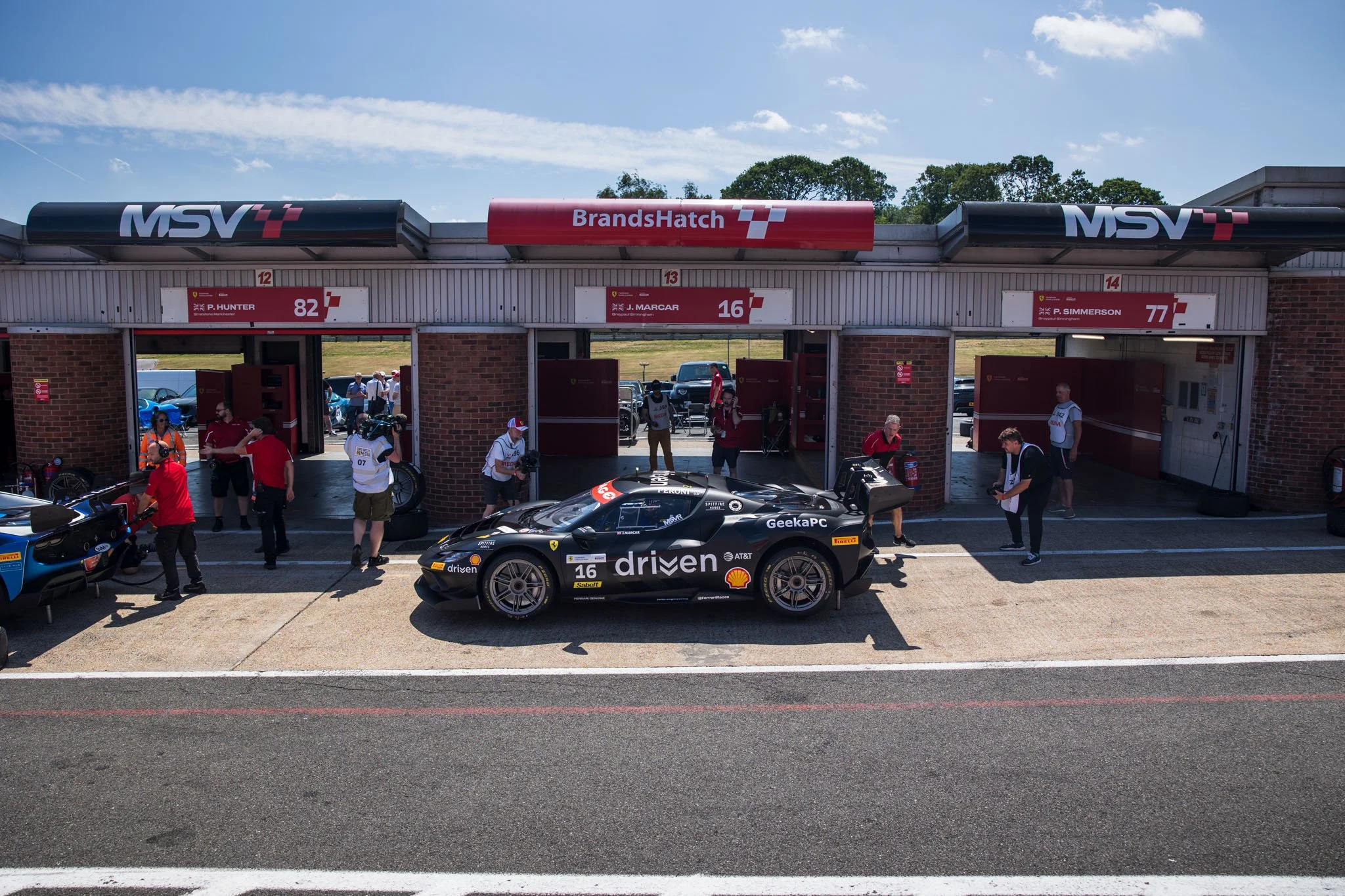
It's true what they say: time flies when you're having fun. We're now halfway through the year and into our 3rd round of the UK Ferrari Challenge Series. Round three would thankfully be the last of the tight and technical circuits on the calendar. Oulton Park was tough, but it was clear that Brands Hatch wasn't going to be a walk in the park by comparison.
Two Circuits in One Weekend
Those familiar with Brands Hatch will be aware that the venue features two circuits: the short Indy circuit and the longer GP circuit. For the Ferrari Challenge Series, the Indy Circuit is used for Race 1 on Saturday, and the GP is opened up for Race 2 on Sunday.
As is fast becoming the norm ahead of the race weekends, I had mixed feelings leading up to the meeting; the fact that I had two circuits to consider as opposed to the usual one, only heightened the emotions.
I'm familiar with the Indy circuit. When I started driving on track days in my late teens and early twenties, it was the first 'proper' circuit I booked onto as a track day driver. When I began organising track day events myself, Brands Hatch Indy was the first 'proper' circuit I hired to host for customers. As a youngster, I'd visit Brands Hatch to watch cars racing on the Indy Circuit, and earlier this year, in February, I even completed my ARDs Race National Licence qualification there. If there was ever a circuit that should feel like home, it's Brands Hatch Indy.
I knew the pace of the Ferrari would be considerably faster than anything else I'd driven on the Indy circuit before, but I knew what to expect in terms of turning points, braking points and the wild undulations, of which there are many.
The GP circuit, however, is a very different story. Before the weekend, I hadn't so much as looked at the layout. I'd never walked it, driven it or even spent much time driving it on a simulator, and yet there I was, preparing to drive it for the very first time, in a 690HP Ferrari Challenge Car.
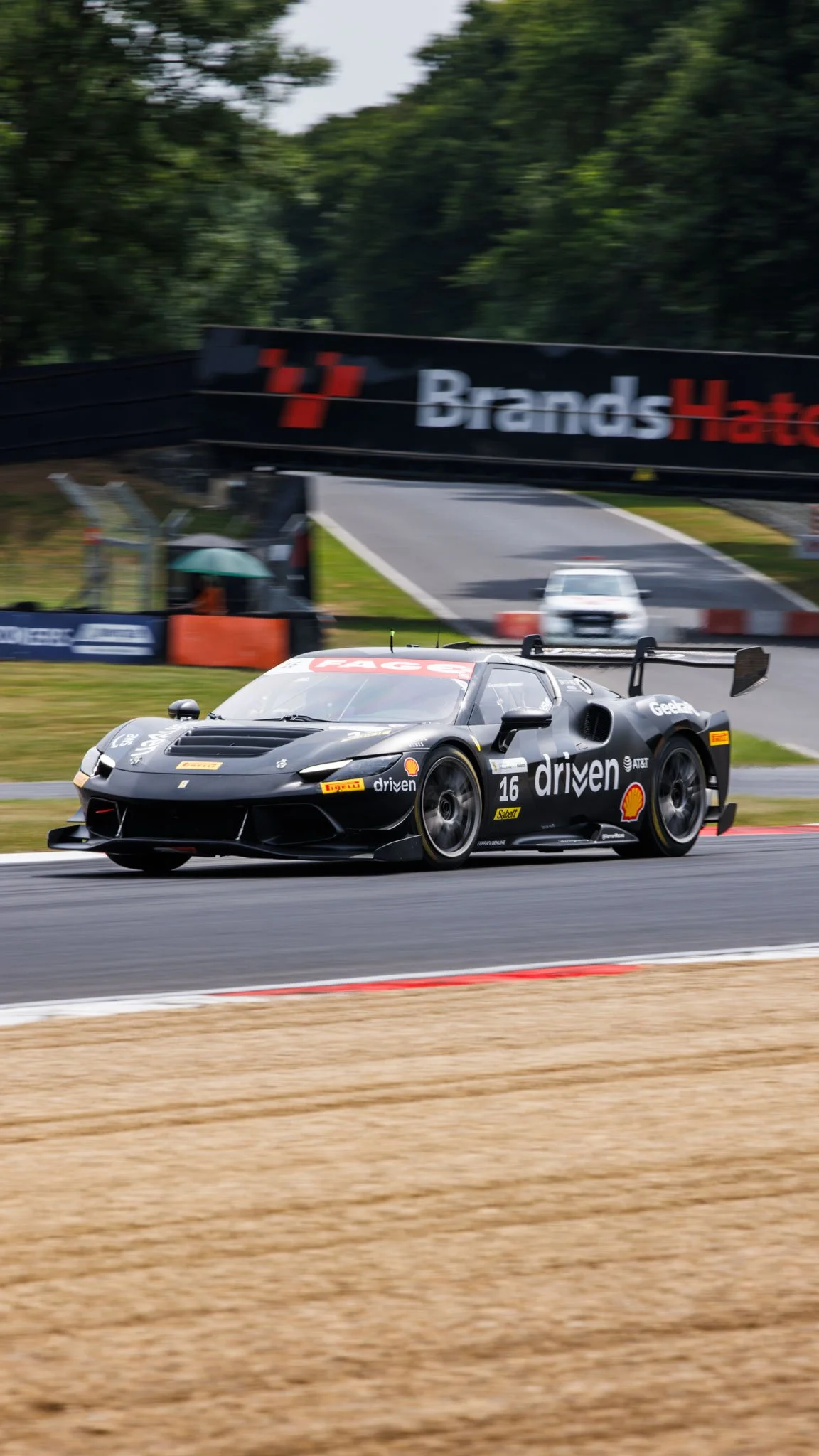
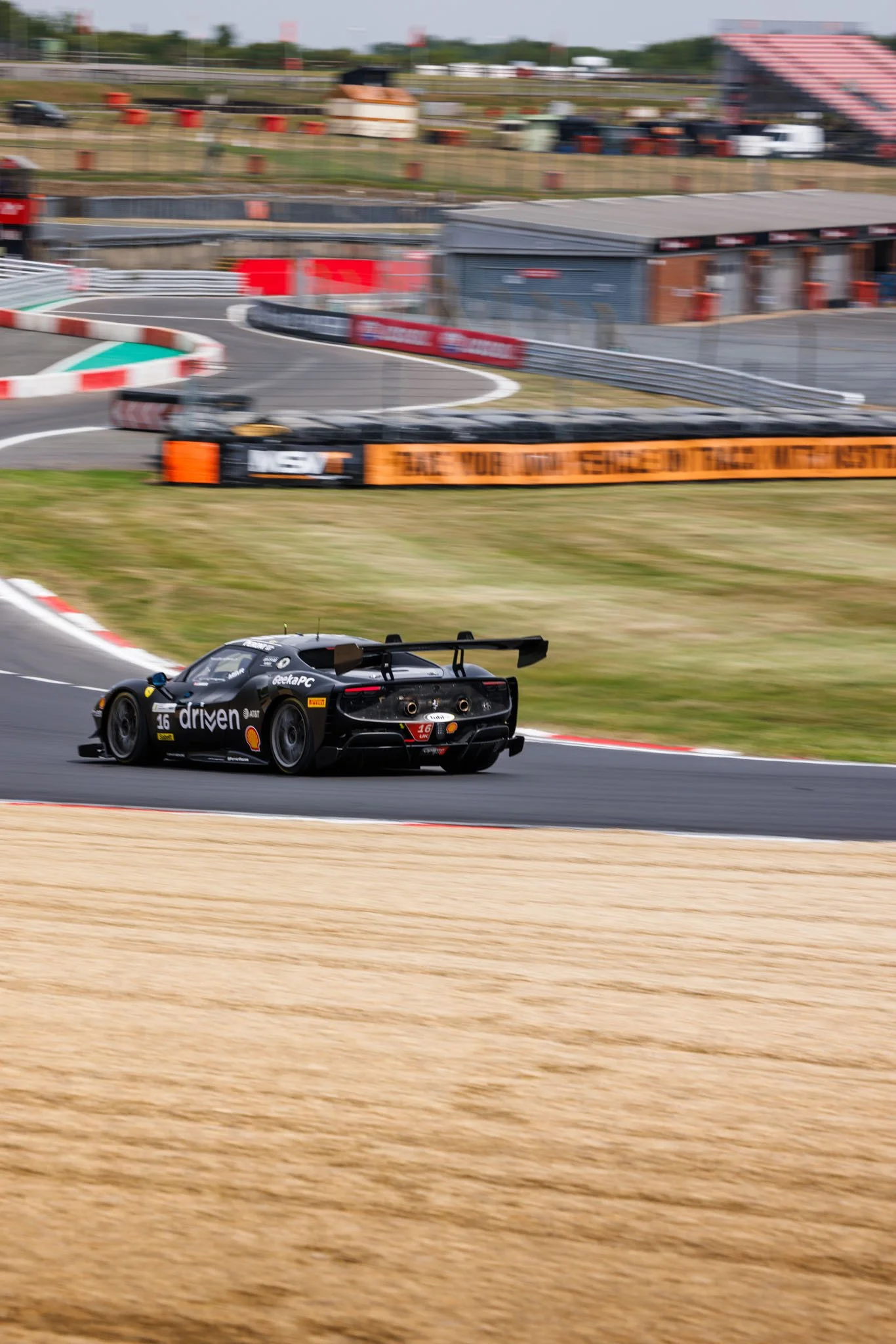
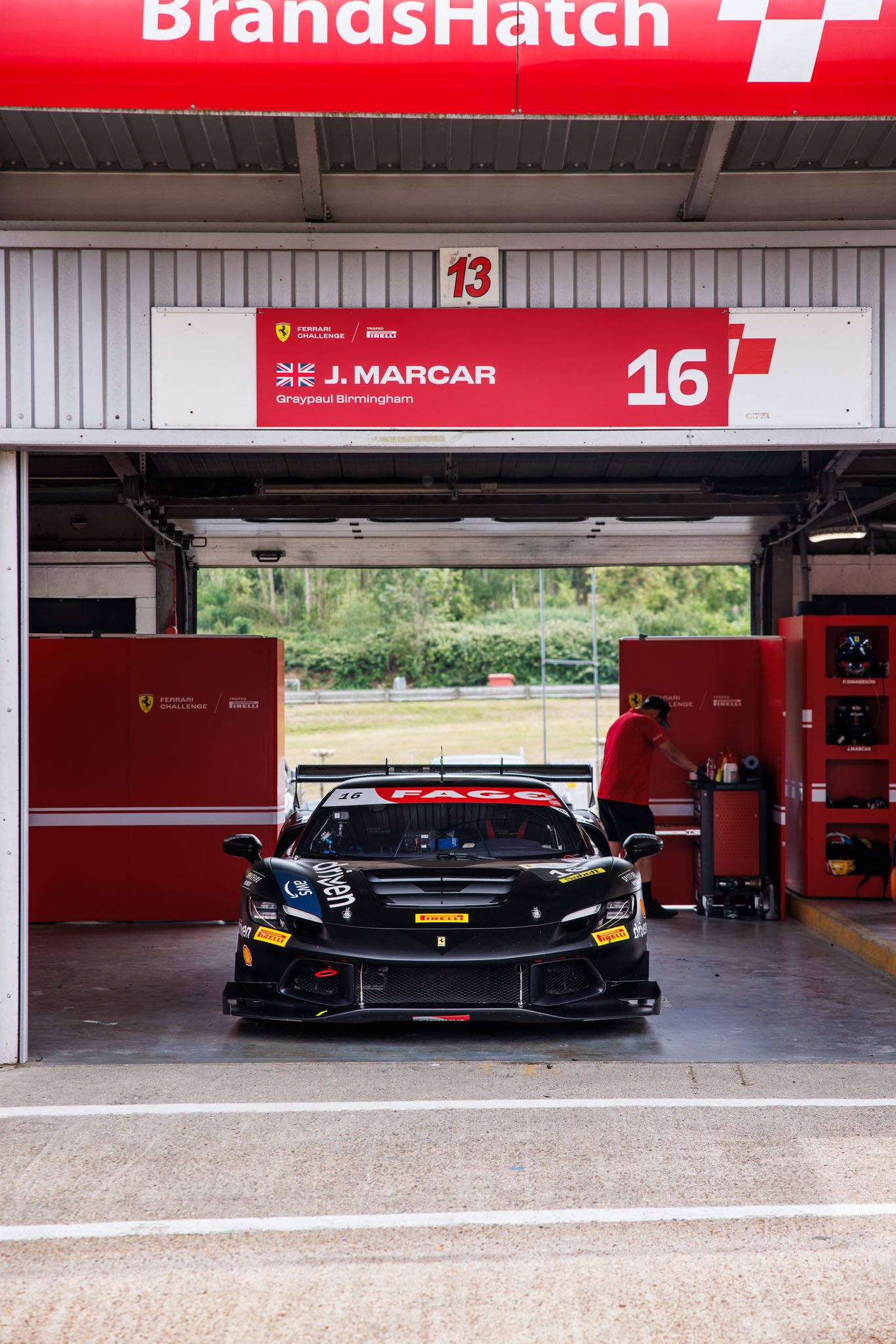
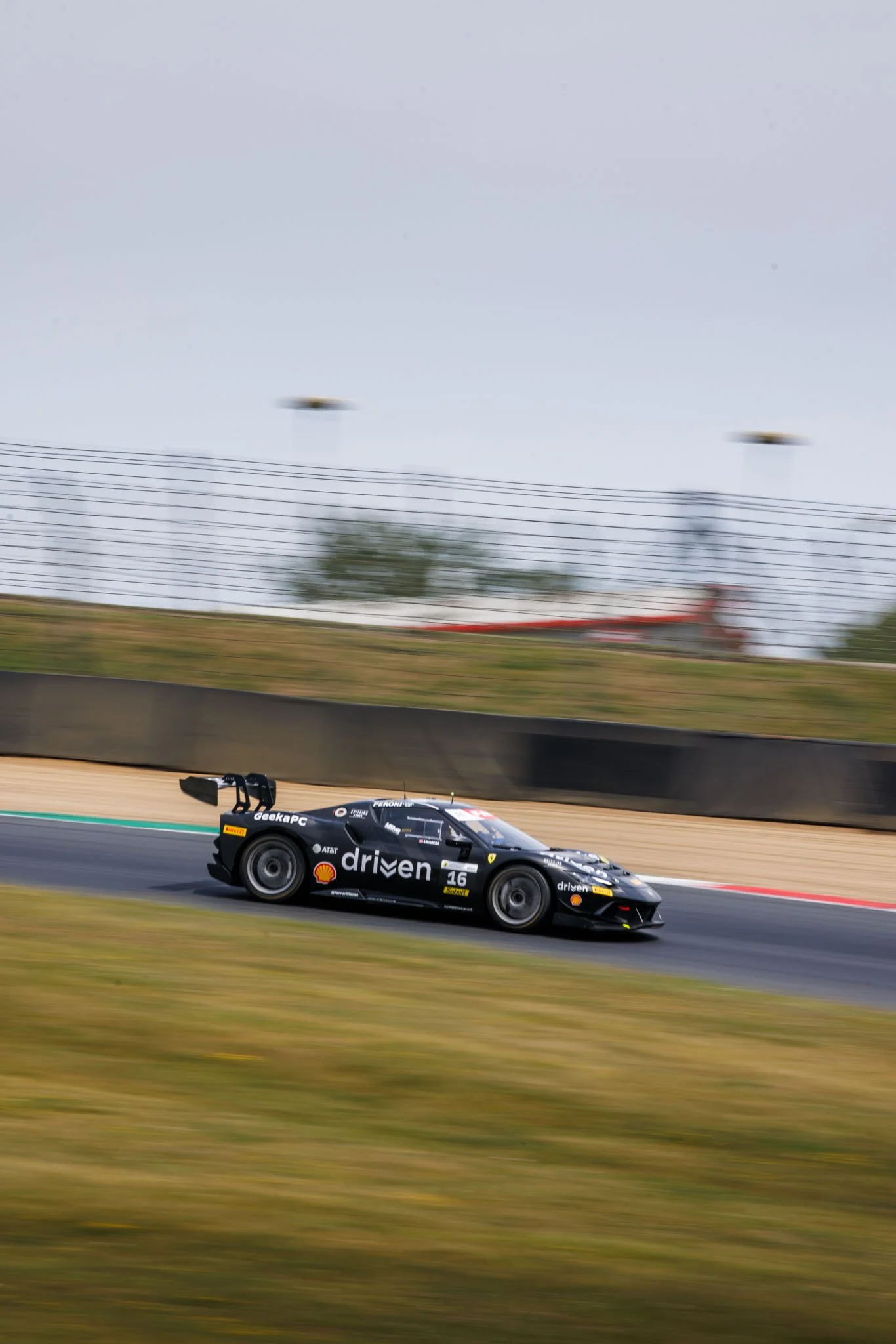


Friday - Test Day
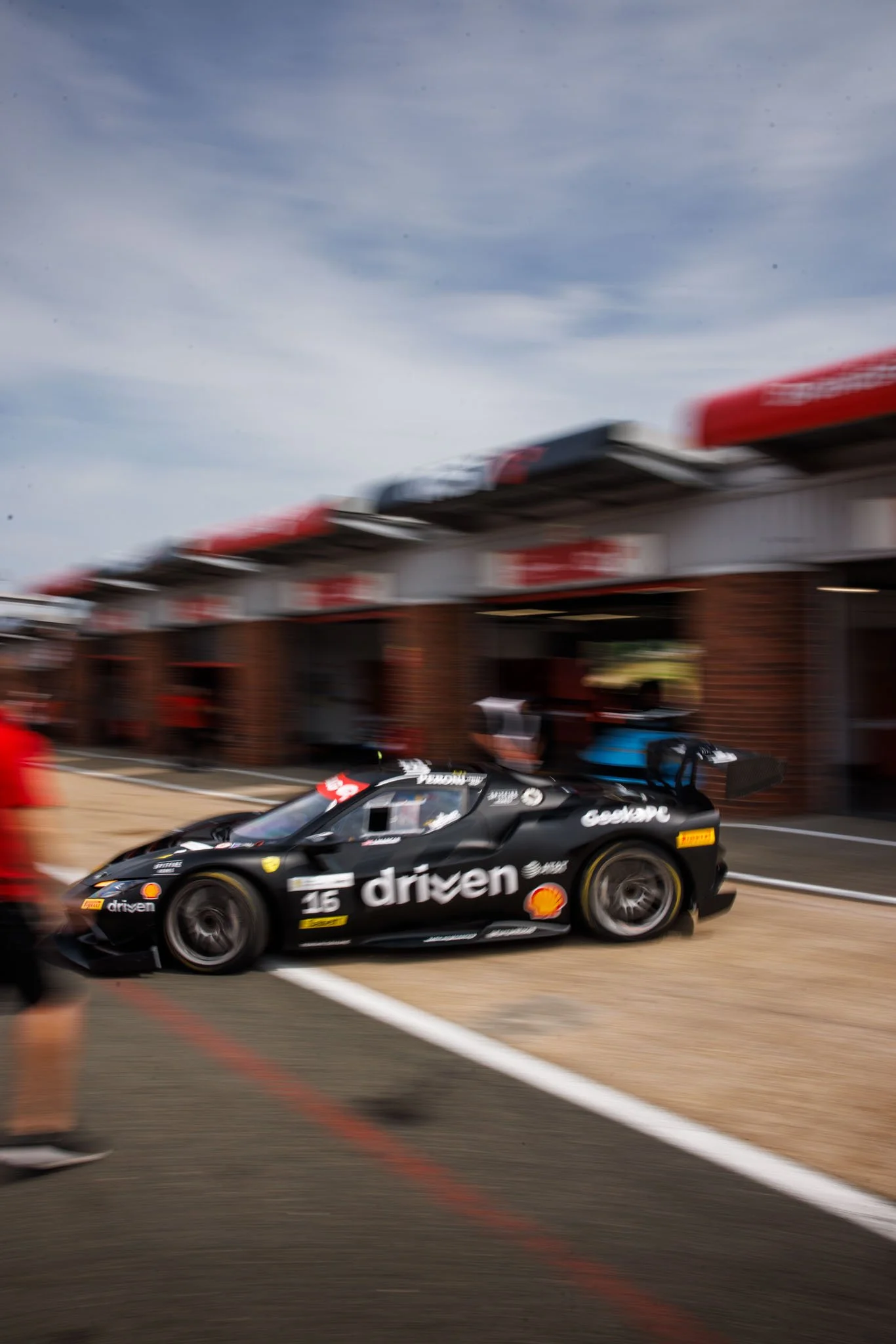
Ahead of the weekend, all drivers had the luxury of a test day on the Indy Circuit. As is the norm with most race meetings on the challenge calendar, drivers and their teams get the opportunity to test for a full day to familiarise themselves with the circuit, the car and the conditions. With the 296 Challenge being a new car to all in the UK Challenge Series for 2025, the test days are priceless. Even the drivers with many years of Challenge series racing experience under their belts are still learning the quirks and nuances of the new cars; for newcomer-rookies like me, it's even more demanding.
Friday's first challenge, which would be an ongoing theme for the weekend, was heat. We're amidst a heatwave in the UK, with high humidity and ambient temperatures of around 30-35 degrees C. The warmer climate would certainly take its toll on the cars, the drivers and, as I'd find out in the afternoon practice session, the tyres.
A new pace
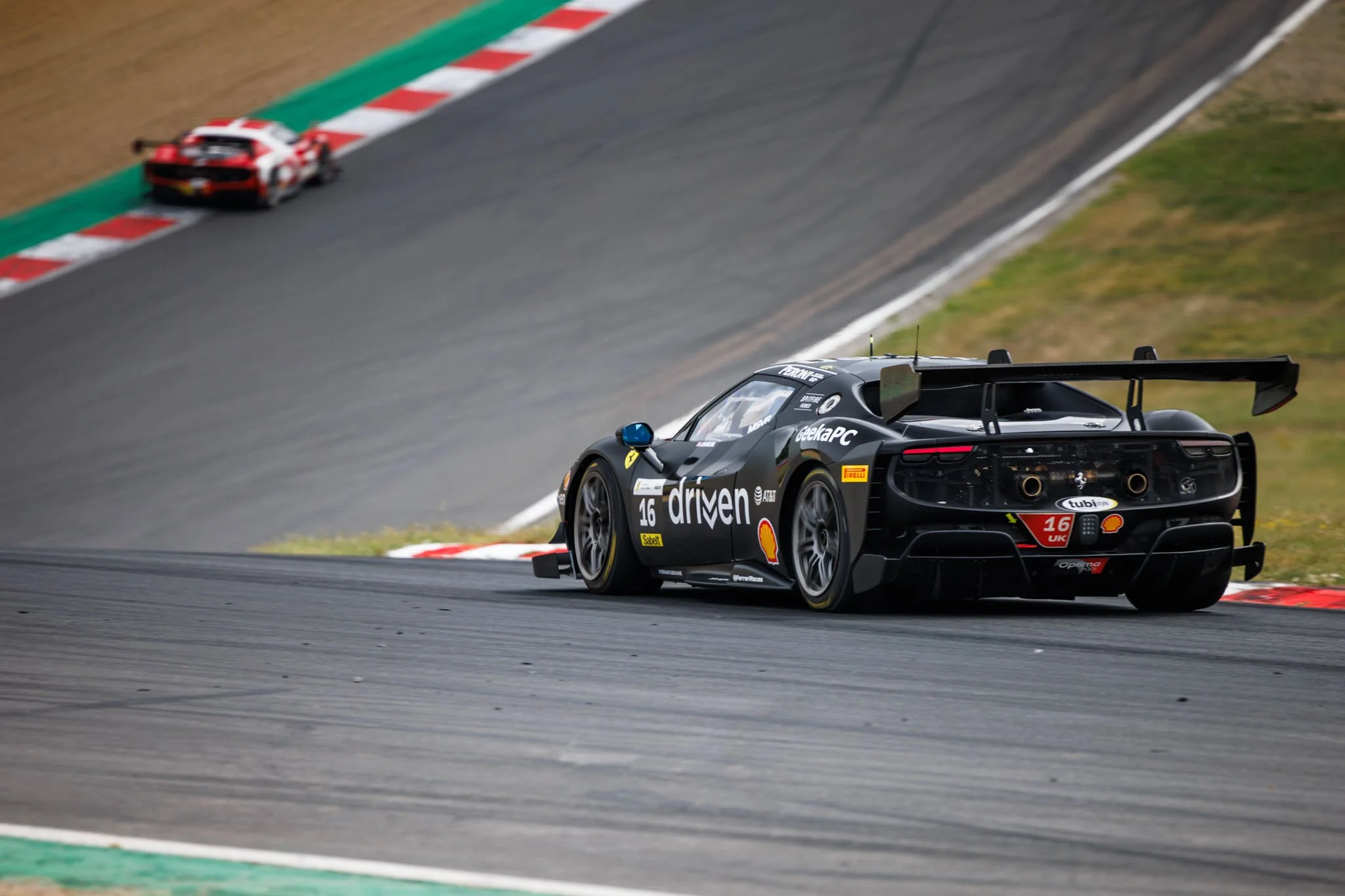
We had a successful morning testing on the Indy Circuit. My personal best lap time on the Indy layout was set earlier this year when completing my race national licence. In the MX-5 racing car, I consistently lapped with times of 58 seconds, and on a push lap, I'd occasionally manage an ambitious 57-second lap. In the Ferrari, on a knackered old set of test tyres, by 3-4 laps of my first practice session on Friday morning, I had smashed my personal best by almost 10 seconds. I knew the pace would be different, but I wasn't quite prepared for such a contrast.
This is where things could have gone very wrong...
We had learned in the morning that tyre management would probably be the name of the game for the weekend. With the ambient temperatures being so high, circuit surface temperatures were much hotter than usual. The proof of this was felt through the tyre installation process. What would usually be a 3-4 lap process of gradually building up heat and grip levels was now taking just two laps.
The Pirelli slick tyres we use on the Challenge cars are remarkable pieces of rubber. Once they're bedded in, they can withstand a fair amount of punishment while delivering physics-defying grip levels. As with all tyres, though, there is a limit. With track temperatures approaching 40 degrees C, rather than the usual high-grip to low-grip transition over 10-15 laps, once the tyres had hit their limit, the grip level changed from excellent to poor in as little as 2-3 laps.
Tyre Delamination - (0/10 would not recommend)
Around halfway through the afternoon session, I was in the car, pushing fairly hard to set some consistent lap times. The degradation of the tyres became very apparent very quickly, and I knew that within a few more laps of the session I was on, it would be time to pit in and have a new set fitted. With this in mind, I crossed the start-finish line on what I'd decided would be a final fast 'push lap', but as I hit the brakes for Turn 1 - 'Paddock Hill', I noticed that something wasn't quite right.
Paddock Hill is widely regarded as one of the most infamous motorsport corners in the world. It starts on the crest of a hill, following the start and finish straight before dipping downhill and to the right. The elevation change between the top and the bottom of the hill is huge, and to make things more exciting, much of the corner is off-camber, which creates a somewhat terrifying sensation of being pushed off the circuit to the left towards a large gravel trap. Find yourself in there, and there's only one way out - the dreaded tow rope. At the bottom of the hill, thanks to the compression in the dip, all the physics that had been pushing outwards and to the left transitions very suddenly downwards. The compression acts as a momentary relief, settling the car in a straight line just in time to shoot back up the hill again towards the next corner - Surtees, which is a double-apex hairpin.
I don't recall hearing anything untoward in the car as I approached Paddock Hill, but as I hit the brake pedal and turned in, something about the way the car handled didn't feel right. The car didn't scrub speed in the way that it should have, and the back end stepped out. In the moment, I assumed I'd hit the brakes too late and entered the corner with too much speed. As I hit the compression at the bottom of the hill, I glanced at my rearview camera in the car and noticed the feed had been cut. It was just a blank screen with 'no signal' written across the middle in capital letters. I was none the wiser as to what was wrong, but I was still driving at pace and now preparing to hit the brakes again for the Surtees hairpin at the top of the hill. I turned the car to the right, and the rear once again felt loose. I glanced at the tyre pressures, assuming it was a puncture; all looked okay, but something clearly wasn't right. I hit the radio button to speak to Miles and the team in the pits - "Something's not right; handling is off, and I need to come back".
Miles replied, "Okay, mate, bring it in carefully."
I returned to the pits none the wiser as to what had gone wrong. Had I broken a suspension arm? Was there a fault with the tyre pressure monitoring system? Had I lost my rear bumper, causing my camera feed to cut? I was clueless. As I stopped outside the garage, Miles clicked through on the radio again, "Okay, mate, we've got a delaminated tyre. Switch it off."
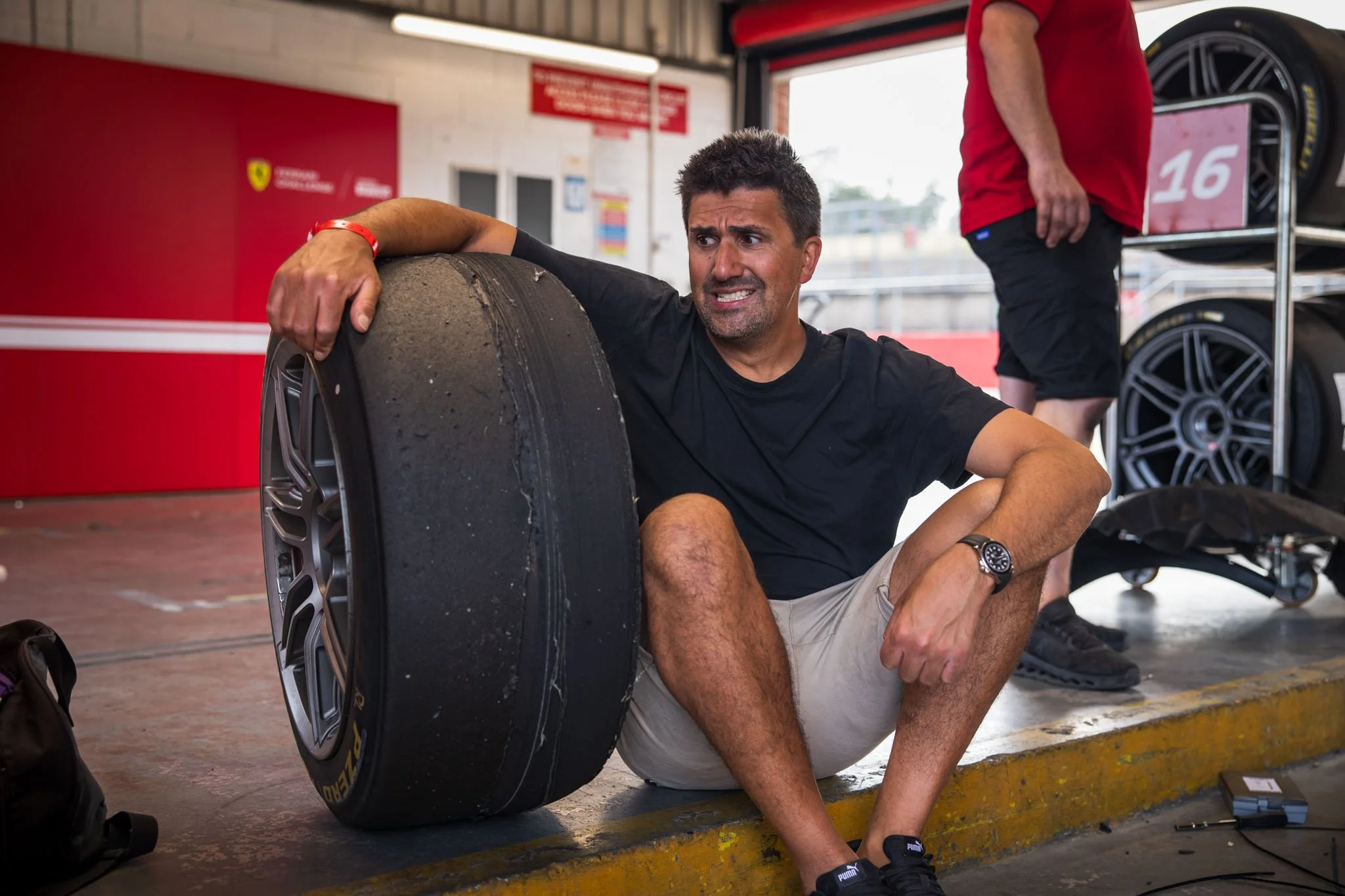
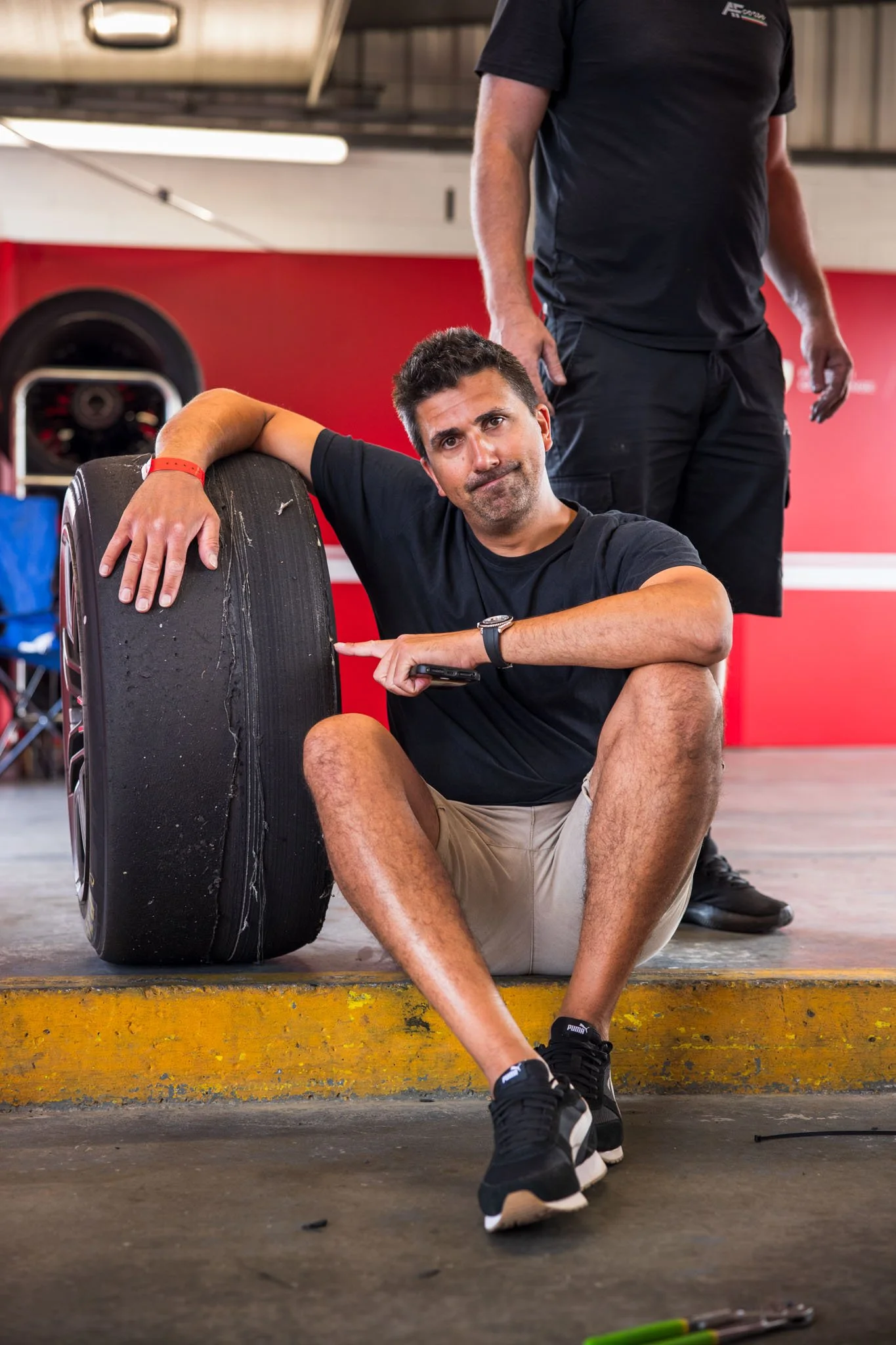
I stepped out of the car to see that half of the surface of my rear left tyre had delaminated, leaving just the exposed cords. Amazingly, the tyre was still holding air; hence, the TPMS sensor alarm not being triggered. The flailing rubber had whipped up and taken out a chunk of my rear splitter and, in the process, sliced the wire that sends the rear camera footage to the screen in the car. I'd assumed that it had all happened in the compression of Paddock Hill; after all, that's when I noticed the camera feed had cut. It was a few moments later, though, that I learned the sobering truth about just how differently things could (and probably should) have unfolded.


Almost Game Over
On the lap where it had happened, the team in the pits had heard a loud bang and zipping sound as I passed over the start-finish line. The sound was created by the outer skin of the tyre flailing around the wheel arch.
The tyre hadn't delaminated in the compression as previously thought; it had happened at top speed before the braking point for Paddock Hill. By some miracle, the structure of the tyre prevented it from bursting, which would have sent me either into the gravel trap on the left side or fired me off into a wall on the right side.
Ideally, you want to avoid an incident at any corner at Brands Hatch, but cars without four properly functioning tyres rarely come off well at Paddock Hill. Had the tyre burst, it very easily could have been the end of the weekend. It could have been the end of the car, possibly even an injury.
A Rapid Repair
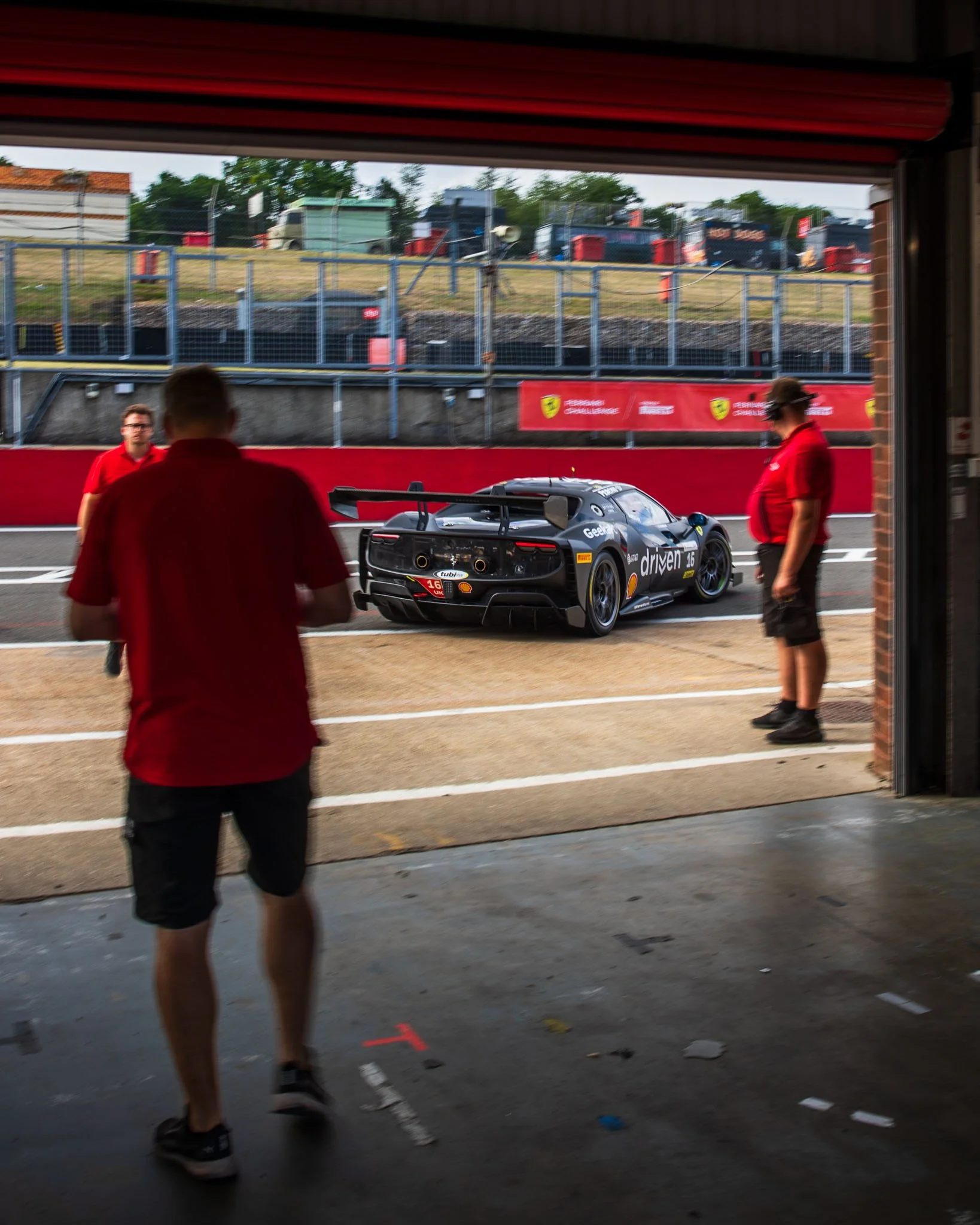
Whilst I was counting my blessings that nothing serious had happened, there was damage to the car that needed addressing. The rear splitter had been shattered on the left side where the rubber had hit it, and the entire inner wheel arch had been destroyed. Our mechanic, Stephen, drafted in some extra hands to replace the broken parts and get the car back together for a quick shakedown before the end of the afternoon practice session. With just 10 minutes left on the clock for the afternoon test session, the car was back together, the work was complete, and the car was back out with Miles at the wheel this time for a shakedown.
The work had paid off. Miles returned to the pits as the afternoon session had ended and reported that all was well with the car. It wasn't the way we wanted the day to end, especially not ahead of two days of racing, but we had to count our blessings and consider just how differently things could have been.
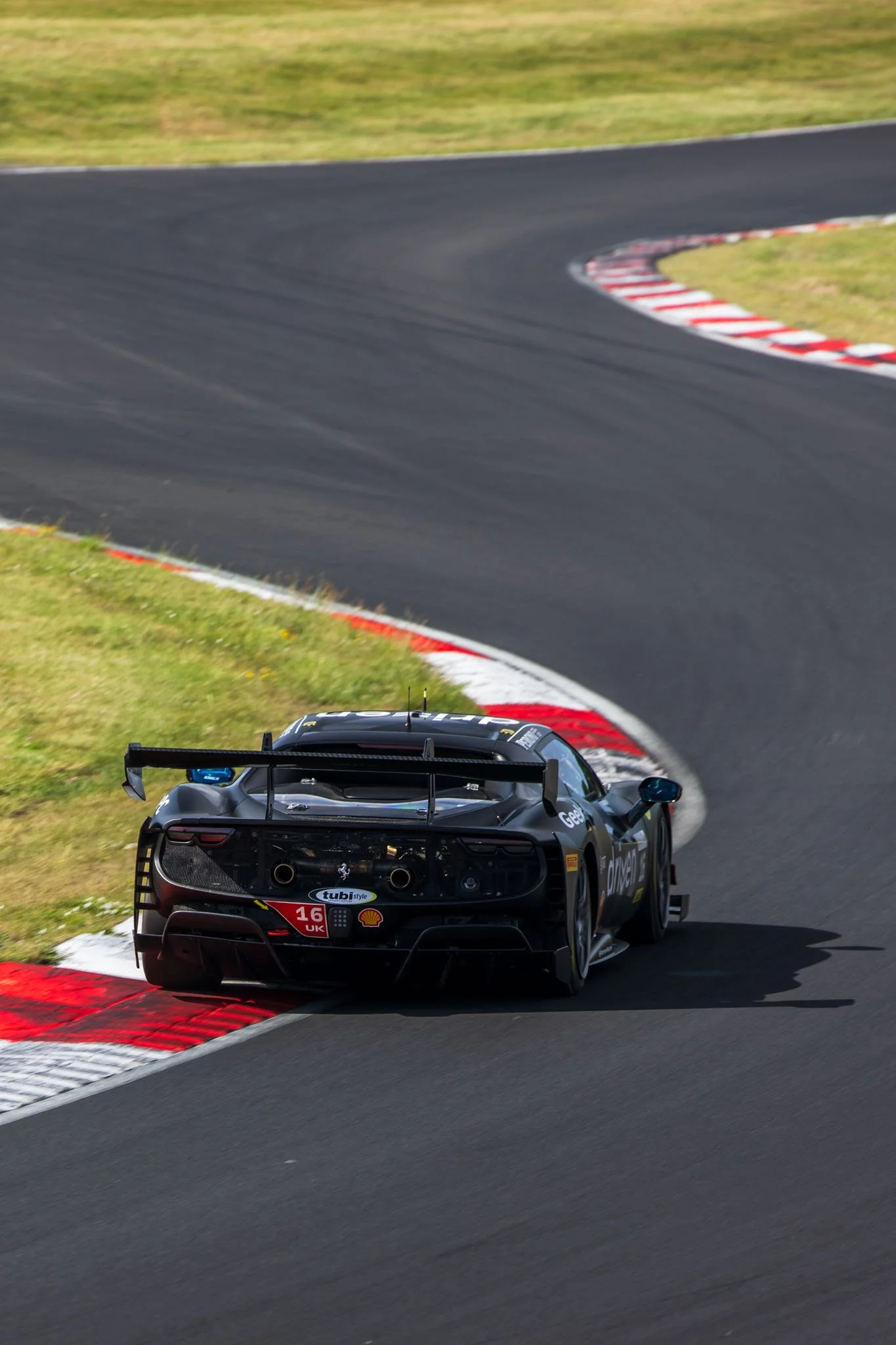
Saturday: Racing at Brands Hatch Indy
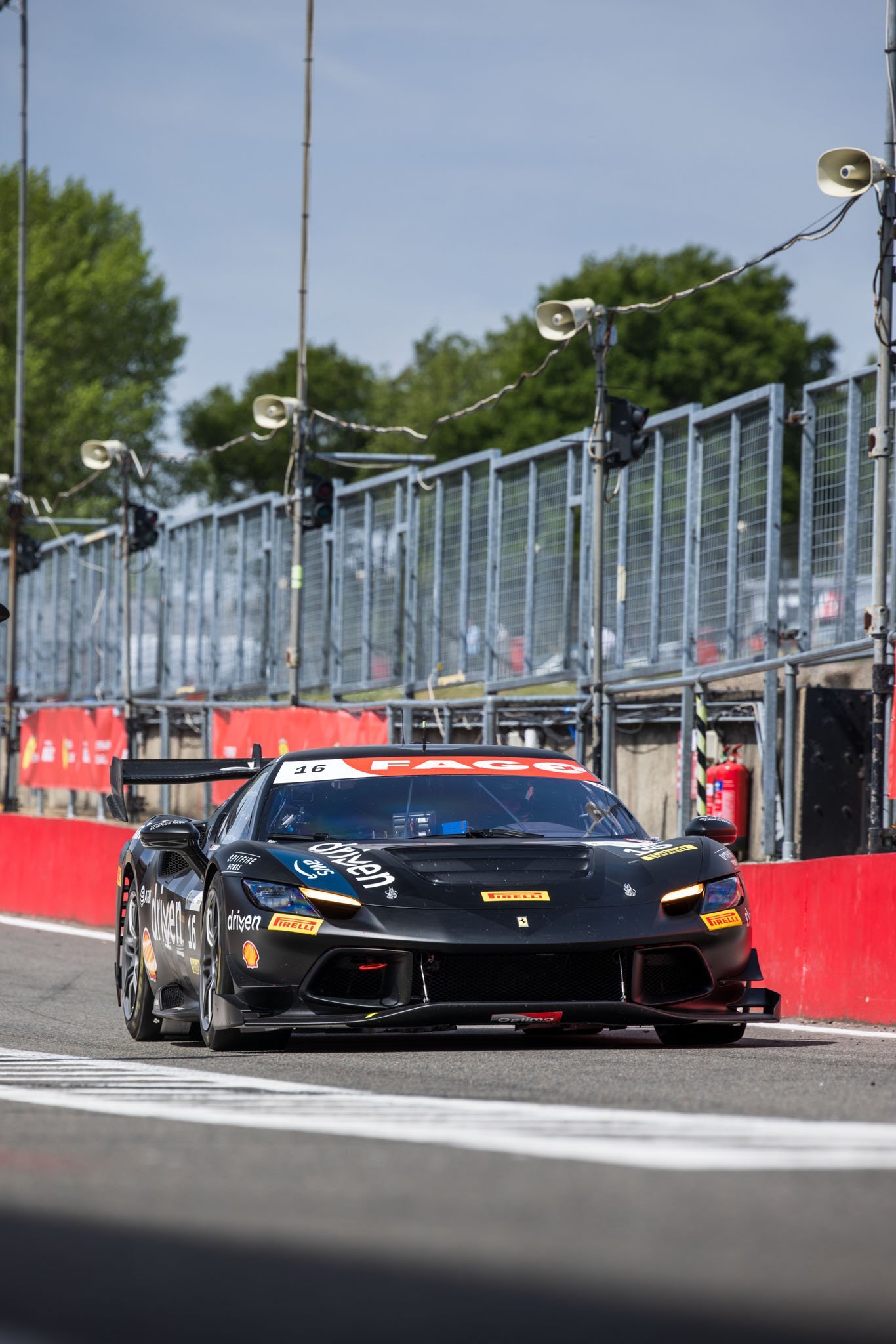
With the events of the previous afternoon still fresh in my memory, I don't mind admitting that despite my familiarity with the Brands Hatch Indy Circuit, I started the day feeling pretty nervous. I'd spent much of the night reflecting on what could have happened, which certainly left a lasting impression. Although every rational neuron in my brain was doing its best to quash the thought pattern, it had an undeniable impact on my performance.
I had a 40-minute free practice session ahead of qualifying, and I wanted to jump back in the car and get to work. It was clear from the outset, though, that I wasn't on pace. I could tell, and so could Miles, who was in the pit lane watching my live timings.
The 40-minute session flew by, and I was out of the car feeling less than satisfied. Something substantial needed to happen in qualifying for me to be in with a chance of a good race.
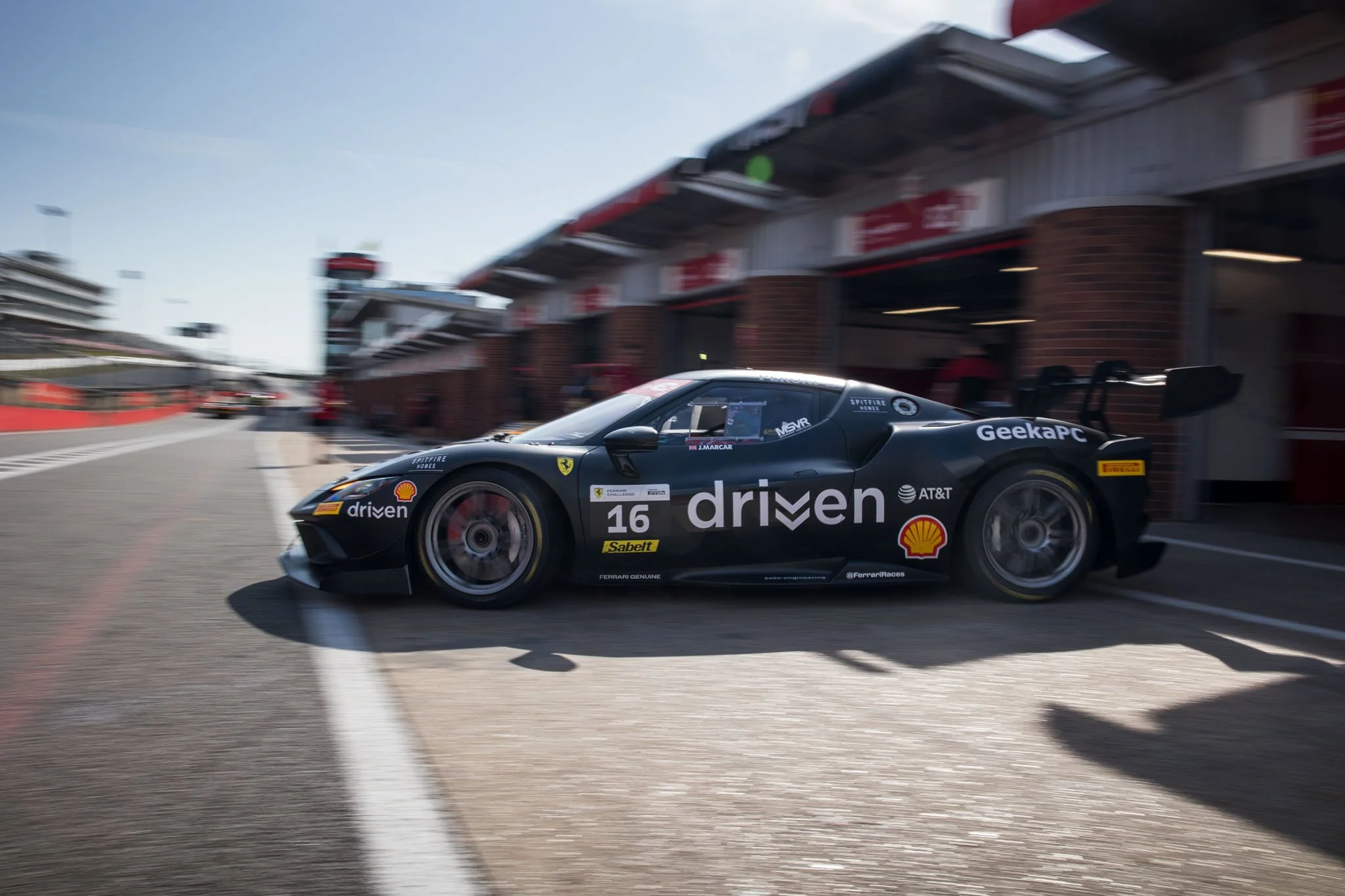
Qualifying 1
After some data review with Miles, it was time to jump in the car for qualifying. Just as it had been on Friday, the ambient temperatures were soaring above typical averages. I went out on new tyres, aware that the new qualifying set had to also last for the race. What I didn't want to do was end up pushing for the full 30-minute qualifying session, exhausting the rubber and, therefore, compromising the performance of the tyres in the race. I had to get out, set a good time on a few consistent laps and then come back in to rest the tyres ahead of the race. Unfortunately, though, just as in free practice earlier in the morning, the pace wasn't there.
The session was interrupted by a stranded car exiting the pits, which triggered a red flag. Given the short lap, the opportunity to push without encountering traffic on the Indy circuit is nearly impossible. The result of qualifying was a 9th-place starting position, but I'd covered 27 laps in the process - the exact opposite of what I'd hoped to do. I was unhappy with my performance and didn't feel good about the outcome of the race.
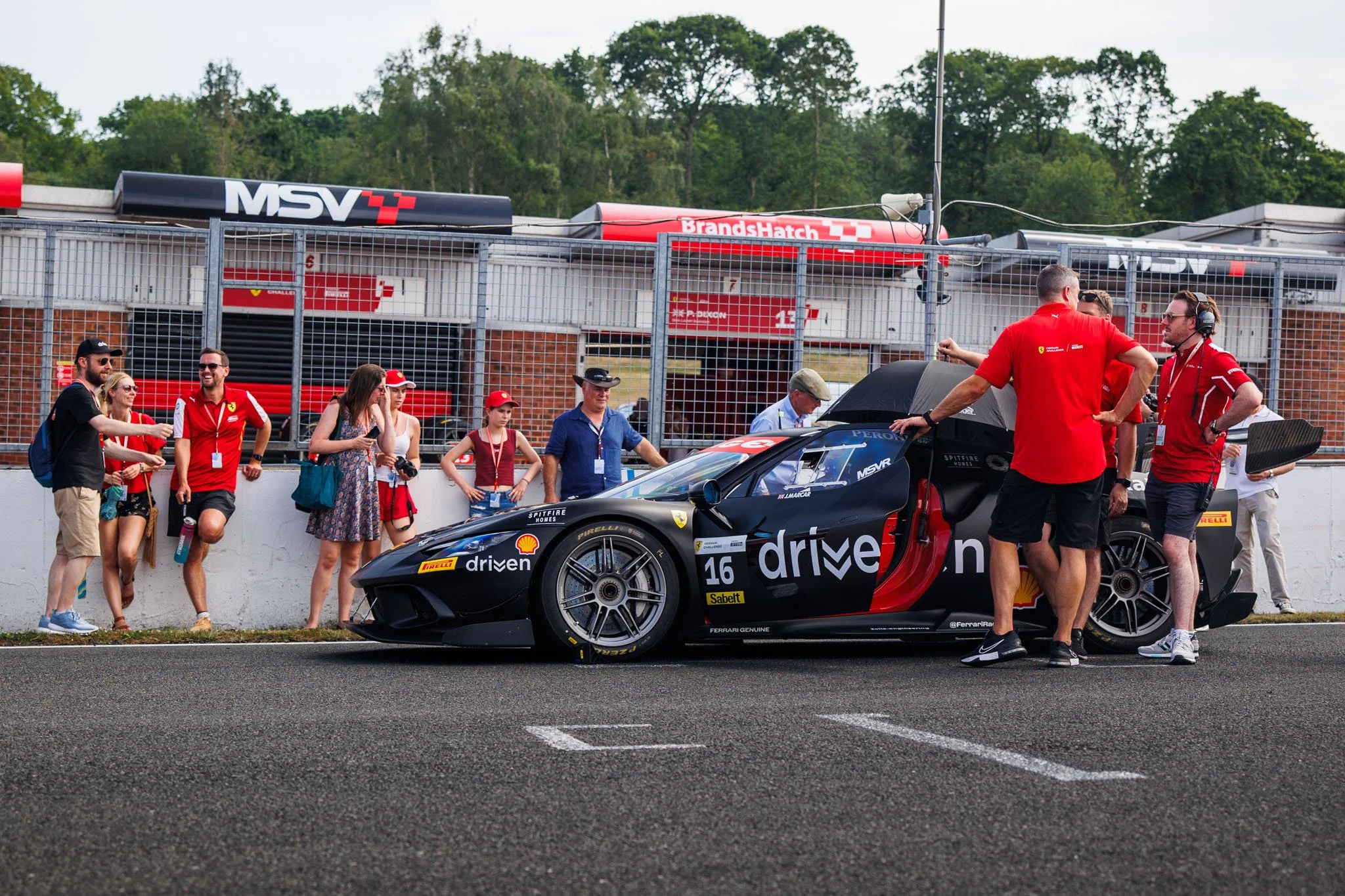
Race 1 - Off to a Bad Start
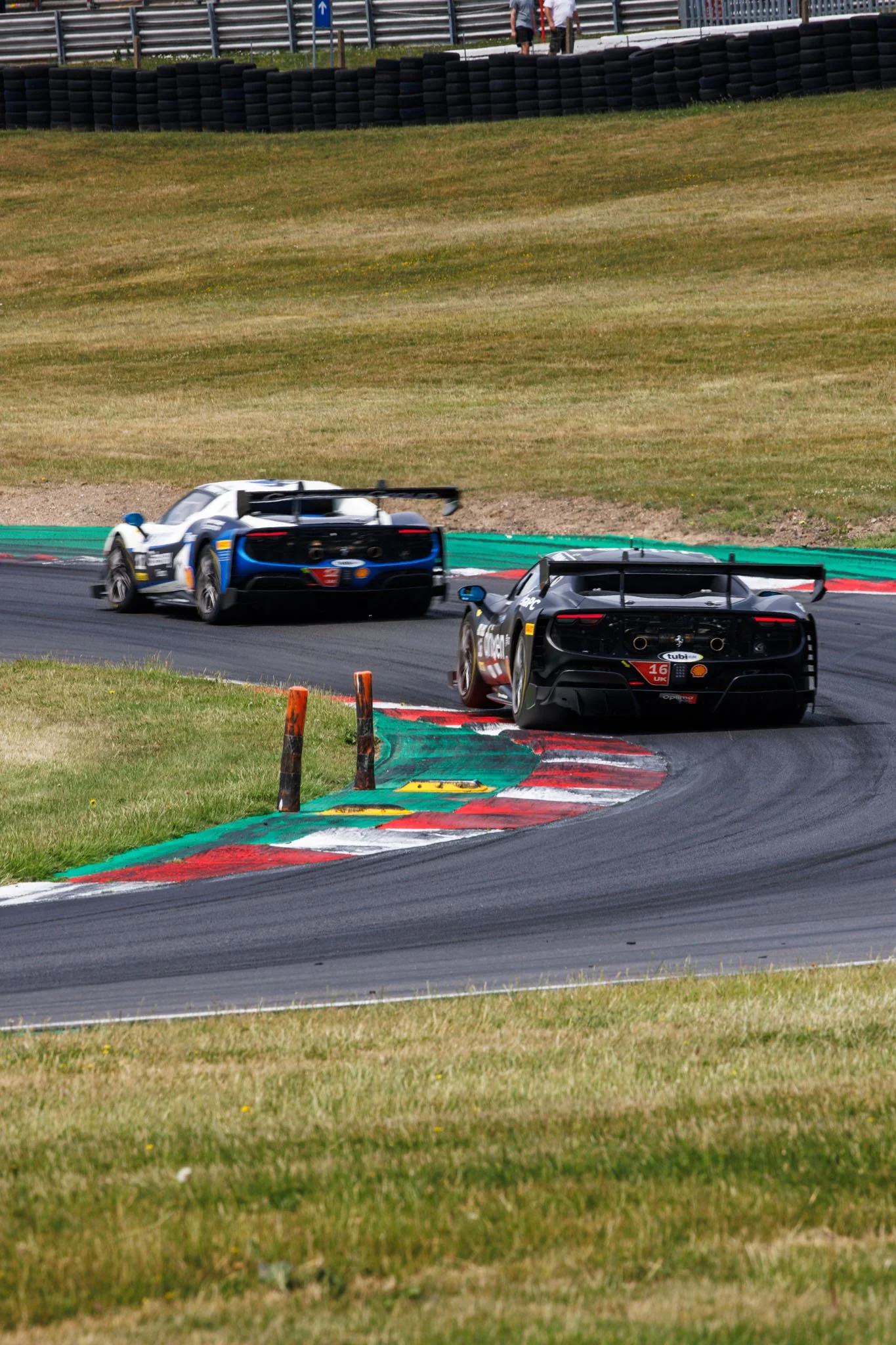
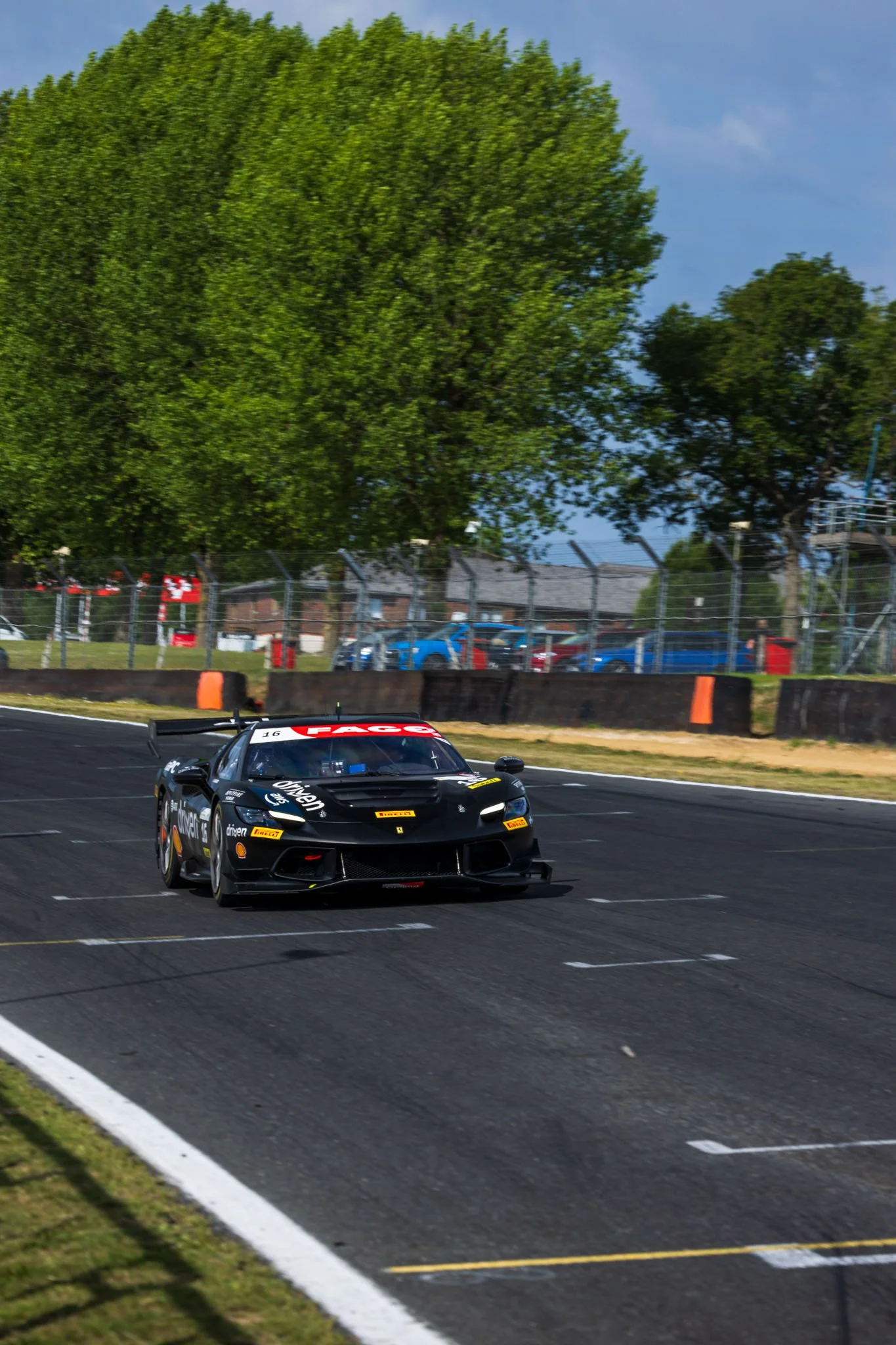
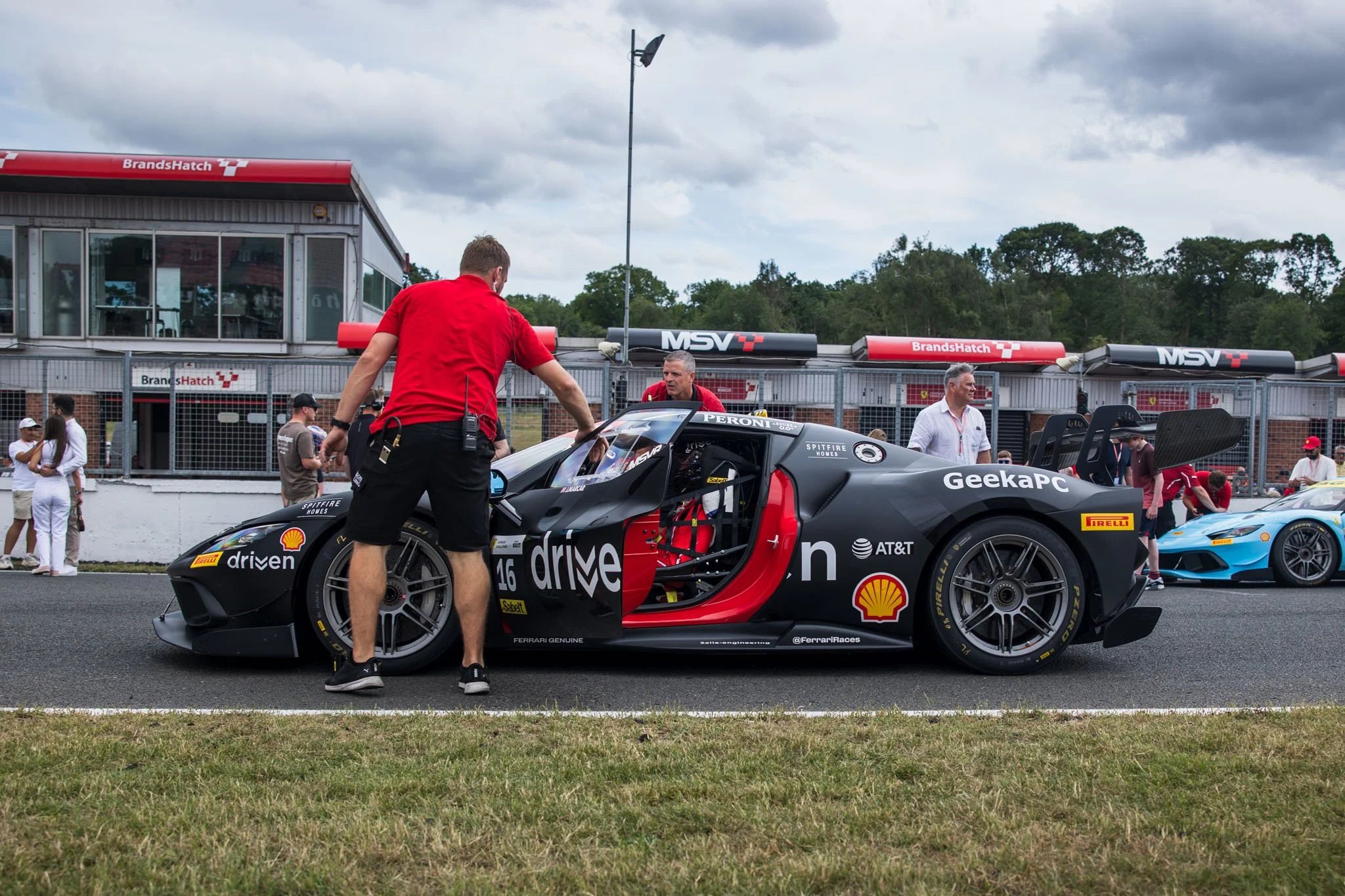
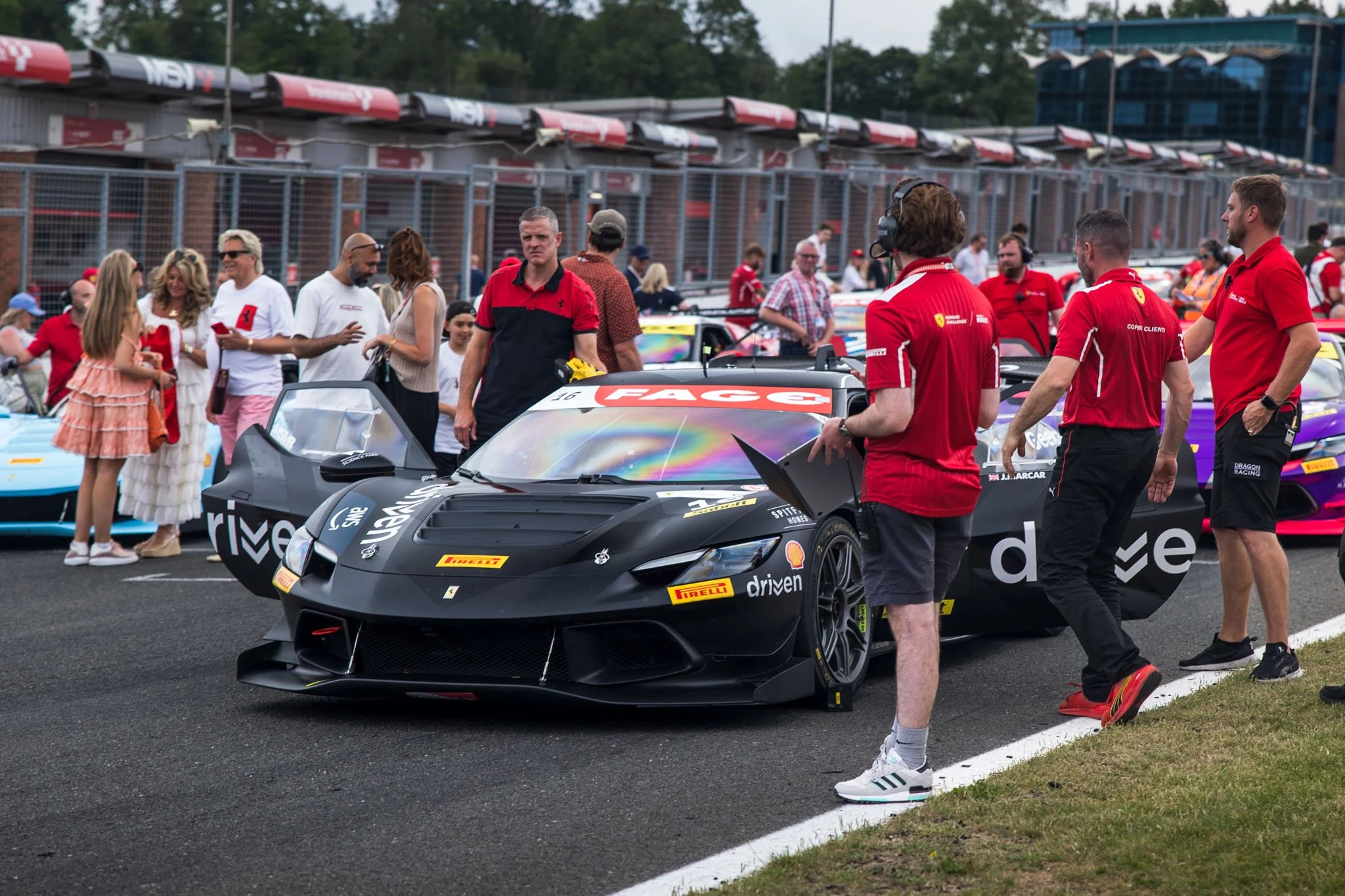
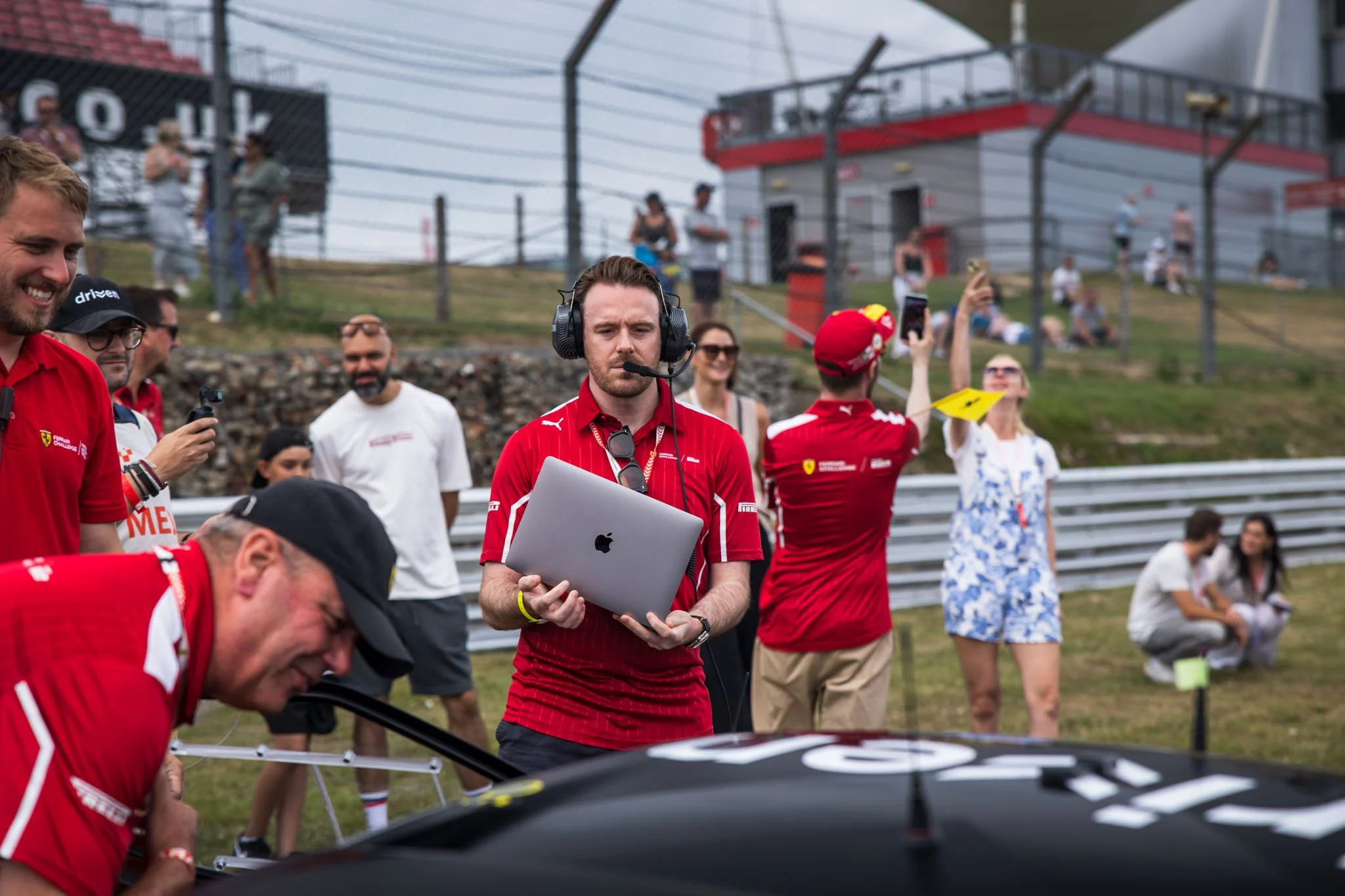
I'm no closer to falling in love with the race starts. I find the stationary grid procedure, where guests and media teams surround the cars, tedious, and I find the formation lap chaotic and stressful. With the lights going out ahead of Paddock Hill on the rolling start, I was preparing for incident avoidance. In 9th position, I was starting on the right-hand side of the 5th row. While I wasn't pleased with my starting position, all drivers, except the top two, had qualified within a few hundredths of a second, meaning the pace was going to be tight and drivers would be fighting for position, attempting to make early overtakes. As I crossed the start line with Miles shouting "go-go-go!" over the radio, I was entering Paddock Hill surrounded by cars.
In the chaos, I saw grass and dust being thrown up into the air; I assumed that someone was off. I lifted off the throttle and prepared to brake. Fortunately, nobody had come off; it was just a couple of wheels on the grass, but my moment of hesitation had allowed two slower cars that had qualified behind me to slip past.
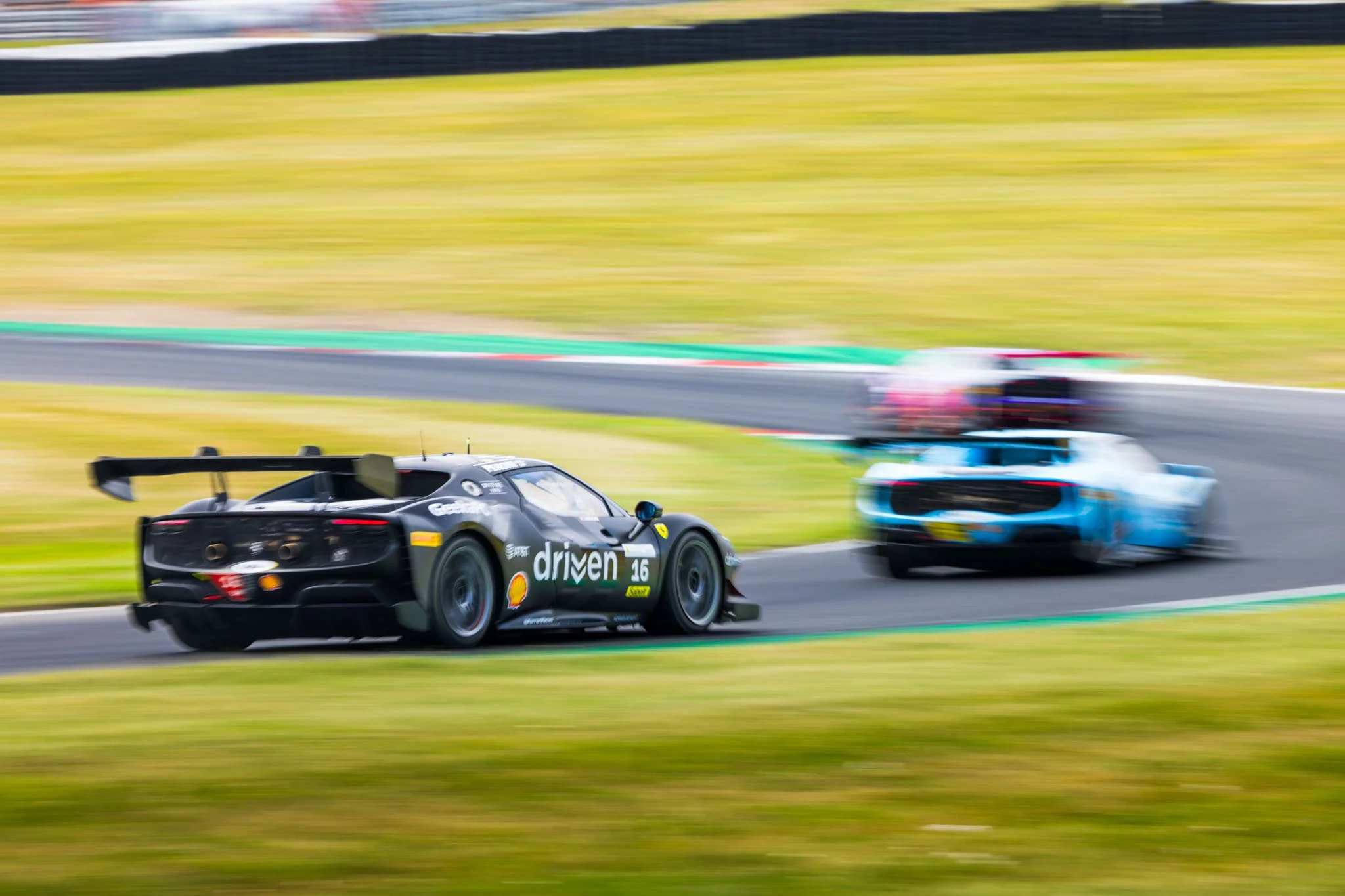
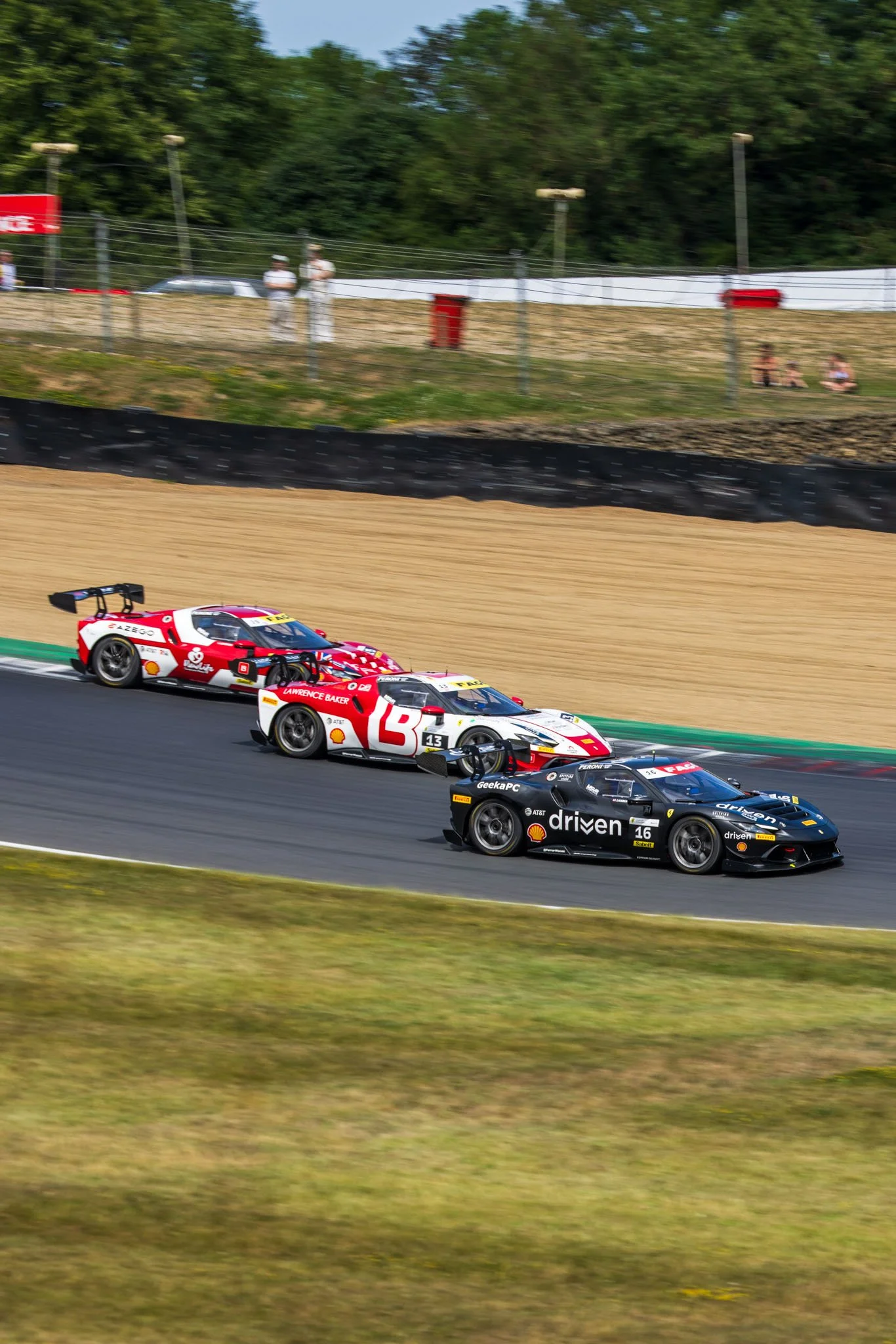
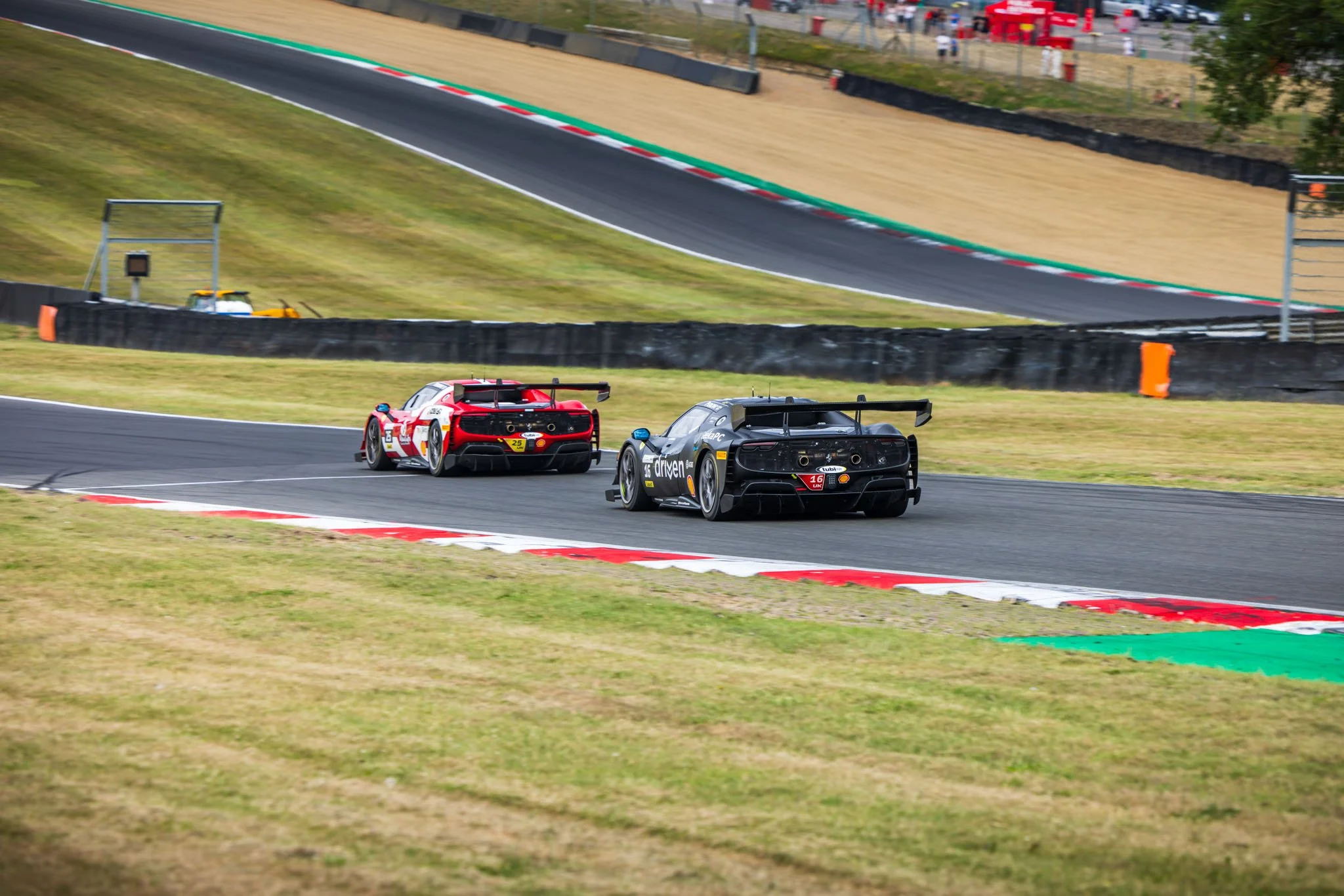
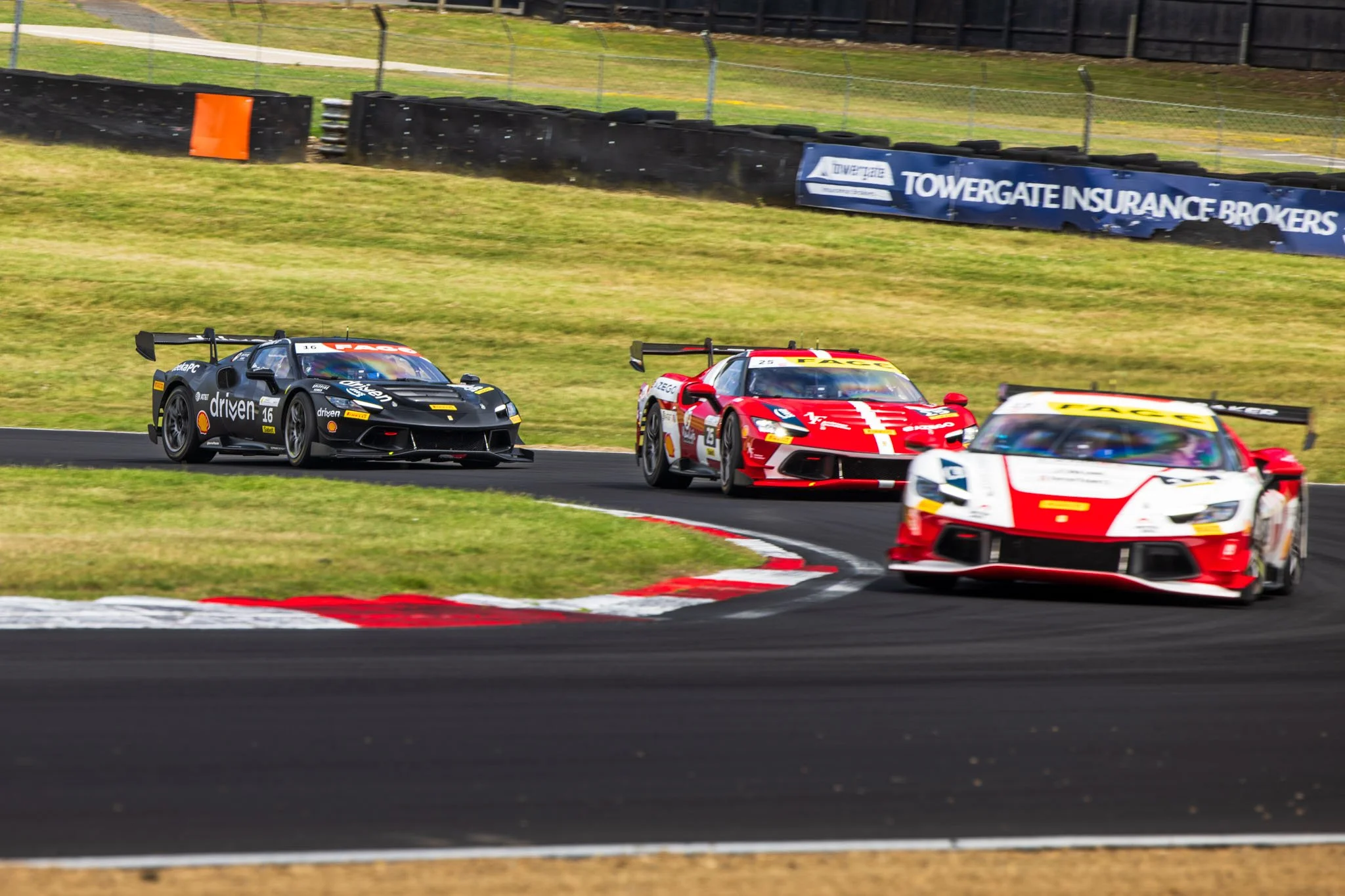
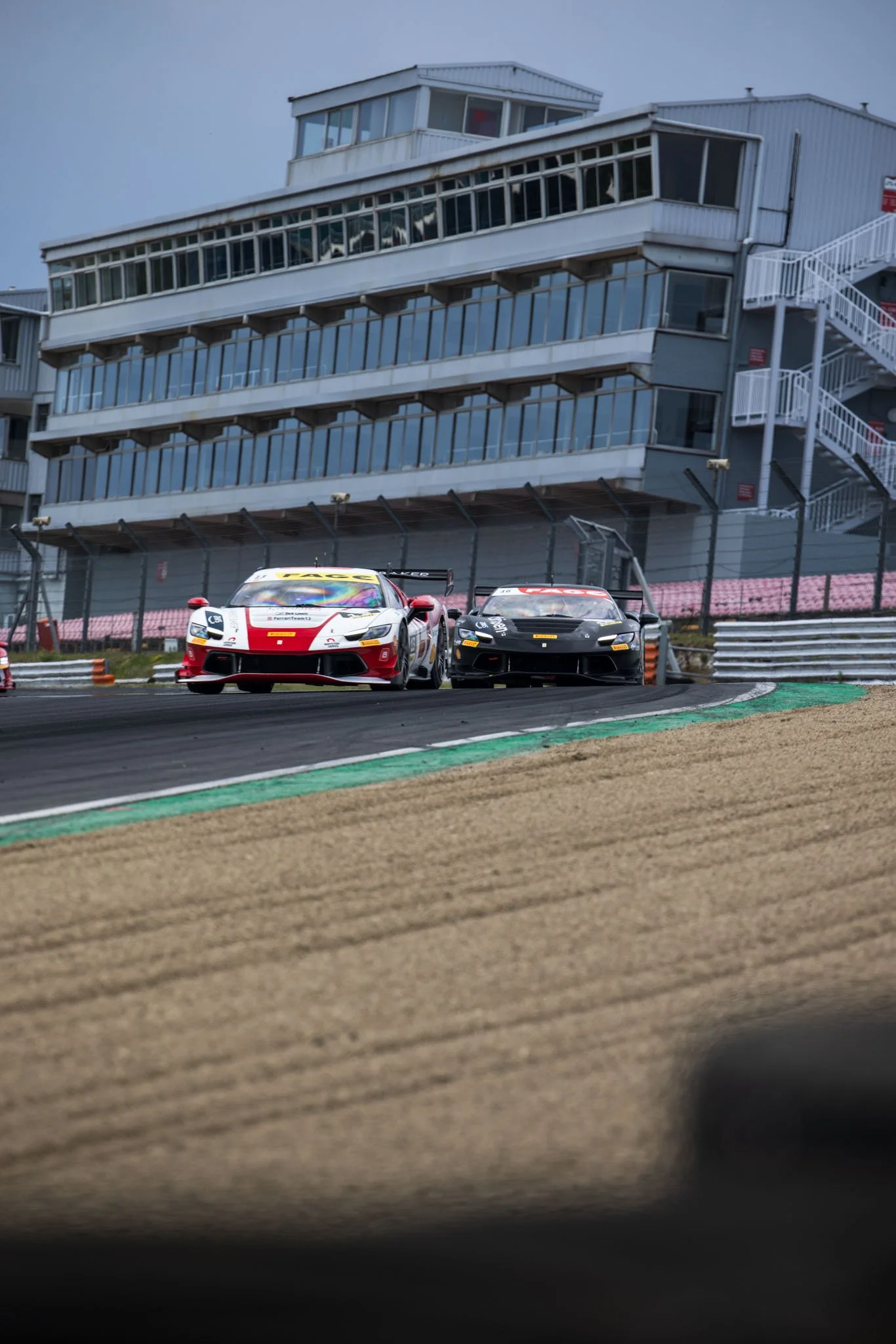
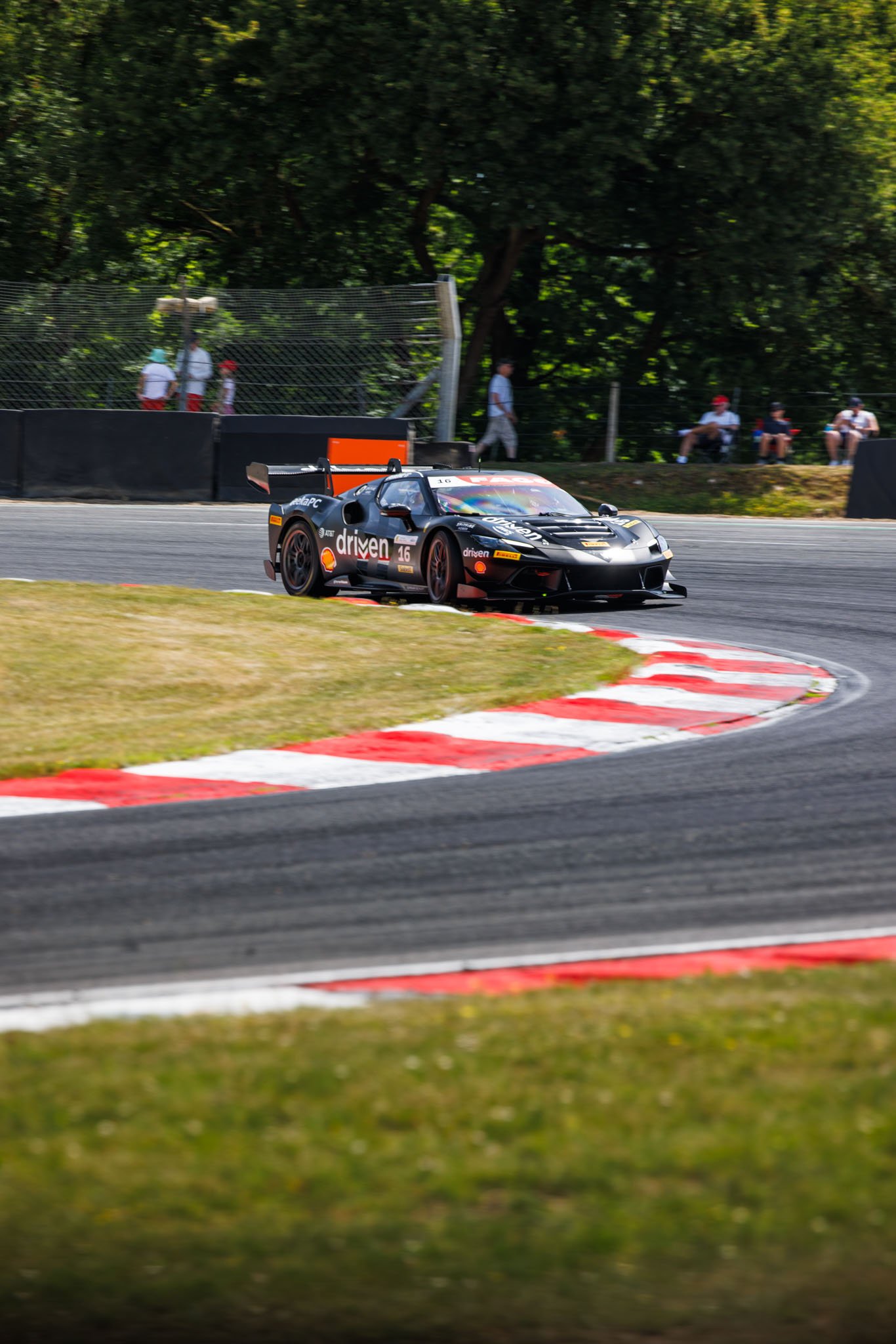
The two cars, driven by Paul Dixon and Stephen Dopson, are both in the Coppa Shell Class, whereas I'm in Trofeo Pirelli. The moves by Dixon and Dopson were fair; however, due to the Indy Circuit's narrow width and constant technical turns and undulations, my race presented a significant overtaking challenge as I attempted to pass the cars that weren't in my class. During the race, I managed to pass Dopson after Surtees and eventually overtook Dixon just meters before the checkered flag. However, the result of the race was a 9th-place finish overall and 5th in class. It's by no means a terrible result, but I was hoping for so much more. I didn't want to be battling cars that I wasn't competing against; I wanted to be up at the front, battling the other Trofeo Pirelli drivers.
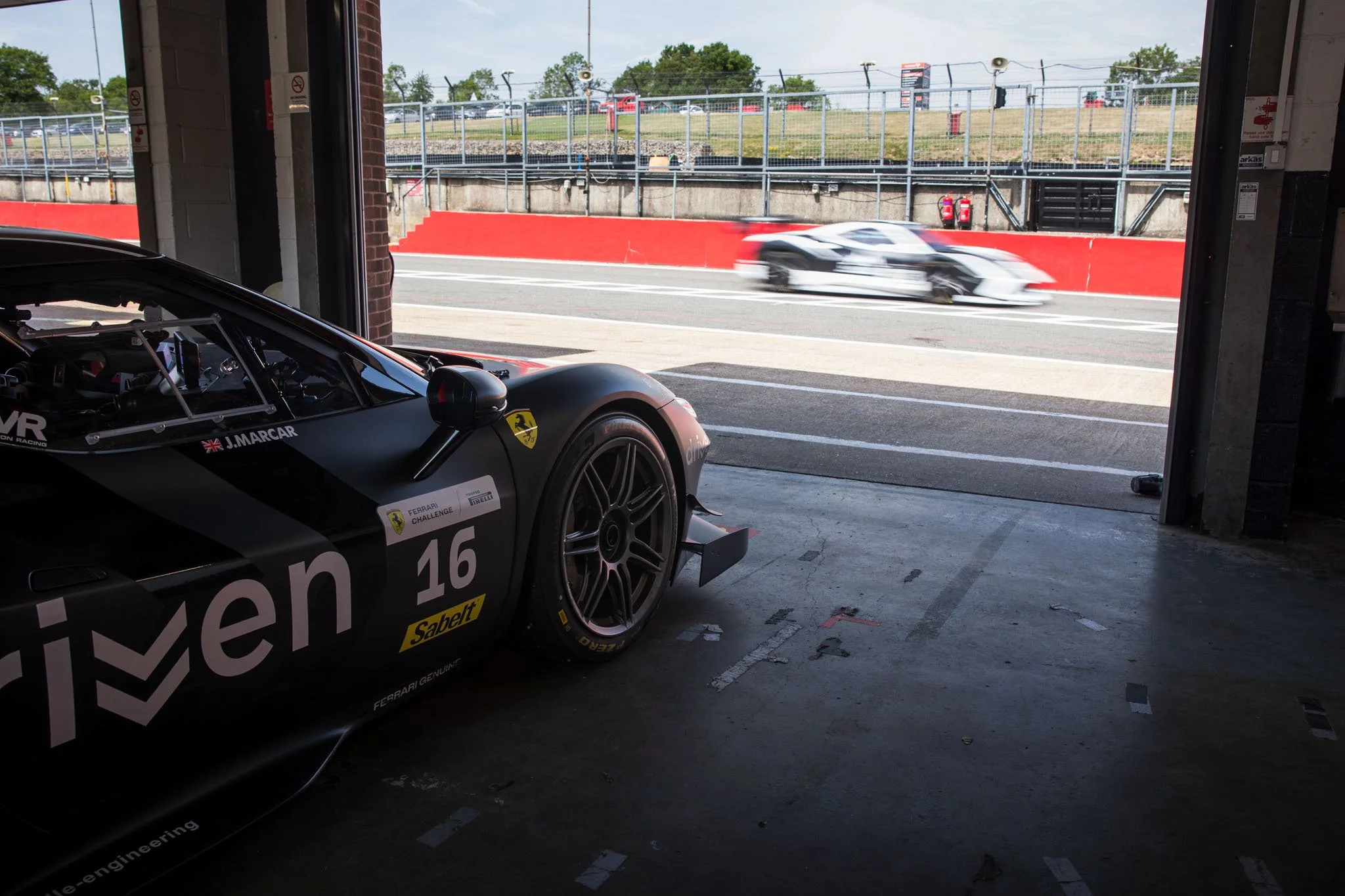
Watch the race coverage for the Indy circuit here: RACE 1
Down on my luck
I'd hoped for something better; I knew I had the potential to do well at Brands on the Indy circuit, and while I was happy with the overtakes and a clean race, it wasn't quite what I'd envisioned.
To make matters worse, when watching the data back with Miles, it was apparent that whilst the incident avoidance at the start of the race was fair, I'd got off to an abysmal start without utilising full engine revs, and I was, therefore, off the pace. We chalked it down as another lesson and looked ahead to race day two, but the second race would present a whole new challenge: a circuit I've never driven before.
Sunday - My GP Circuit Debut
Ahead of the weekend, I'd allowed myself some ambitious expectations. I had a romantic vision of a podium finish on Saturday at what I often regard as 'my home circuit.' The reality of the day burst that bubble.
I could blame a multitude of things, including the heat, trepidation over the tyre incident from Friday, or bad luck, but it was clear that my start in race 1 was too shaky to be competitive, and that was on me.
The big challenge for Sunday would be my debut on the Brands Hatch Grand Prix layout. Miles and I had worked through some laps on the simulator, but in terms of actually driving (or even looking at) the GP circuit, it would all be a brand-new experience.
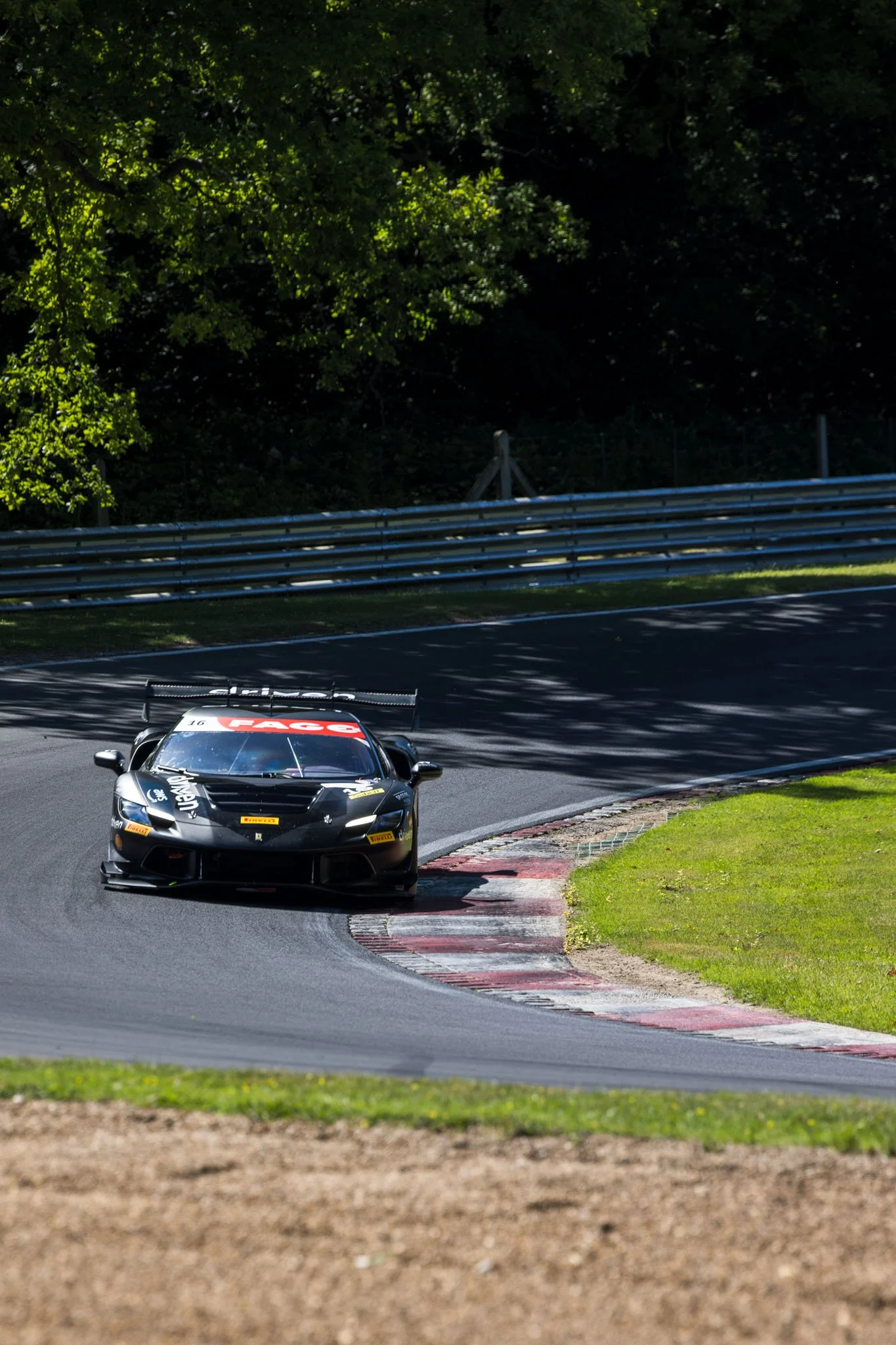
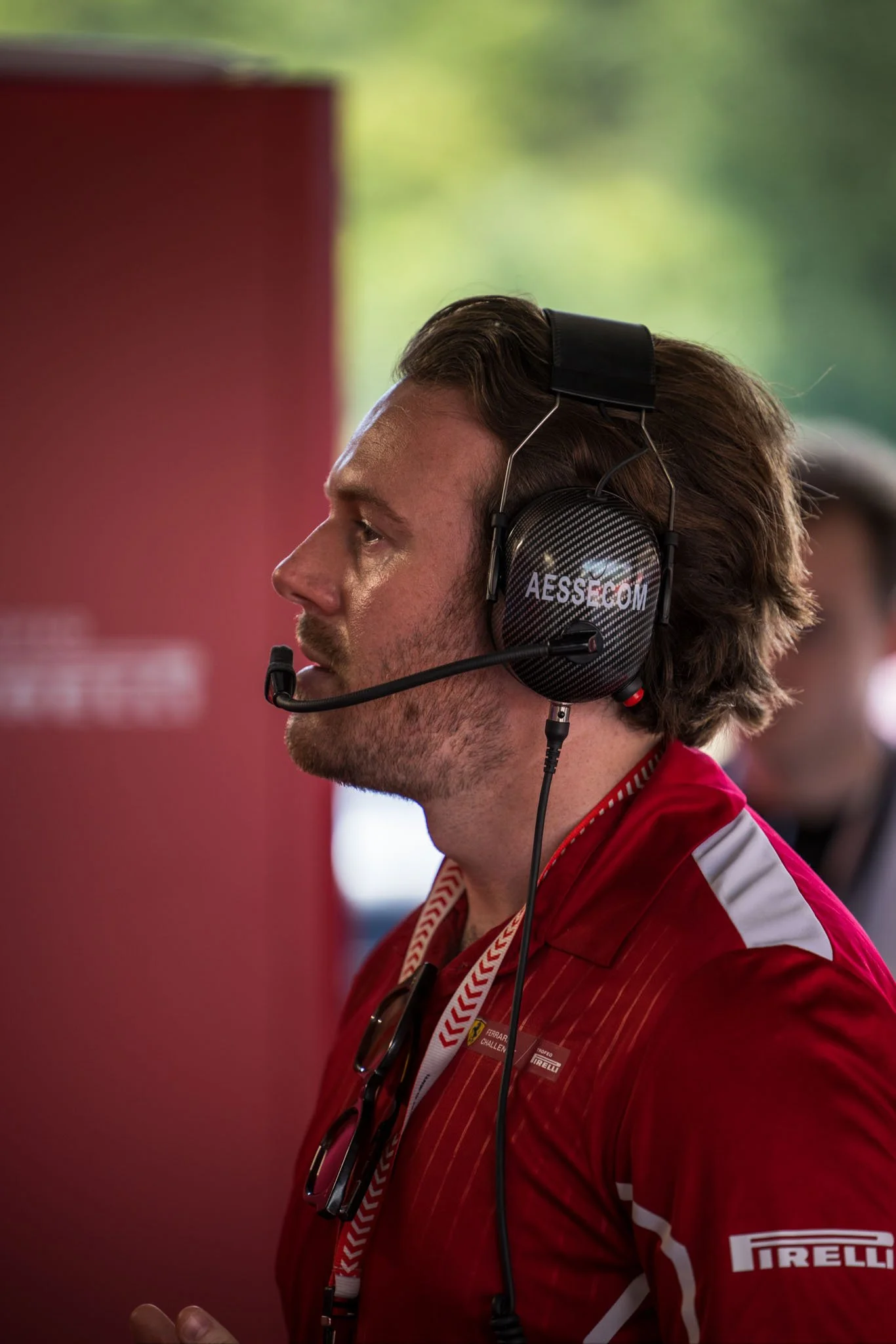
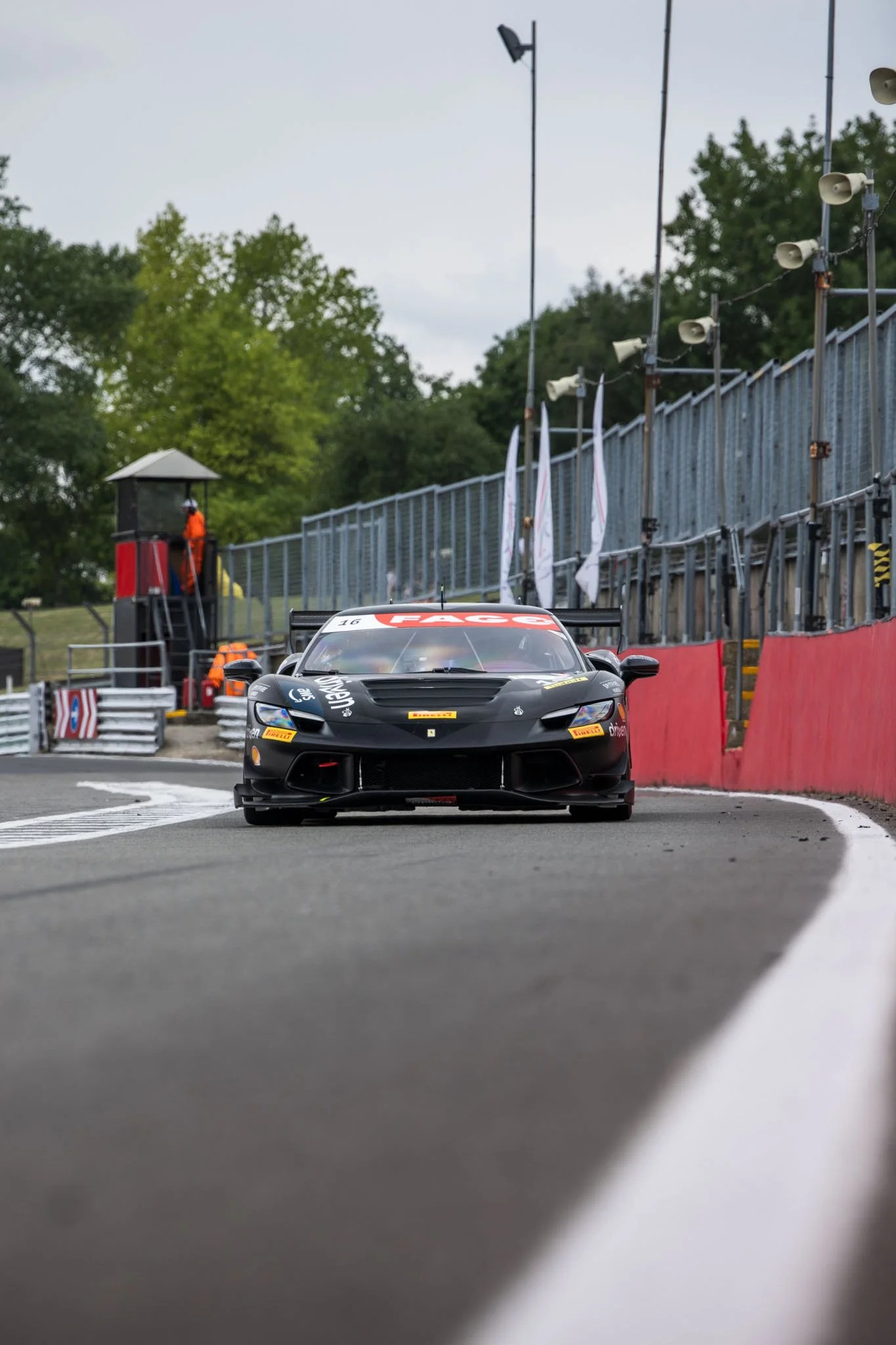
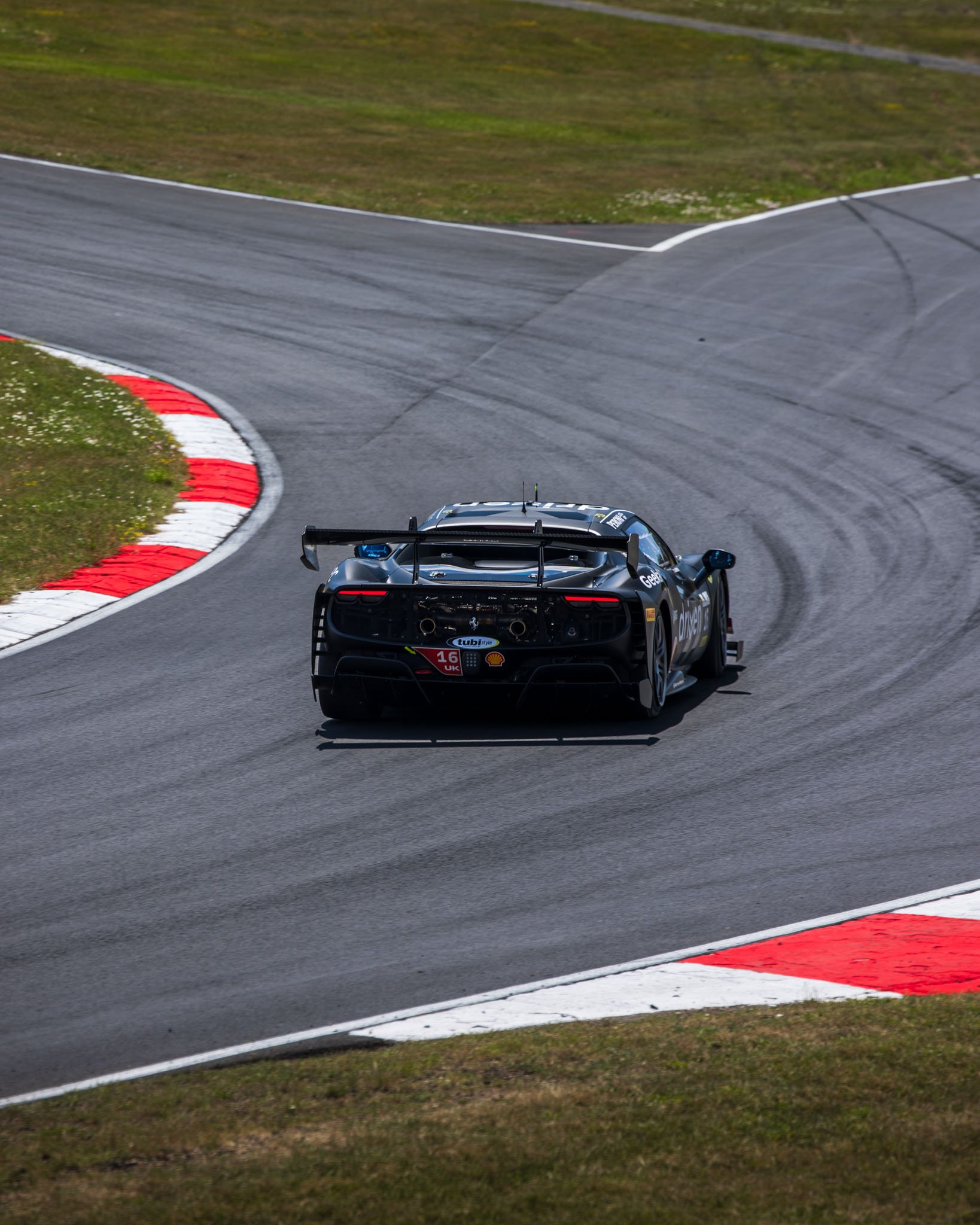
40 minutes to learn Brands Hatch GP
In the first free practice session of the day, I went out on the set of tyres from the previous day's race. The idea of utilising the old tyres was to gain an understanding of the circuit before swapping to new tyres and pushing to see if I could achieve some reasonable times.
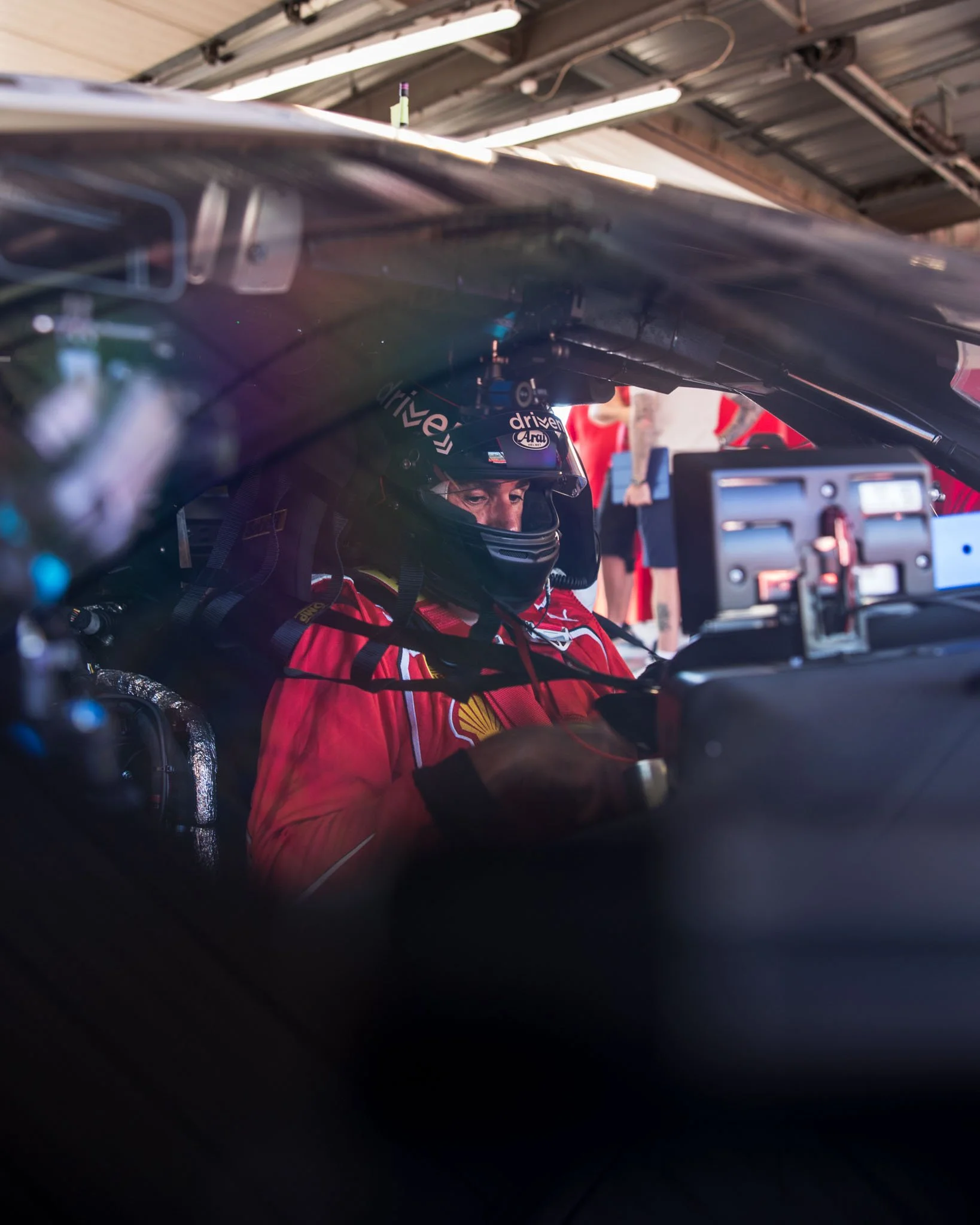
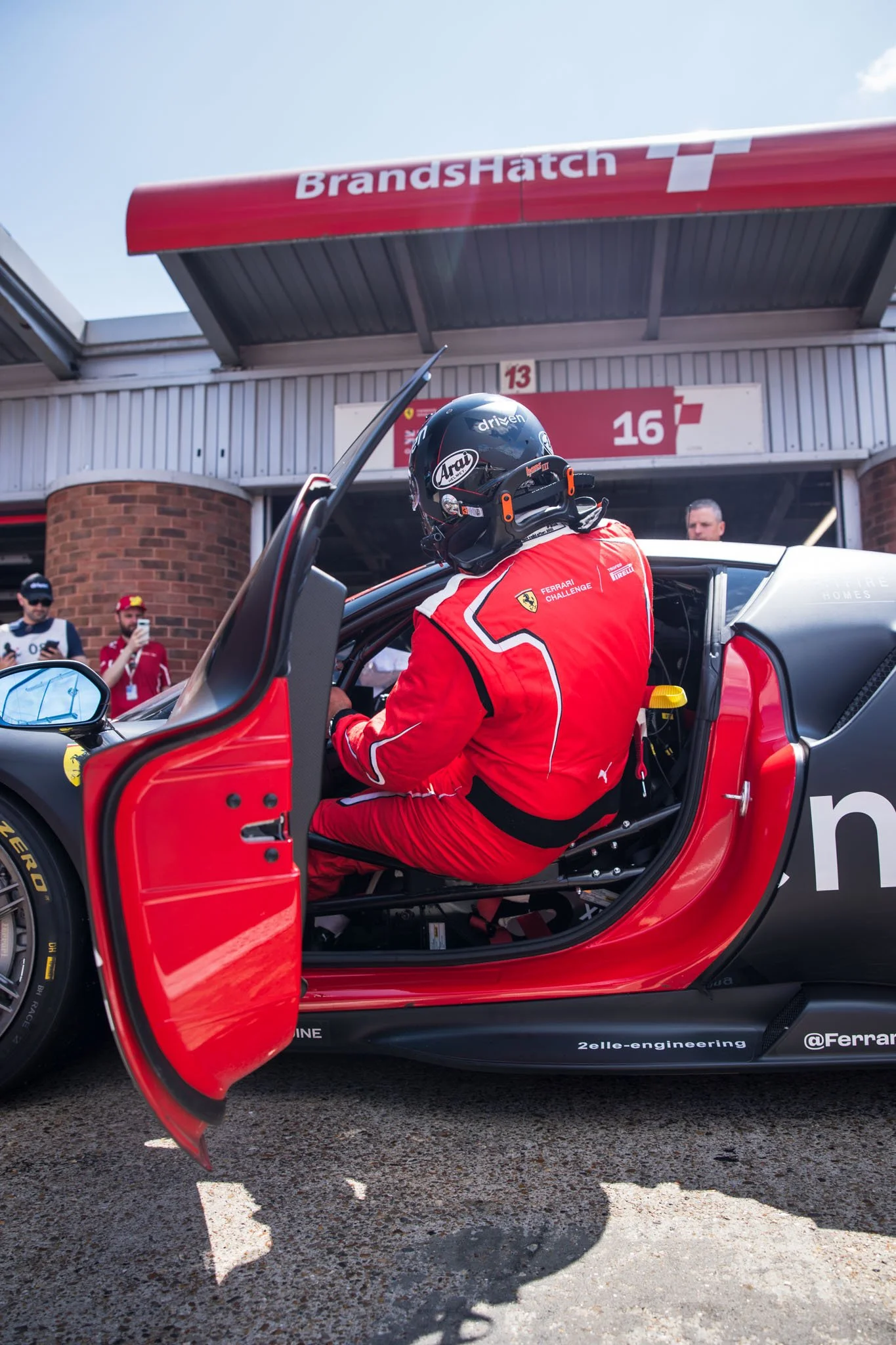
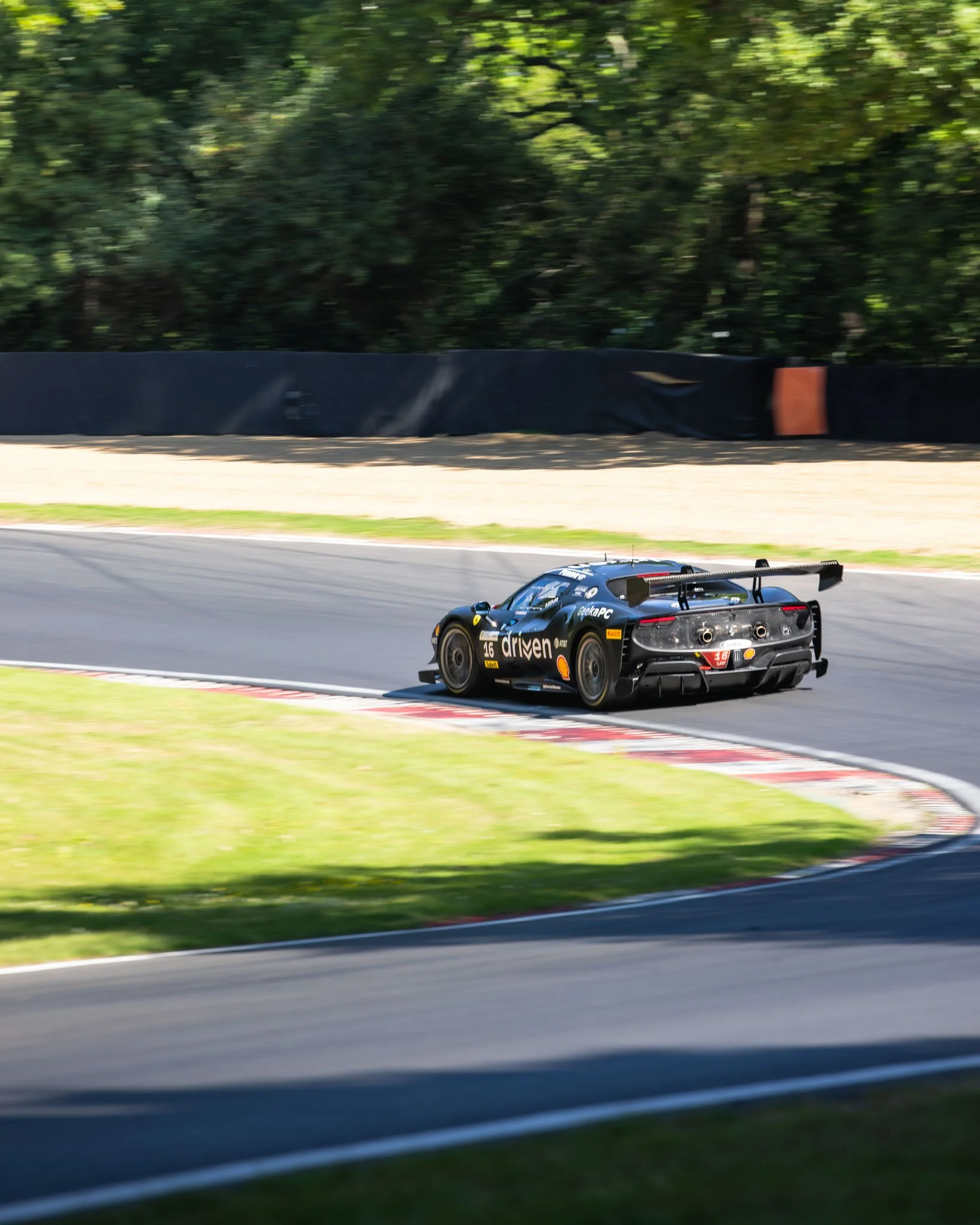
Driving a new circuit is nothing unusual for me; I usually enjoy the process. In a near-700HP Ferrari Challenge car, though, with other more experienced drivers around me, it was one of the more stressful drives of my life. I boxed for new tyres and worked on installing them in the way Miles had taught me. The first half of the GP circuit still features Paddock Hill, Druids, and Graham Hill, but for Surtees, instead of a left and a right to McLaren and clearways, it's a sharp left and an uphill climb to the woods, leading to an entirely new complex.
With the new tyres bedded in, I was looking for purple sectors on the timing screen in my car. I'd occasionally get a flash of purple indicating that the pace was good, but in terms of how my times compared to those of other drivers, I'd have no idea until I was out of the car.
The result of Free Practice 2 on the GP layout was a time of 1:29. For context, the two fastest laps set by Gilbert Yates and Pranav Vangalla were 1:25 and 1:26. My pace in Free Practice was 11th fastest out of 13 cars. Something drastic needed to happen in the qualifying session if I wanted to stand a chance of being competitive; luckily, my biggest asset was on hand to help - Miles Lacey.
"Let's find you some time."
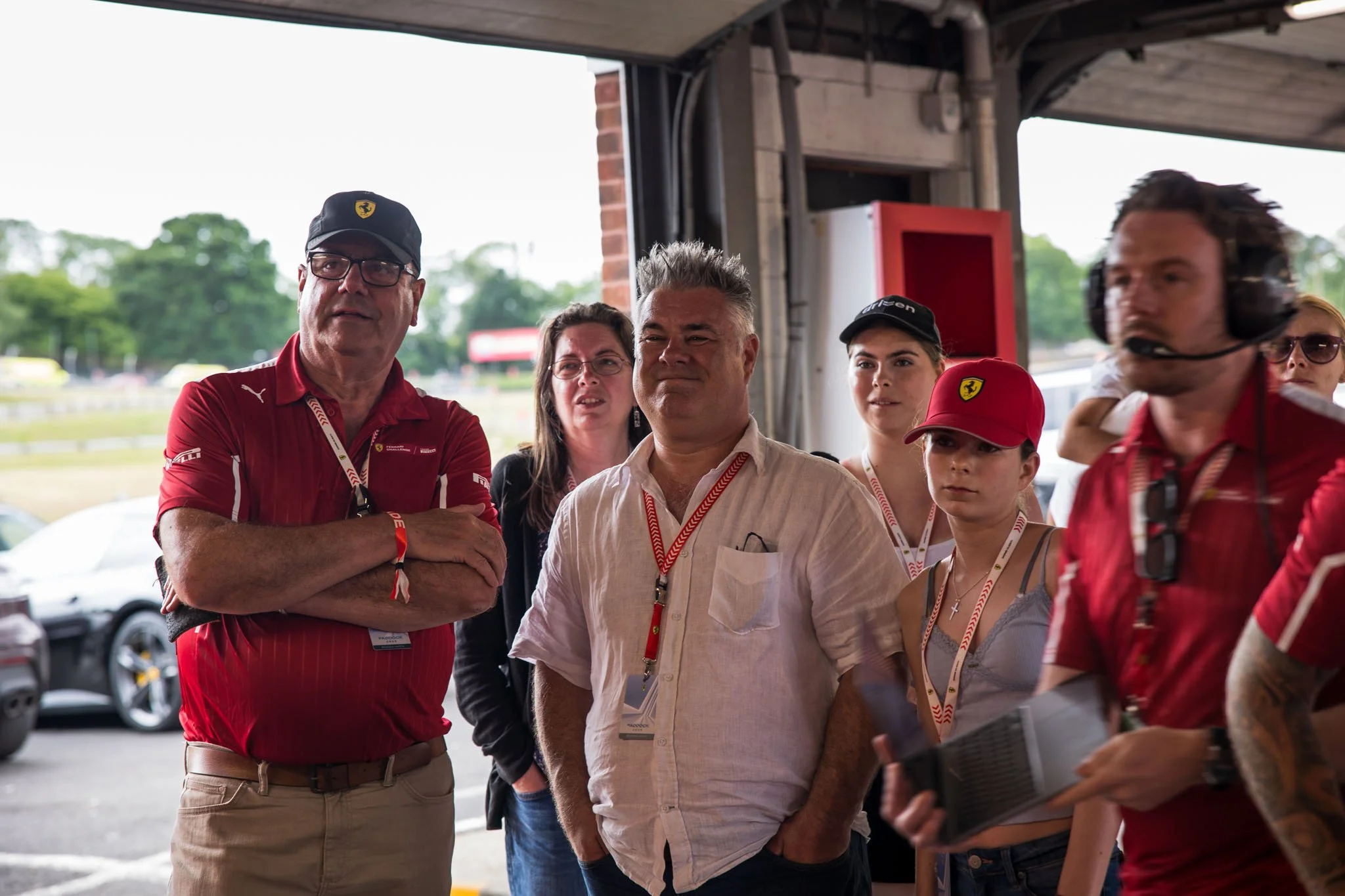
Miles and I sat down in the data room. The data room is a designated area reserved for drivers and their coaches to review race data. Miles had already offloaded the files from the Ferrari's VBOX and could see where I could improve. When I joined Miles in the data room, I was expecting a dressing down, but instead, Miles seemed optimistic. "I think we can find some time easily," he said. He was right, too. We agreed, while reviewing the footage, that there were opportunities for increased speed, later braking points, and a bit more bravery in the new sector of the circuit.
The fact that this was my first outing on the GP circuit could have been enough of an excuse for not doing well, but I wasn't having it. There was more to be gained, and I needed to find it. Miles and I concluded the data session in agreement on what needed to be fixed, and the qualifying session was the only opportunity left to complete the task.
Qualifying 2
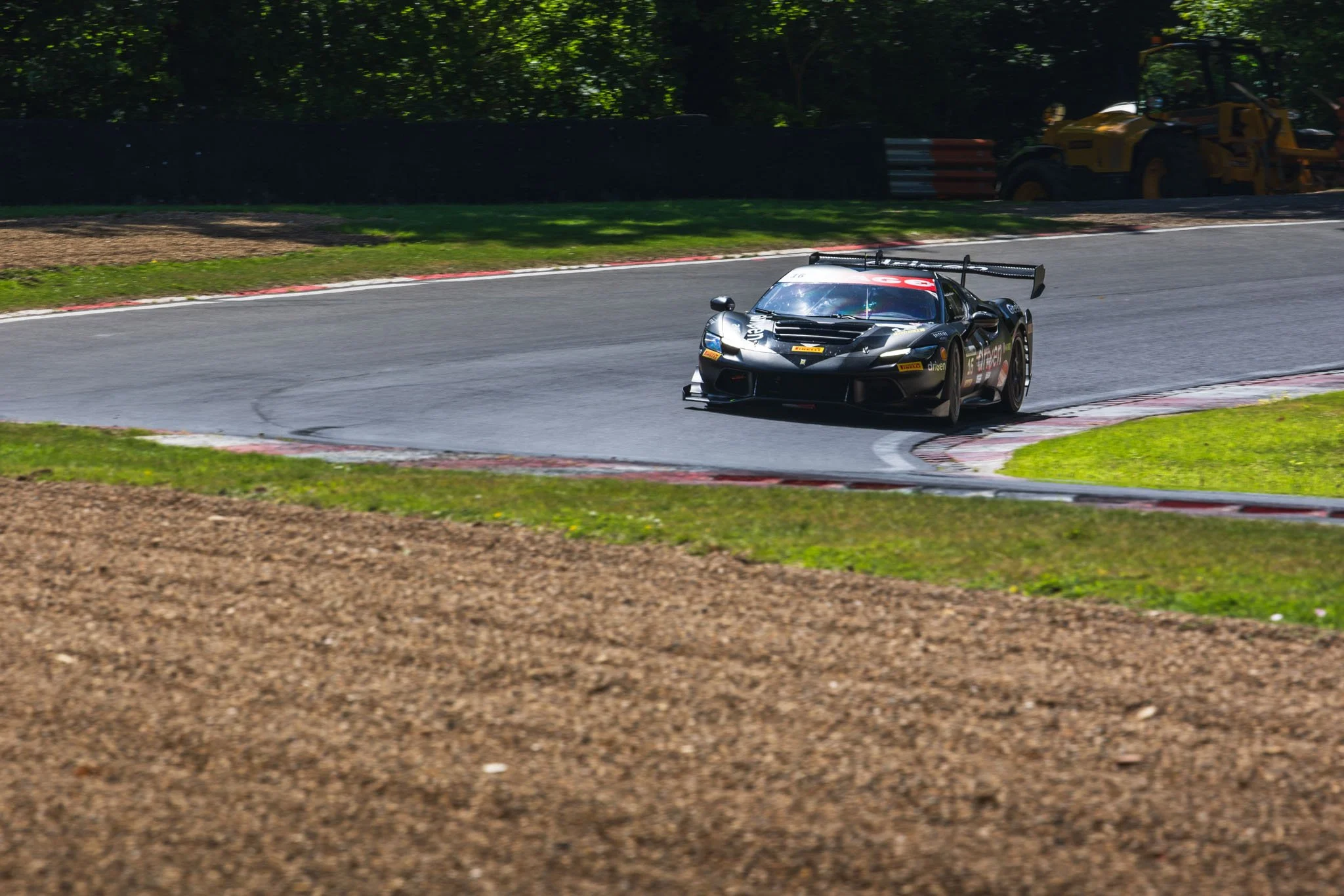
With a new focus, determination, and a good internal pep talk, I got into the car for qualifying and set out to register a time that would secure a better starting position for race 2.
As agreed in the data room, I pushed harder through the new GP section of the circuit and linked up the sections of the Indy Circuit for a better overall time through the first sector. I completed a fast lap, but at what felt like a safe pace. I secured a time of 1:27, shaving over 2 seconds from my previous best time, which earned me a 6th-place start (5th in class).
Race 2: Be fast, be brave, and get your elbows out.
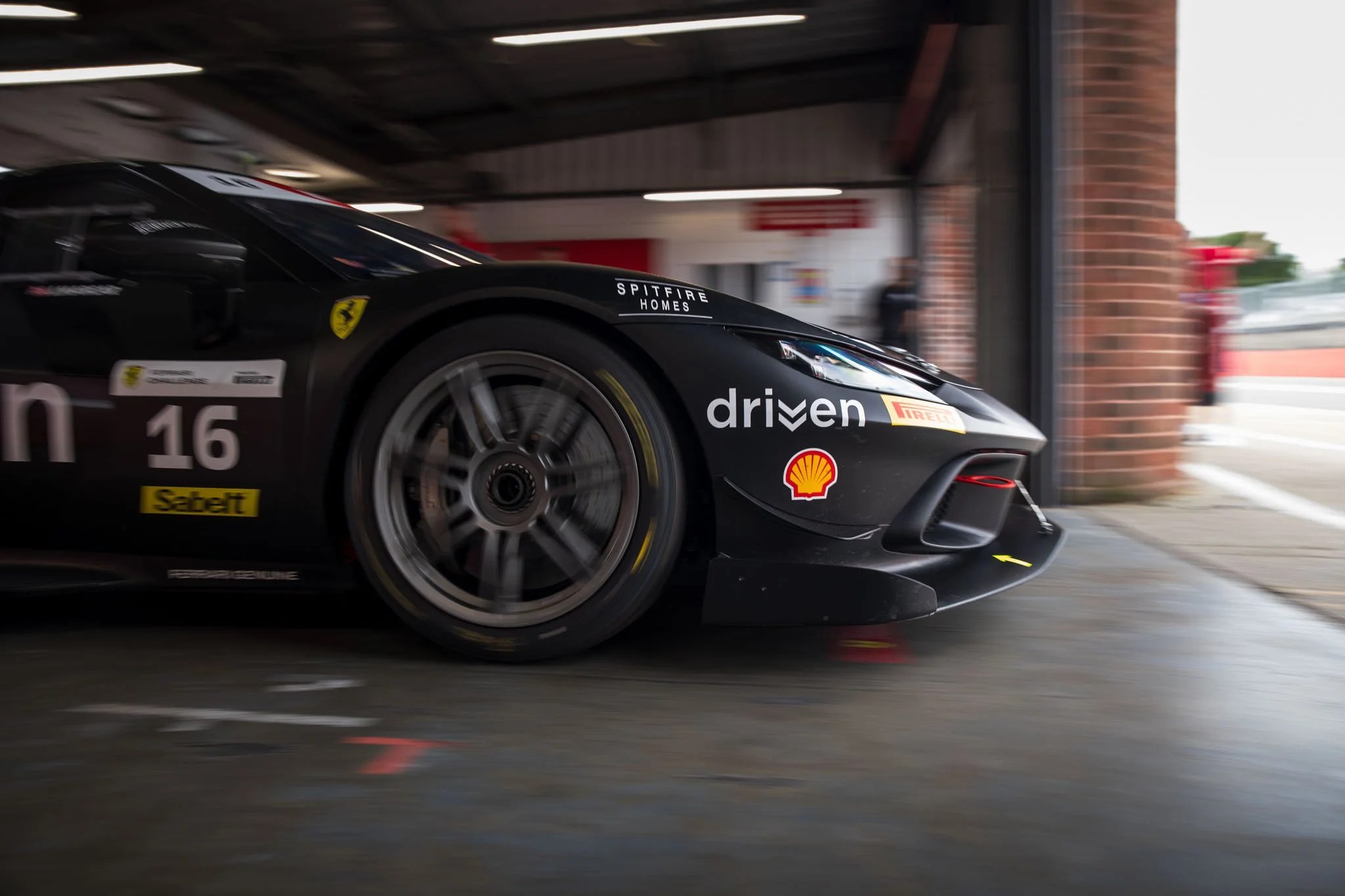
The second day of racing is always slower compared to Saturday, but the slower pace allows for extra time to think and plan. Following my conversations with Miles, what I needed to do was clear. Be fast off the line, use all the revs, be brave, hold my position, and if necessary, get my elbows out (not literally, obviously) to defend.
My 6th-place starting position moved me forward three rows from the day before, and I was also fortunate enough to tuck in behind the car in 5th place, hug the inside line through Paddock Hill, and then fight and defend through Druids.
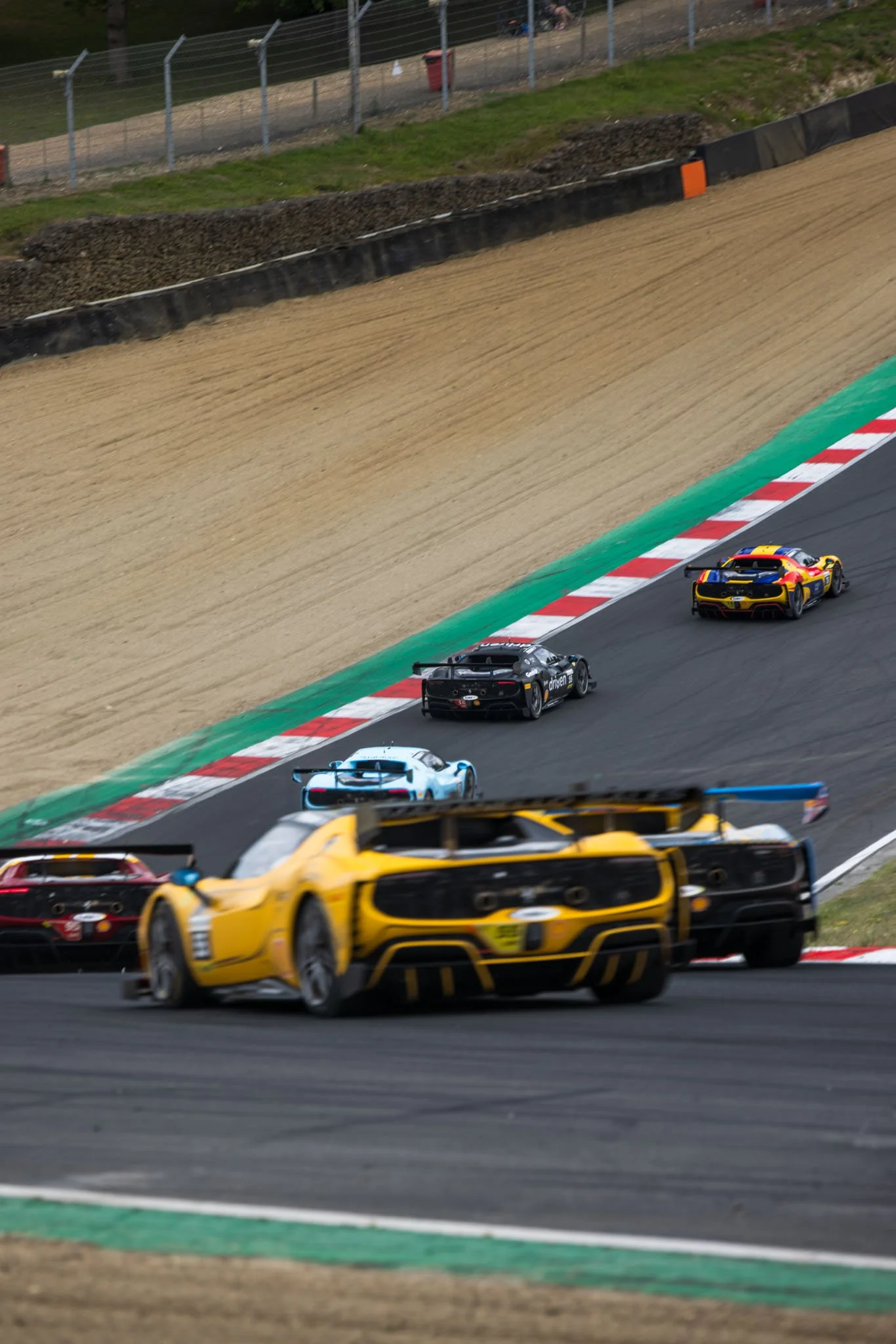
As we rolled toward the end of the formation lap, the lights went out, and we were off. It was a good start; much better than yesterday. I tucked in just behind the car in 5th place and blocked any other cars that might try to overtake. We got down and around Paddock Hill, hit the compression and then were back up the hill and into Druids. The line was safe, the exit was good, and by the end of lap one, the order had sorted itself out; I just needed to get past Mike to catch up with my competition - the other Trofeo Pirelli cars up ahead. But that, as I would soon learn, was to be no easy task.
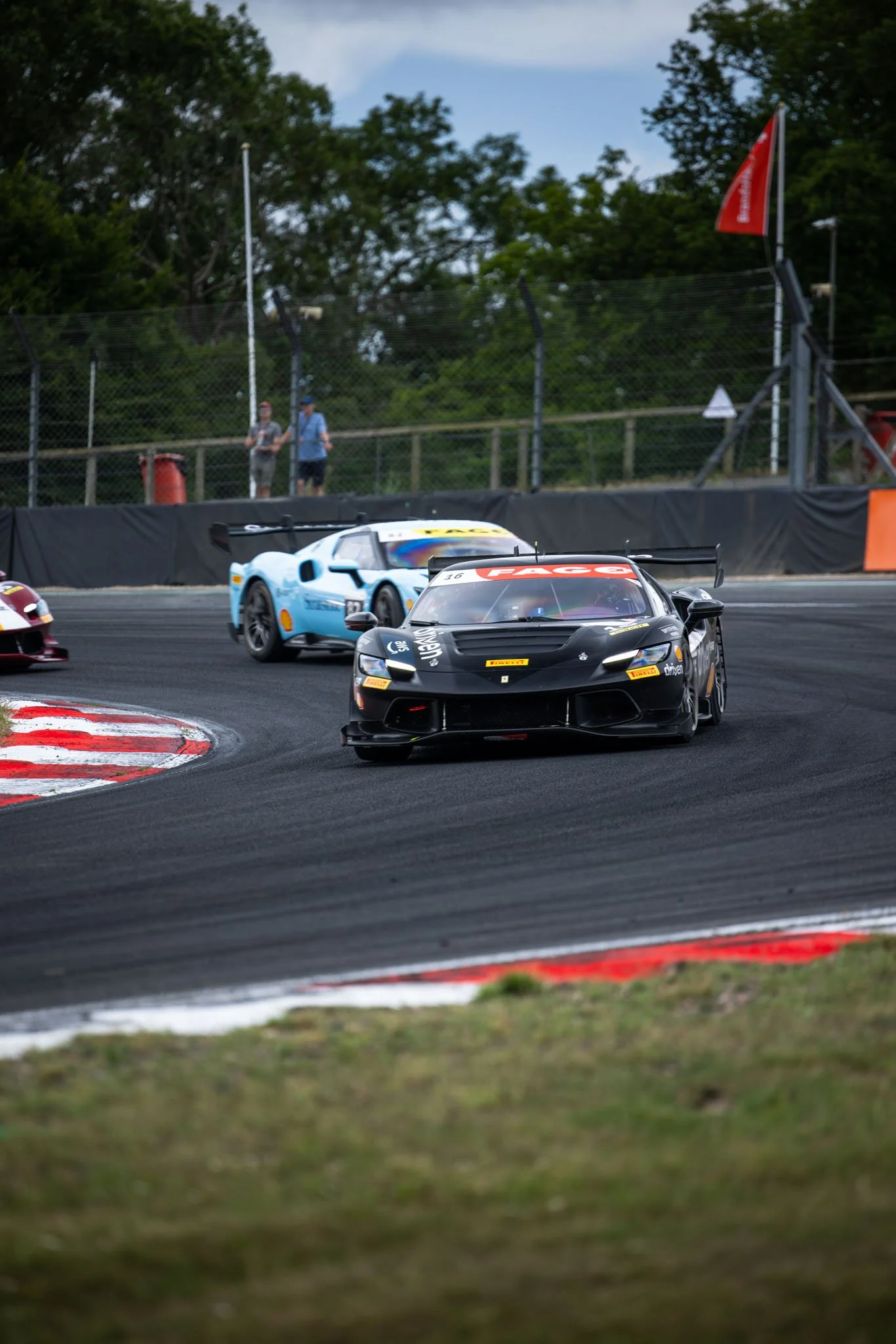

The 30-minute battle against Mike Dewhirst
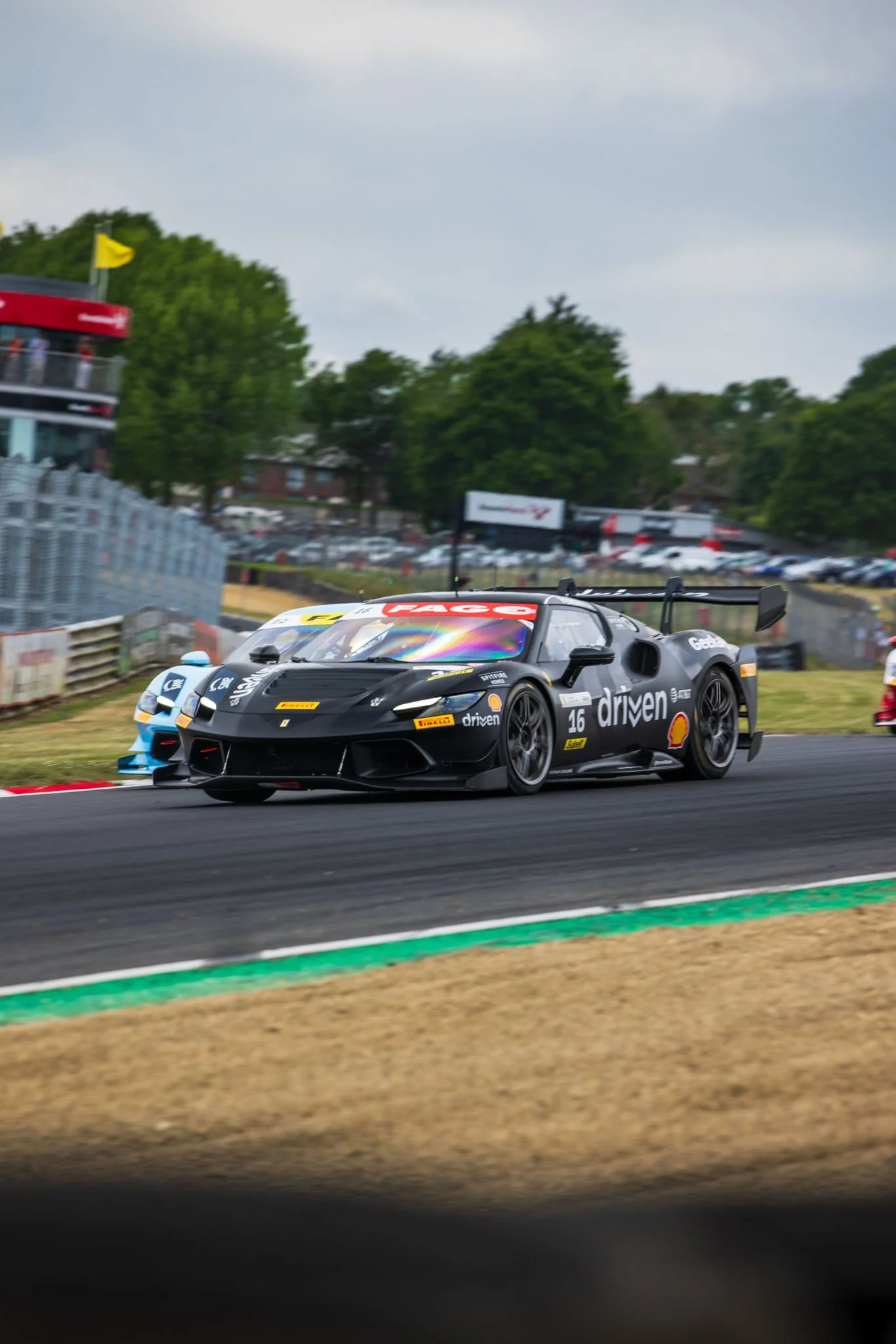
Mike Dewhirst, in car 78, is an experienced driver with a previous season of competition in the Challenge Series. He's quick and has fantastic car control, but due to an 'off' he'd had in the qualifying session, he had to lose all but one of his new qualifying tyres due to gravel damage. This meant Mike had to compete in Sunday's race with the tyres he had used to compete in Saturday's race.
It was obvious Mike wouldn't have as much grip in the corners, and within just 10 minutes of the race, it was likely that he'd be having a tough time trying to keep his car in check with just one new tyre fitted.
I'd assumed that Mike would have no choice but to let me by within a few laps - but he didn't.
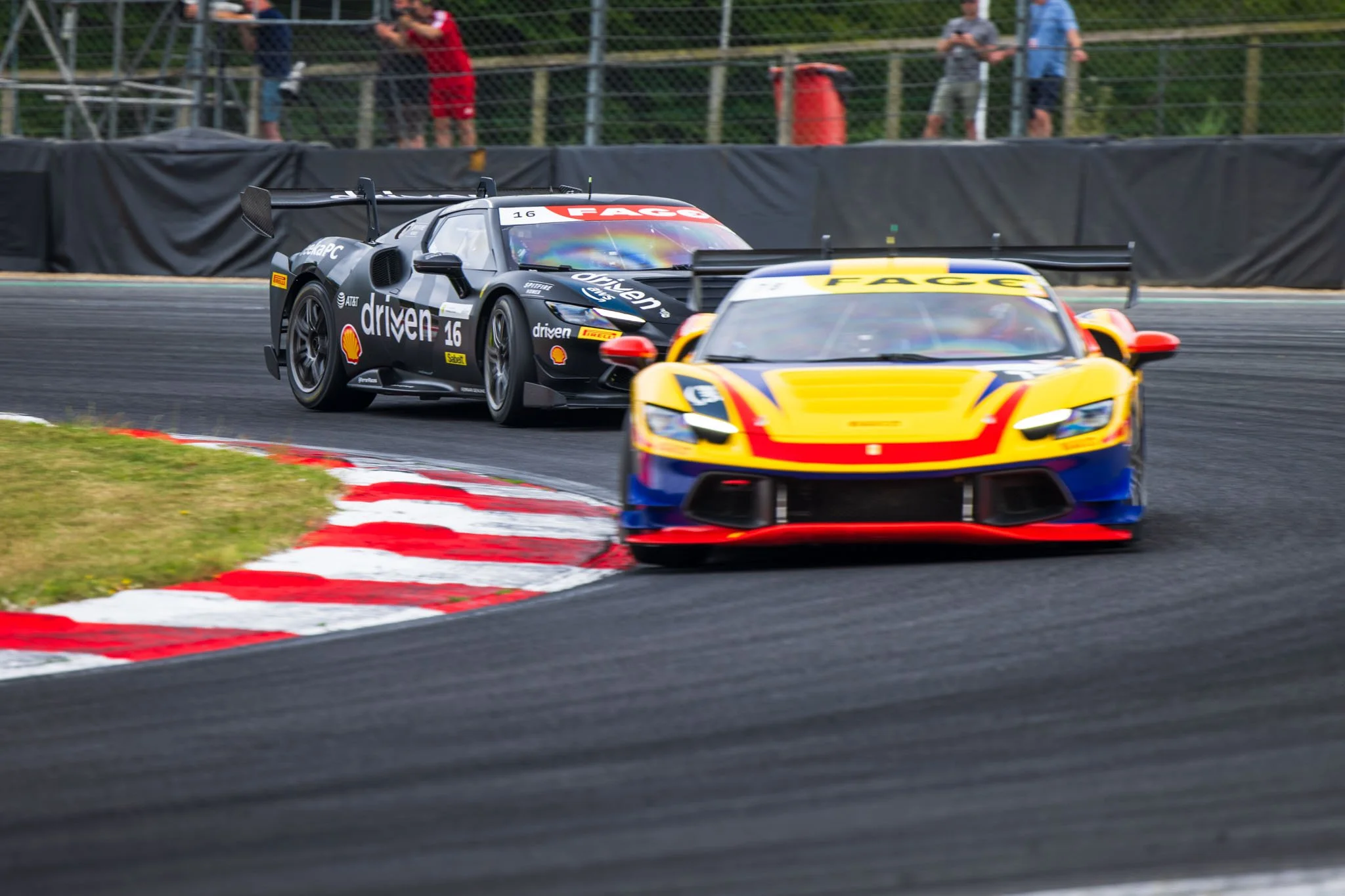
Mike drove brilliantly throughout the race and defended like a true champion. Try as I might, I couldn't get past him. I was being pressured by cars behind, and as a result, I was close enough to Mike's rear exhaust pipes to see the fiery glow being projected from deep inside his engine. At one point, I managed to execute a cleaner exit out of Surtees, where the GP circuit heads up and into the woods. Mike and I were side by side for the length of the Pilgrims Drop straight towards Hawthorns. Miles clicked through the radio while watching the footage from the pit garage. "You will outbrake him; keep pushing," he said. But Mike had the inside line, and we hit the brakes at the exact same time. Mike had the advantage, and I was battling to get alongside once more. It was clear that Mike's tyres were finished and that I had the faster pace, but with Mike's biggest competitor in his class, Peter Hunter, directly behind me, he wasn't going to give the place away without a fight.
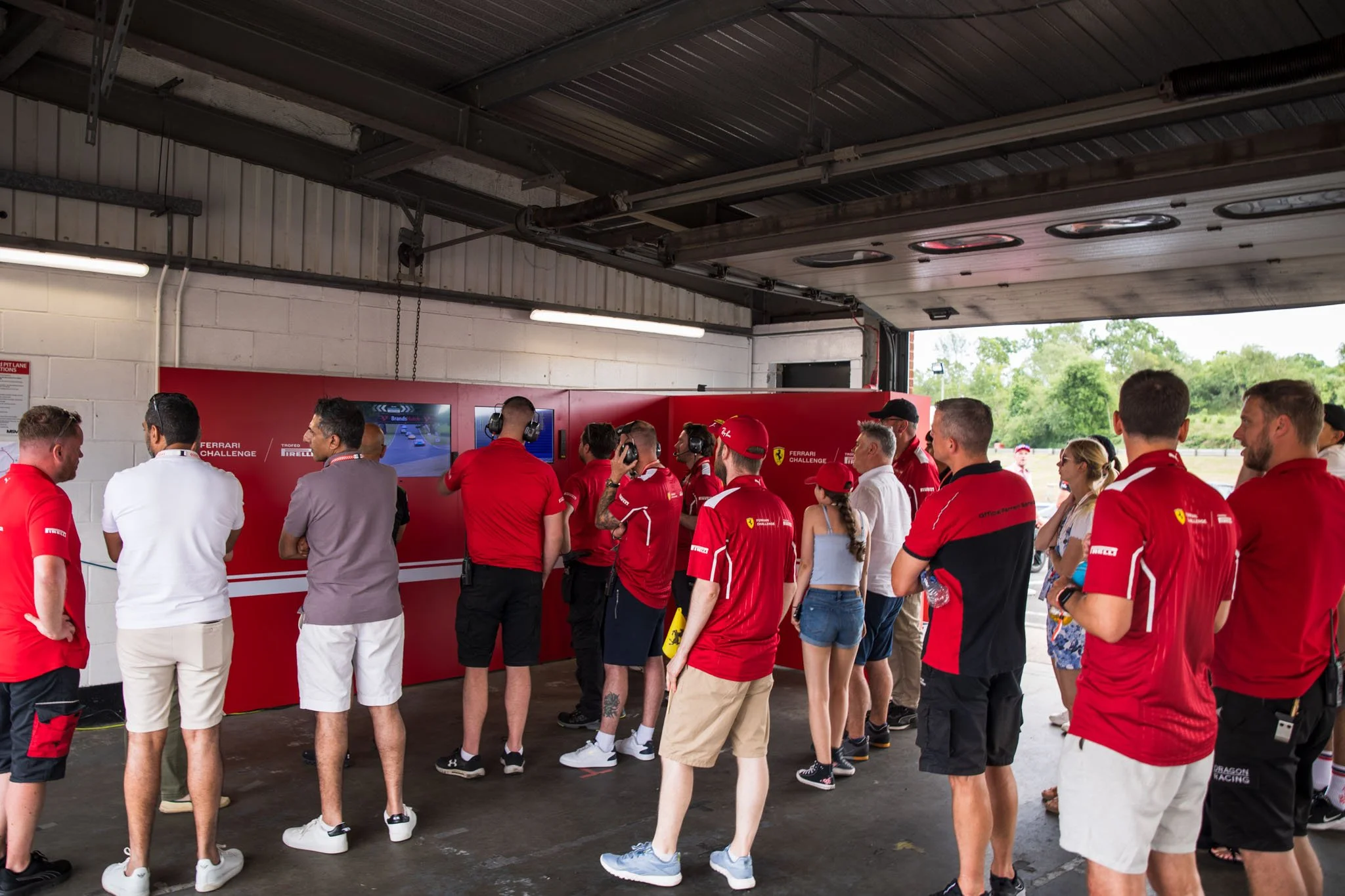
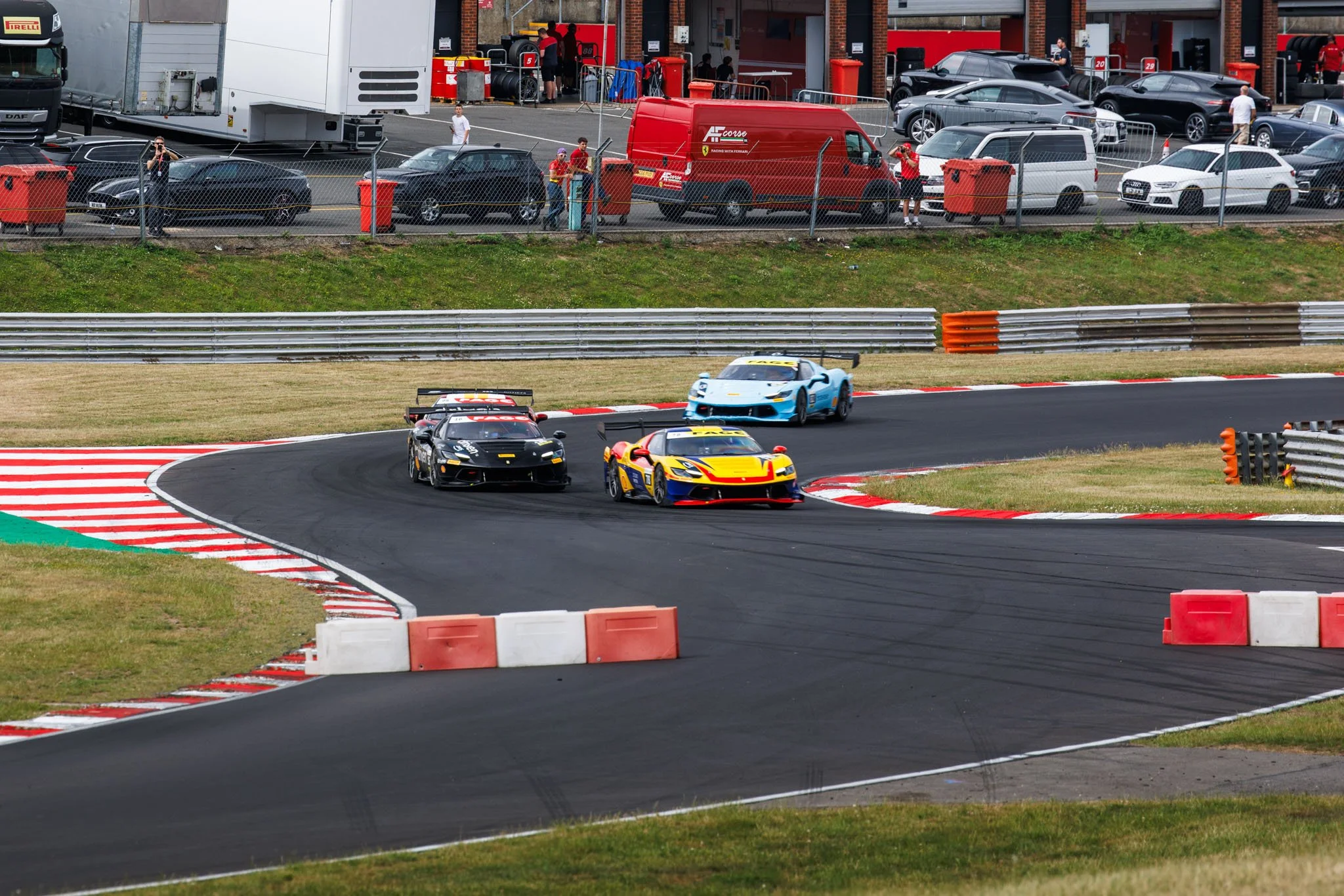
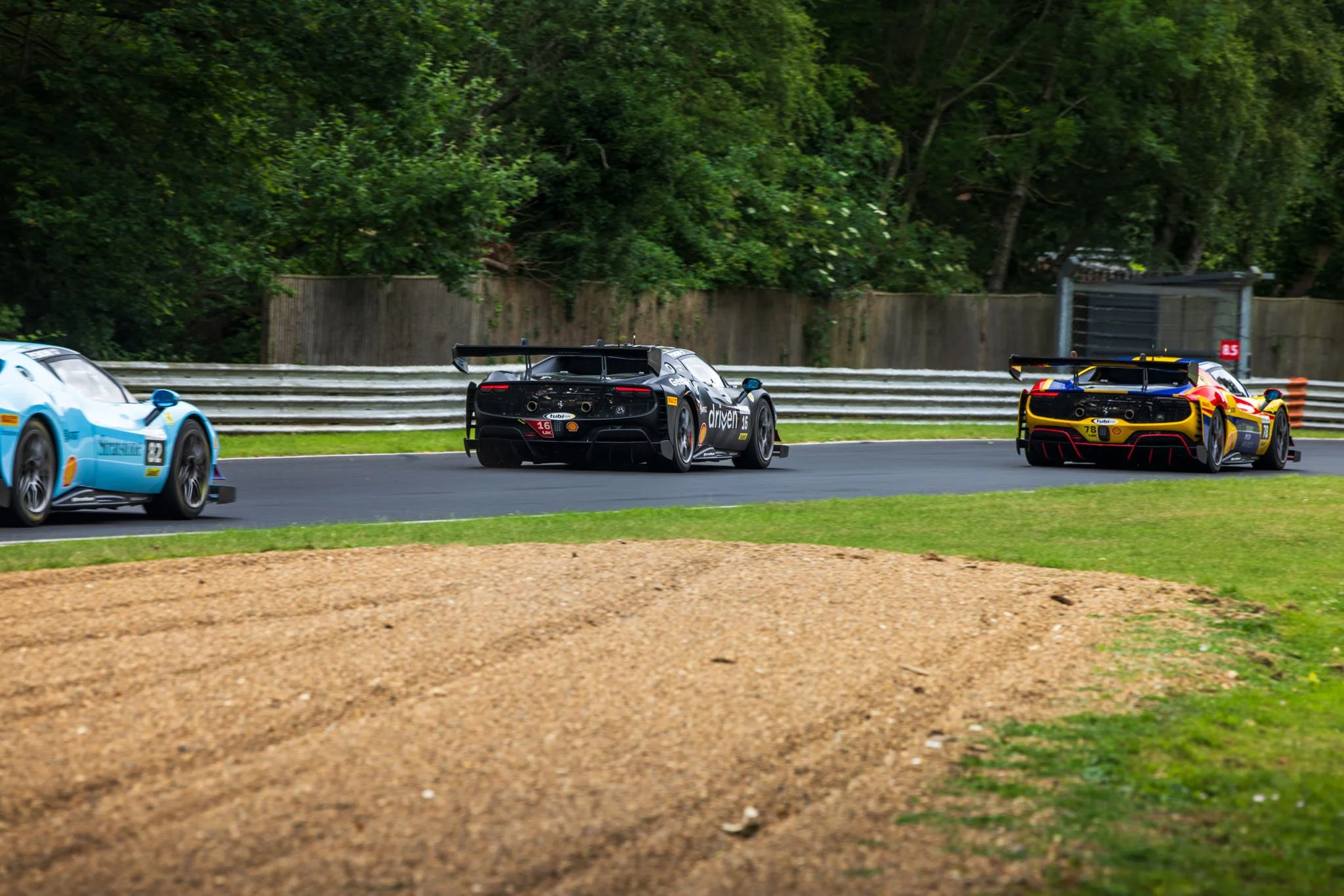
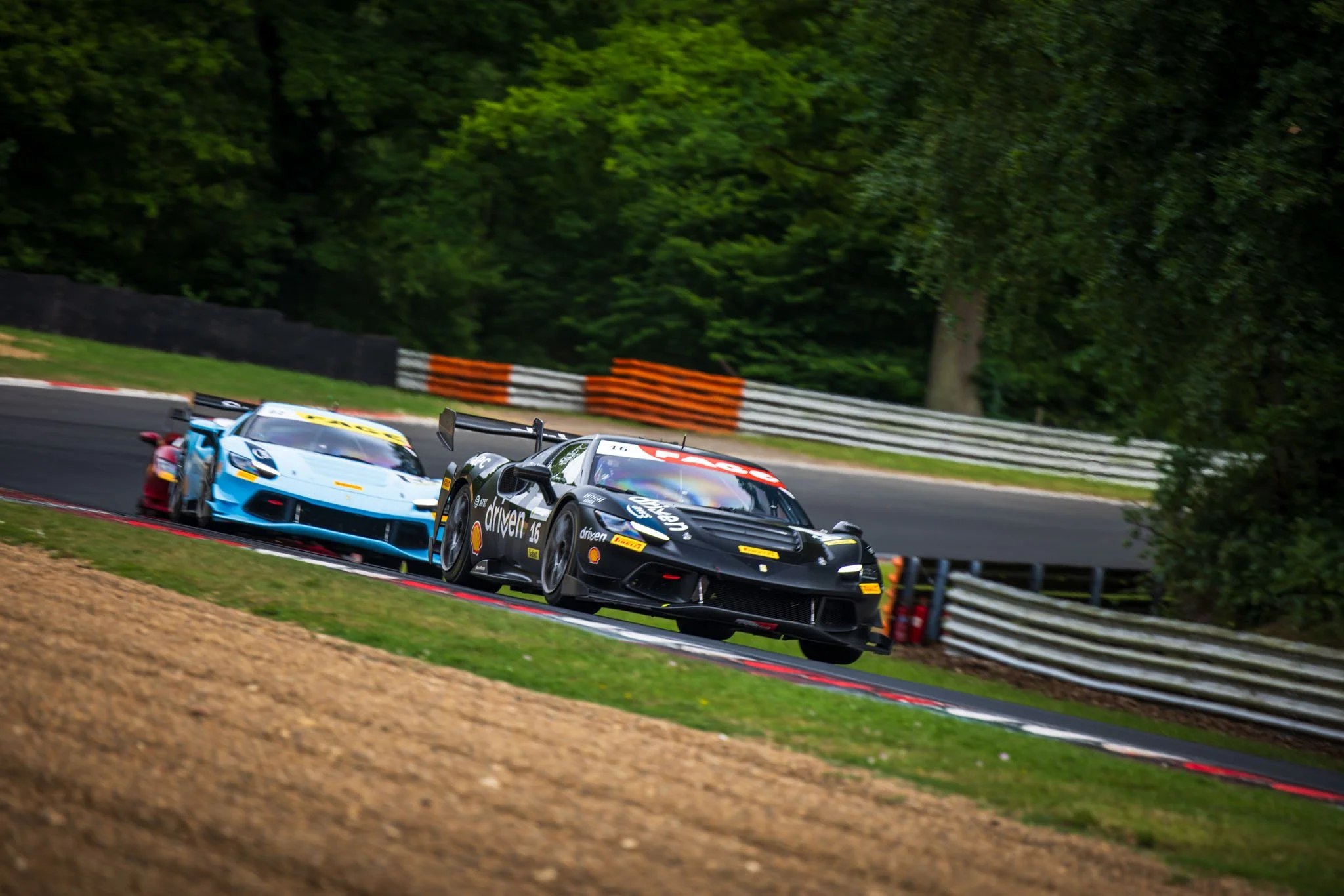
What came as a saving grace to Mike but a curse to me was the dispatch of a safety car following an incident at Sheene Curve. The safety car prevented any further overtaking opportunities and stayed out until the very last lap of the race. It was a one-lap final sprint to the checkered flag, but Mike, as he had done so brilliantly for the duration of the race, held his line and defended brilliantly. I had lost out to a car in a different class once more, but the battle had given me a lot of screen time for the race coverage, which provided plenty of excitement for those watching at home and in the pit garages. I crossed the line once again, 5th in class (6th overall), precisely as the race had started.
Watch the race coverage for the GP circuit here: RACE 2
No podium yet, but there's still time...
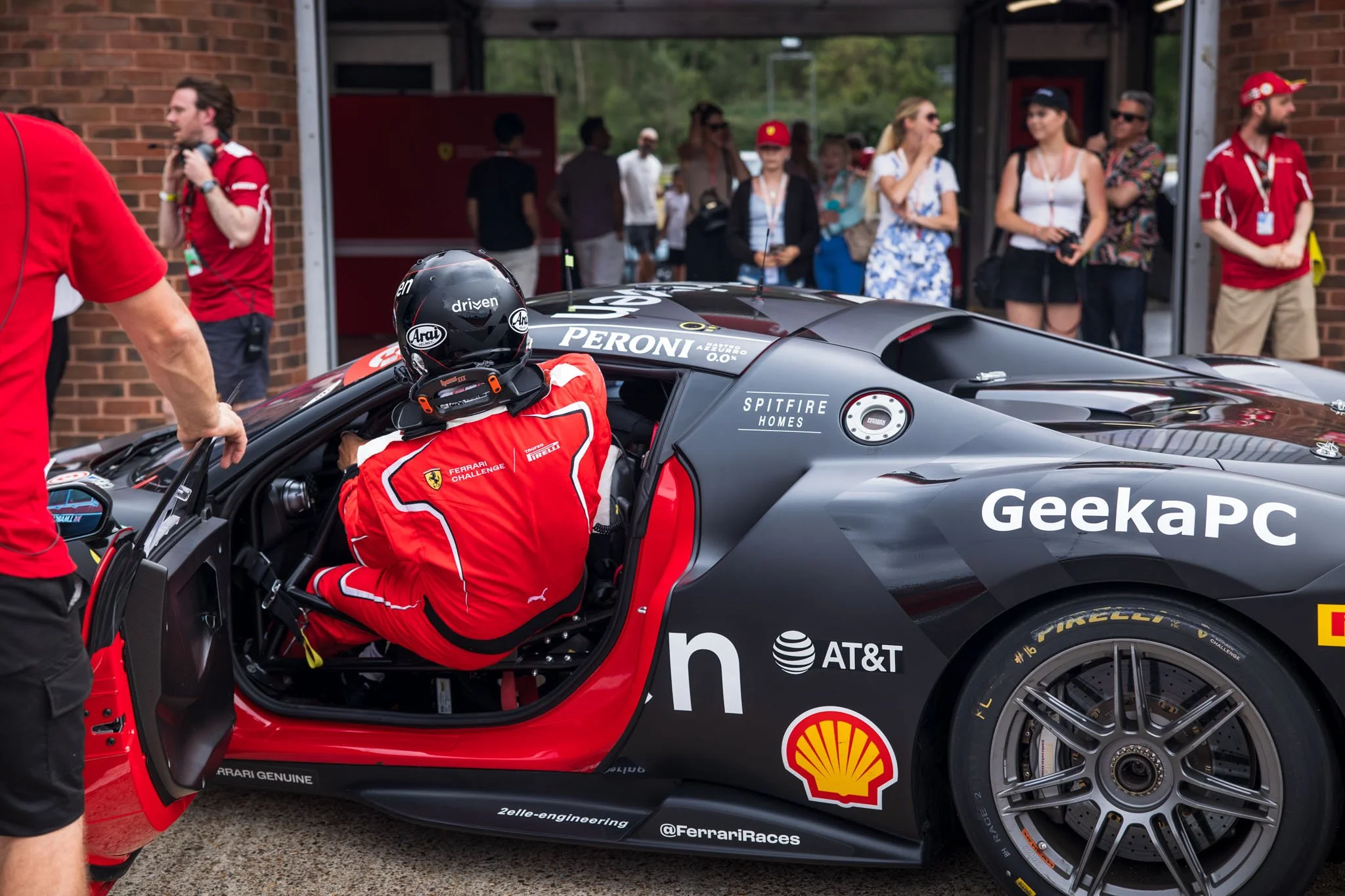
A podium at Brands Hatch, my 'home' circuit, would have been wonderful, but it wasn't to be this time. There was, however, plenty to be pleased about. As I had done at Oulton Park, I'd finished both races in the top 5 in class. The racing was clean, safe, and highly entertaining for those spectating as well.
Brands Hatch is the last technical circuit on the calendar. Next up is Donington Park on July 26th and 27th. Donington is faster, wider, and safer for opportunistic overtakes. I've got a month to prepare, train, and practice before then, and who knows, maybe I'll conclude the next entry with a trophy by my side. Wouldn't that be nice?
words by John Marcar
photography by Henry Faulkner-Smith
John Marcar's Motorsport Diary:
The Prologue: ‘Welcome to the diary’ >> READ HERE
Chapter 1: ‘Ferrari UK’s Ready 2 Race’ >> READ HERE
Chapter 2: ‘Let's Start Off by Winning’ >> READ HERE
Chapter 3: ‘My First Official Test Day’ >> READ HERE
Chapter 4: ‘The First Race at Navarra’ >> READ HERE
Chapter 5: ‘Round Two at Oulton Park’ >> READ HERE
Chapter 6: ‘Battling Brands Hatch’ >> READ HERE
Chapter 7: ‘Podium Chasing at Donington’ >> READ HERE