
Geely Starray EM-i | Geely Joins the PHEV Battlefield in the UK
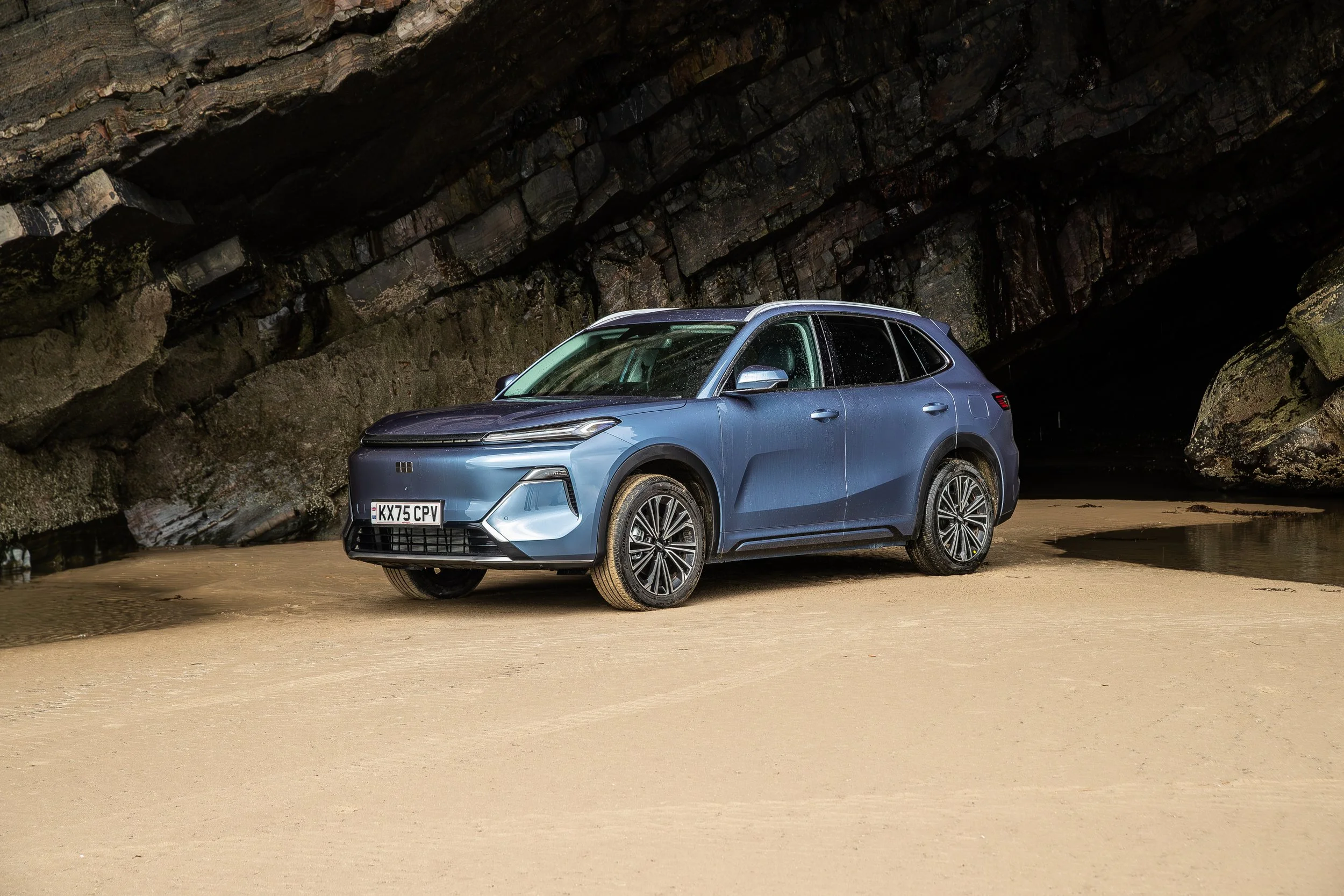
Sam Sheehan has been testing the latest Geely model, and this time it's a plug-in hybrid that's likely to concern the likes of Kia, Nissan, and BYD.
Barely three months after it launched the EX5 electric SUV in Britain, Geely has set its sights on one of Britain's most competitive segments with the arrival of a new hybrid family car called the Starray EM-i.
Rivalling longstanding top sellers like the Nissan Qashqai and Kia Sportage, as well as fellow newcomers like the Chery Tiggo 7, Geely's slightly oddly named plug-in hybrid doesn't just promise as much as 84 miles of electric-only range and 118 miles per gallon combined, but also an equipment list and practicality to fight with the best in the class.
First Impressions and Prices
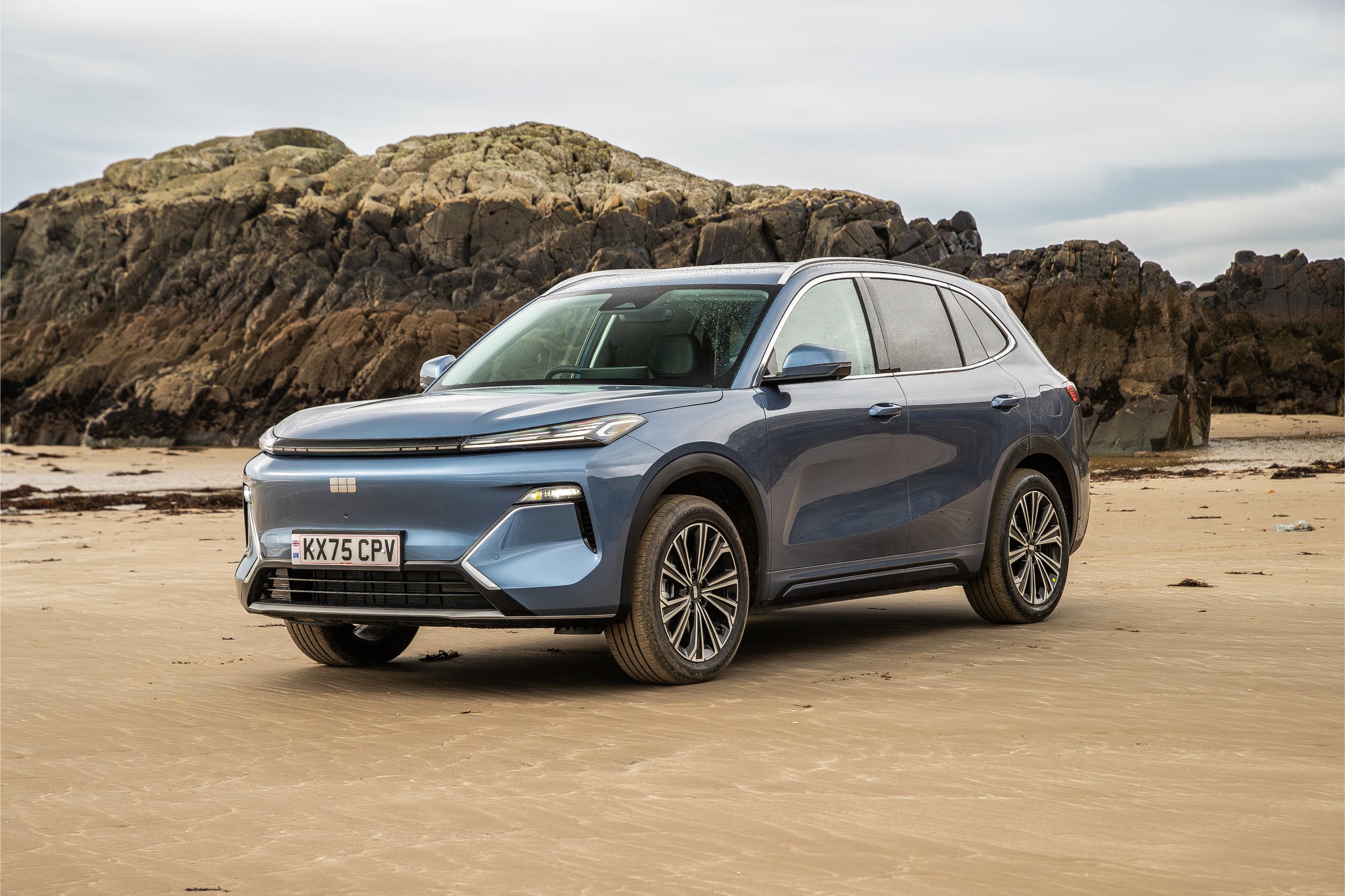
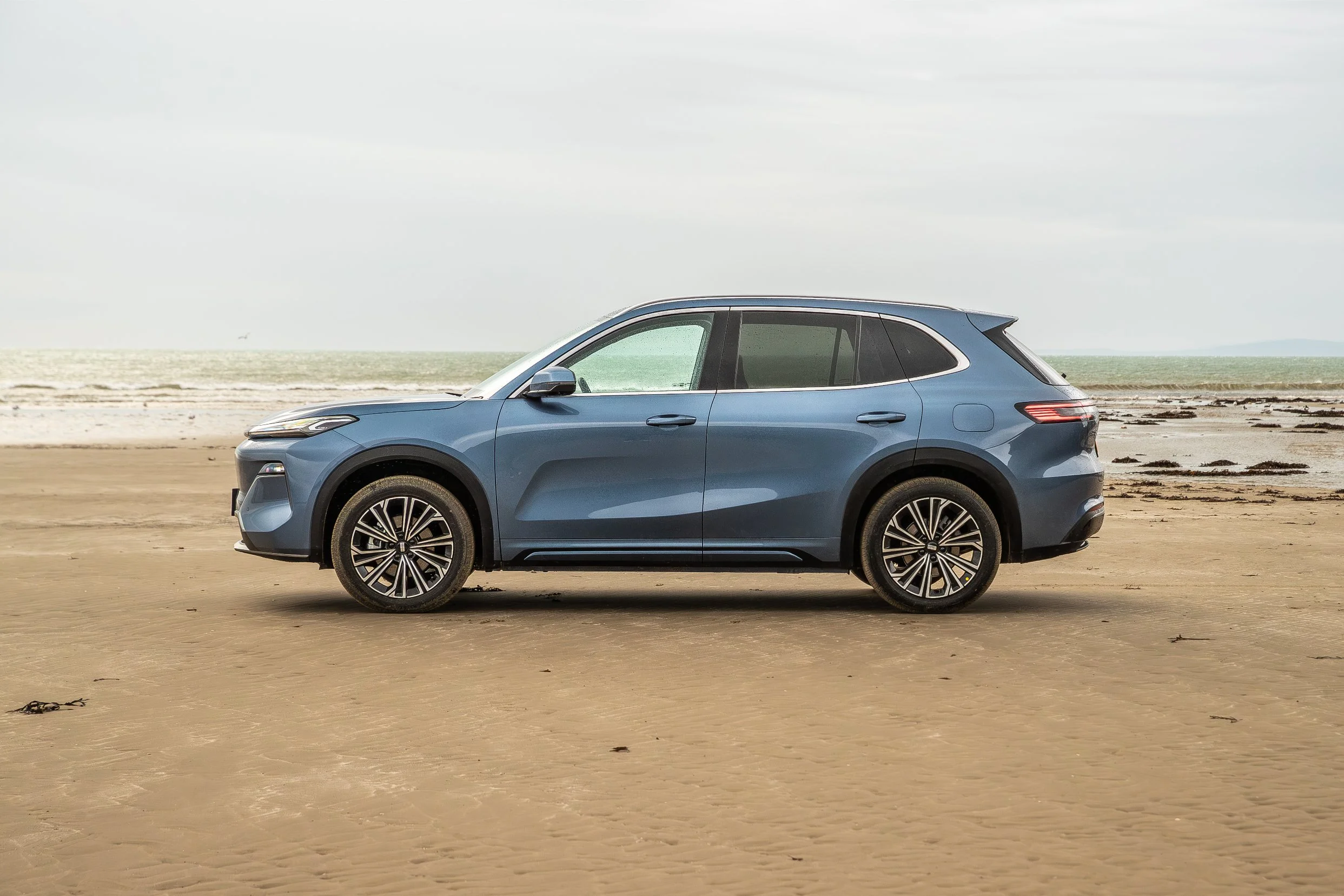
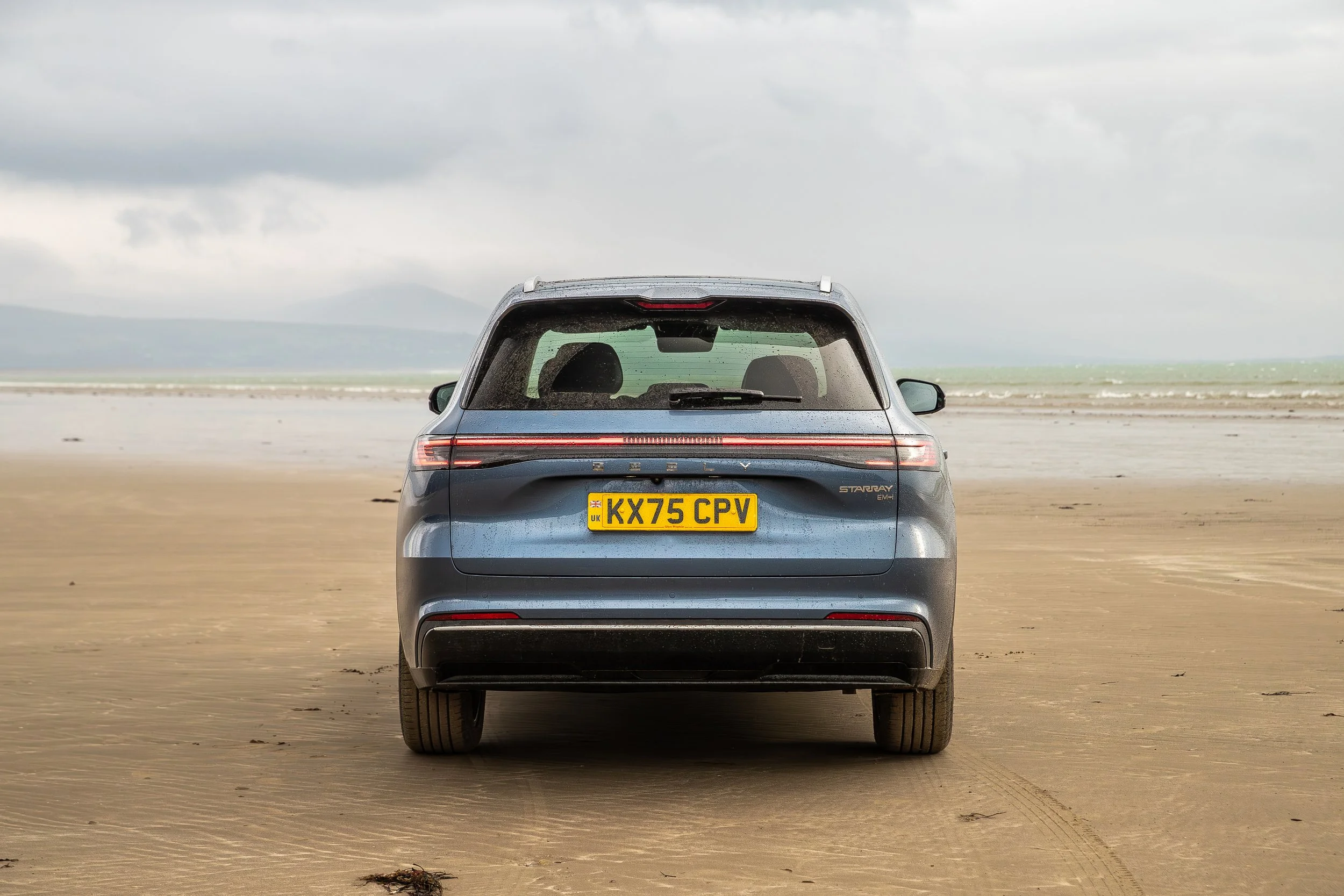
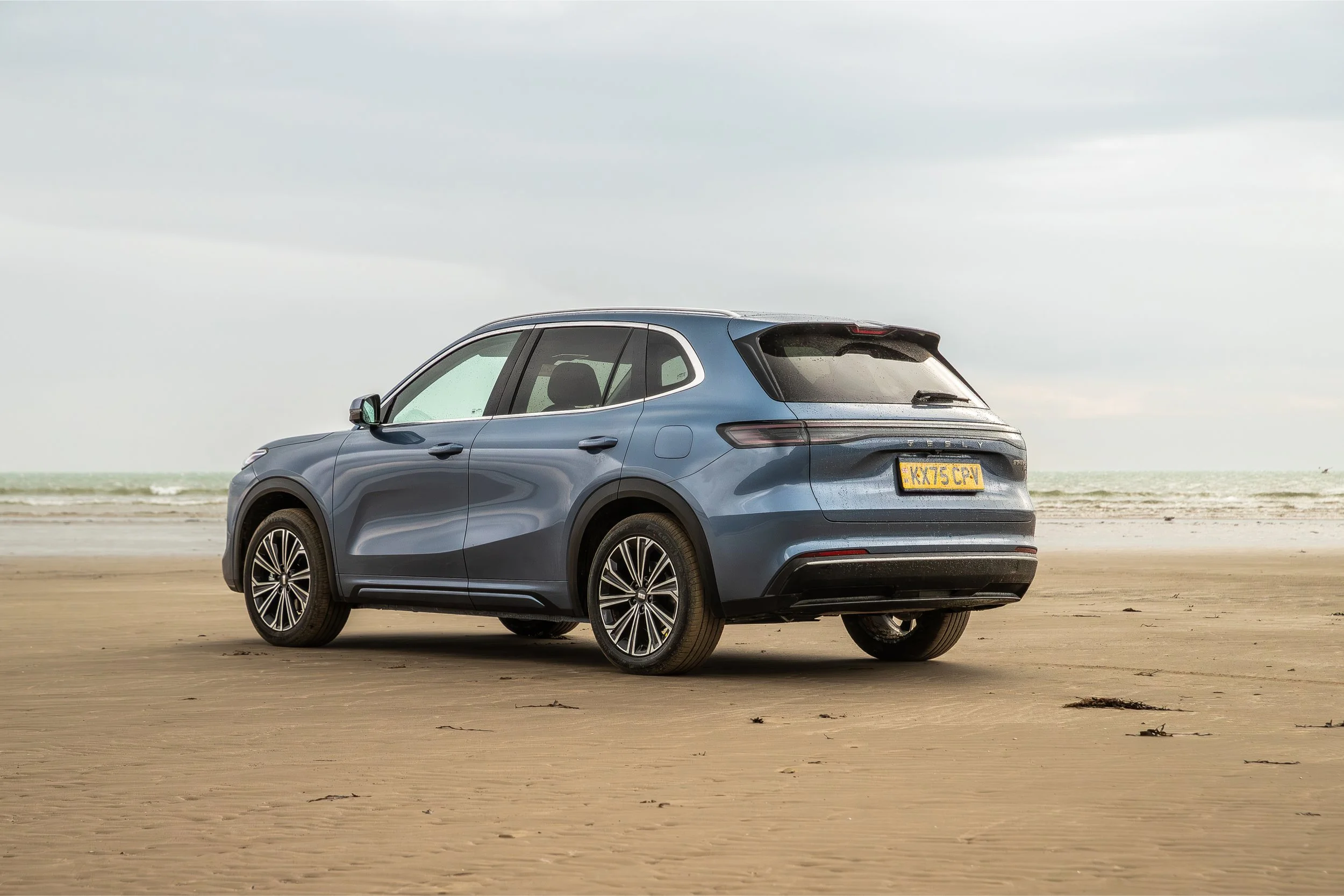
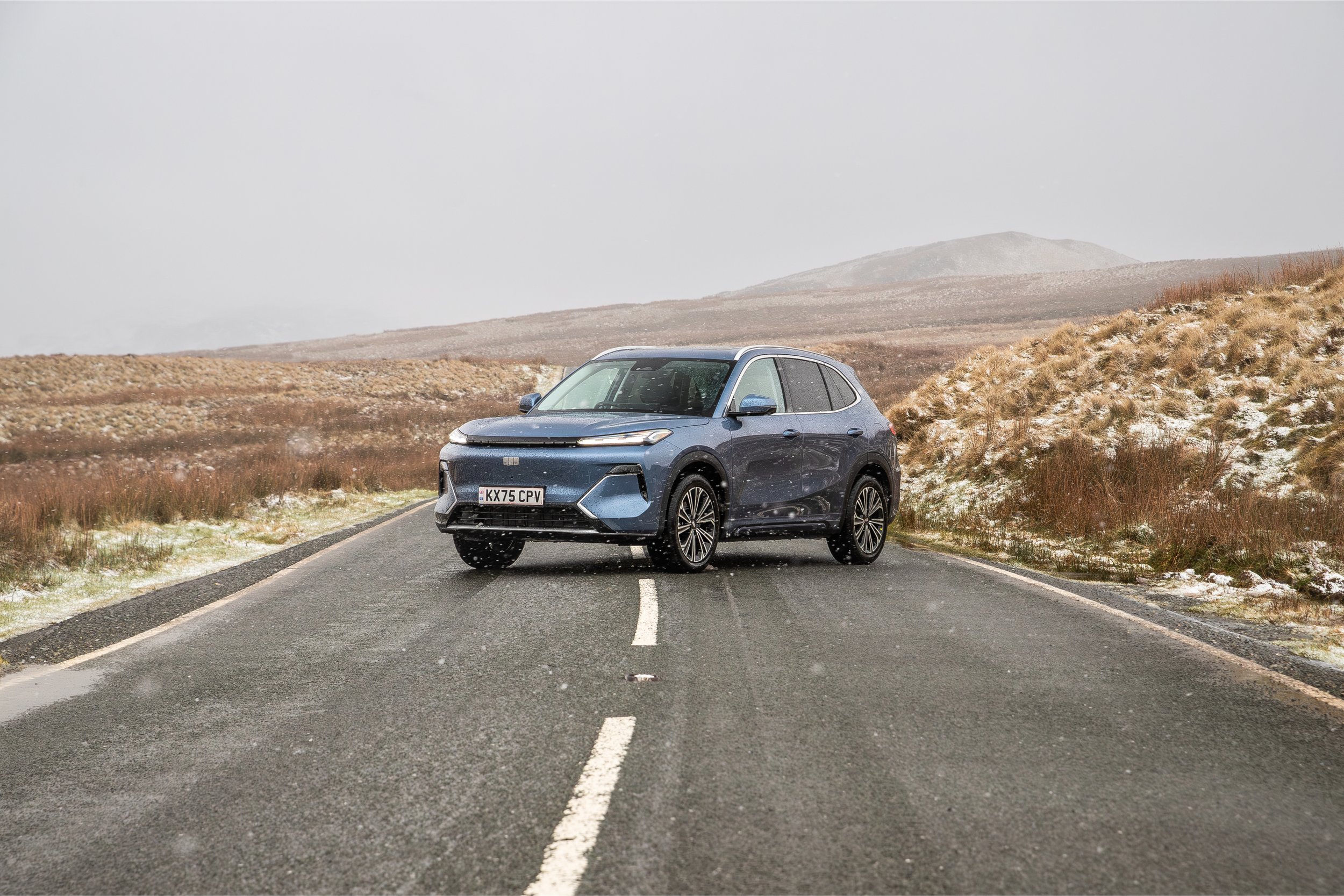
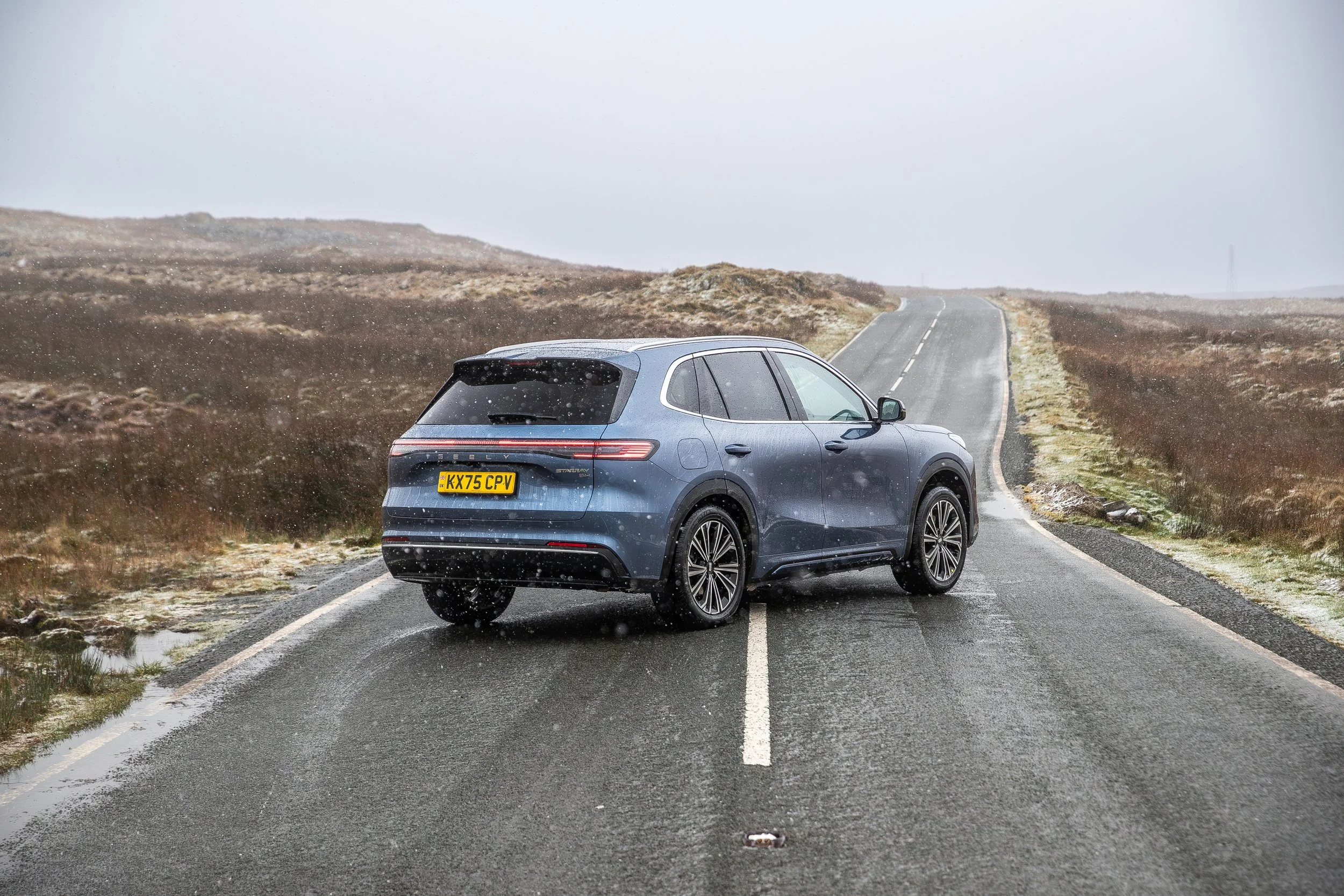
Things certainly get off to a good start when it comes to the Starray (pronounced Star-A) EM-i's design, which sports a more striking nose with sharper angles than the softer EX5, while the rear features similar, Porsche Cayenne-mimicking features, including an LED lightbar. Standard-fit 19-inch alloy wheels and chrome details finish it all off nicely, giving the Geely a look that's arguably still not quite as eye-catching as the Sportage's, but no doubt still capable of turning heads on the school run. This is vital, as Geely wants its two newcomers, plus 10 more, to help it grow UK sales to 100,000 a year by 2030.
As such, pricing is competitive, with the Starray EM-i starting at £29,990 in entry-level but still well-specced Pro trim, before rising to £32.7k for the (slightly misleading in name) Max, and £34,990 for the range-topping Ultra. I'll run through some key additions for each trim in a bit, but to emphasise the positioning here, an all-bells-and-whistles Ultra is barely a few hundred pounds more than the base price for Nissan's Qashqai e-Power and Kia's Sportage Hybrid. Also, definitely not by coincidence, those Geely prices are almost identical to those of the Chery Tiggo 7 'Super Hybrid'. It's a close fight.
Interior Quality
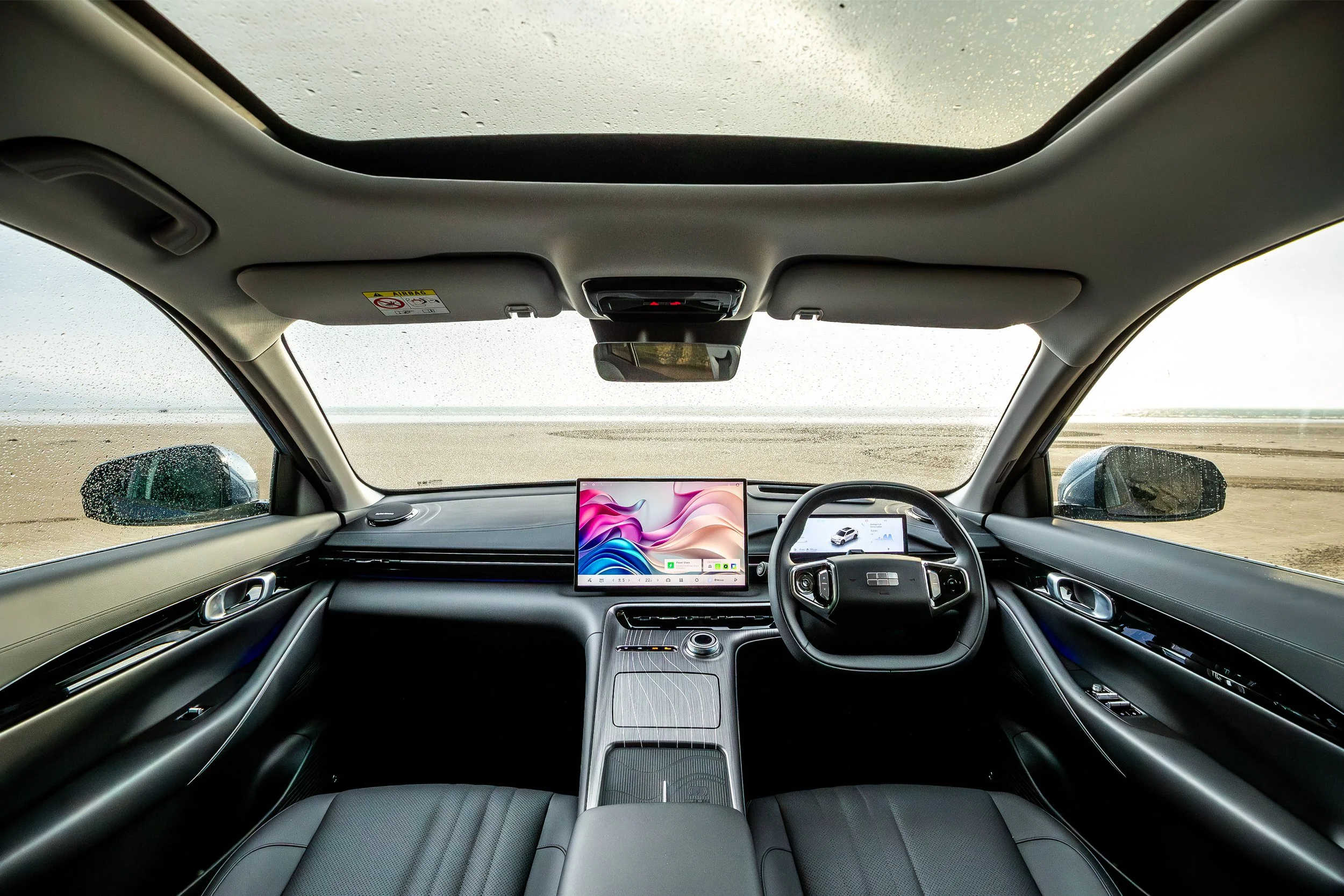
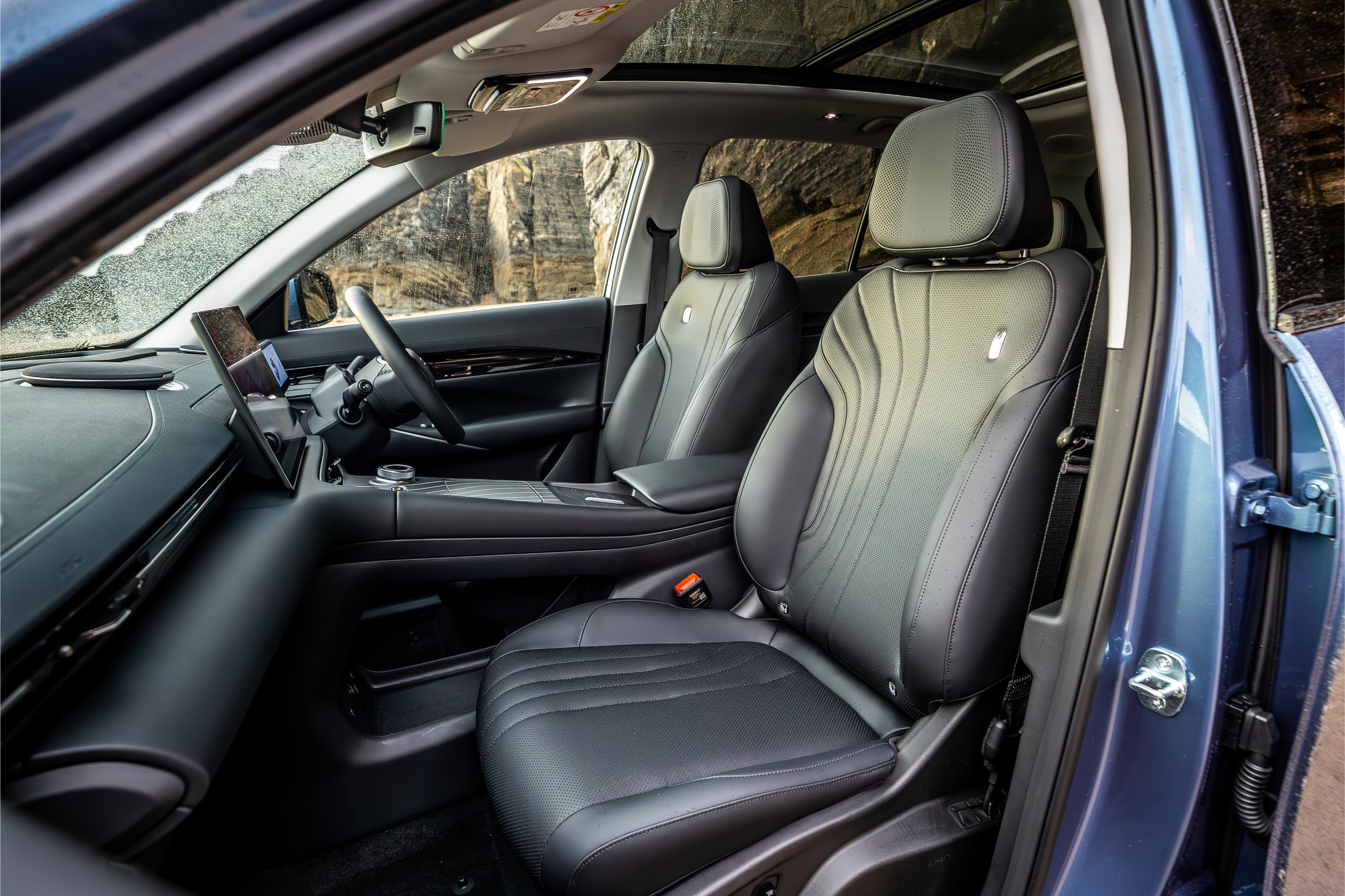
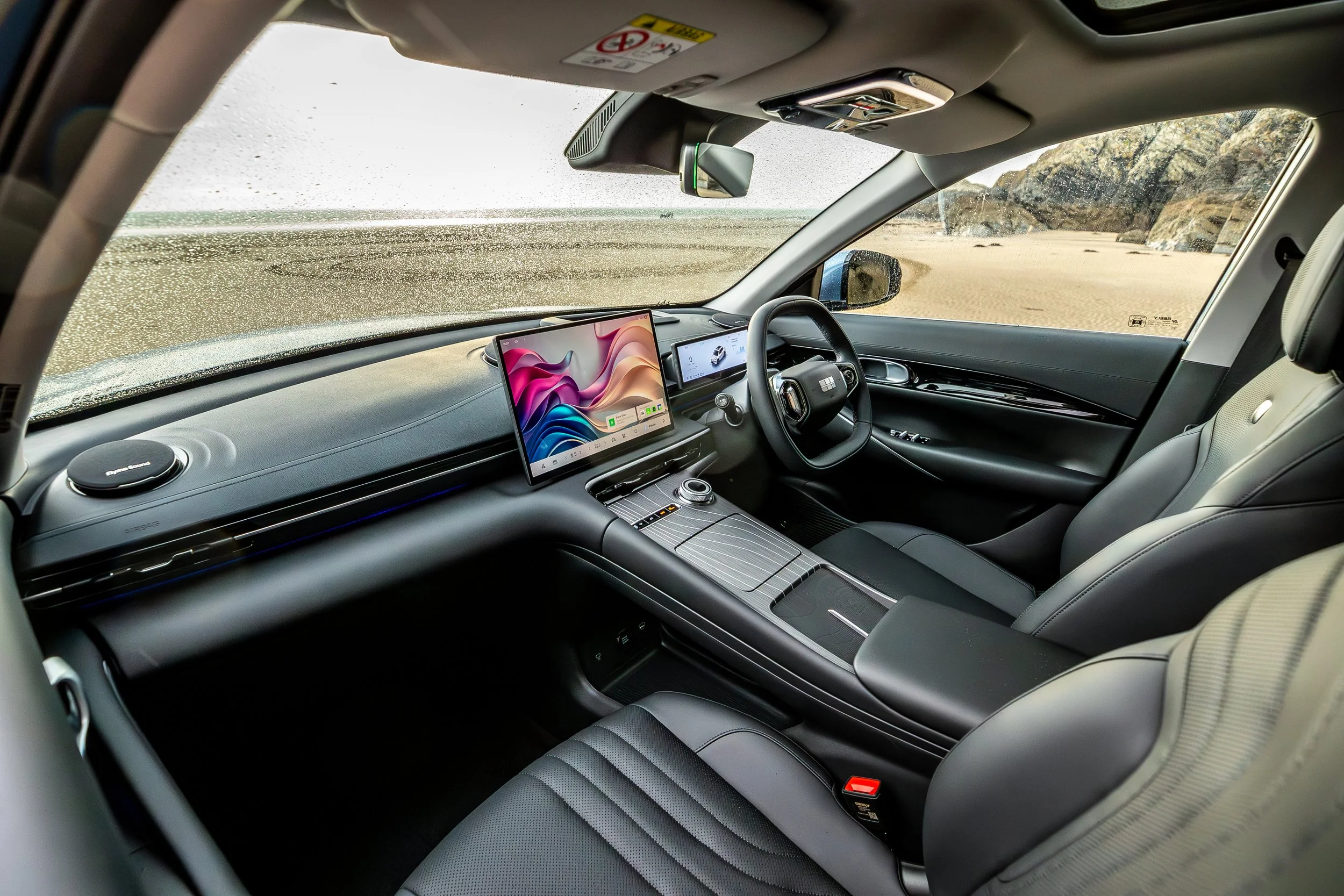
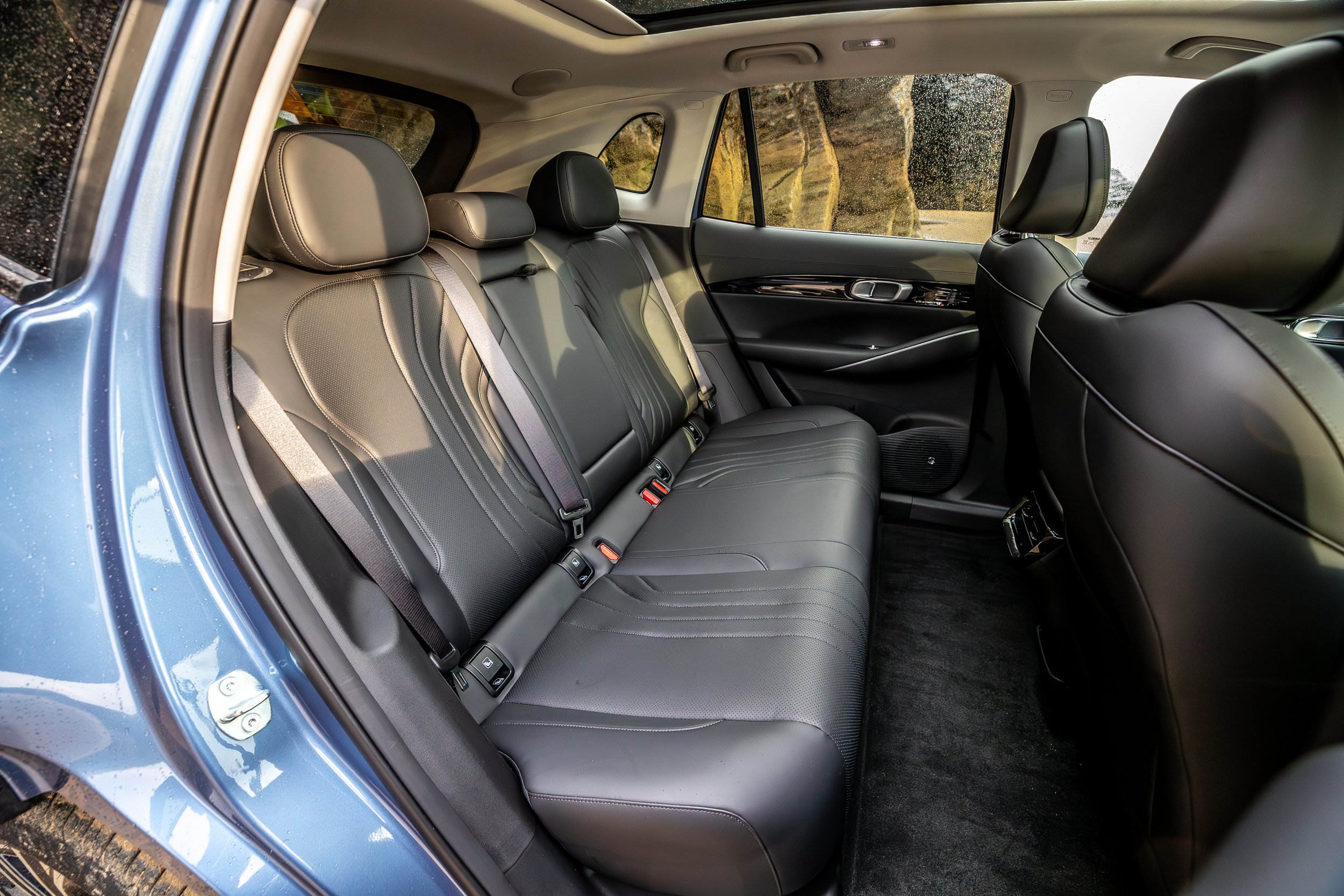
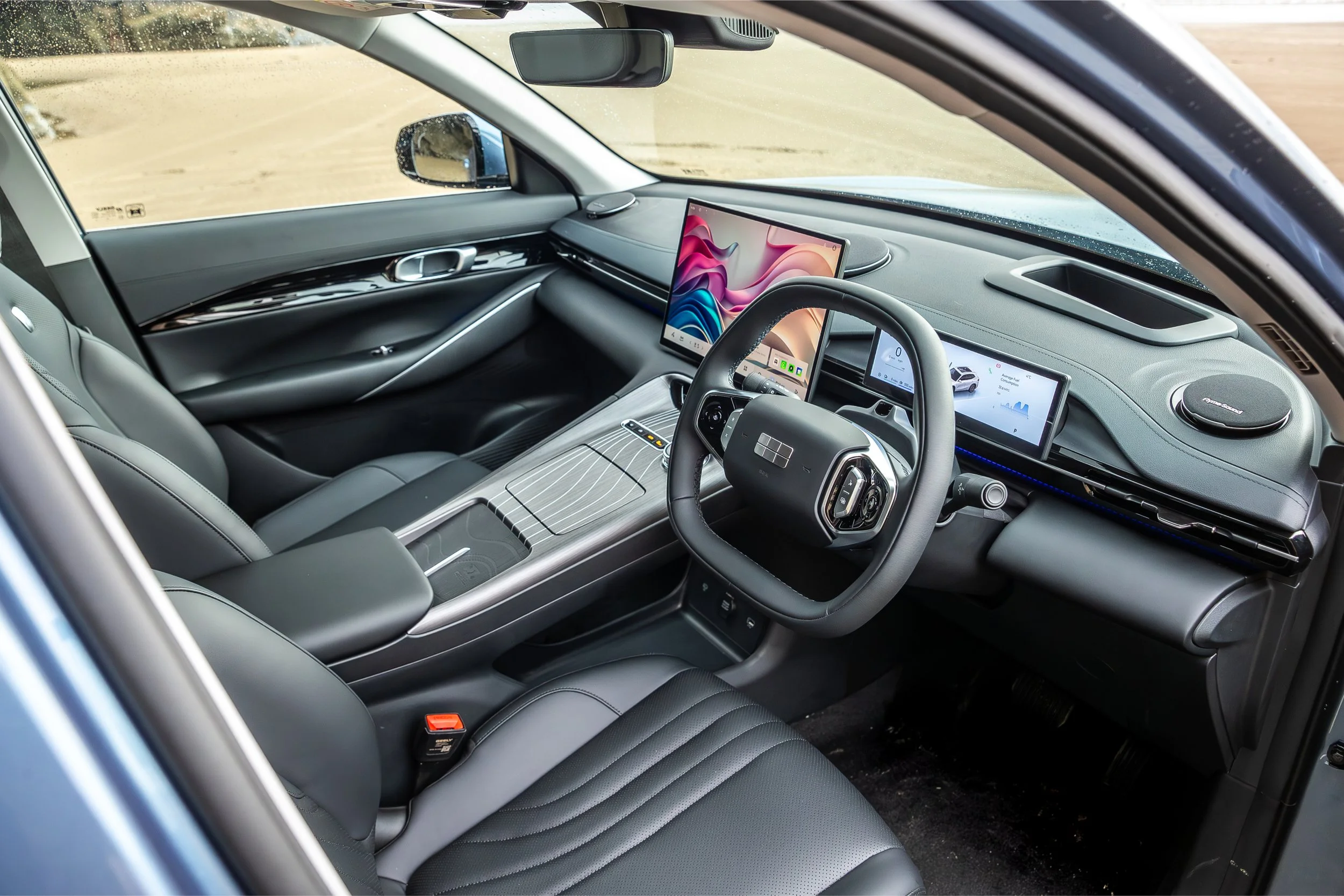
Inside, the Starray EM-i feels well-built, spacious, and airy, thanks in no small part to the panoramic sunroof, fitted as standard from the Max (which we're testing) up. The soft, vegan leather-clad seats also provide plenty of room to the glass above, while storage space is impressive for a car with both petrol and electric hardware aboard. There's space under the centre console in particular to shame petrol-powered rivals. There's also a decent-sized storage box under the central armrest, while the glovebox and door bins aren't short of volume either. That means items like small handbags and wallets can easily be hidden away.
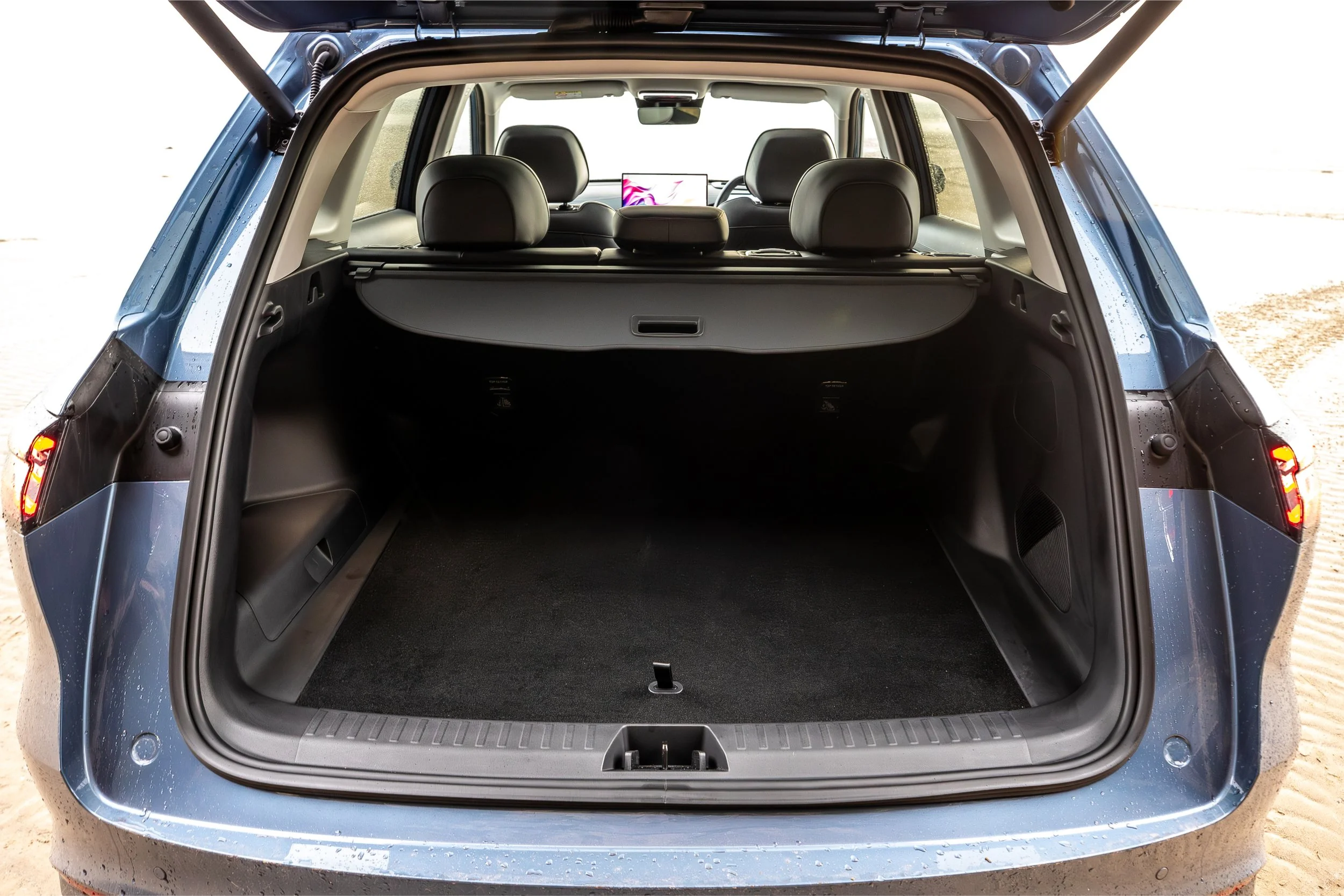
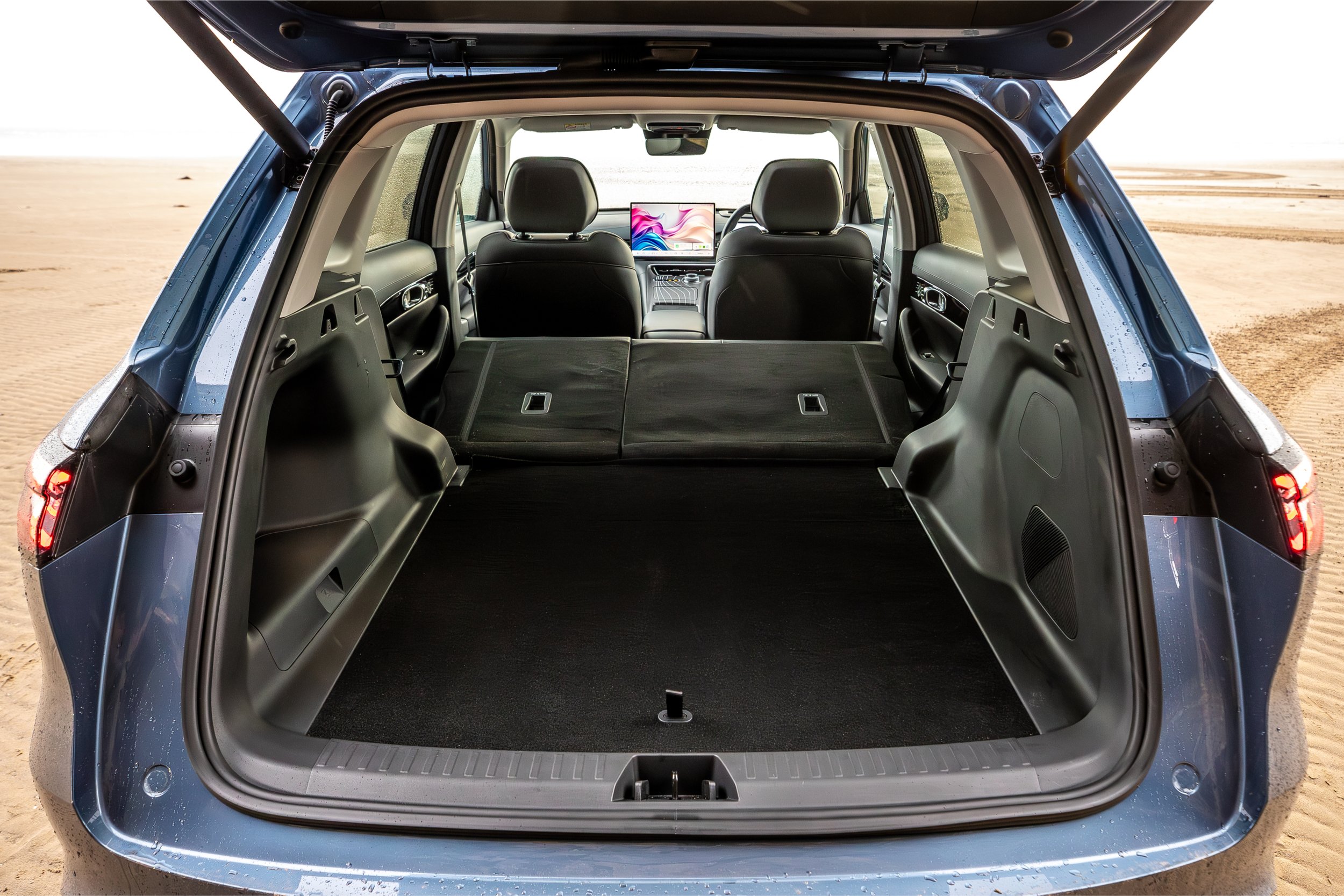
In the back, there is ample room for your head, knees, and feet, with the latter rarely available in electrified cars due to batteries often located in the floor. But the Geely's flat floor means even middle seat passengers have plenty of foot space. The boot also impresses with 428 litres when the rear seats are up, ranking it close to but not ahead of its key rivals, but the Geely offers 100 litres of extra lower boot storage, which is found under the two-stage floor, to stay competitive. For maximum space, you can remove the boot floor entirely and fold down the 60:40 split rear seats for 2,065 litres of space. But you'd need to leave the floor in its highest position to create a flat loading bay.
Still, that's impressive stuff given that the Ultra model comes as standard with the bigger of two available batteries, a 29.8kWh pack, and yet it offers the same interior space as the 18.4kWh in the lesser setups.
Available Range
Both of the latter, by the way, are claimed to deliver 51 miles in electric mode and 585 miles of total range, while the Ultra promises the headline figure of 84 miles in EV mode and 618 miles of total range. The bigger-capacity Ultra can also charge its battery from 30-80% in 16 minutes on a 50kW plug, which is around 4 minutes quicker than the other variants, according to Geely.
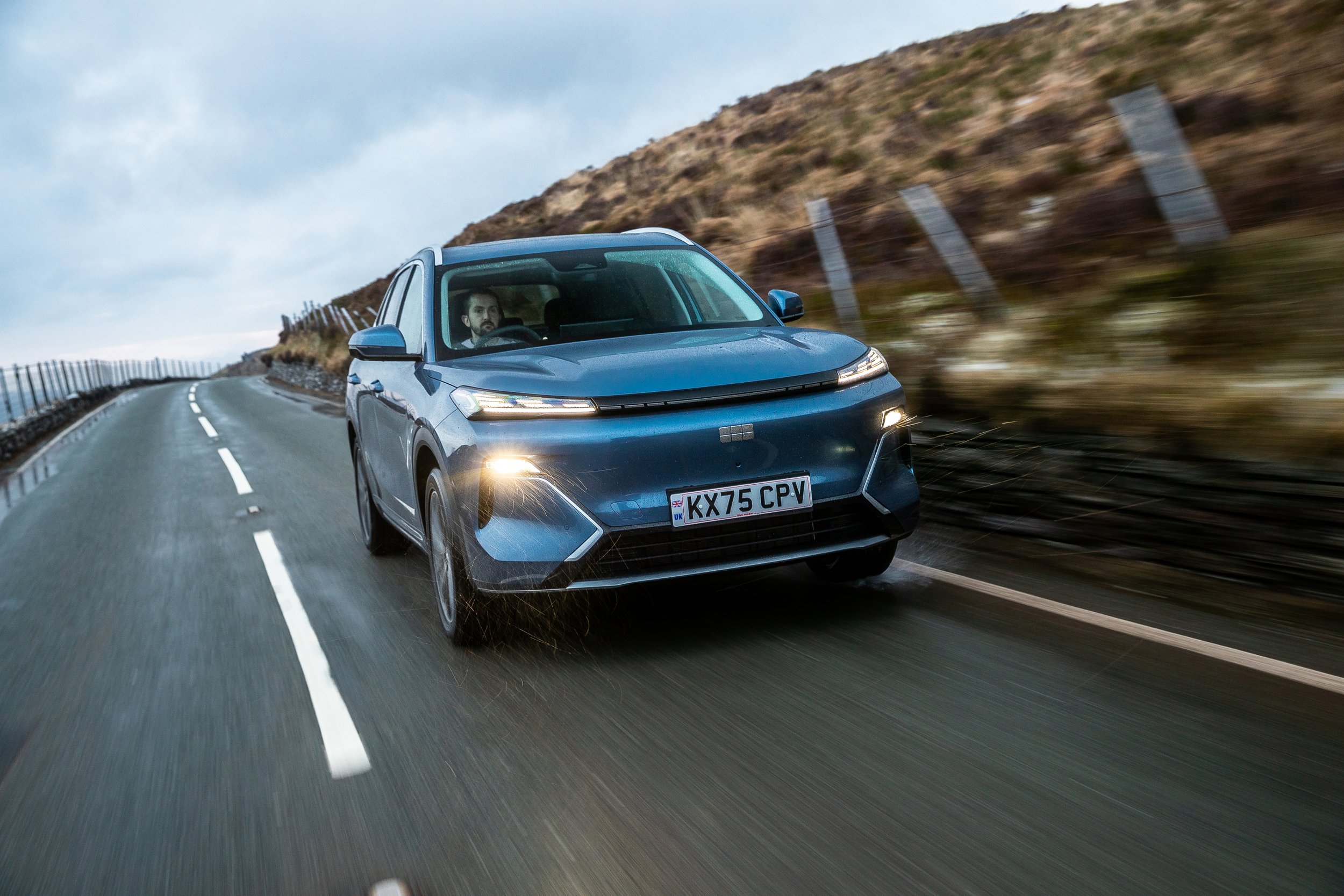
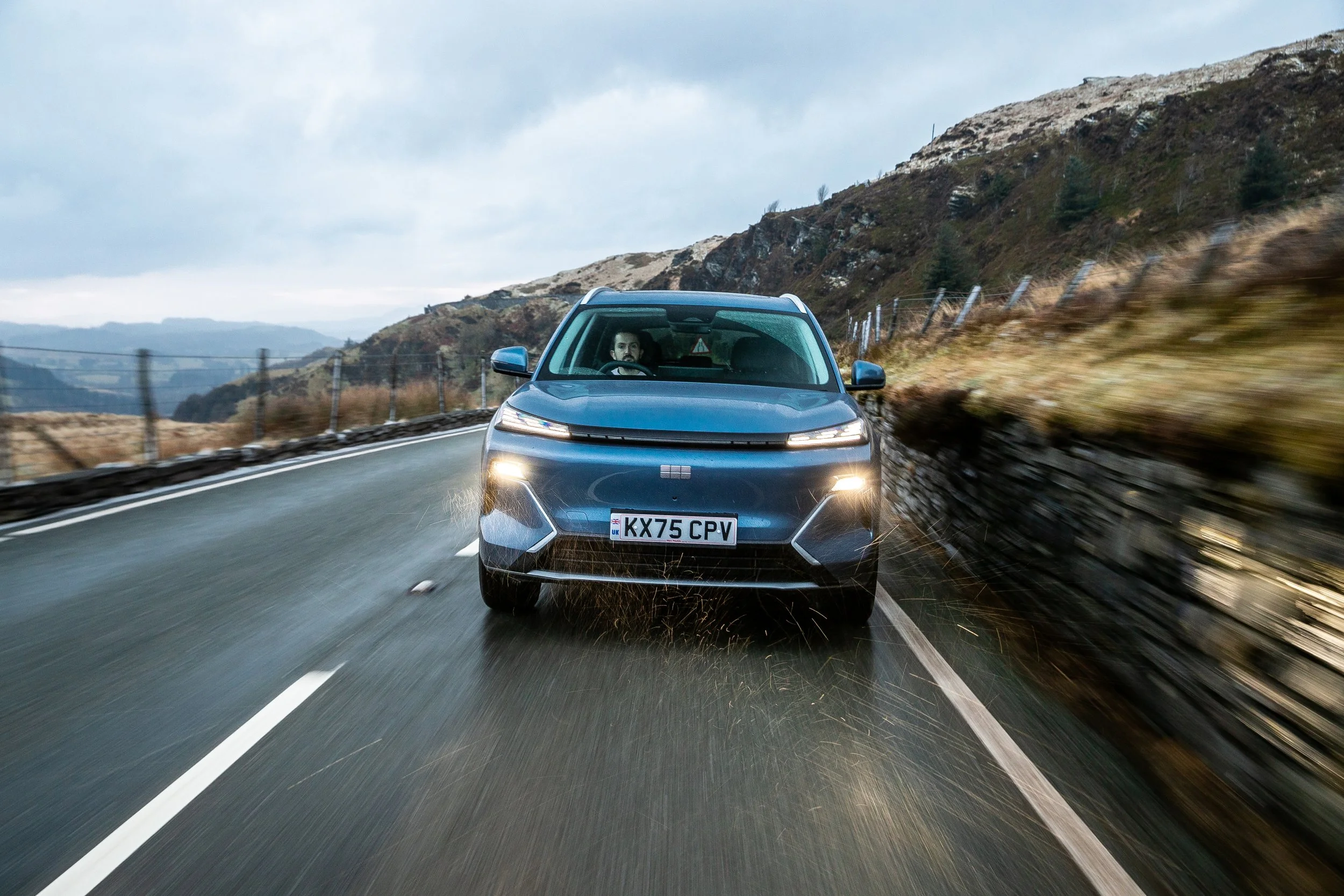
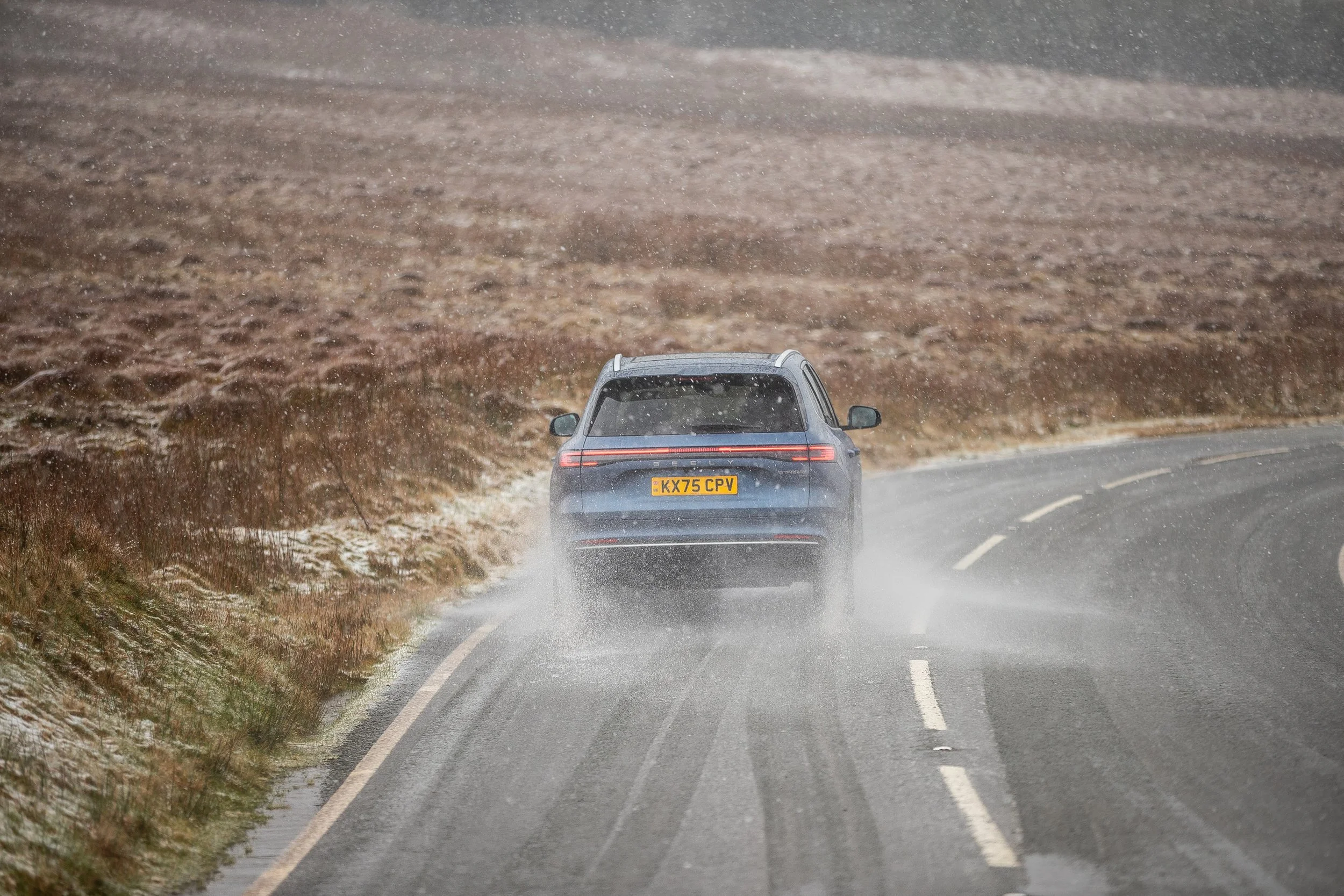
That said, most plug-in hybrid buyers tend to charge overnight and then let the car use its battery range throughout the day to reduce fuel consumption, so for our test, we leave the car in its standard setting, where it automatically juggles engine and electric power. In this mode, the EM-i drives in purely electric mode by default, only calling on the petrol engine under heavy accelerator input. Even then, the delivery of its 262hp remains electric-like. It's immediate and linear, but never particularly quick, although on a greasy surface, any sudden request for off-the-line performance results in the front's eco-focused tyres initially scrabbling away. The car also has no problem powering up to fast lane motorway speeds.
The Powertrain
Clearly, the setup - which mostly uses the 1.5-litre four-cylinder under the bonnet as a generator - is capable of saving fuel, as in most scenarios, the engine is off or running at inaudibly low revs. But if you spend a few seconds at full throttle, it can be sent spinning fast with a thrashy note thanks to its use of a CVT (continuously variable transmission). The sound is less refined than the more polished equivalent in that aforementioned e-Power Nissan. Conversely, the default setting for the Geely's regenerative braking system is a little weak, and you have to dive into the infotainment menus to ramp it up, making it less intuitive to use than the Nissan's. There's also no full one-pedal mode like the Qashqai.
Bitter-Sweet Features
Welcome EX5 traits that're carried over to the slightly larger (at 4.7 metres in length) Starray EM-i include cushioned low-to-mid-speed ride comfort and great urban manoeuvrability. Both cars feel softly sprung and therefore more than capable of soaking up speed humps and potholes. But like its all-electric sibling, the Starray never manages to isolate passengers from the jiggles caused by higher frequency bumps, meaning motorway driving can feature a bit of vibration through the floor. Also, the road noise is quite high at speed, meaning you're well aware of the UK's coarse and often broken motorway surfaces. It's a noticeable step down on more premium rivals like the Nissan and Kia, in this regard.
Big Perks
At least there's a brilliant 16-speaker sound system to mask most of the noise, as the Max and Ultra both get as standard a Flyme setup that includes rear speakers in the roof for 360-degree coverage. You've also got powered, heated front seats in all trims to maximise comfort, while Max upwards gives the driver a ventilated seat and heated steering wheel. Wireless phone charging and 256-colour interior lighting help to enhance convenience and ambience in the Max too, oh, and the tailgate's electrically-powered when you're pulled over and loading up the boot. Evidently, the kit list is highly competitive, even before you consider the trim prices.
Shortcut Star Button
Mercifully - because without it, this appreciation for the tech would have come to a screeching halt here - there's also a shortcut 'star' button on the steering wheel, which can be customised to switch off annoying driving assistance tech. When you start the car, the lane keep assist tech has a tendency to fight your inputs through the wheel, while the speed limit alert bings at you when it misreads road signs. But pressing the star button, then tapping a button twice on the screen, switches them off. It makes up for the fact that the menus of the infotainment, responsive and intuitive as they are, can be a little fiddly to use on the go. In its defence, this is a trait that's common in many of the Starray EM-i's rivals.
The tech will be routinely updated via over-the-air updates, and Geely's already following suit of MG by listening to owners of its first UK model, the EX5, for incoming updates there. Further evidence that the brand means business with its sales ambitions for Britain comes with what it calls the class's best service offering, Geely Care+, where routine maintenance and parts replacement can be handled at 50 UK service locations. You also get four years of roadside assistance thrown in for free, which should give peace of mind for those not yet totally confident in switching to a new brand in Britain.
Conclusion
The Geely Starray EM-i is priced right, spacious and well equipped, plus it feels well built and should be cheap to run. Sure, it's perhaps not as distinctive in design as the Sportage or as refined as the Qashqai e-Power, but the success of models from Jaecoo and Chery suggests the Geely Starray EM-i will find no trouble in luring private and company car buyers alike, not to mention taxi drivers looking for wheels to cover their next three years of motoring. There's definitely more to this car than just competitive pricing, and while long-distance motorway drivers might find the higher-speed ride a little tiring, urbanites and suburbanites in particular will no doubt appreciate the bump-beating suspension and manoeuvrability of Geely's second UK-bound model. On first impressions, that 2030 target feels very achievable.
words by Sam Sheehan
photography by Geely UK