
John Marcar categorically does not need a pickup truck. Yet after spending a day driving the full range of new Isuzu D-Max trucks at a specialist MoD testing facility... he wants one. But why?
Disclaimer: I Don't Really 'do' Pickup Trucks
I've said it before, and I'll say it again: my day job is brilliant. I get to test, sample and review vehicles. From dirt bikes to superbikes, family SUVs to supercars, I occasionally also get to test the odd racing car, too. You could say I test everything on wheels, except that's not entirely true.
I have no reason to test the commercial stuff such as vans or agricultural vehicles like tractors or farming equipment. Dedicated publications and entire communities of journalists specialise in that; and it sounds brilliant, but me describing what's good or bad about a farming tractor or telehandler (I even had to look up the spelling) would be about as pointless as me attempting to review a Boeing 787.
But when the PR outfit that looks after Isuzu got in touch to ask if I fancied a go in the new range of D-Max pickups, I obviously had to say yes. Why? Well, because it's a pickup truck, and who doesn't love a pickup truck??
Why do we love pickup trucks so much?
Pickup trucks are a universally appreciated vehicle. In some cultures, they're a daily necessity. In the Americas, for example, owning a pickup truck is far more common than owning an equivalent van. In the USA, Ford F-Series pickups outsell almost every other vehicle on the road year on year. In the Middle East, pickups move livestock over rough and challenging terrain, and down under in Australia, the pickup or 'ute' (short for utility vehicle) is so well loved that showrooms even offer high-performance versions that people proudly choose to drive instead of a typical car.
The Problem with Pickup Trucks in the UK
Here in the UK, though, the pickup is seen as somewhat of a novelty. Our weather often means that whatever we store in the back of a pickup bed is likely to get quite wet, or worse, stolen by a horror at the traffic lights. But there's a far more obvious reason we don't embrace the pickup as much as our friends elsewhere in the world: the van.
We love vans here in the UK, and when you compare vans to pickups, it's easy to see why. Vans offer more storage, are easier to manoeuvre, and can be left parked in DIY store car parks without thieves leaning into the vehicle and stealing the contents.
The bigger problem: Tax Brackets
Beyond the dull convenience of vans, another reason pickup trucks lose out is tax brackets. On April 5th 2025, His Majesty's Revenue and Customs office changed the bracket under which a pickup was classified.
Before April 2025, HMRC generally treated a double-cab pickup with a payload of at least 1,000kg as a van for Benefit-in-Kind purposes. From April 6th 2025, HMRC moved away from that payload-based approach and decided that most double-cab pickups will instead be treated as cars for BIK because they're considered equally suitable for carrying passengers and goods. To make things even harder for the pickup, the new rule also affected capital allowances and certain business deductions, with the relevant corporation tax change applying from April 1st 2025 and the income tax change from April 6th 2025.
To cut a long story short, overnight the pickup truck went from a no-brainer sweet-spot tax option for sole traders and self-employed workers to one that made very little sense at all.
Perhaps unsurprisingly, the tax bracket changes caused a catastrophic fall in pickup sales in the UK, with the SMMT reporting a 57.7% drop between April 2025 and April 2026.
And yet, we're still buying them
Even after the tax changes, pickups remain a significant part of the UK's light commercial vehicle market. The Ford Ranger, for example, remained the third-best-selling LCV in the UK in 2025, with 17,462 registrations. The D-Max also appeared among the leading LCV models. So, rather than calling it quits in the UK market, Isuzu did something brilliant: it updated the D-Max and made it even better.
The New 2026 Isuzu D-Max
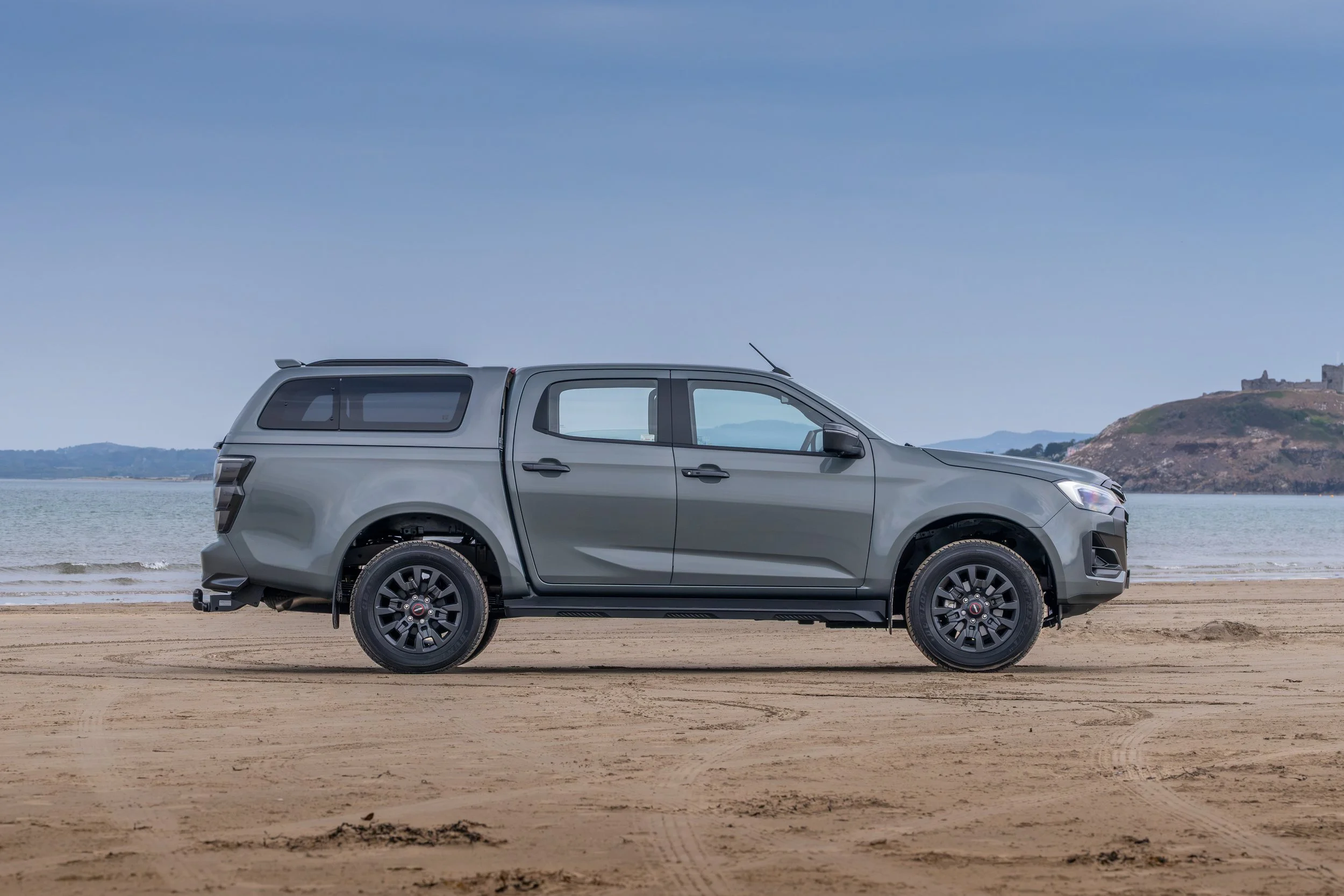
In light of the challenges that come with the pickup market, Isuzu is keen to keep pushing and, in doing so, has updated the D-Max with an improved and upgraded 2.2L turbocharged diesel engine, a new 8-speed autobox or refined 6-speed manual and an improved ability to drive into the rough stuff with enhancements to the off-road capability.
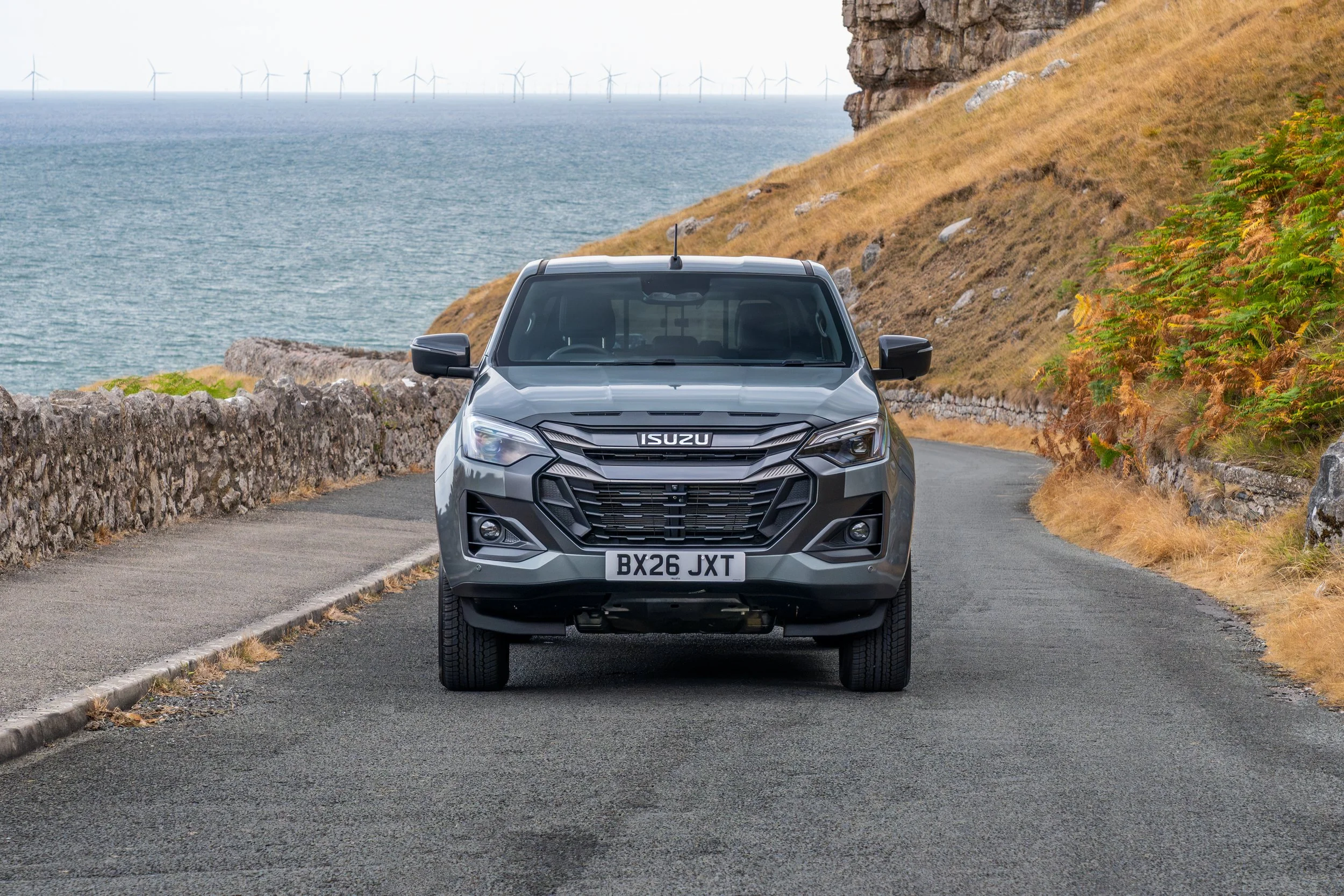
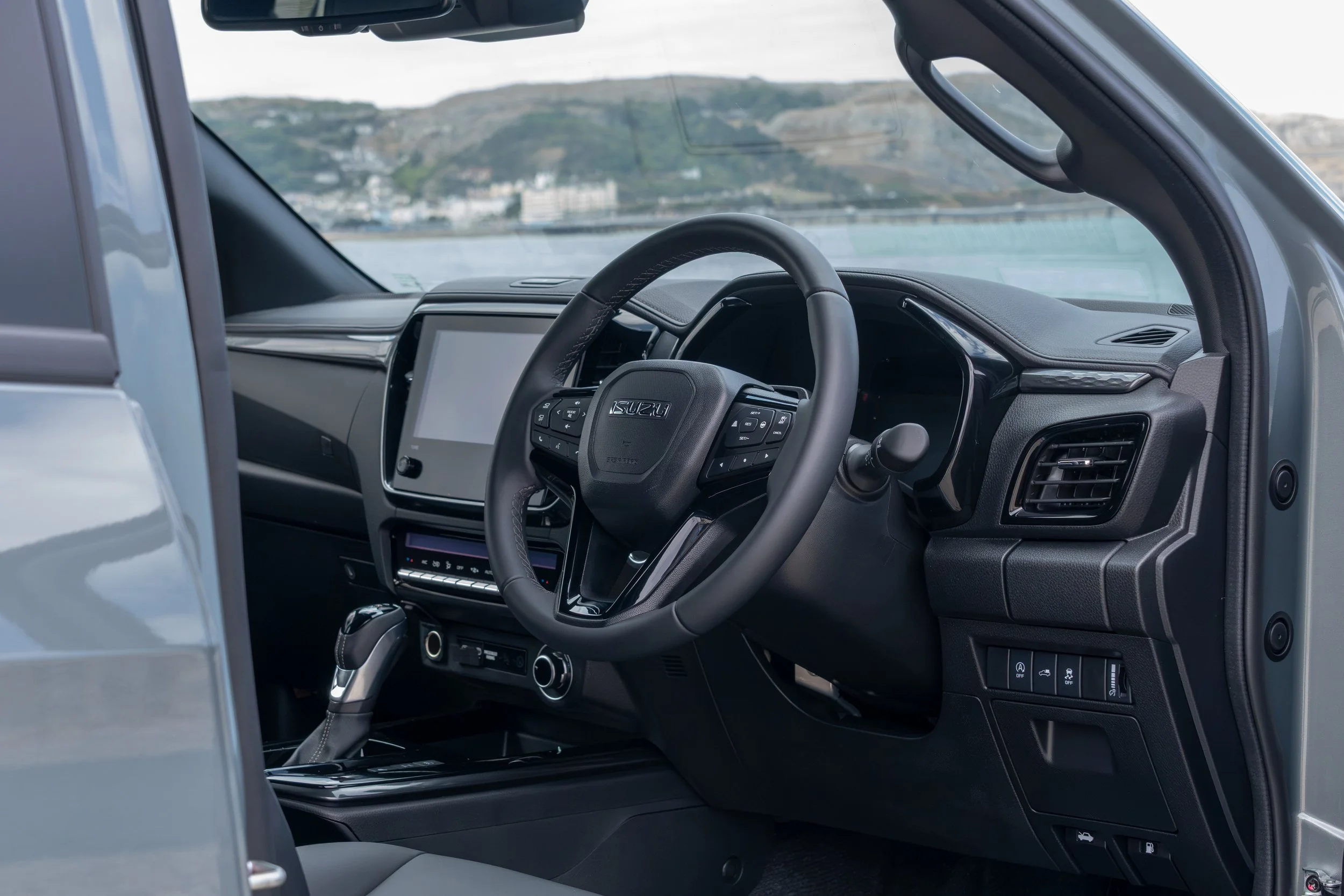
Beyond the hardware upgrades, there have also been some design facelifts, with some new front-end styling and interior tweaks.
New Diesel Engine
The diesel variant of the D-Max is powered by an improved 2,164cc 4-cylinder. The engine has new, stronger internals, and the turbo has also been upgraded to help deliver 163 hp and 400Nm of peak torque. In terms of economy, the new diesel D-Max returns around 32 mpg. The engine feels extremely refined and very strong, while getting the job done at a very reasonable noise level.
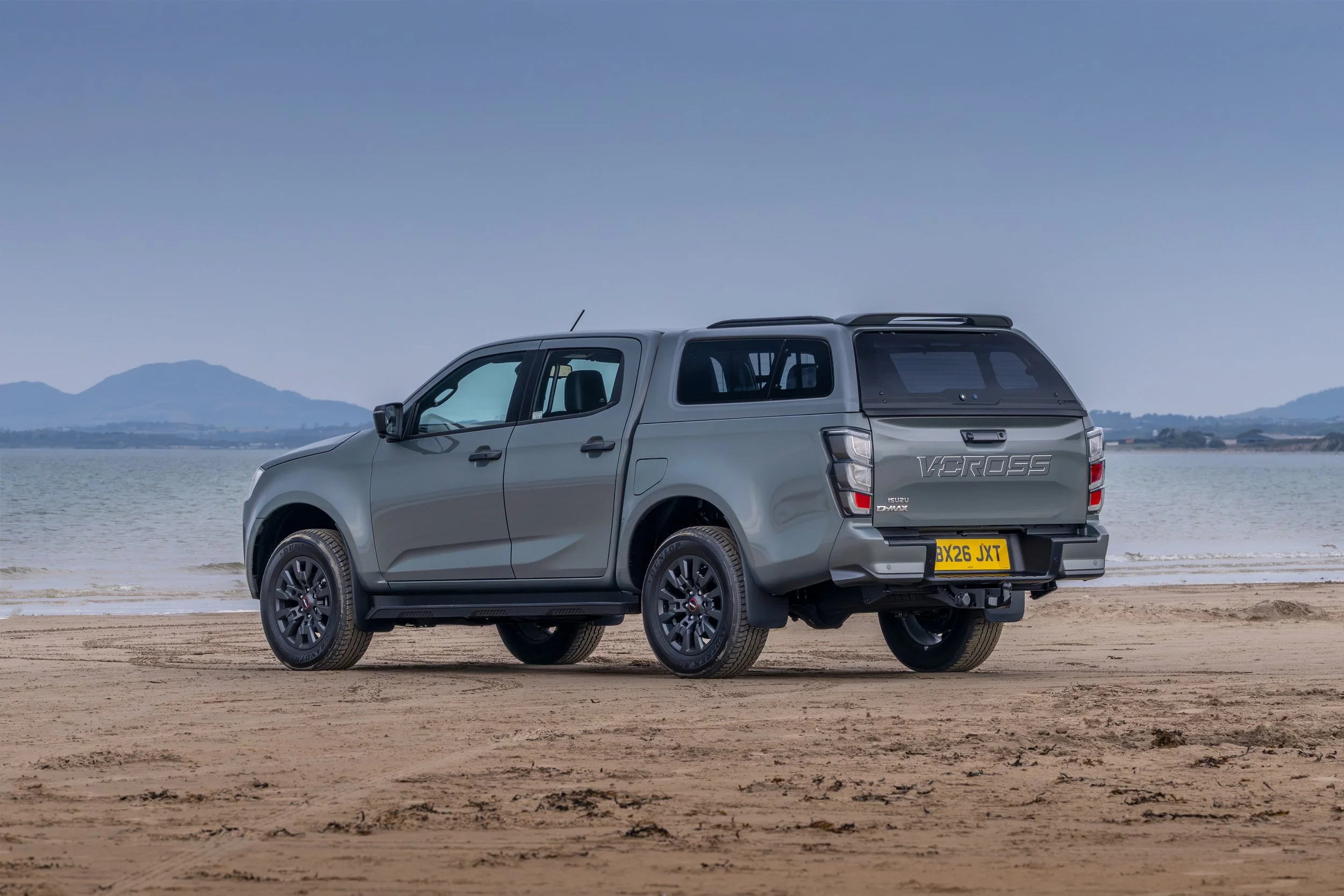
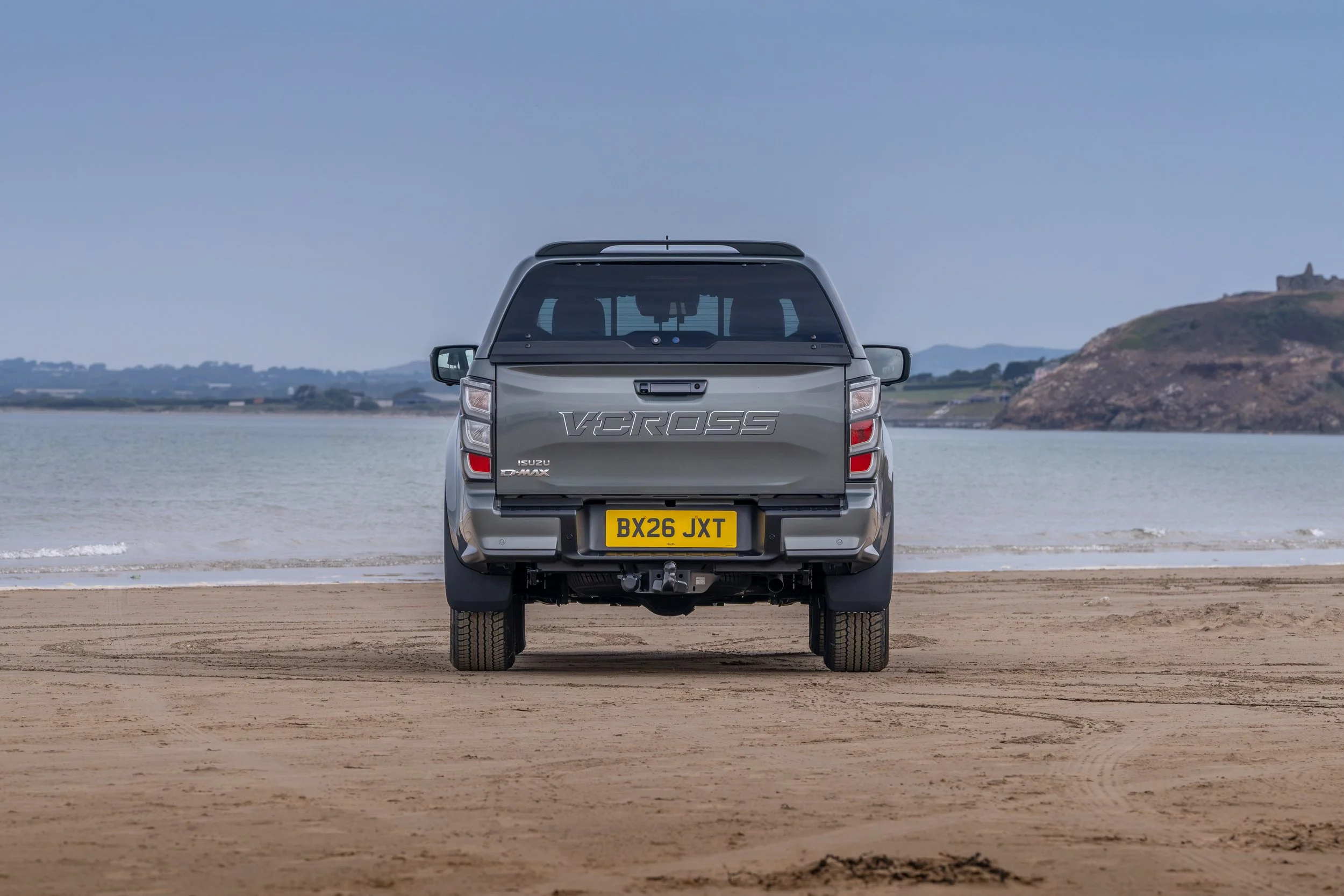
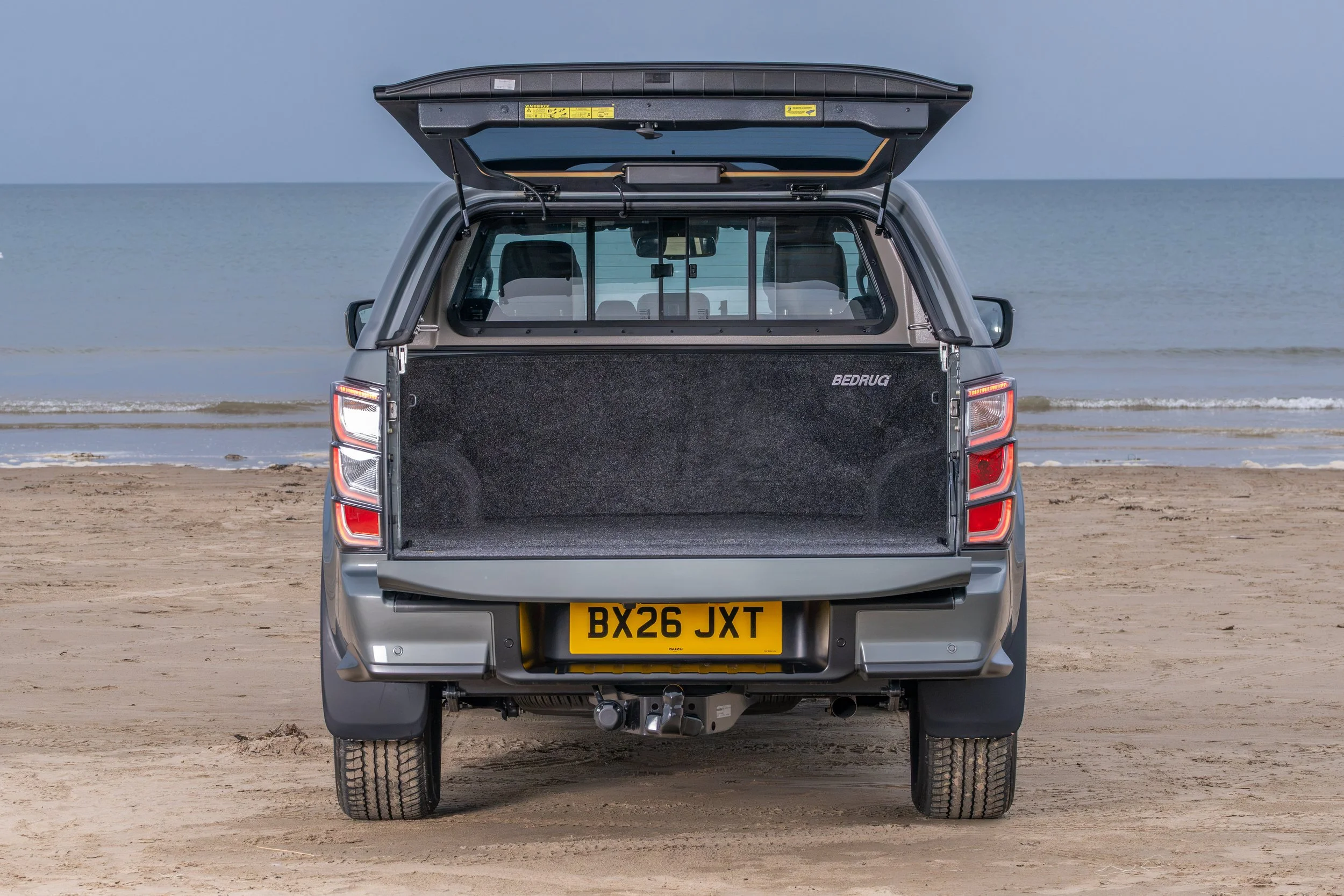
Dimensions and Load Capability
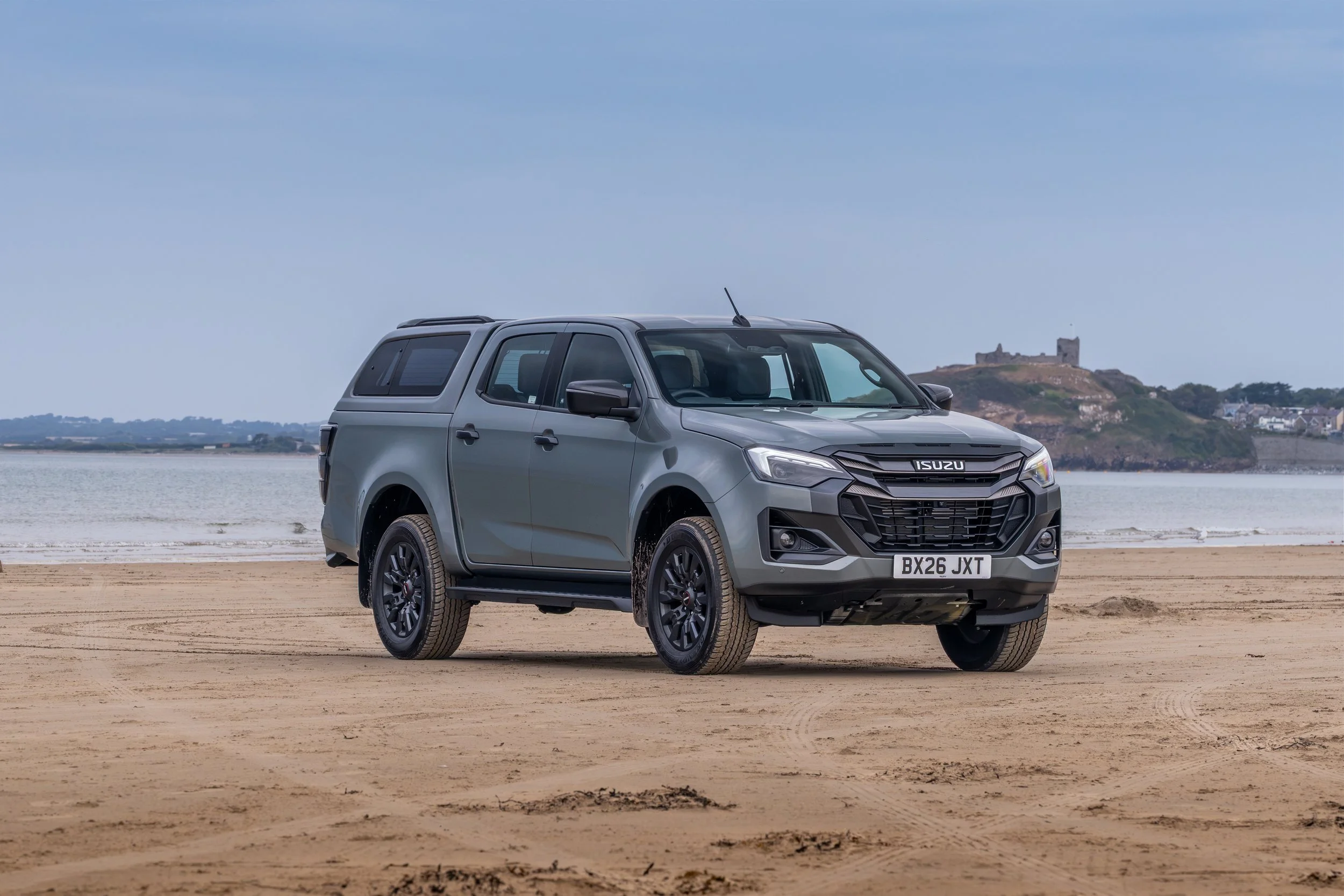
The D-Max is available in single- or double-cab variants, plus an extended double cab version with varying load bed sizes. As a single cab, the D-Max is 5.3 metres long and 1.8 metres wide; as a double cab, it is 5.2 metres long and 1.9 metres wide. Both versions share a 3.1-metre wheelbase.
For load space, the single cab bed is 2.4 metres long, and the double cab is 1.6 metres long. The extended double cab has a 1.9-metre bed.
The maximum towing capacity for all variants is 3,500 kg (braked), with a gross train weight of 6,000 kg, and the truck itself weighs between 1,090 and 2,030 kg depending on cab specification.
The latest diesel variant also has a wading depth of up to 800mm and improved ground clearance of 210mm, making off-road duties somewhat of a doddle.
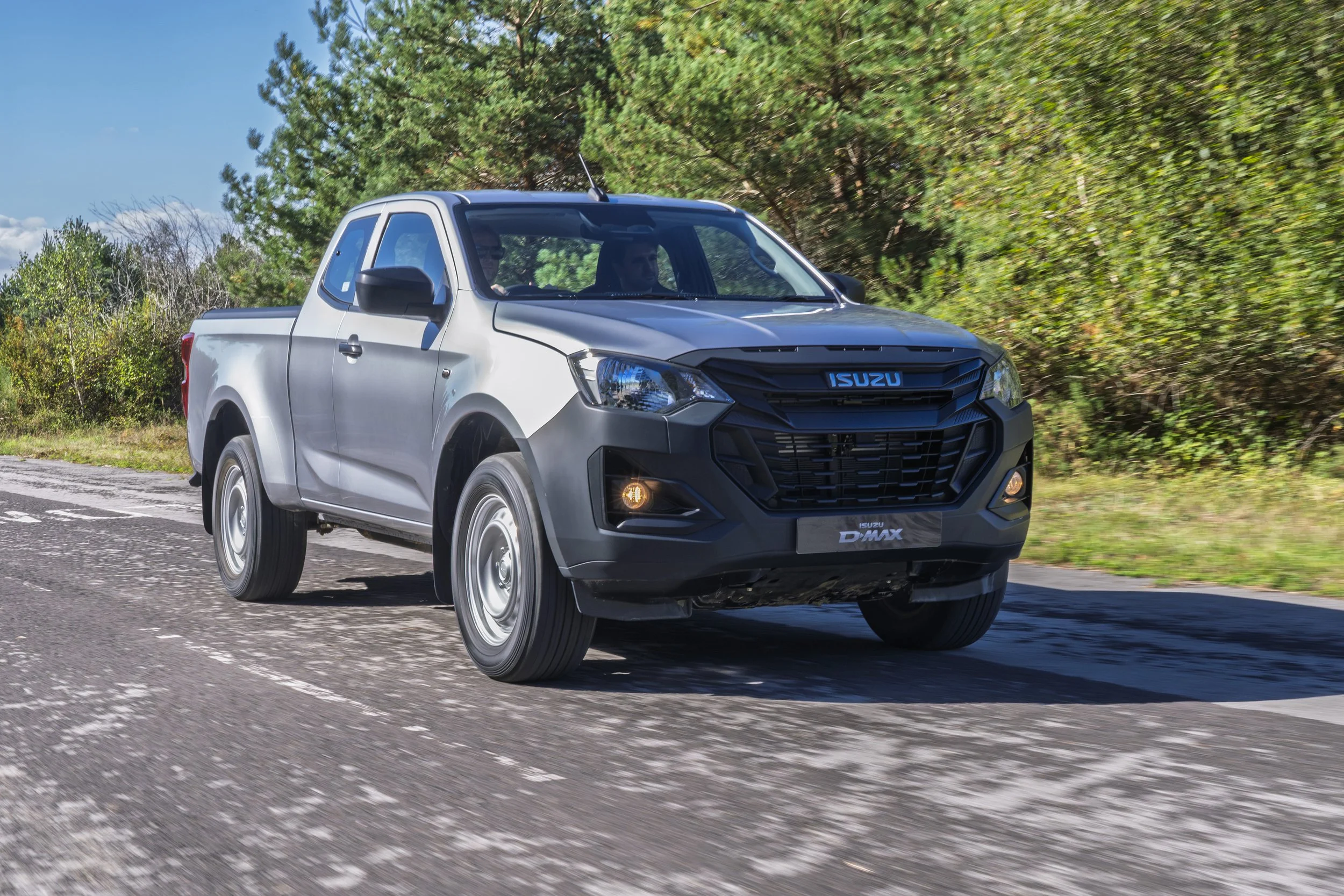
Trims and Prices
The latest D-Max is available in 4 variants, all sharing the same 2.2L engine and 4x4 drivetrain.
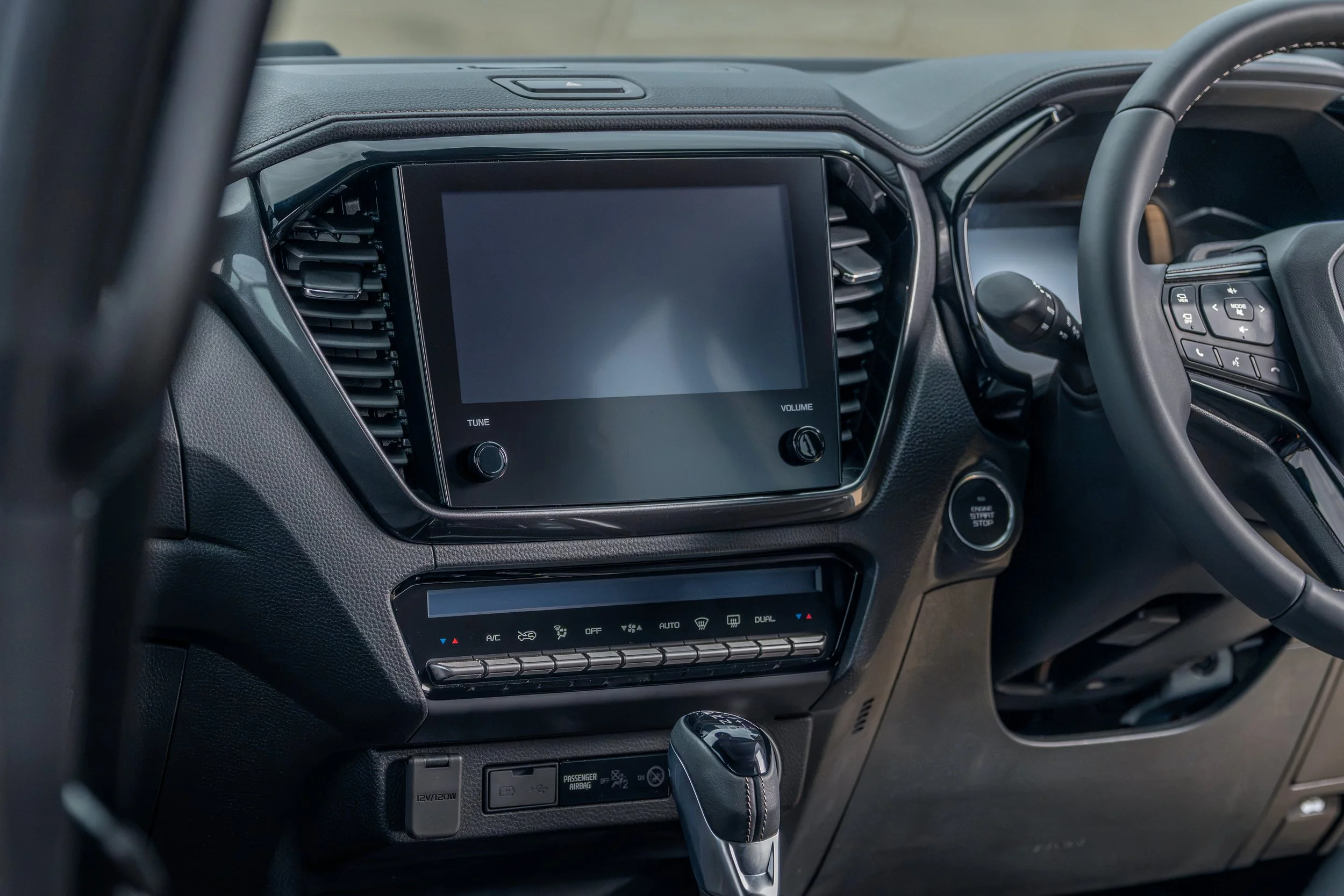
Utility is the entry-level trim priced from £33,495 (+VAT) for the single cab and £34,295 (+VAT) for the extended cab. For the money, you get a set of deliciously basic 16-inch steel wheels wrapped in Dunlop tyres, a manual gearbox, a cloth interior, and a more than adequate 8-inch centre display with Android Auto and Apple CarPlay. On the extended cab, the wheel size increases to 18-inch.
Next up is the DL20, a double cab option priced at £35,795 (+VAT) with a 6-speed manual or £37,795 (+VAT) with the 8-speed automatic gearbox. For the extra cash, you get a set of 18" alloy wheels as standard and a rear-view camera.
The DL40 is next in the range and is available as a double cab with a manual gearbox from £38,995 (+VAT), an extended cab auto from £39,995 (+VAT), or a double cab with an auto box from £40,995 (+VAT). The DL40 also includes a 360-degree surround view camera system, which is great for car parks and even better for driving off-road.
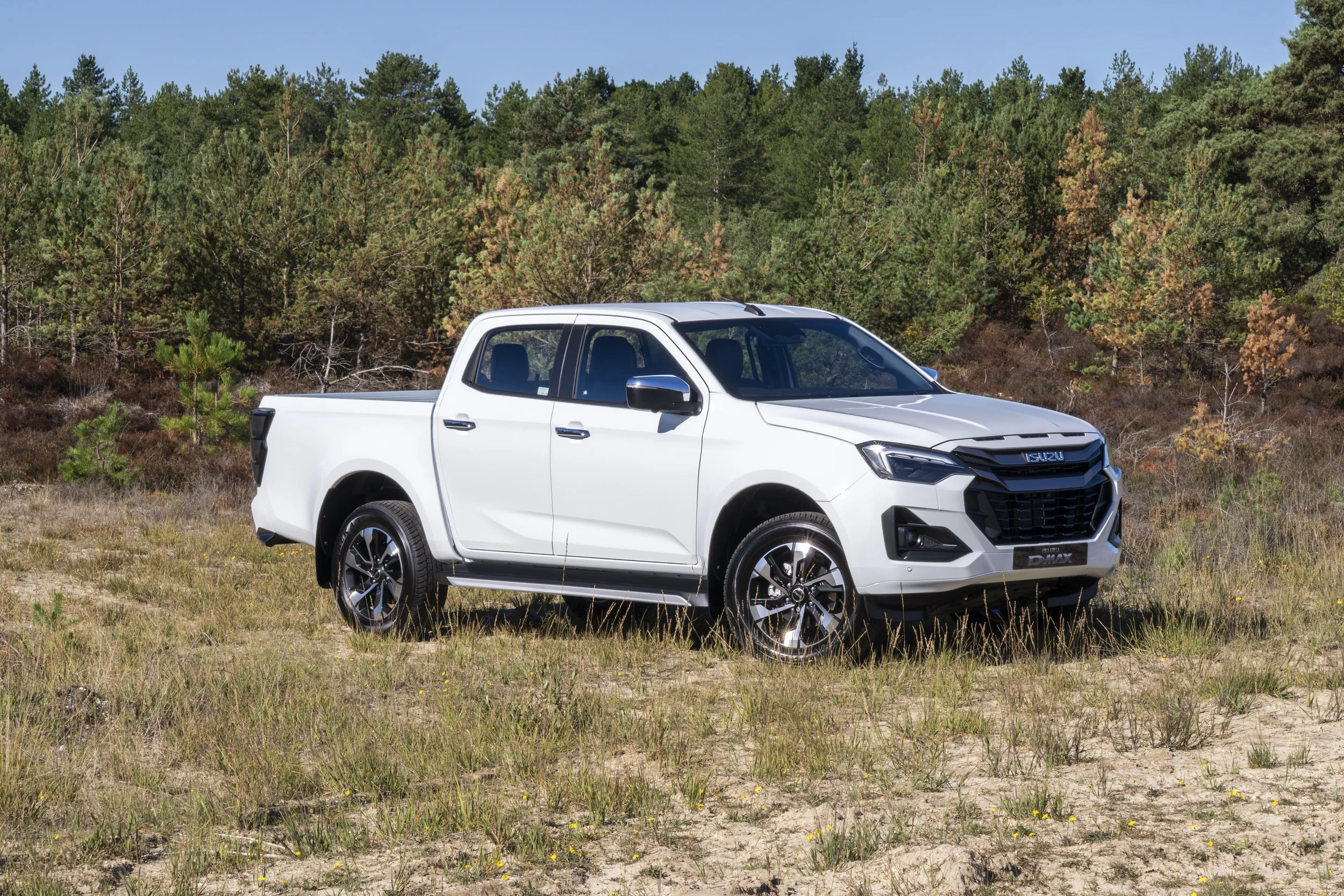
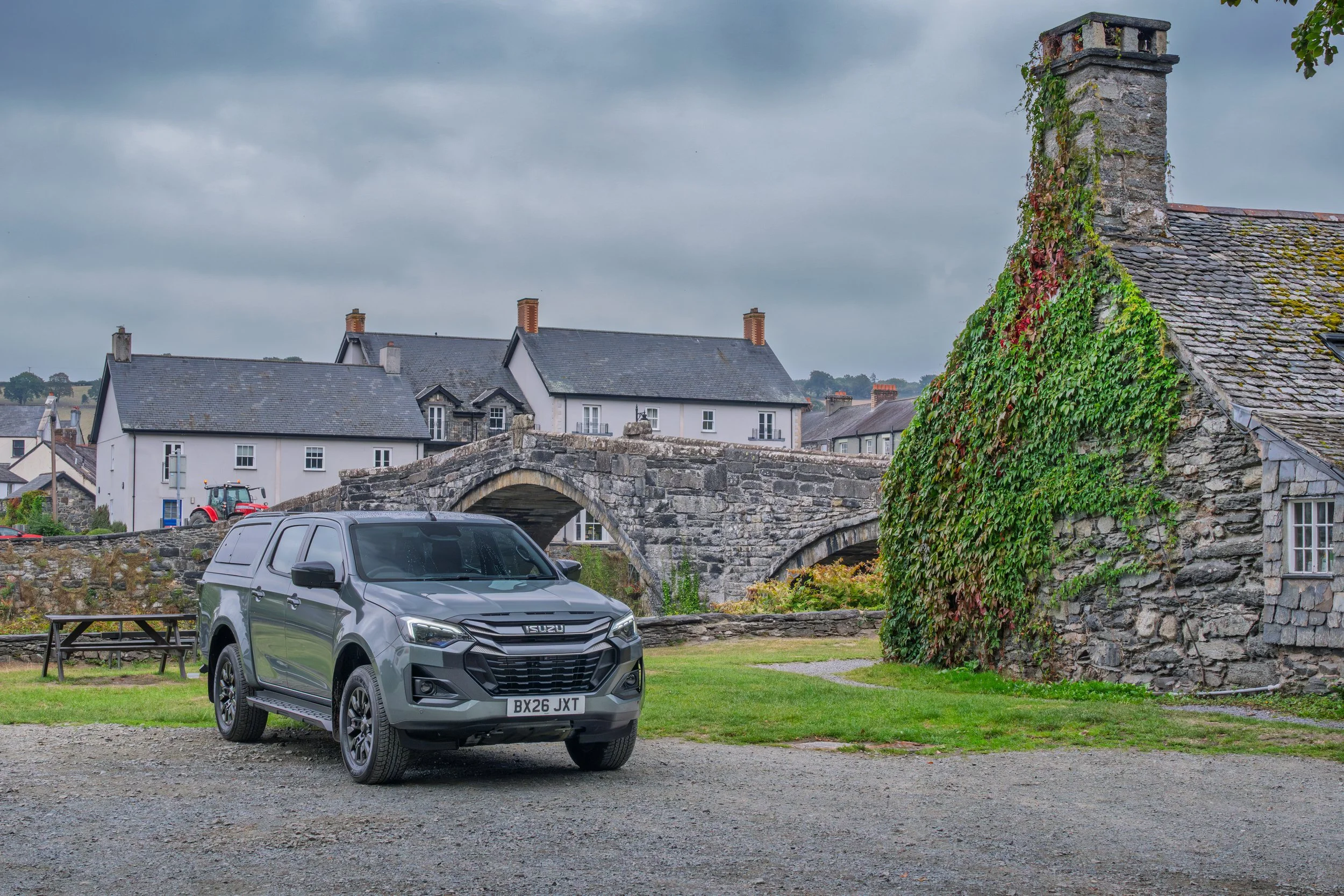
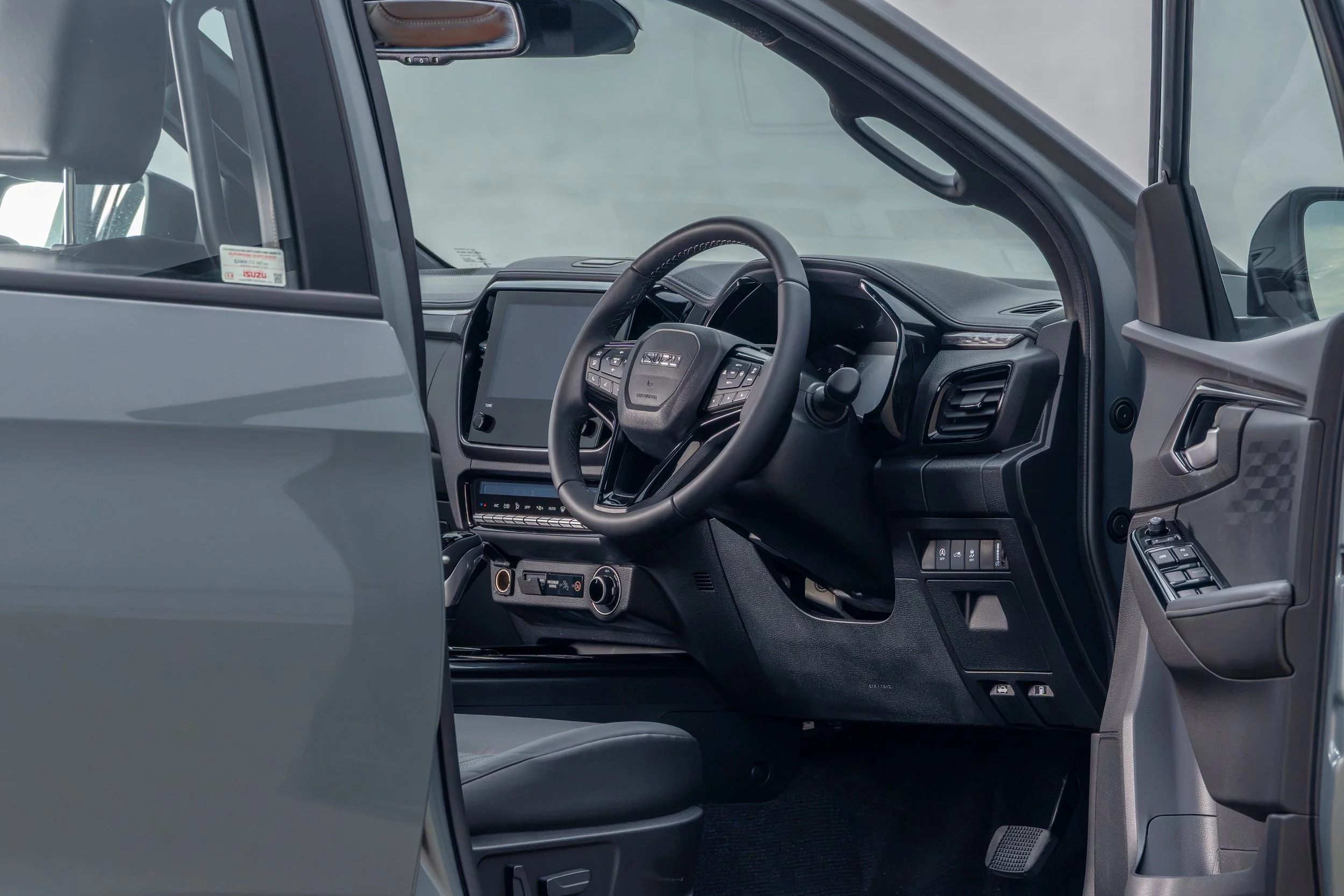
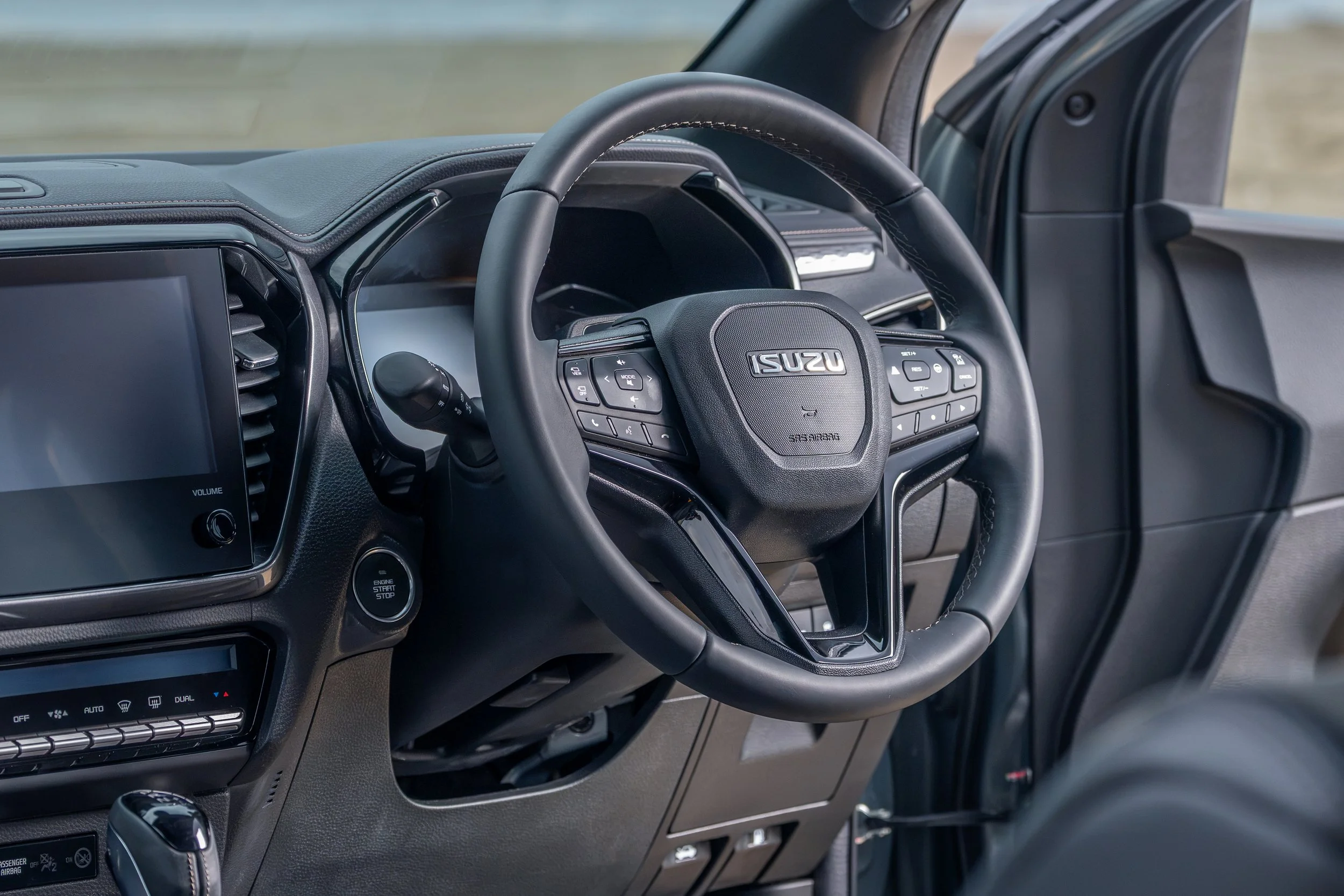
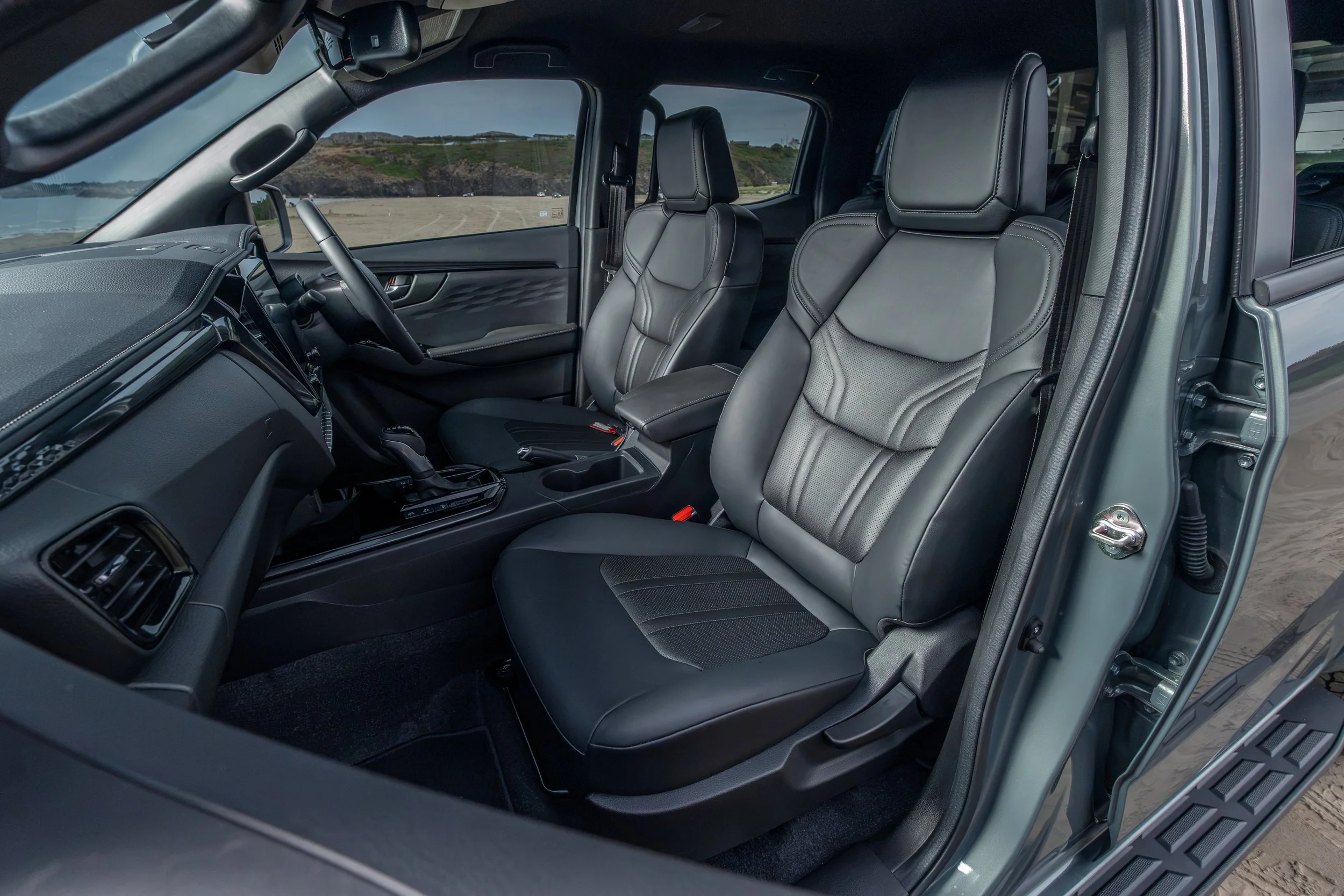
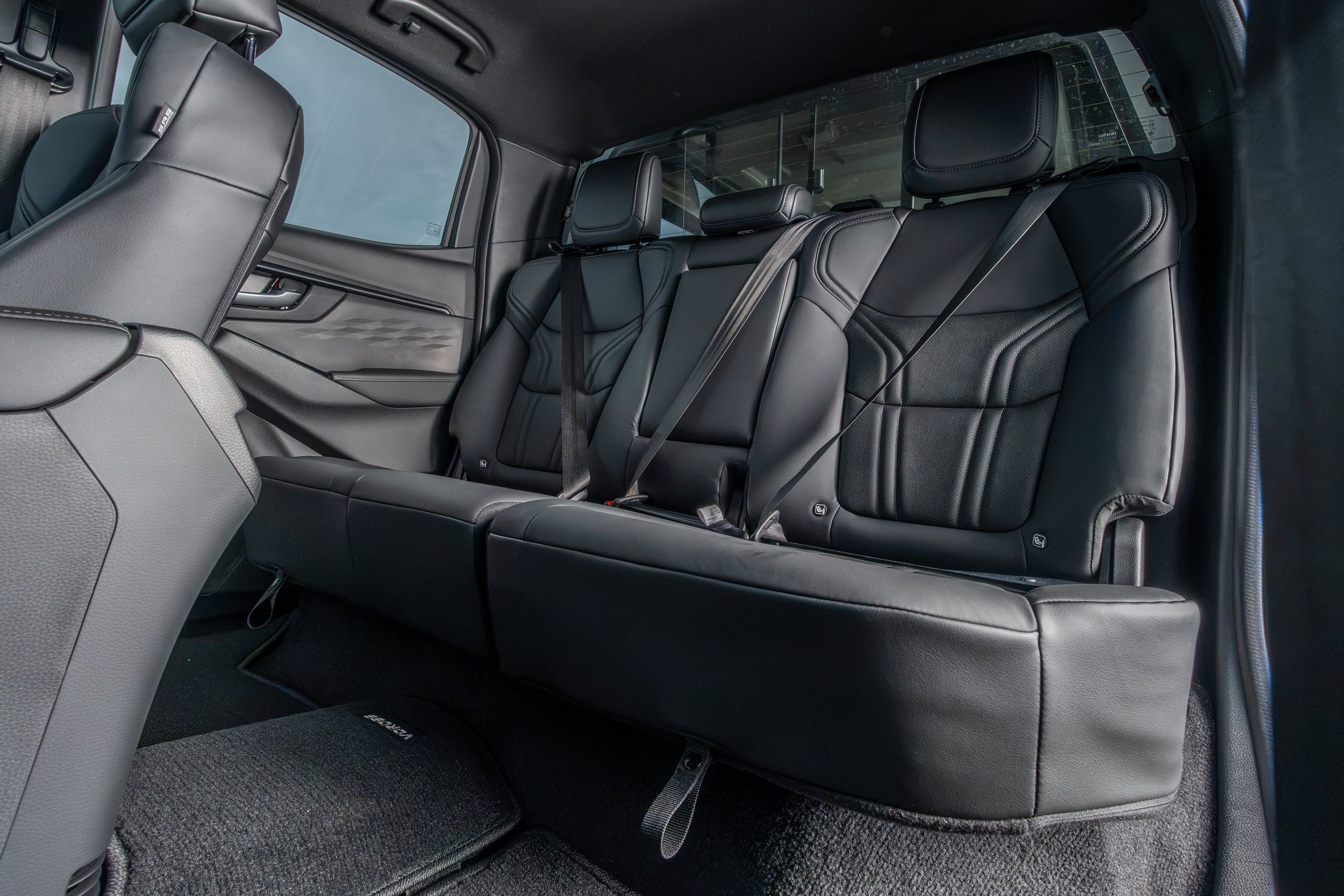
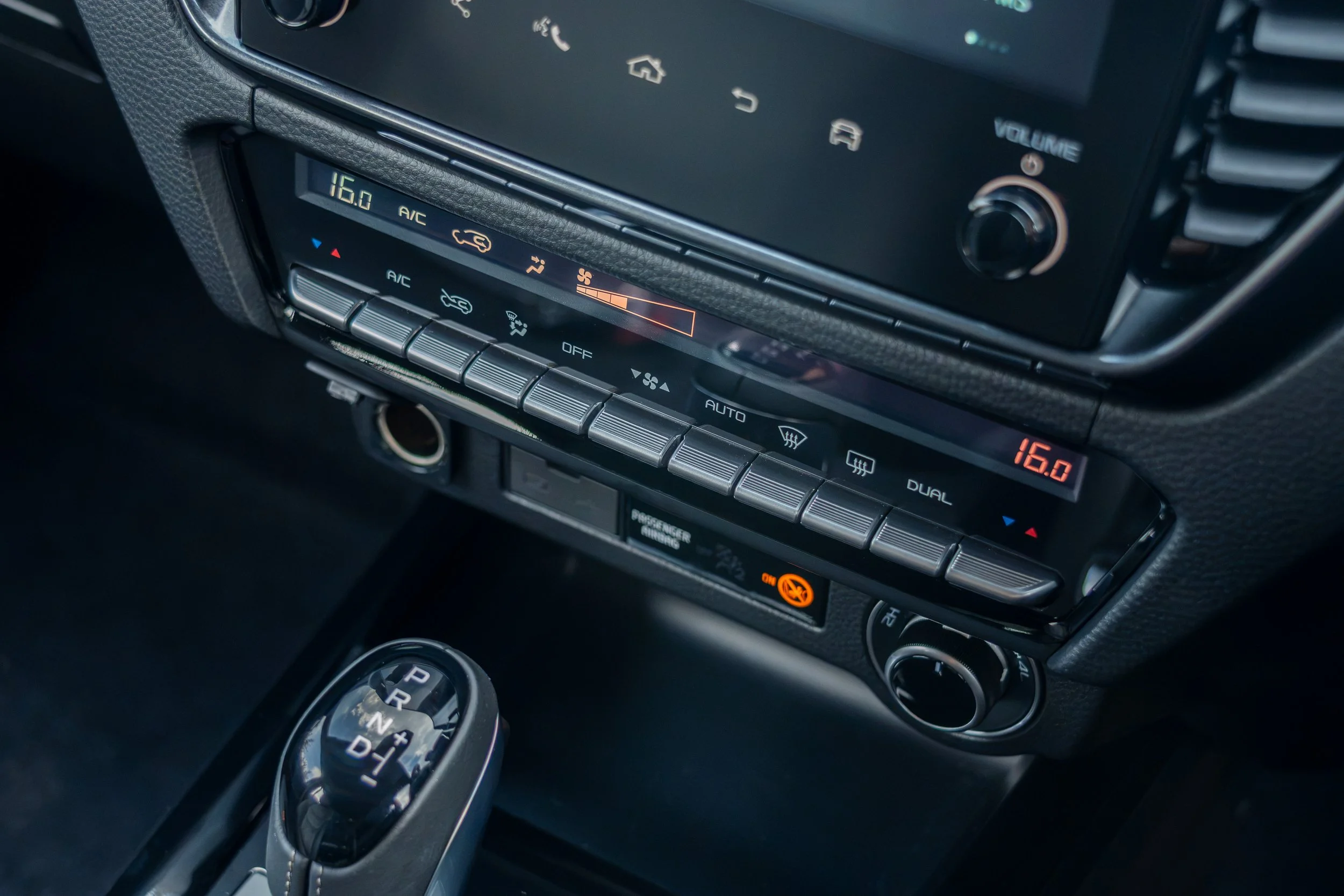
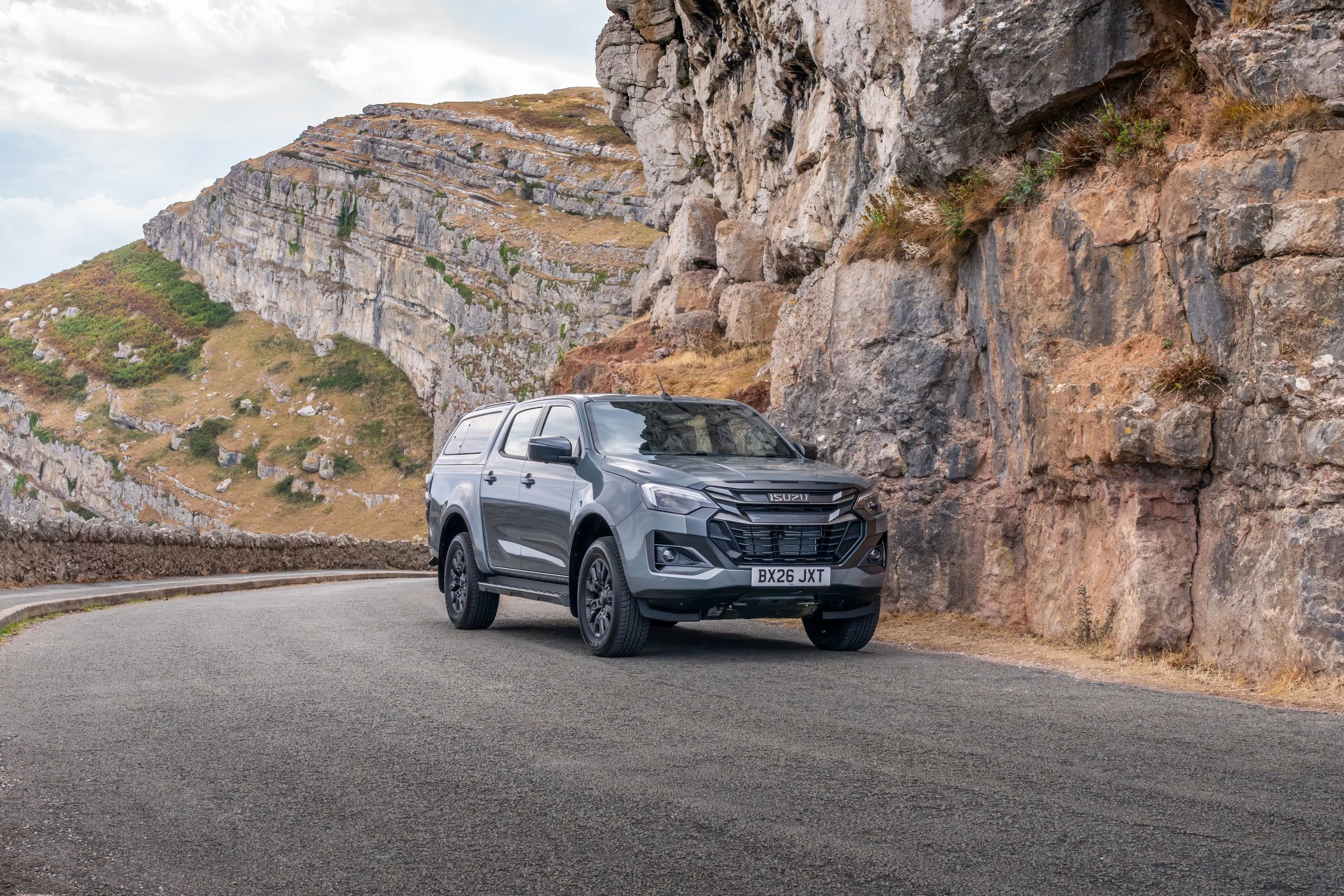
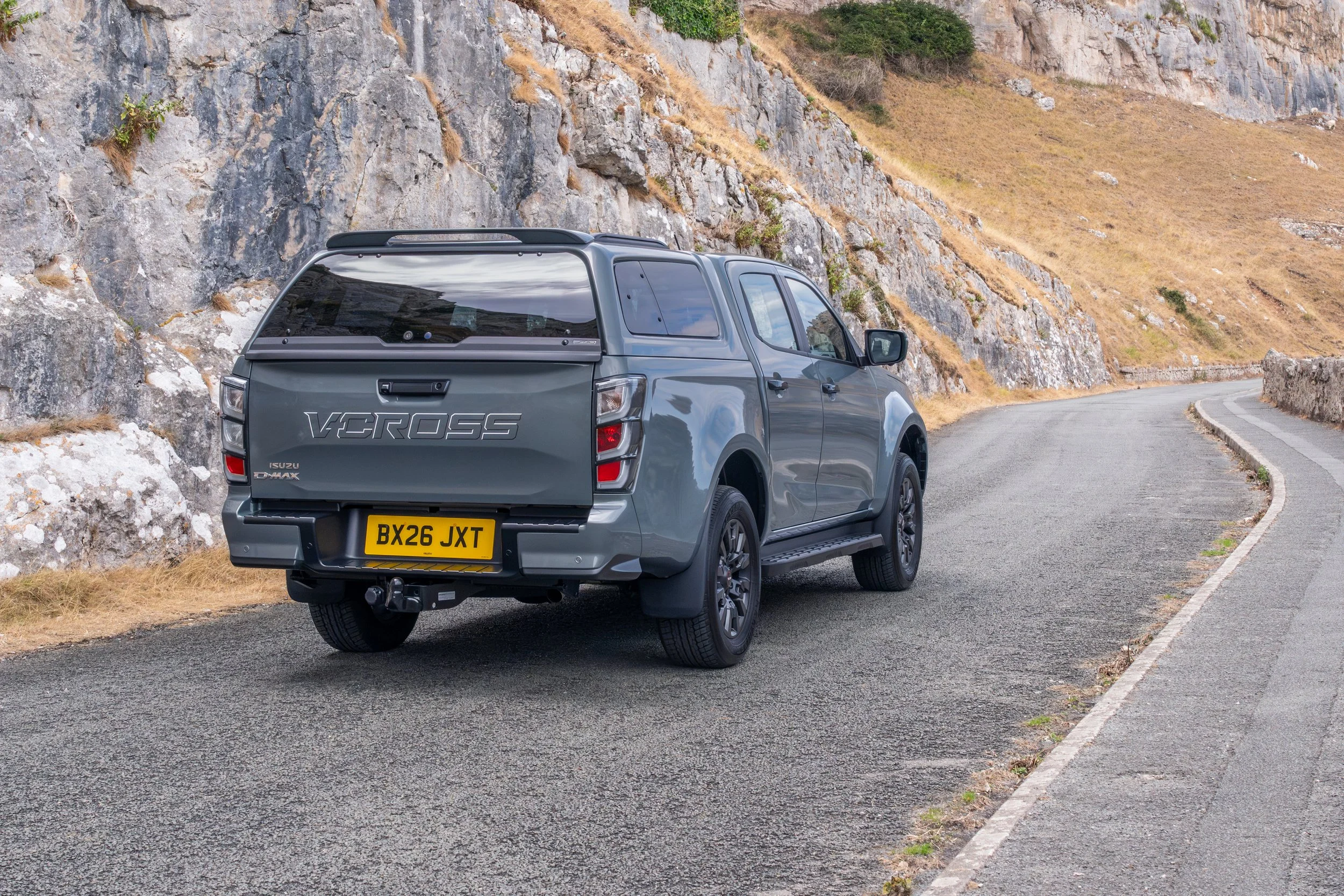
At the top of the range is the V-Cross, available only as an automatic double cab priced from £42,995 (+VAT). The V-Cross offers the most luxurious leather interior, heated seating, dual-zone climate control, an upgraded 8-speaker sound system, and a driving environment that would make most drivers of £60k+ SUVs feel very at home.
The Test: Hurn MOD Facility
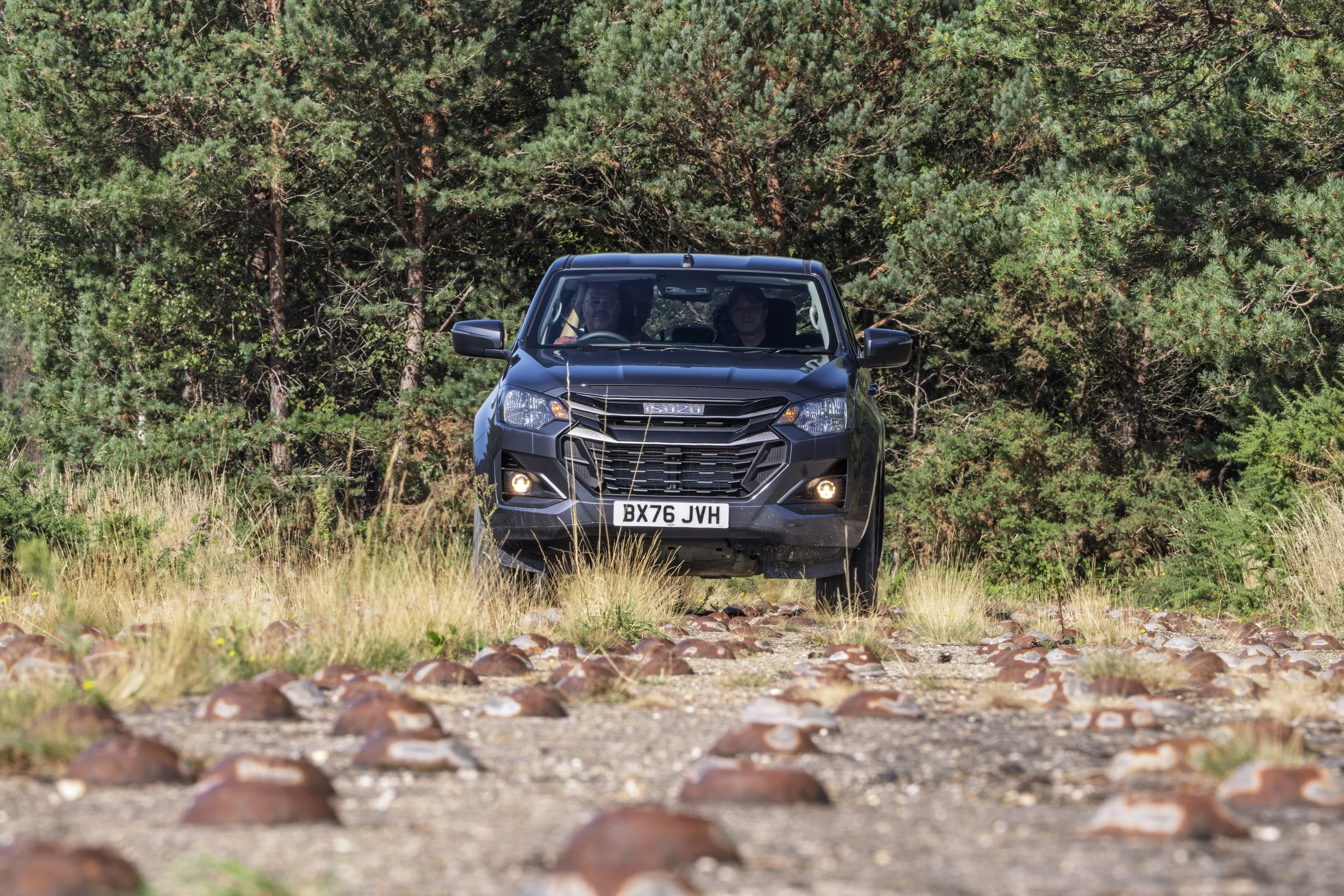
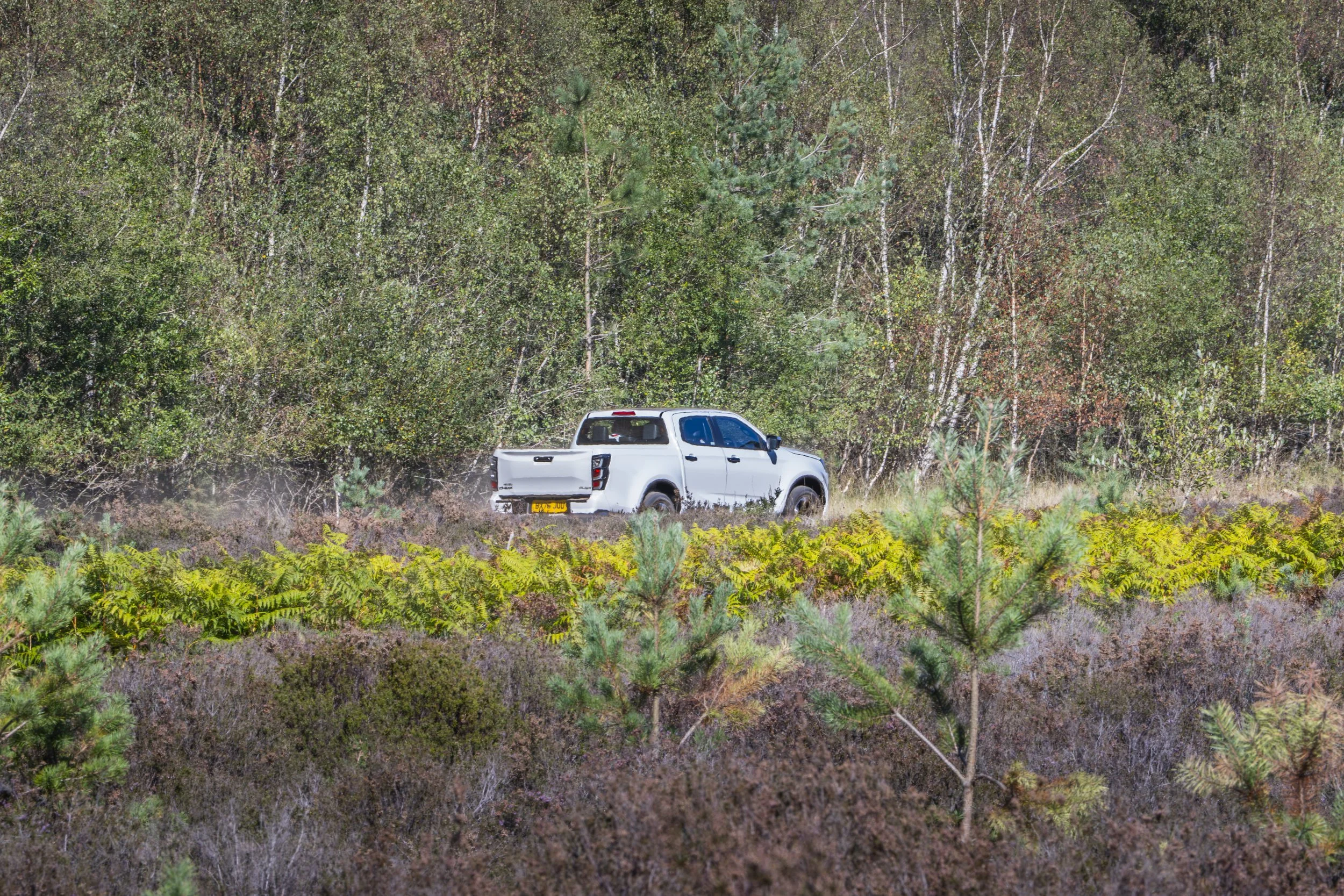
For my driving day, I was invited to the otherwise restricted Hurn MoD testing facility in Hampshire. Hurn is designed to put the best off-road military vehicles through their paces with an array of tarmac road routes, manufactured challenging terrain including canonball roads, plus muddy, boggy, and gravelly ravines, and an enormous sandy field that, for all intents and purposes, can be described as a desert.
Isuzu picked Hurn for its challenging terrain and brought along every iteration of the new D-Max for testing, including an EV version (more on that very soon).
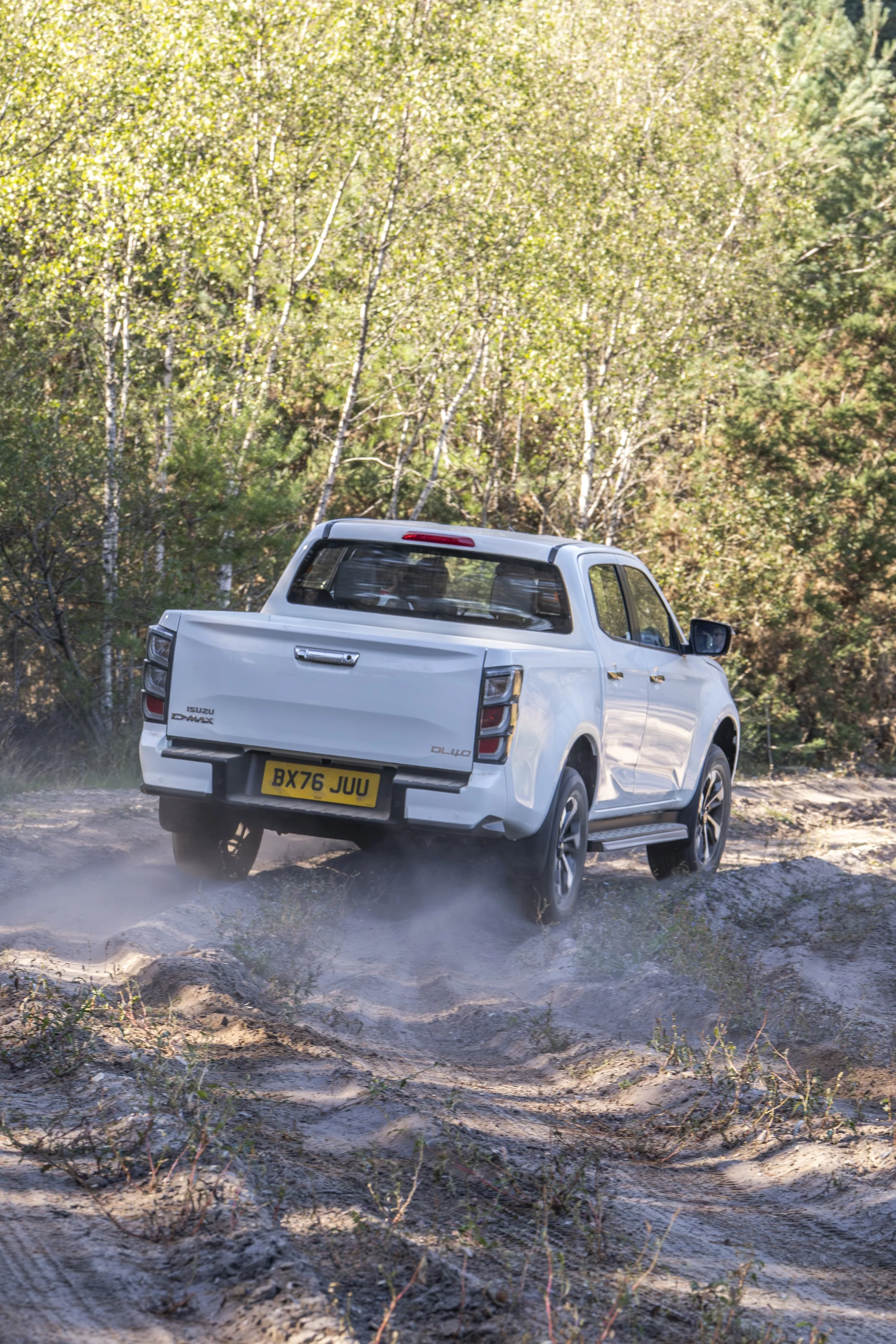
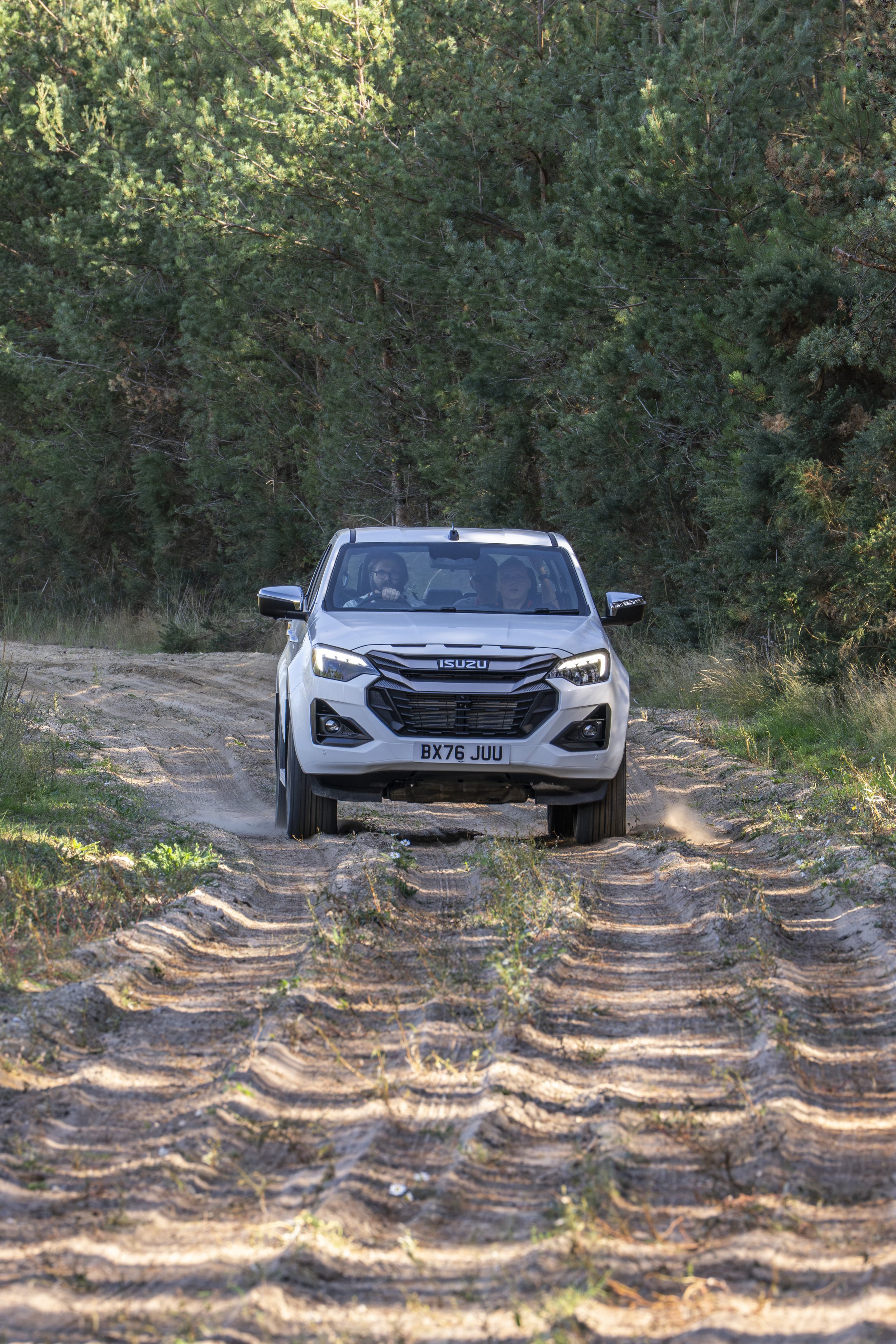
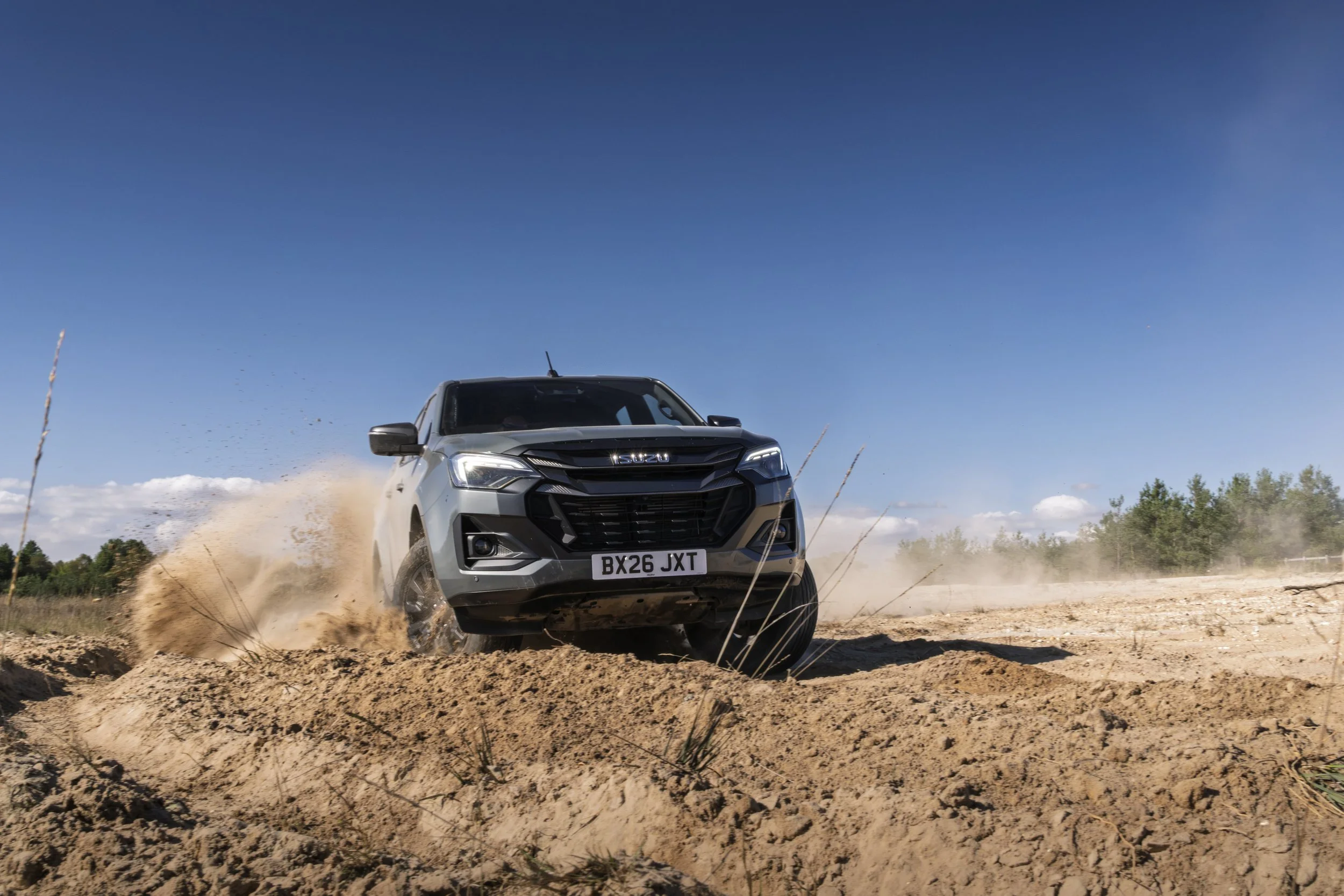
As good as a £90k Land Rover Defender?
On my day with Isuzu, I was given the option to drive all variants and trim levels, so naturally, I did. The entry-level Utility surprised me the most in terms of comfort, ride quality and noise. Both on and off road, the Utility trim felt extremely strong and exceptionally well put together with no rattles, creaks or clunks despite some exceptionally knarly off-road sections.
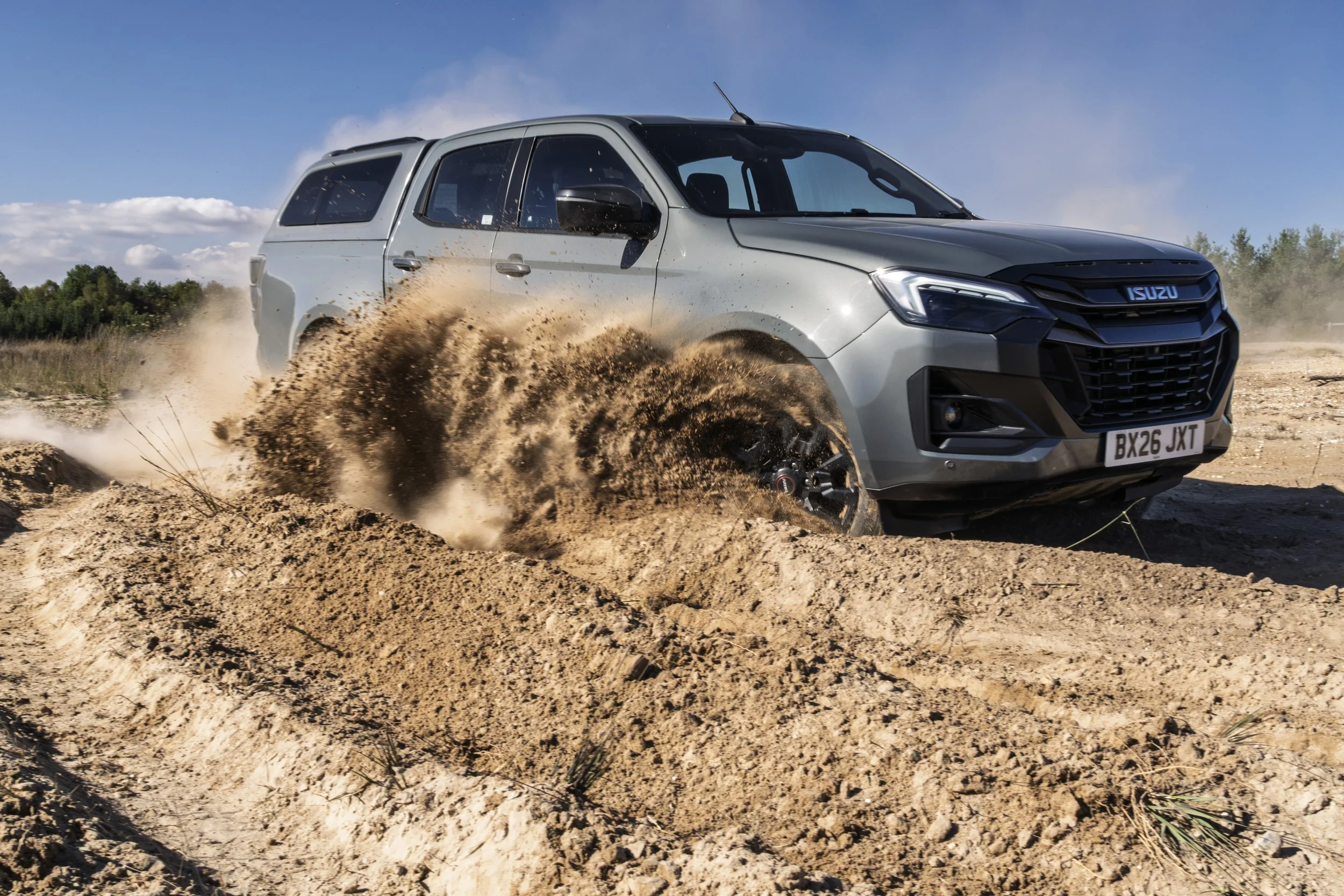
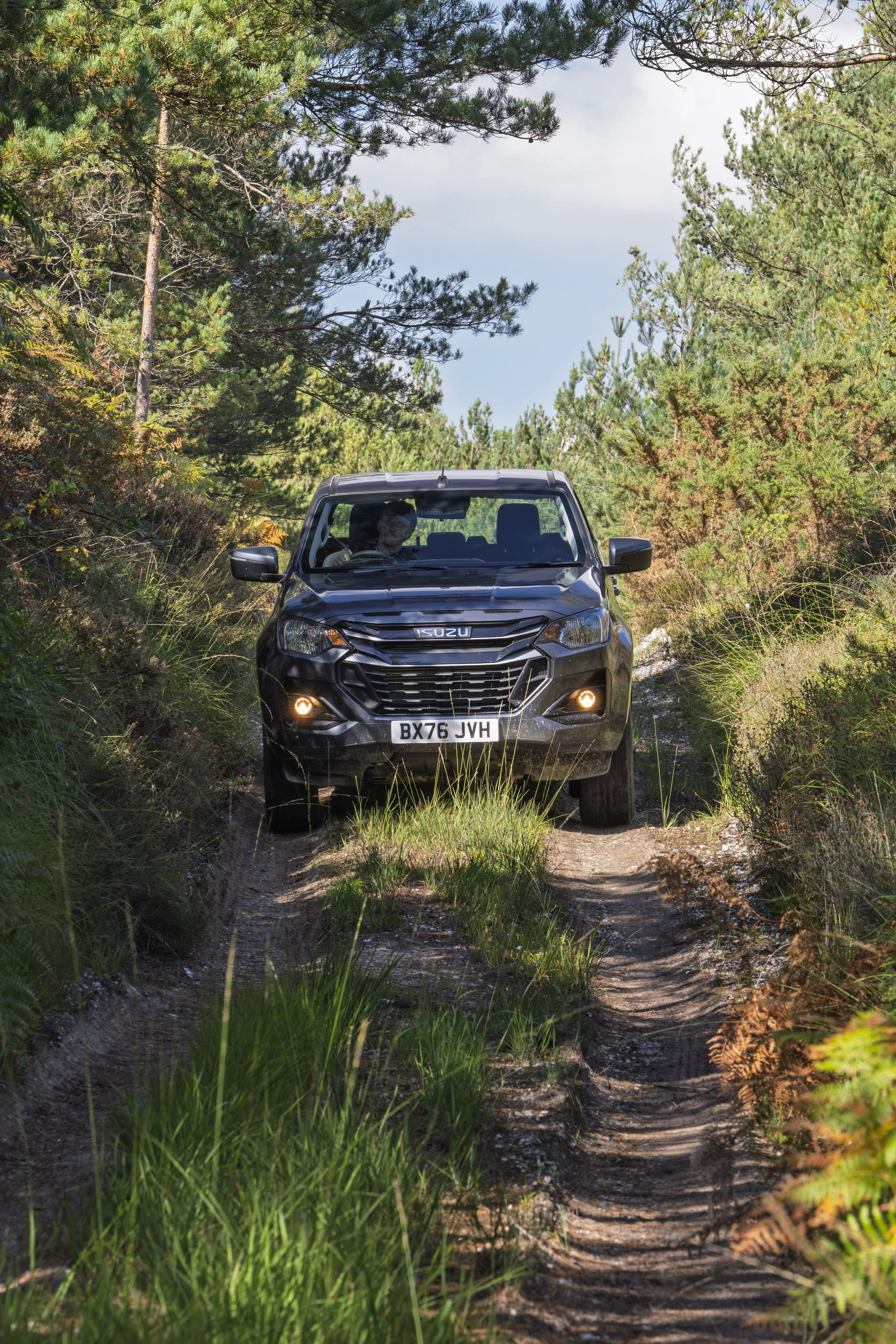
I took the DL20 and DL40 on the most rugged off-road sections, and was left feeling utterly astonished at how well the pickup dealt with wet mud, deep sand, steep climbs and even steeper drops, all with standard Dunlop road tyres.
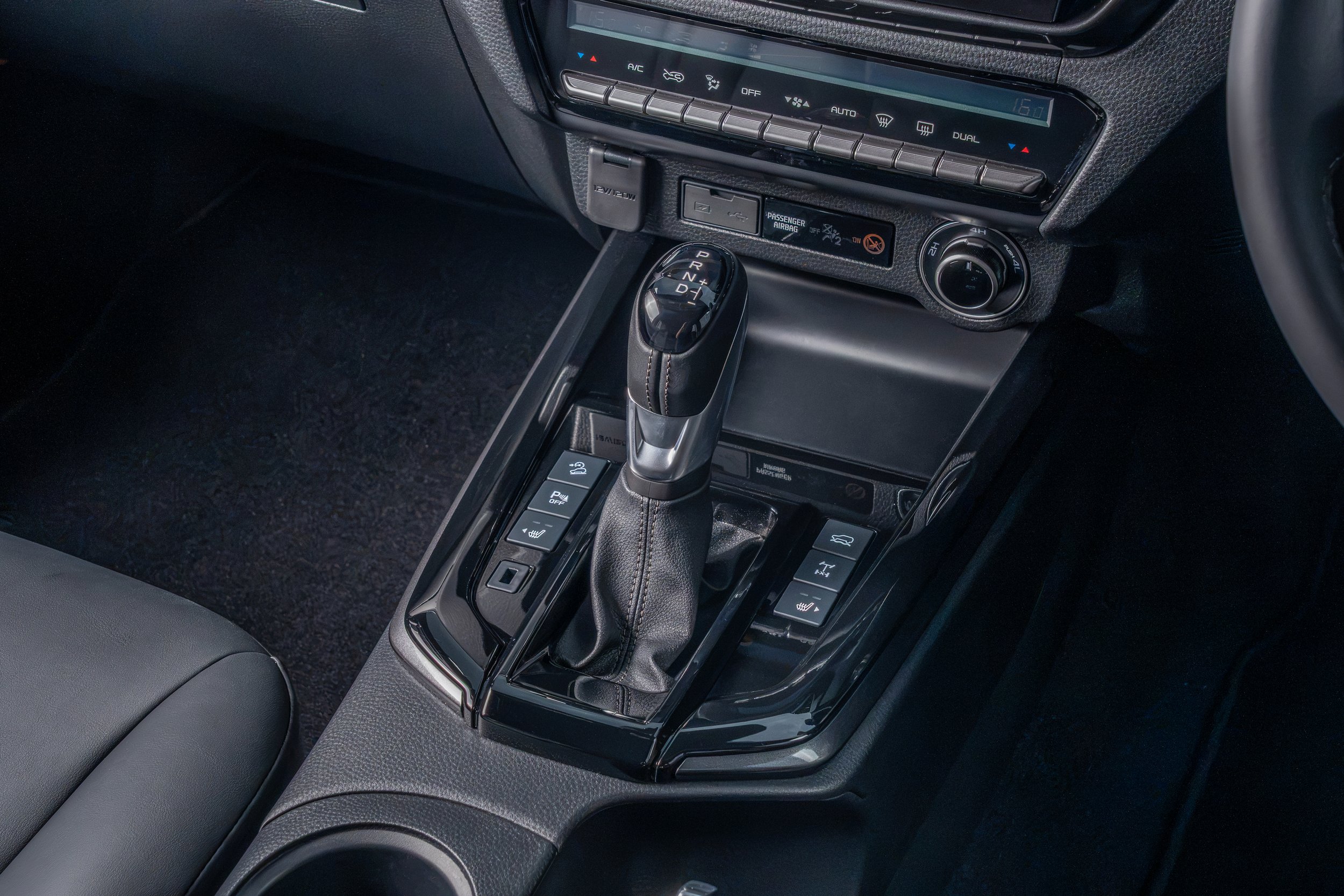
I've been fortunate over the past decade to experience some of the best off-road-derived vehicles on the market in some of the most unique environments, and I can say with my hand on my heart that the D-Max is up there with the best in terms of off-road capability. Inside the cab, both the manual and automatic variants let you switch from RWD (for road use) to 4WD high and low (for off-road use) with the twist of an electronic switch. Gone are the days of awkward secondary manual selector levers; the D-Max's clever electronics take care of the adaptations quickly and quietly, with minimal fuss.
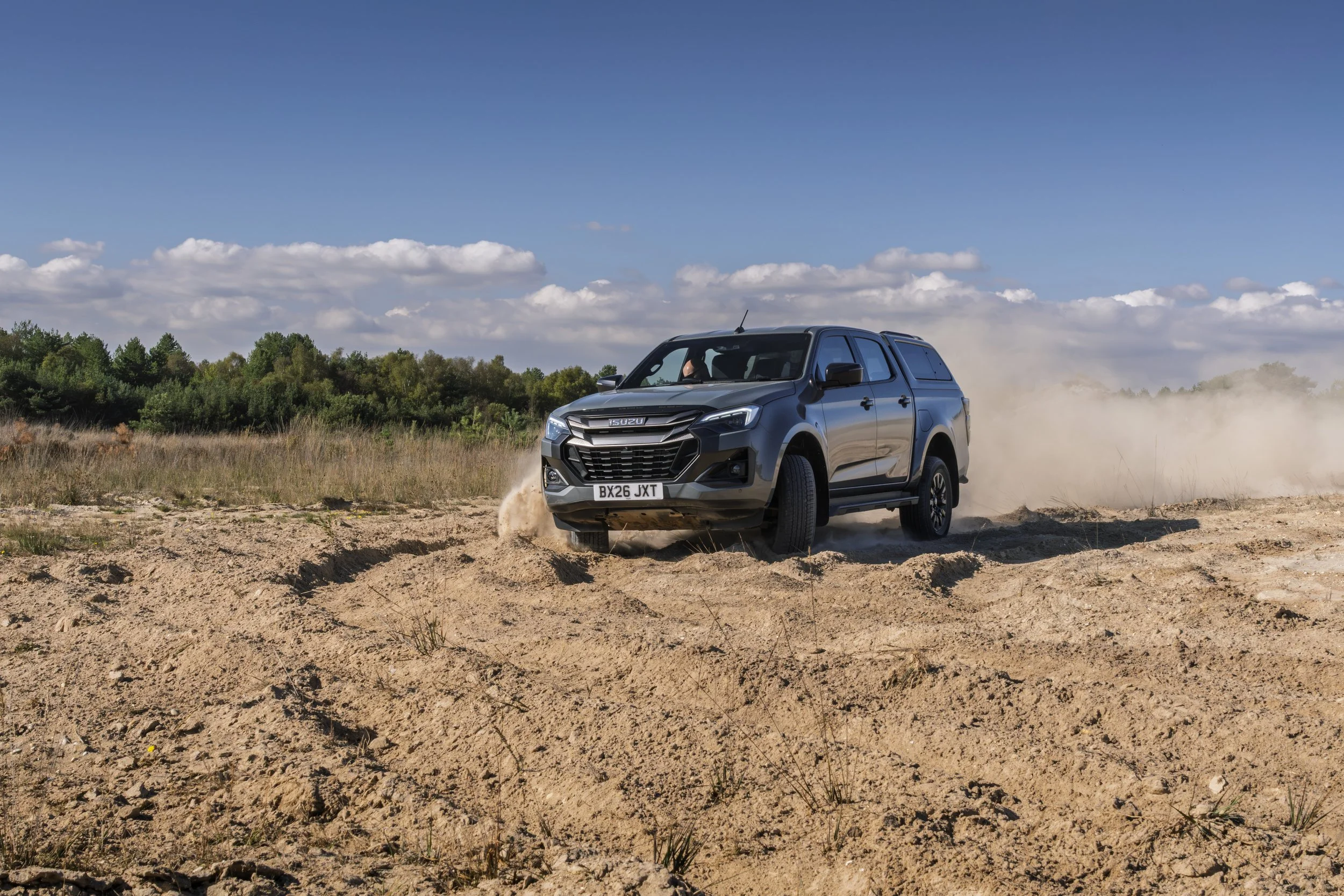
On a route made up of mostly deep and very soft sand, the D-Max clawed its way up and down slopes and around tight bends with little-to-no fuss at all. The only other vehicle that's left me feeling as impressed with the ease of driving off-road in such challenging environments is the Land Rover Defender - prices for which start at almost £20,000 more than the most expensive D-Max.
On the road, the D-Max DL20 and DL40 are equally impressive, with no compromise as an all-terrain vehicle. Typically, if a car is excellent off-road, it tends to be less suited to road duties or vice versa, but with the D-Max, I'd be happy to cover a 2-3 hour motorway stint quite happily.
In the top-trim V-Cross, from the driver's seat it's very easy to forget you're driving a pickup truck at all. The interior quality feels great; the sound system is well above average, and the road holding is excellent for a tall vehicle.
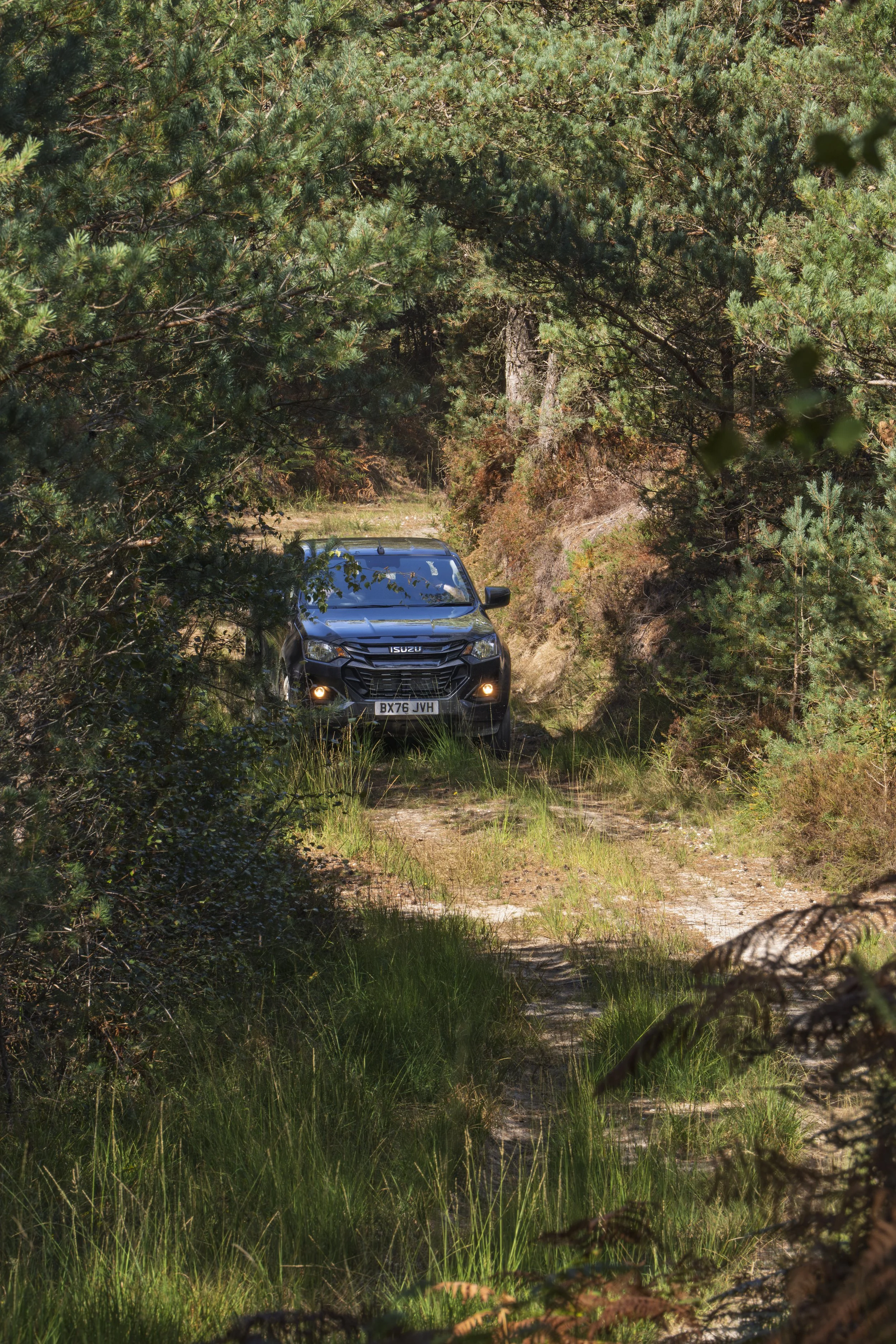
Pickups have come a long way; the D-Max possibly the furthest
I remember driving mid-size pickups like the D-Max around 15 years ago and feeling quite satisfied with their capabilities as off-road and utility vehicles - but not much more.
I had little desire to spend more time than necessary driving them, and I certainly didn't see the appeal of owning one instead of an SUV or a van. But now things are different; the D-Max is so well refined that buying a V-Cross at £51,594 (including VAT) feels like undeniably better value than spending £65,610 on an equivalent Defender Hardtop - and I can say that with certainty, as a Defender 110 Hardtop is what I've been driving around in daily for the past 4 years.
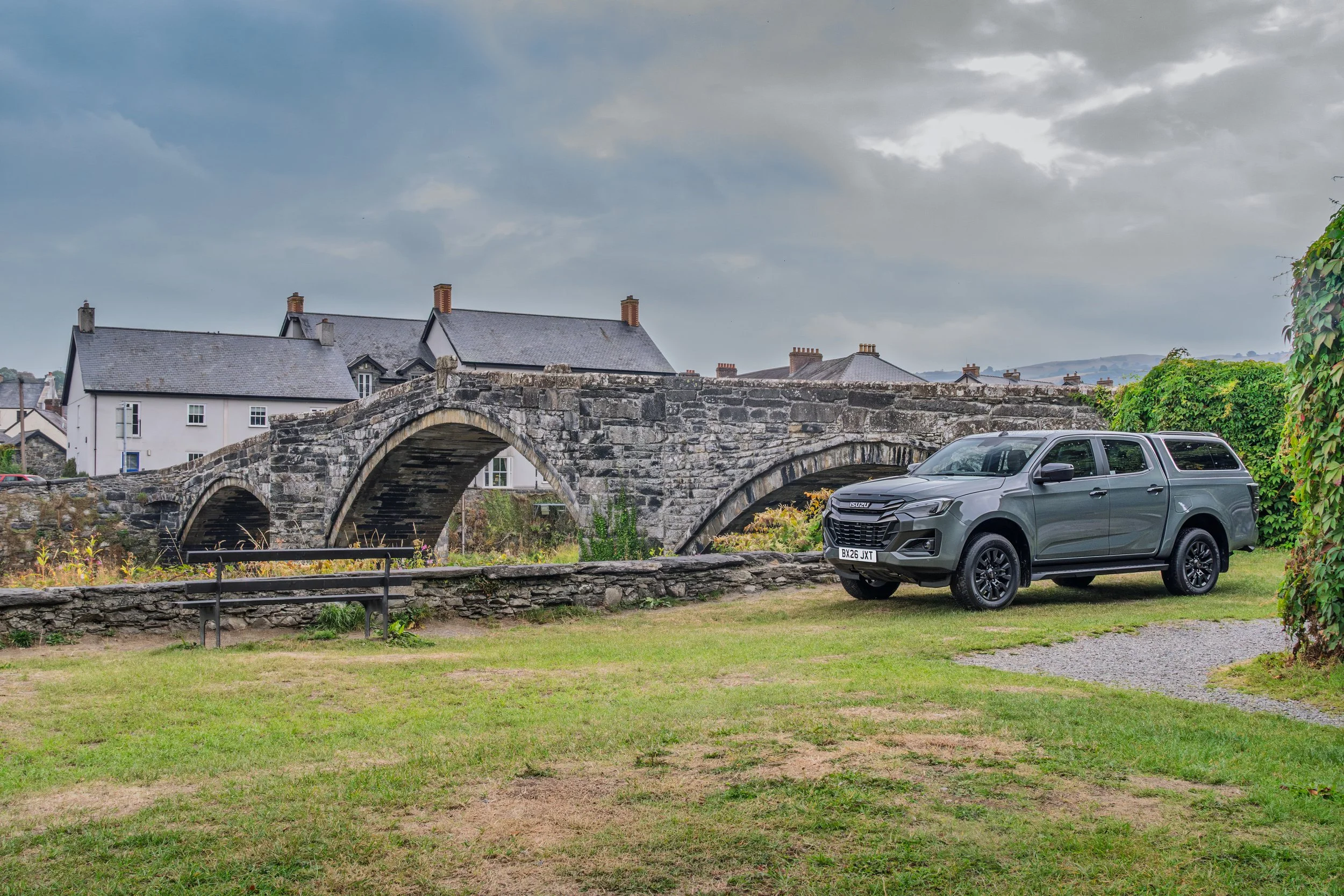
Conclusion: Effortlessly cool
The D-Max, while, truth be told, is in a tough battle against the equivalent car or van, somehow appeals to me more than both. For a car to be 'cool' or have a certain desirability appeal, it needs to be extra special. For a van to be desirable, it needs to offer something that other vans don't - but ultimately, it will always be 'a van'.
Pickup trucks, on the other hand, are seriously cool and even in the most basic 16" steel wheel trim, offer the sort of appeal that cars and vans could only ever dream of. I still can't quite put my finger on why, but what I do know after spending the day driving the V-Max... is that, for some reason, I now want one.
For a farmer, builder or trader, I think you'd be hard-pressed to find another workhorse capable of so much elsewhere for a similar price. The D-Max impressed me as much as a 4x4 off-roader as a road-going vehicle, and I'm certain most people on a test drive of a new D-Max will feel much the same, especially if they're stepping out of a van.
The D-Max proved to be so much more than just another commercial vehicle. It's reminded me that pickups are utterly brilliant.
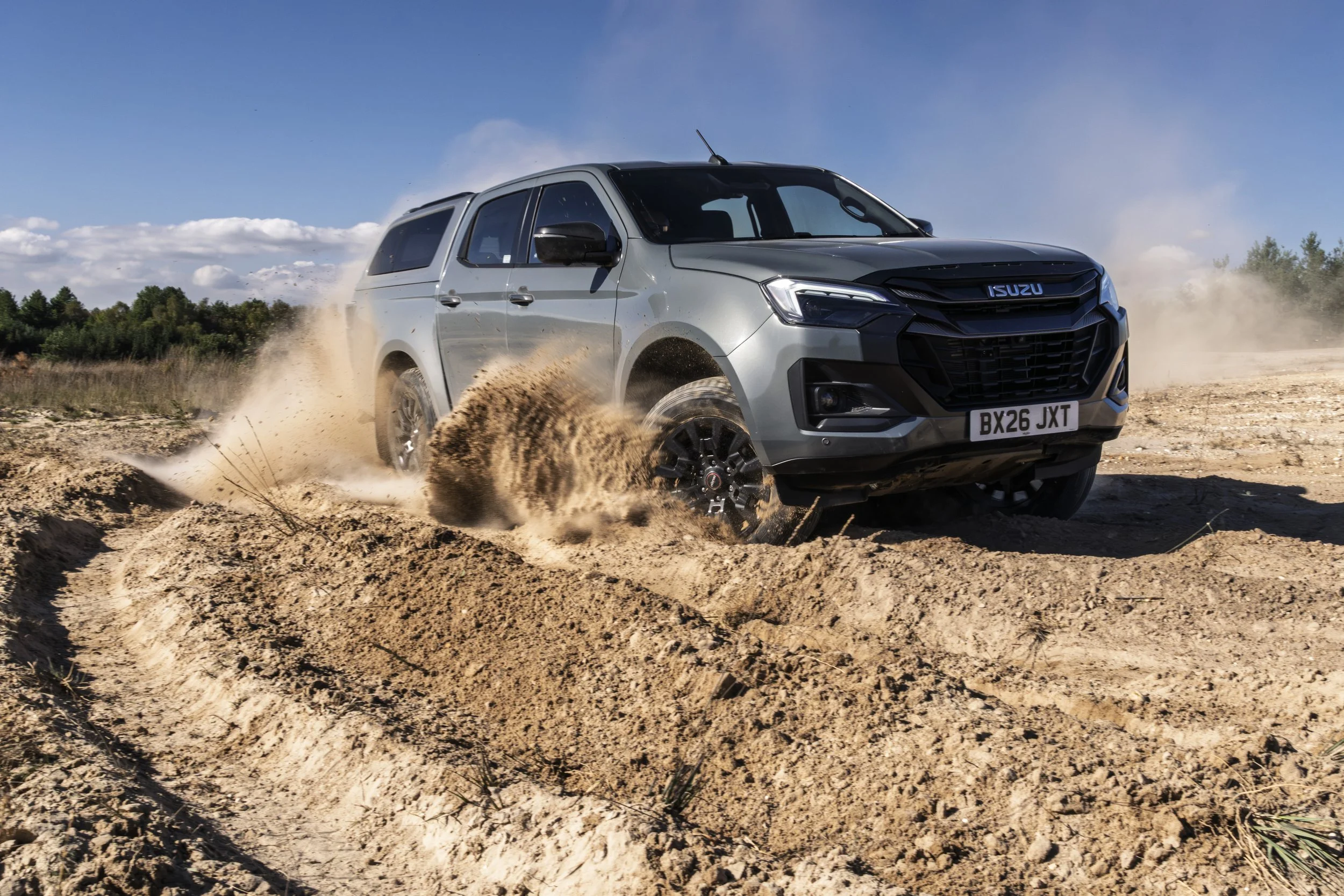
An Ode to the D-Max
For most buyers, pickups like the D-Max have a fair bit going against them.
They're less practical than vans, less refined than cars, and considerably less economical than both - truth be told.
Yet for so many, me included, they offer something neither can quite match.
They're capable, imposing, versatile and, perhaps most importantly, they make you want to get in and go.
The tax man has been working brutally against the humble pickup, and yet, like the model itself, the D-Max just keeps going.
So it should.
So it deserves to.
For it is excellent.
words by John Marcar
Photography by Isuzu UK