
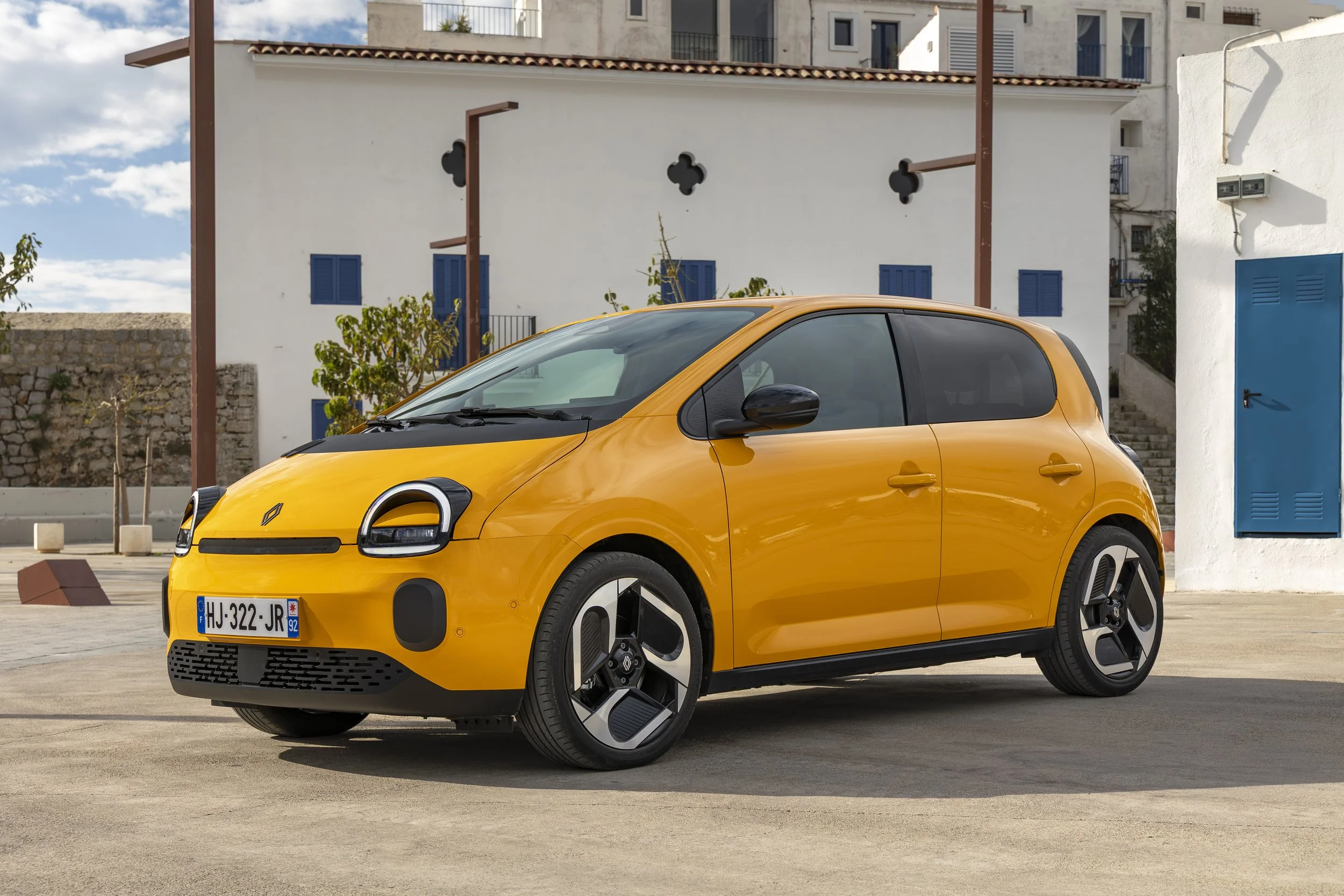
John Marcar has been behind the wheel of Renault's latest retro-revival EV, the new Twingo E-Tech, and with a promised price of sub £20k, the new electric Twingo might be Renault's best work so far.
If there were a competition for manufacturers to make retro-inspired EVs based on lovable design classics, I think we could all agree that Renault would be firmly in the lead. So far, we've seen the Renault 5, the Renault 4, and the sporty Alpine A290 enter the market as very popular electric tributes to the French brands' iconic designs of the past. The latest retro model to receive the throwback treatment is the Twingo, and although we have to wait a little while until it arrives here in the UK, if it's a small, stylish electric city car you're looking for, this one might be worth the wait.
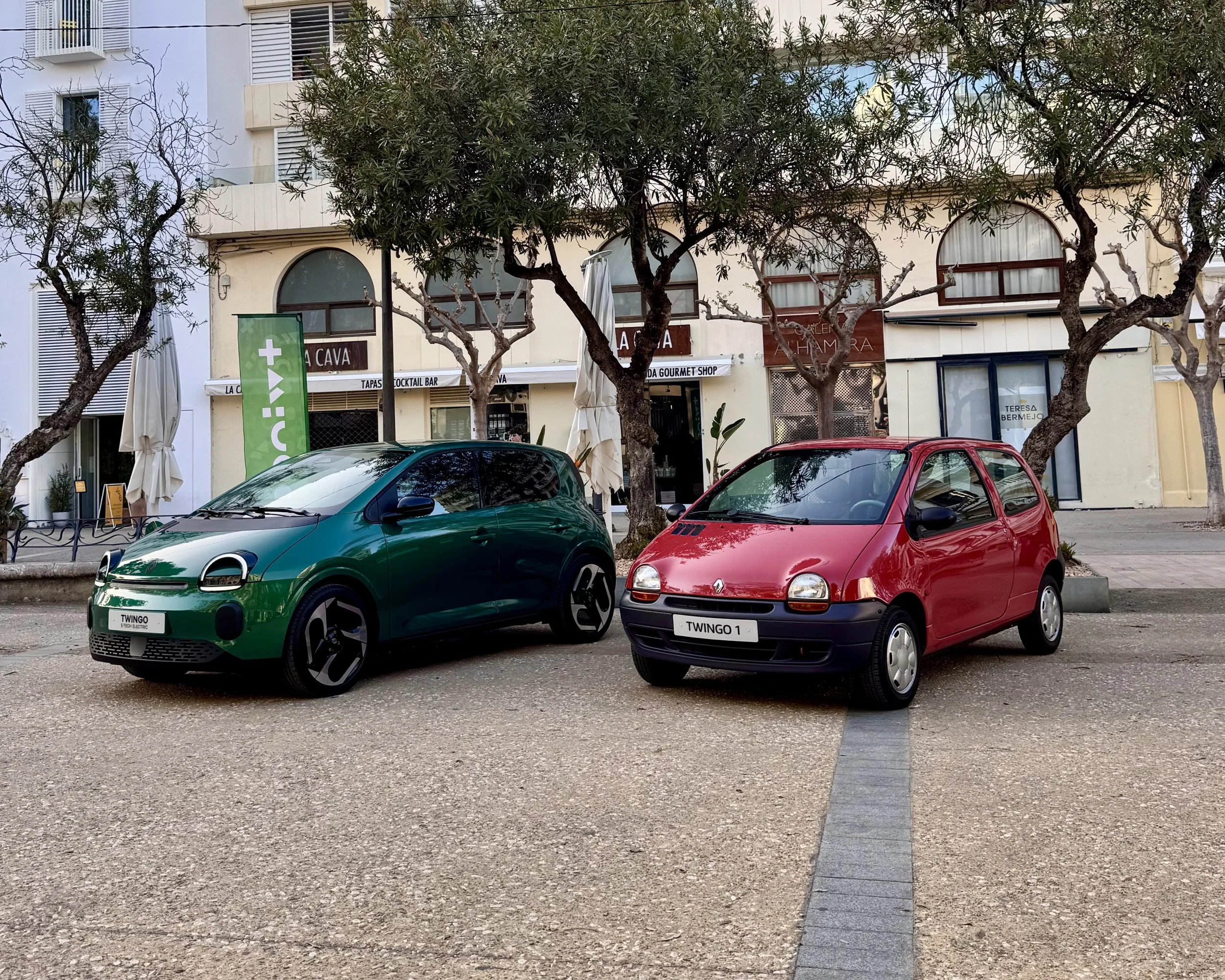
The Twingo Story so Far
The original Twingo was launched in 1992 and featured a small 59bhp 1.2-litre petrol engine, paired with a five-speed manual gearbox. In terms of specs and options, it was very much a one-size-fits-all... unless, of course, you were in the UK, because there was no right-hand-drive option available.
The design brief for the original Twingo was as simple as the car itself. It wasn't introduced to the market as anything more than a small, affordable city car - the fact that it had a quirky design was an unexpected bonus.
Despite not being available in the UK, a handful of models were imported and, in recent years, have earned the accolade of being a desirable classic on UK roads. We did get the following Twingo models, but I'll forgive you for not being able to picture them, as, aside from the Renault Sport RS edition from ~2009, which Jeremy Clarkson famously launched into the sea at Belfast Docks on BBC Top Gear, both the Gen 2 and 3 Twingos were remarkably forgettable.
The Frog-Like Twingo is Back as an EV
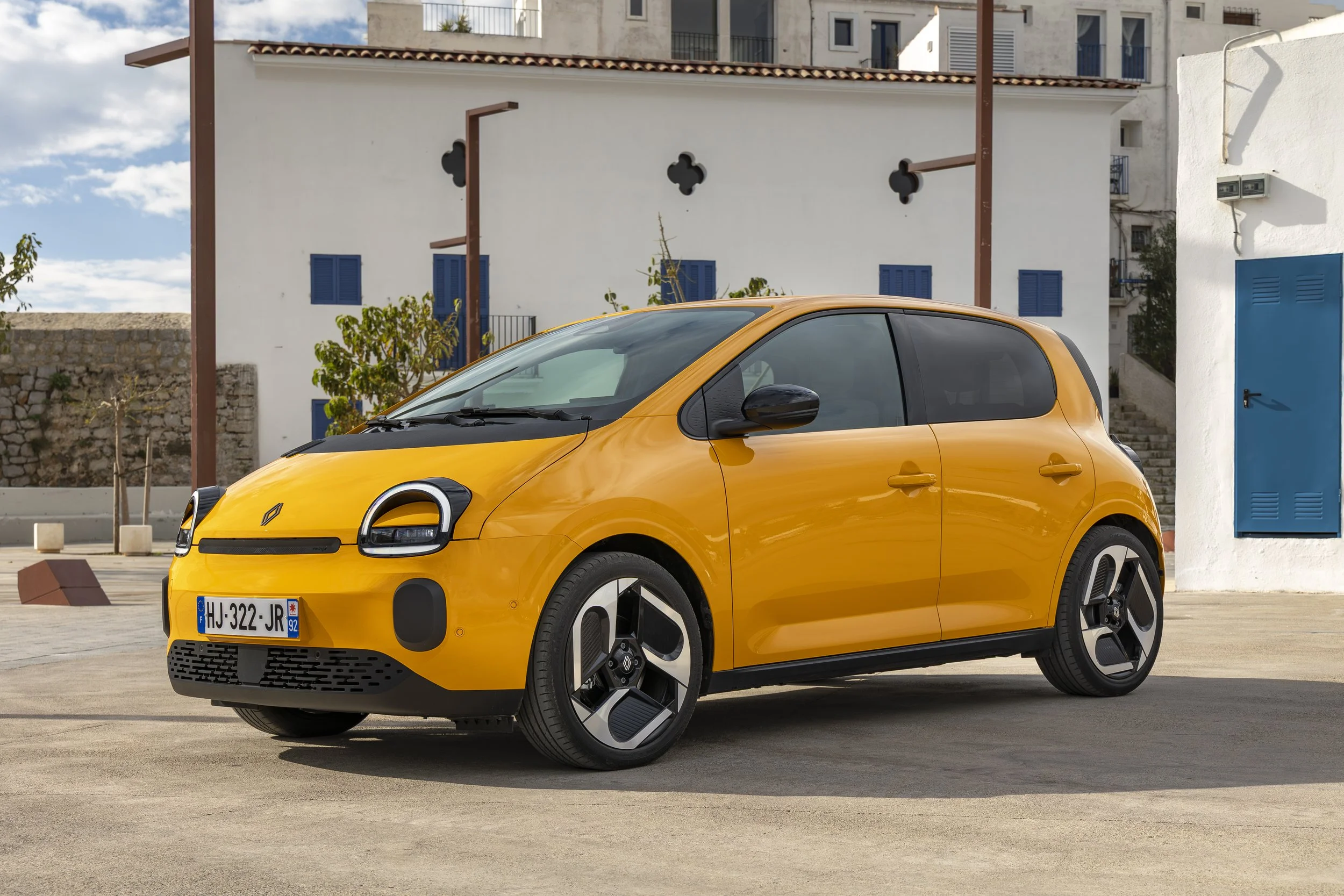
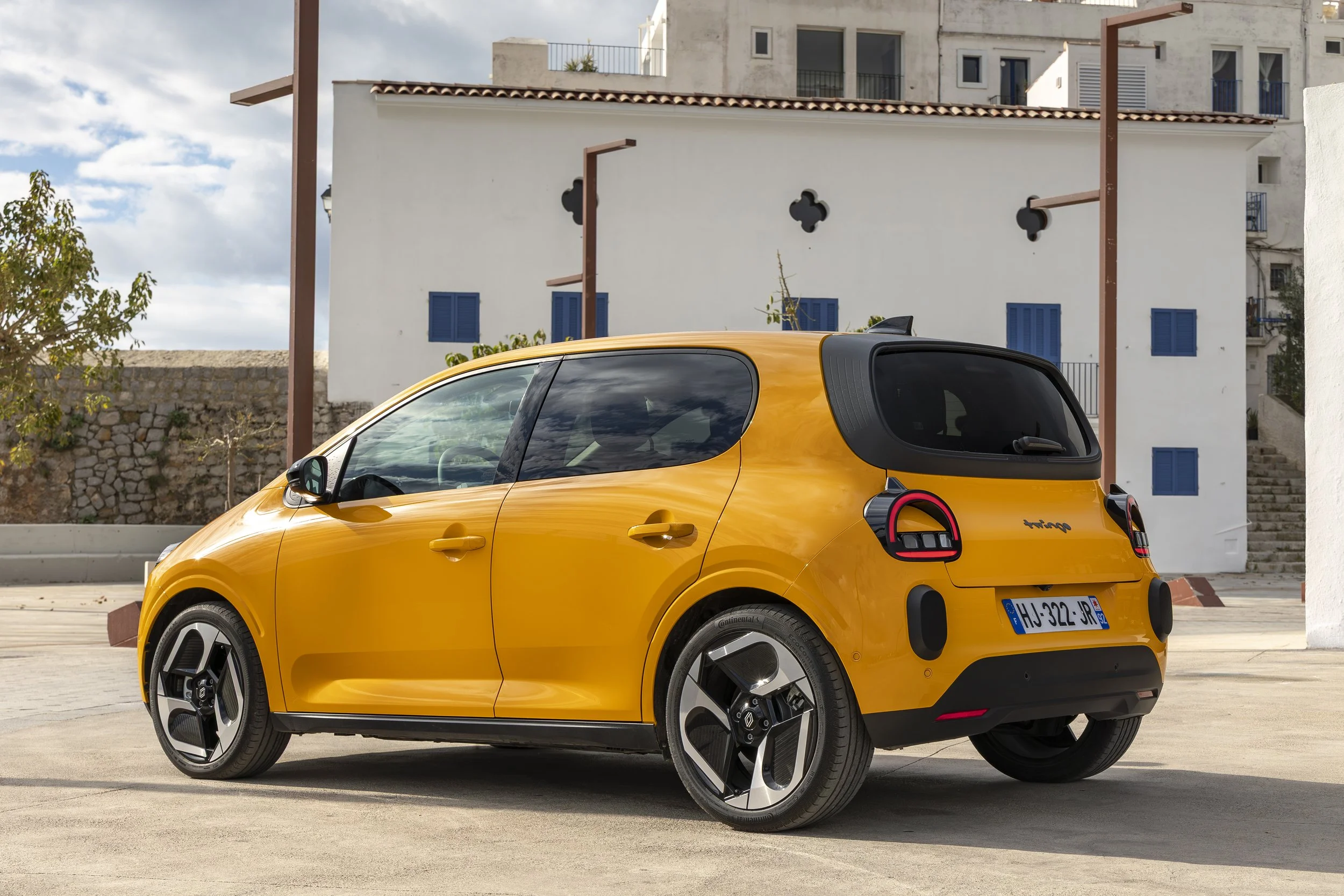
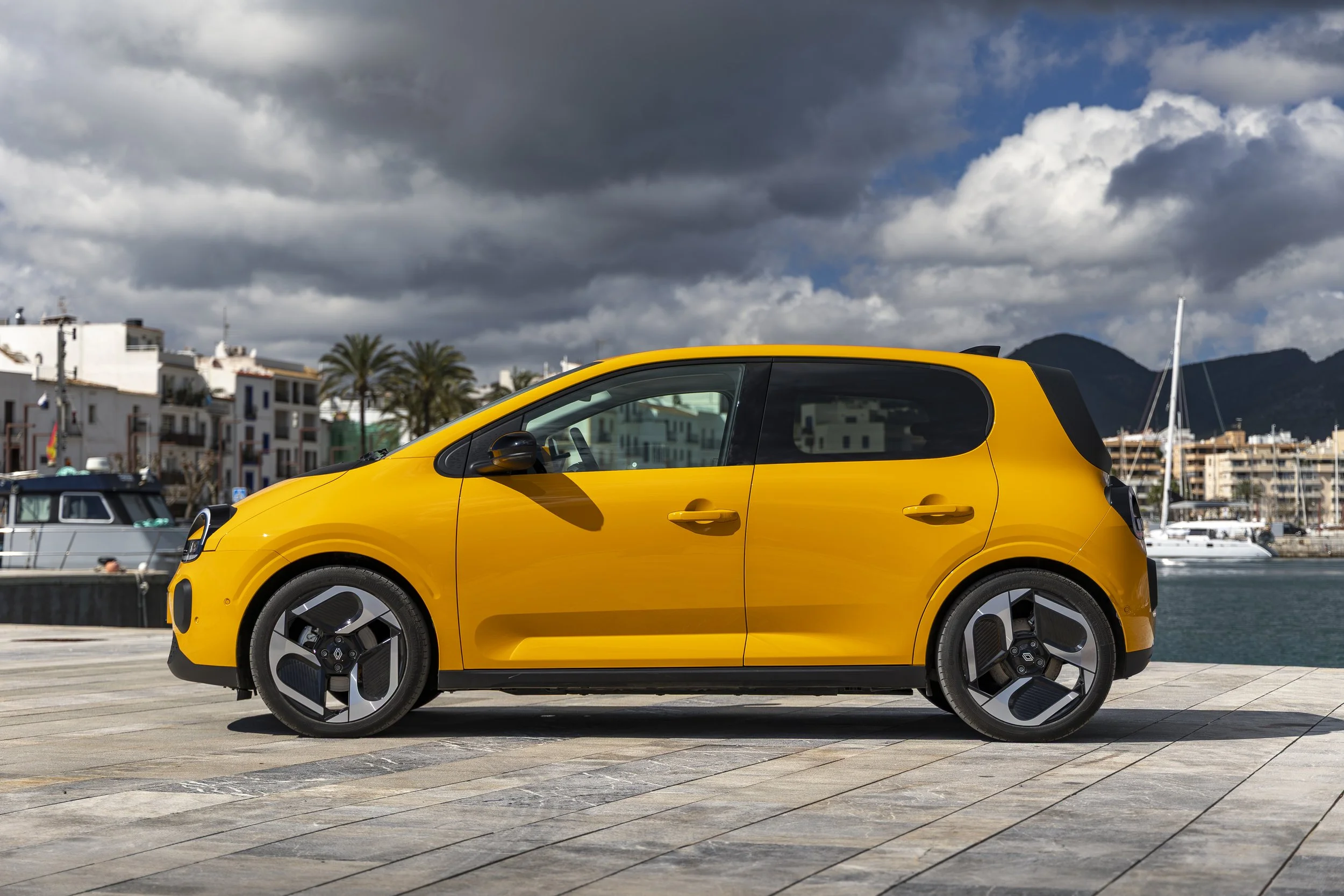
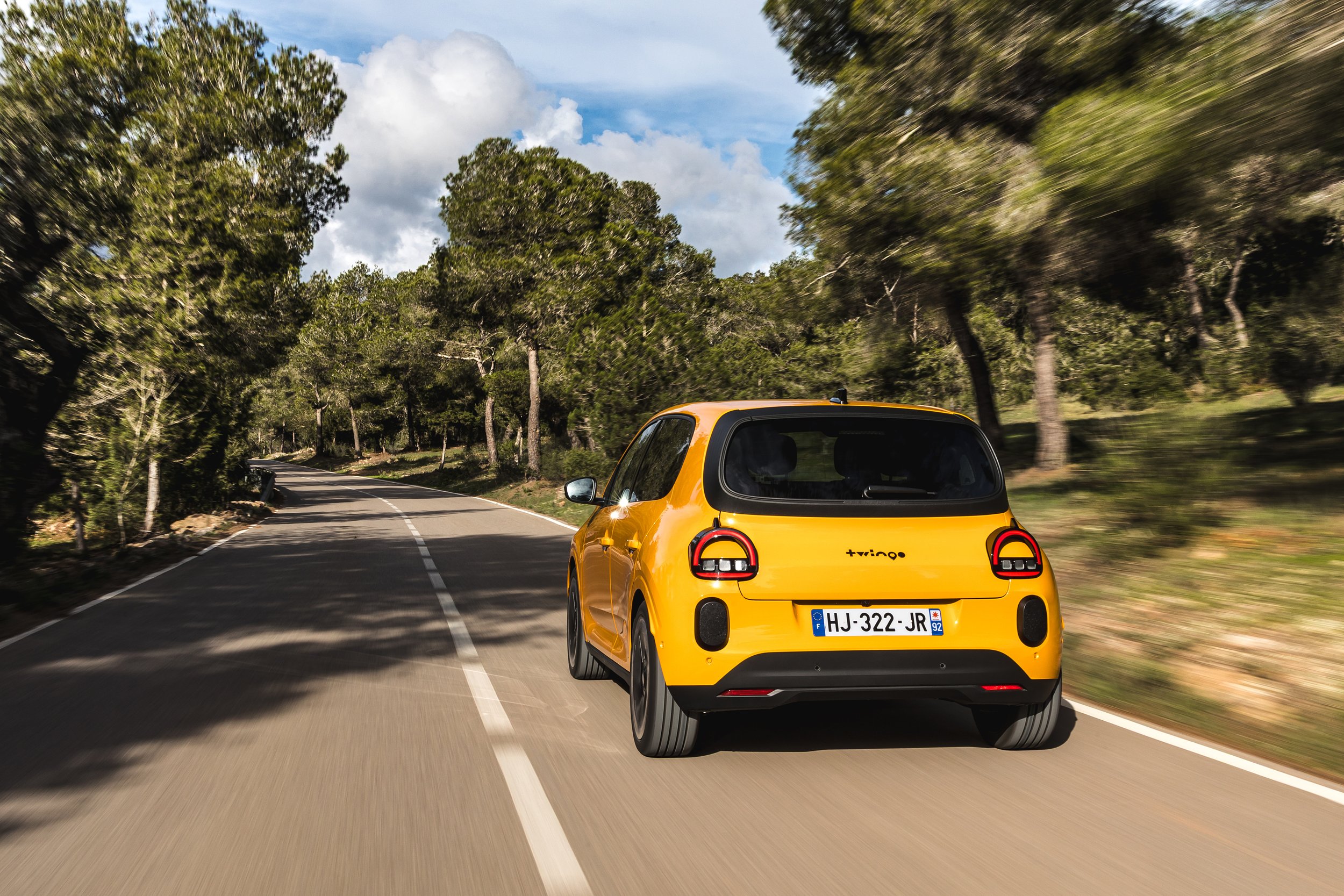
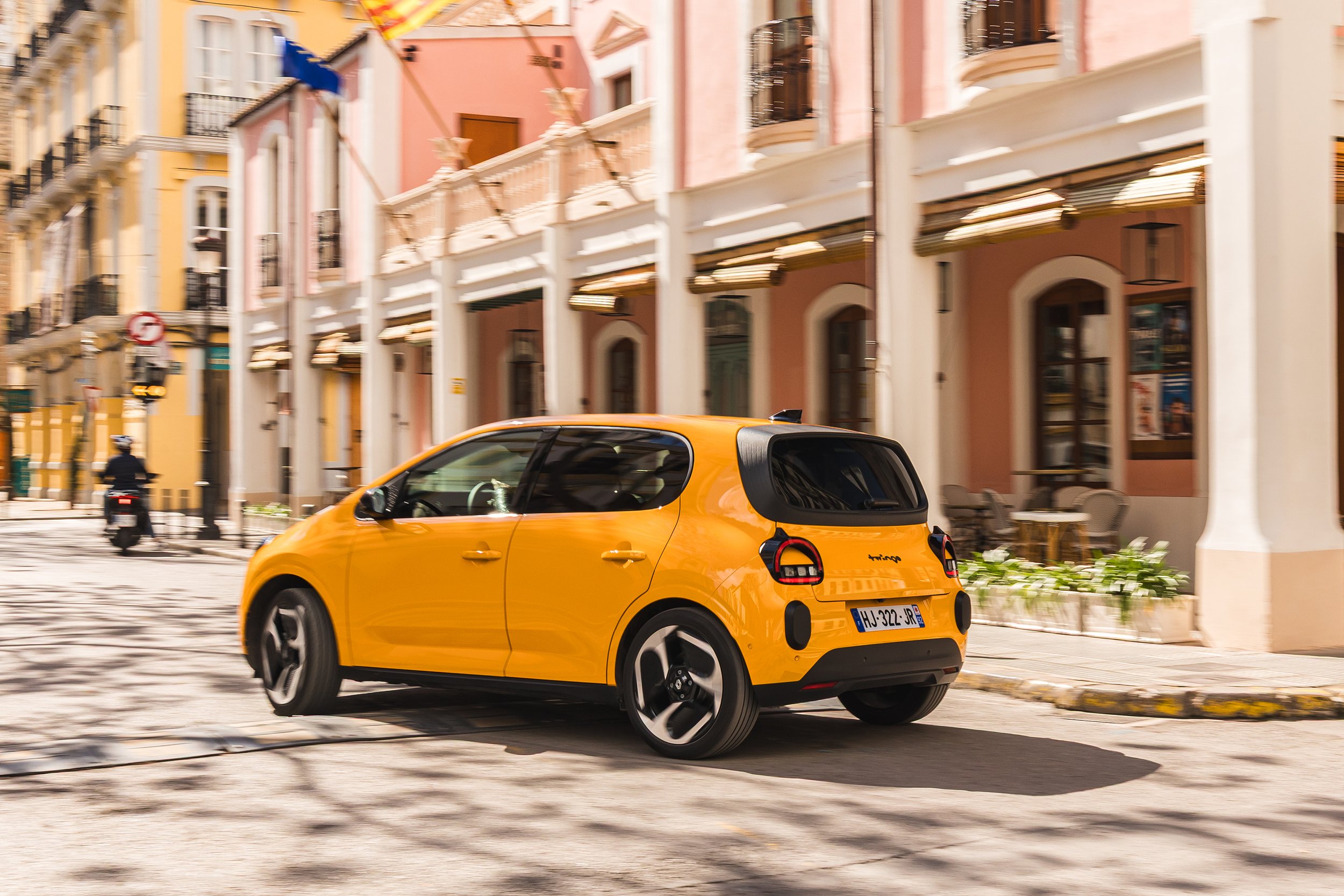
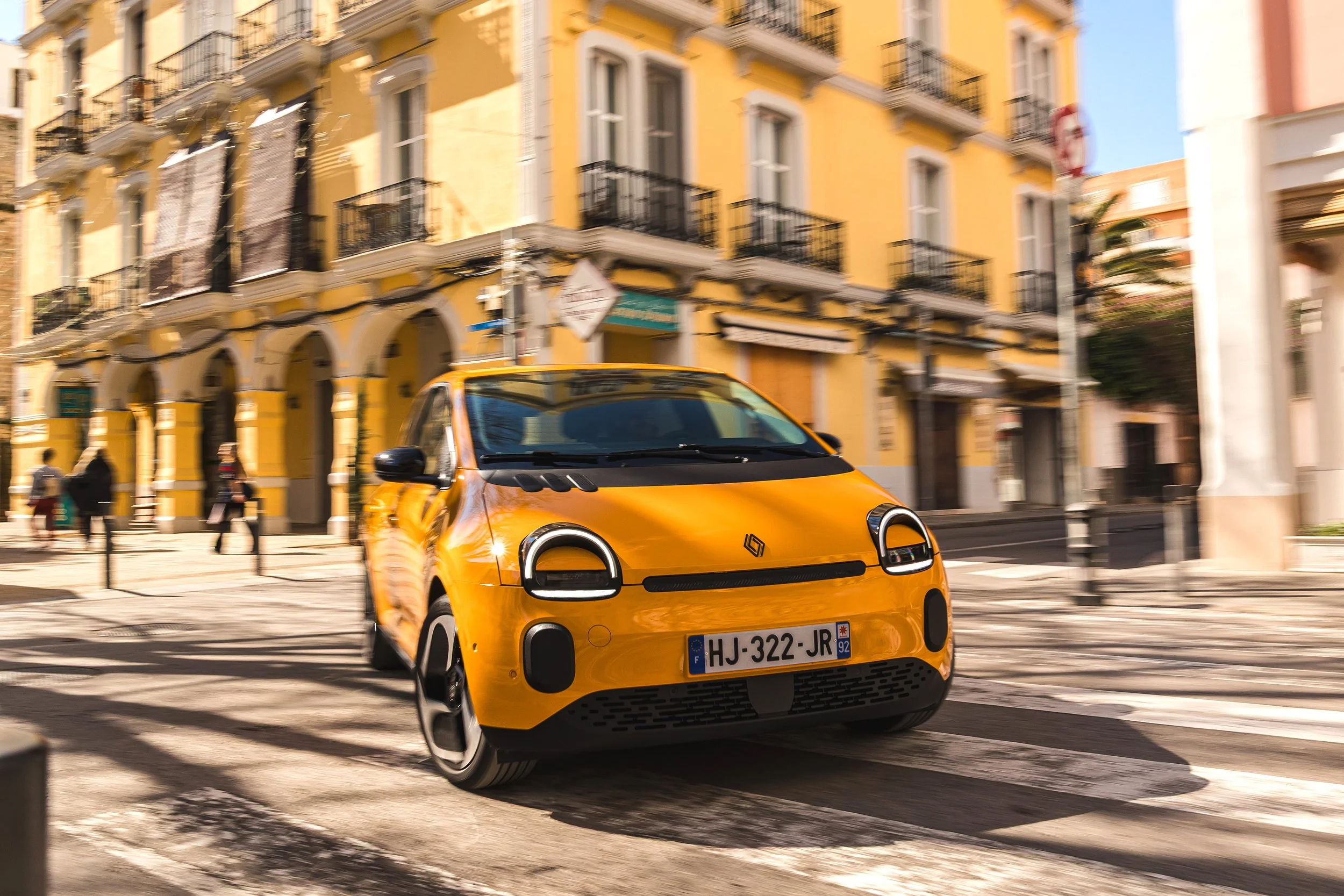
For 2026, the first electric Twingo has followed the previous design, as the Renault 5 and Renault 4 have in recent years. Whilst time, electric underpinnings, and Euro NCAP safety regulations have seen the new car grow considerably in size from its original 90s form, I foresee very few people complaining about either the modern styling or growth.
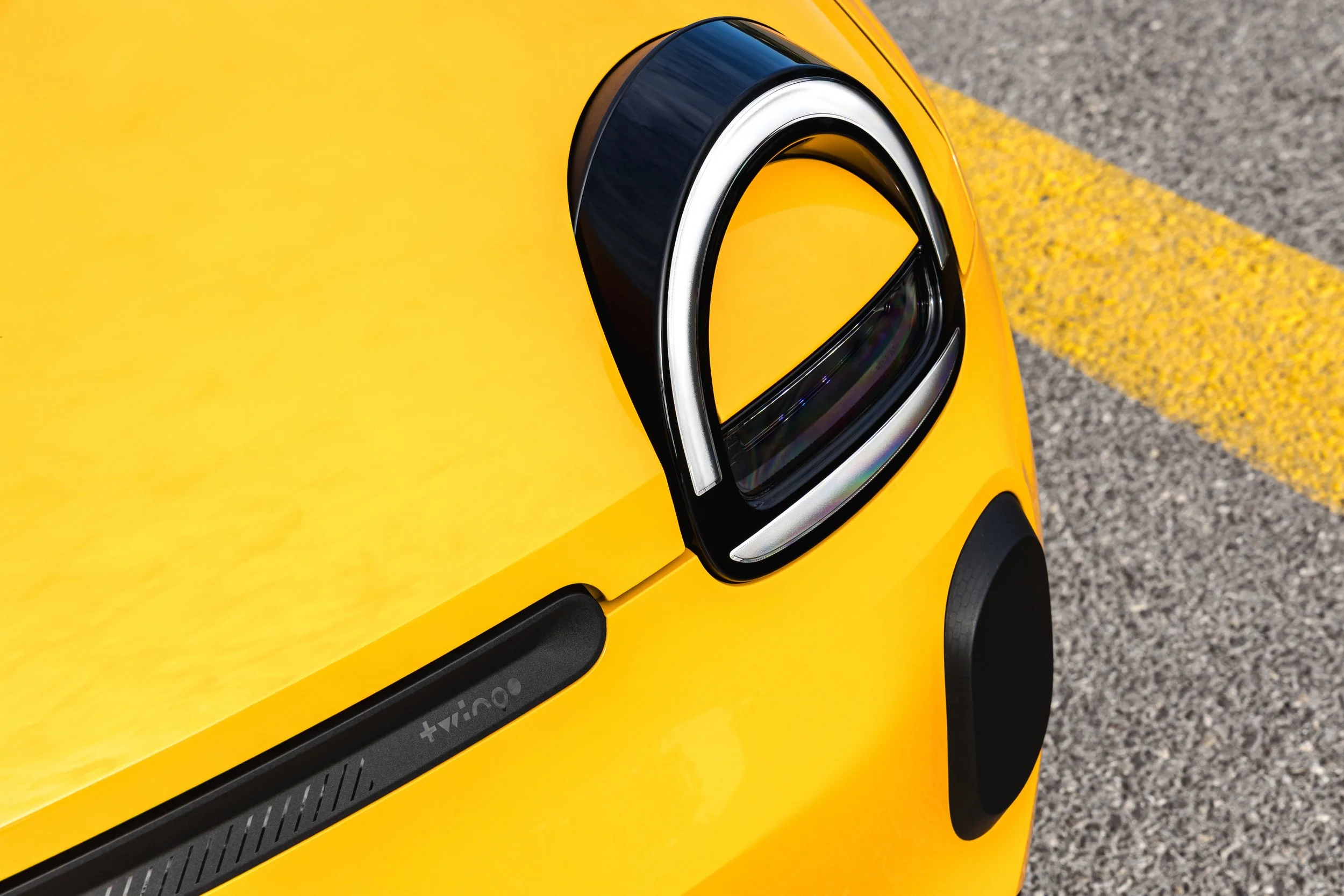
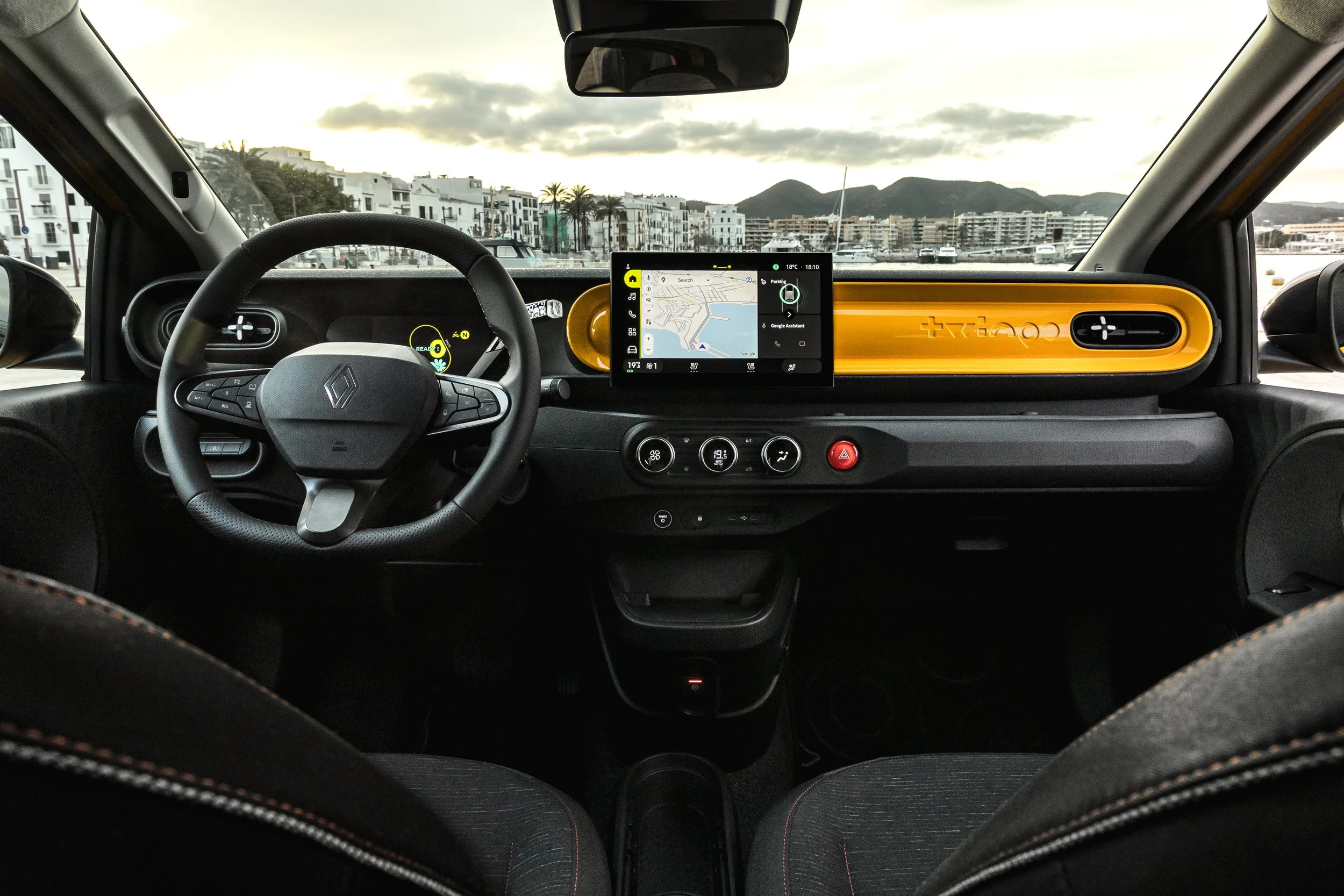
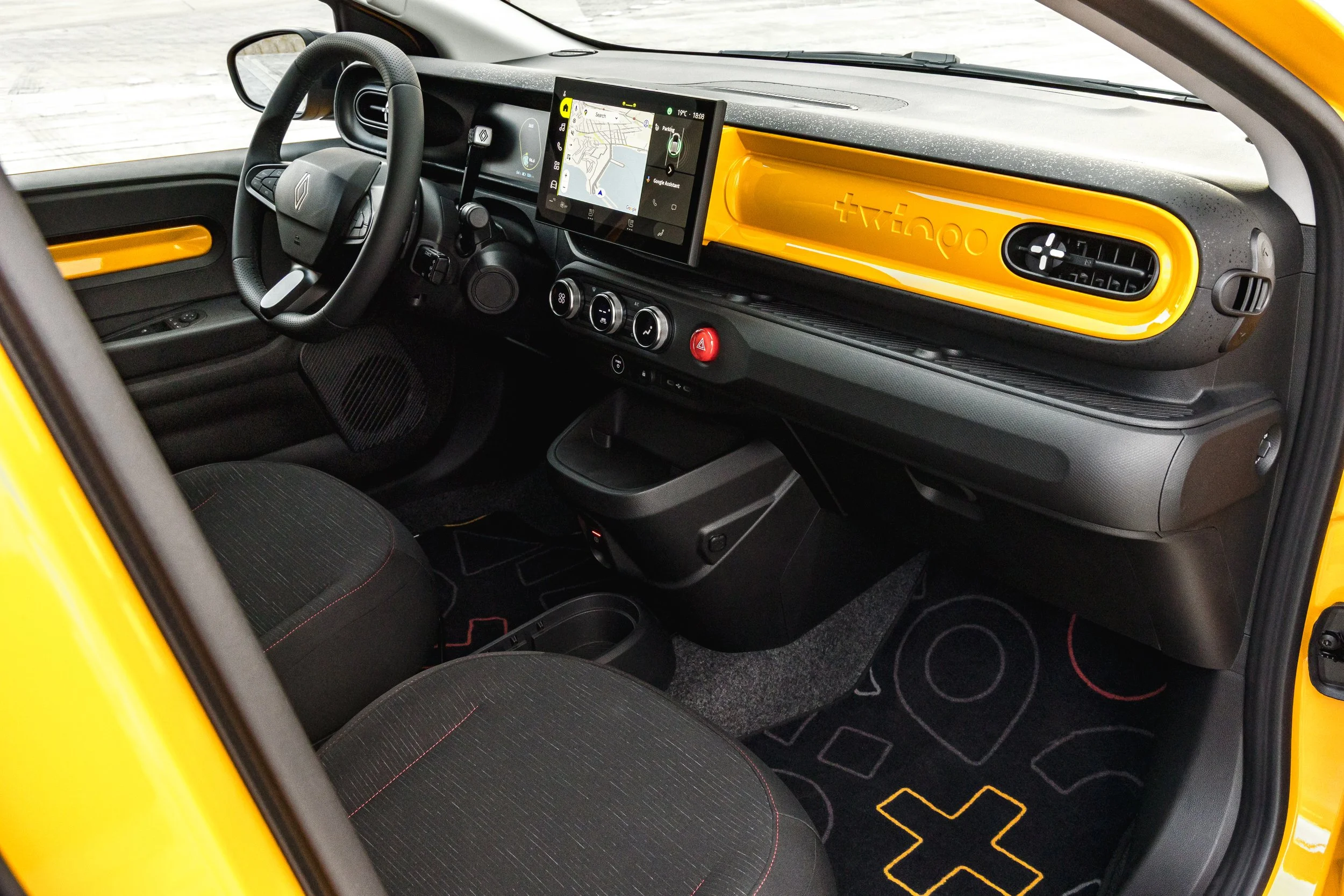
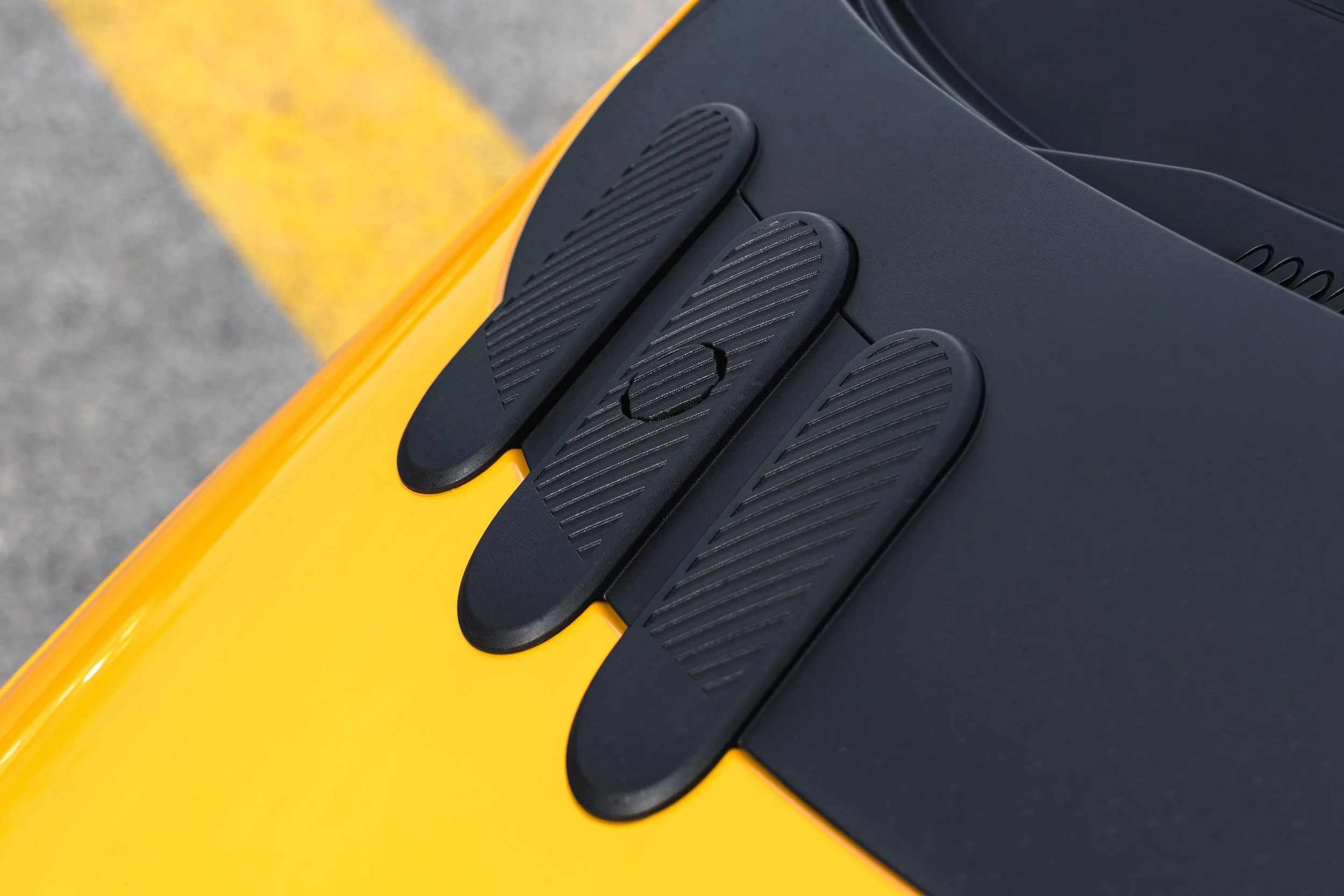
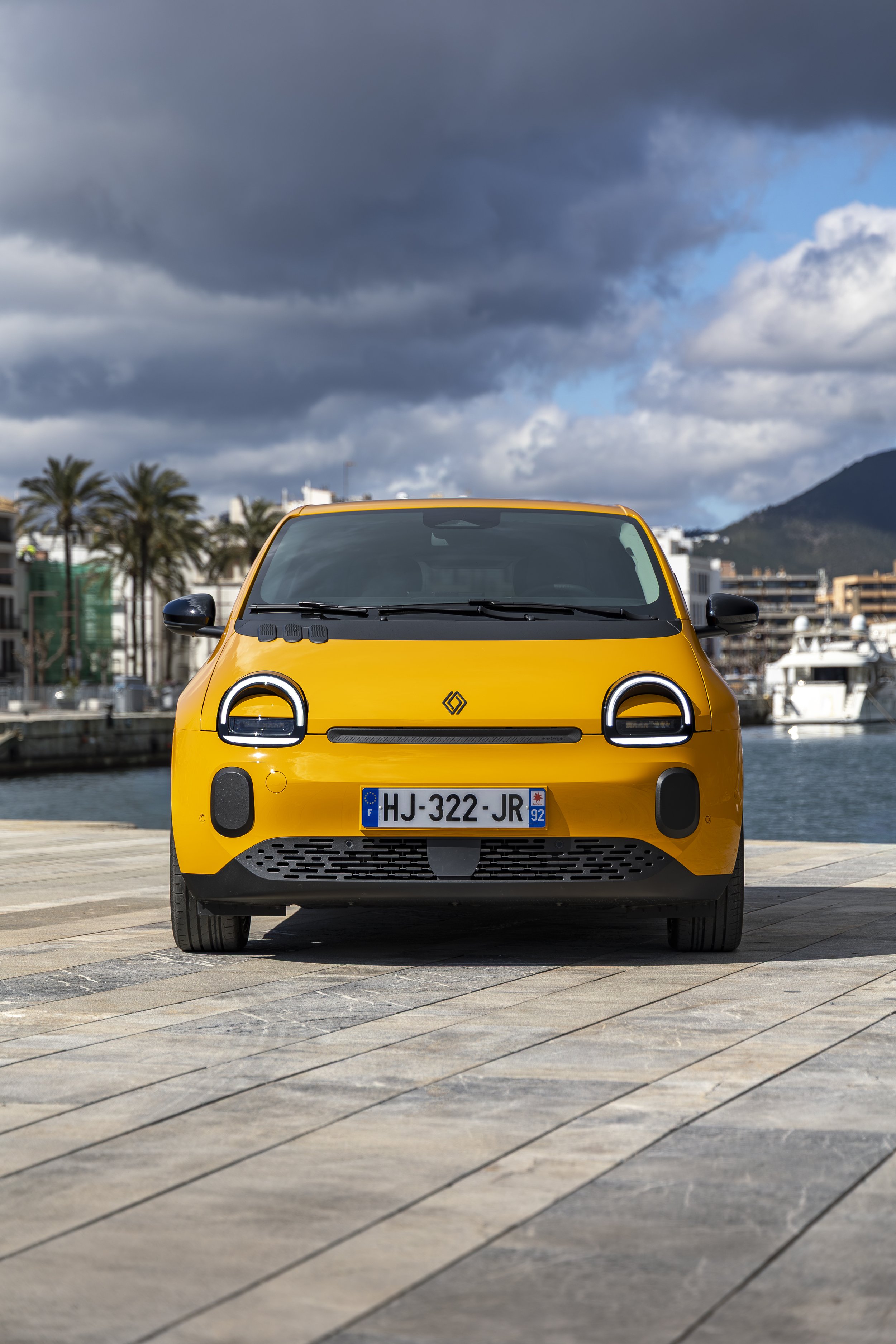
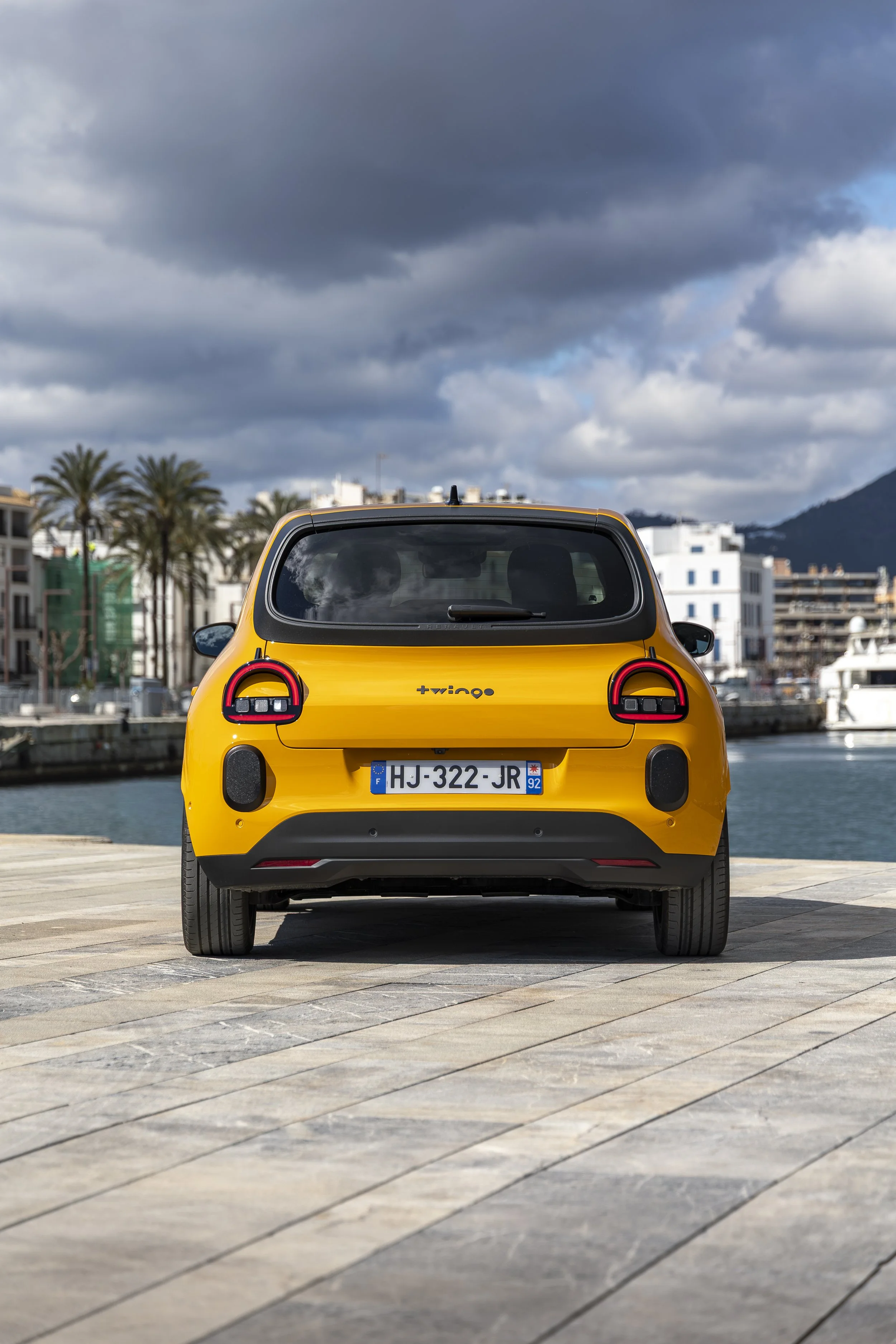
The 'frog eye' headlights are the most obvious standout feature from the original car, and additional clever design features draw on the original in other areas, including a cap for refilling washer fluid on the bonnet, shaped to mimic the original three air vents. The side profile and rear are both upscaled versions of the original, and the interior layout carries over many other features, which will likely make the new Twingo a popular choice in a world of bland, safe interior designs from the competition.
Battery and Power
The Twingo E-Tech takes the underpinnings from the Renault 5, however, with an adapted (read: simplified) rear suspension setup. The battery is a 27.5 LFP unit with reduced nickel and cobalt content. The battery, which is a first of its kind for Renault, also uses a cell-to-pack architecture, which helps keep the package small and, crucially, production costs down. The motor has a relatively low output of 60kW (around 82 hp), resulting in a sensible, albeit far from speedy, 0-62 time of 12.1 seconds. The city-focused design is also reflected in the model's top speed, with the Twingo topping out at 81 mph.
Charging and Range
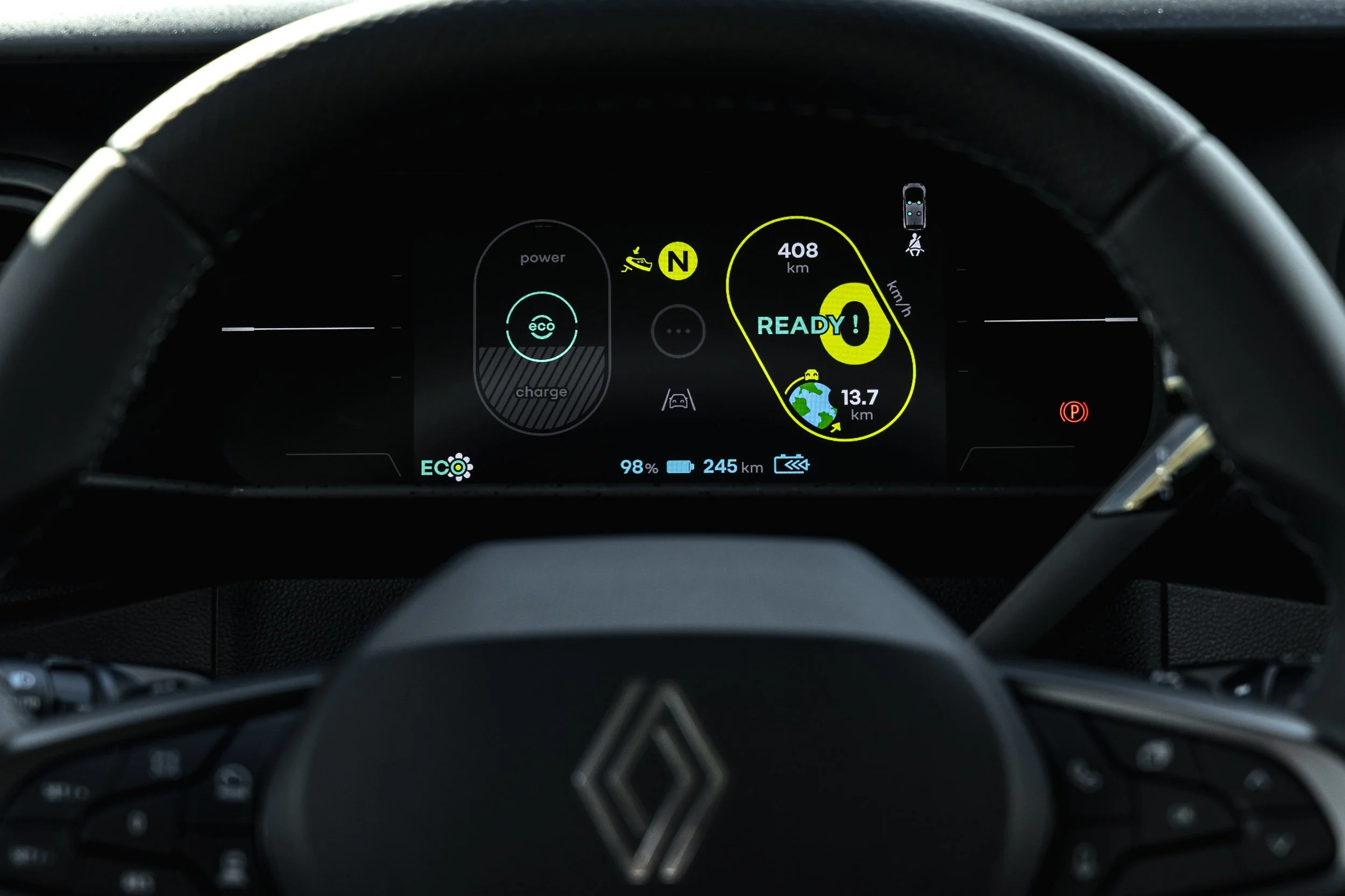
The smaller battery architecture limits charging capability, with the fastest available charge rate at 50kW. That said, a 10-80% DC charge (at around 50kW) can still be achieved in around 30 mins, which will be ample for most. 10-100% on a typical 11kW home charger will take around 2 hours and 35 mins, whereas with a conventional AC socket, the same 10-100% will take just over 4 hours. With a full charge, Renault claims the Twingo E-Tech will have a WLTP-certified range of up to 163 miles.
Space and practicality
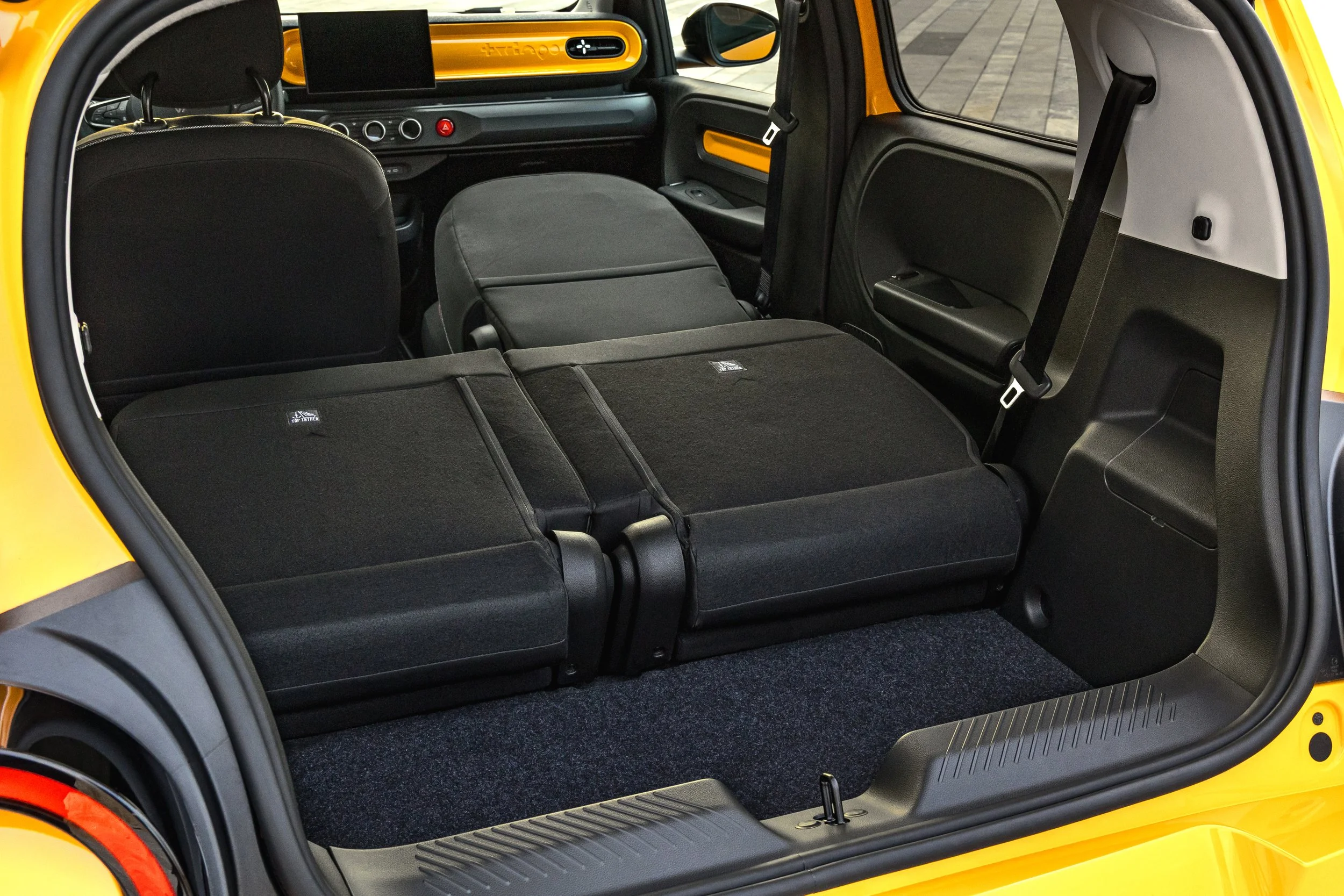
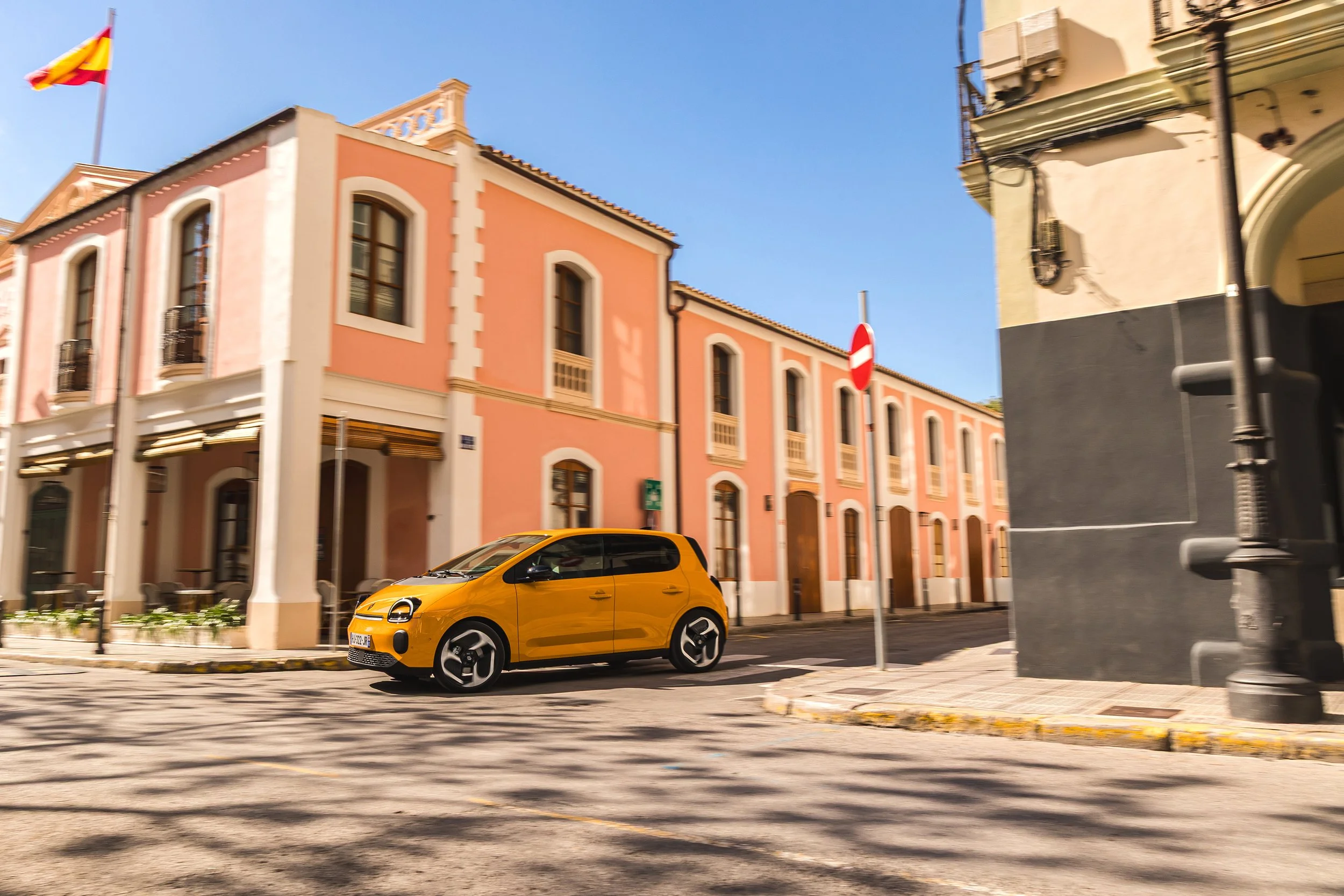
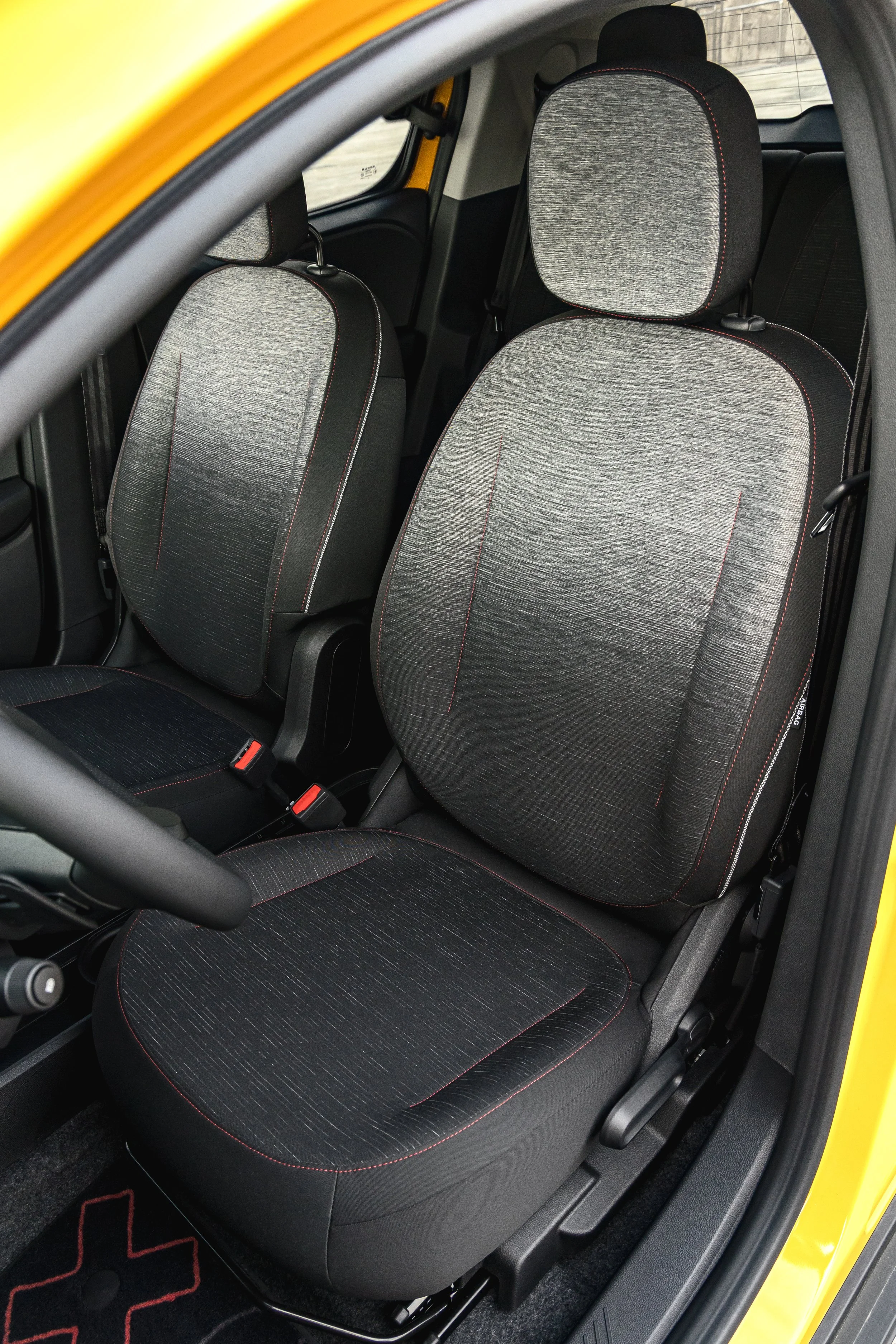
Whilst the new Twingo dwarfs the original in size, by modern-day standards, it's still a small A-segment car. The exterior dimensions are 3.8 metres long, 1.7 metres wide, and 1.4 metres tall. Where the designers have been especially clever is with the interior layout. In the front seats, the space is ample for a tall driver and passenger, and the rear seats are adjustable, with the capability to slide back and forth by a total of 17cm. The rear seats' adaptability does affect the boot space; however, even with the rear seats in the furthest back setting, there is ample space for small bags whilst allowing for sensible rear legroom. As standard, the boot offers 360 litres of volume, and with the rear seats folded flat, the total volume is 1,010 litres. For added convenience and the occasional larger item, the back of the front passenger seat can also fold flat, comfortably accommodating something in the shape of a surfboard.
Driving the new Twingo
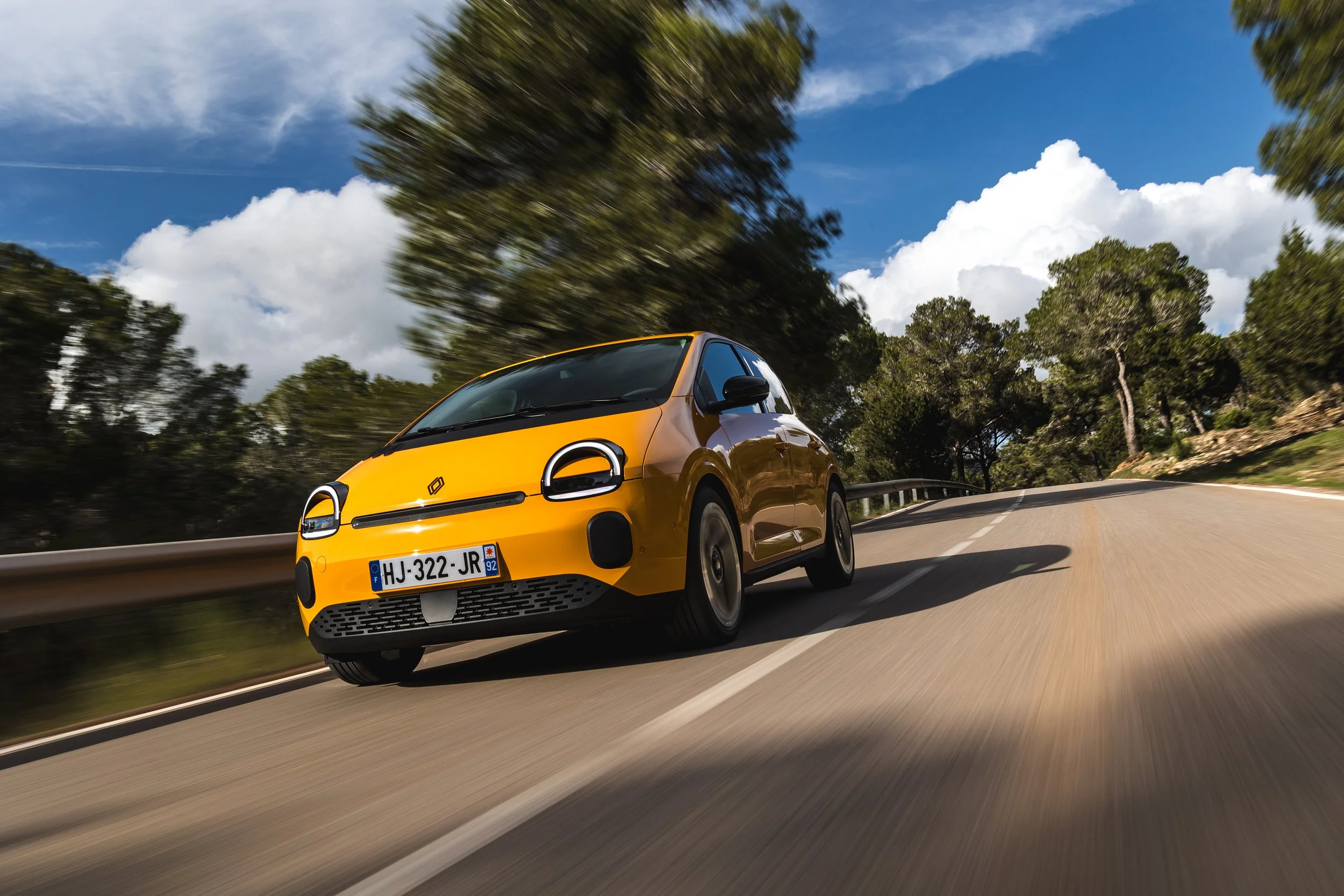
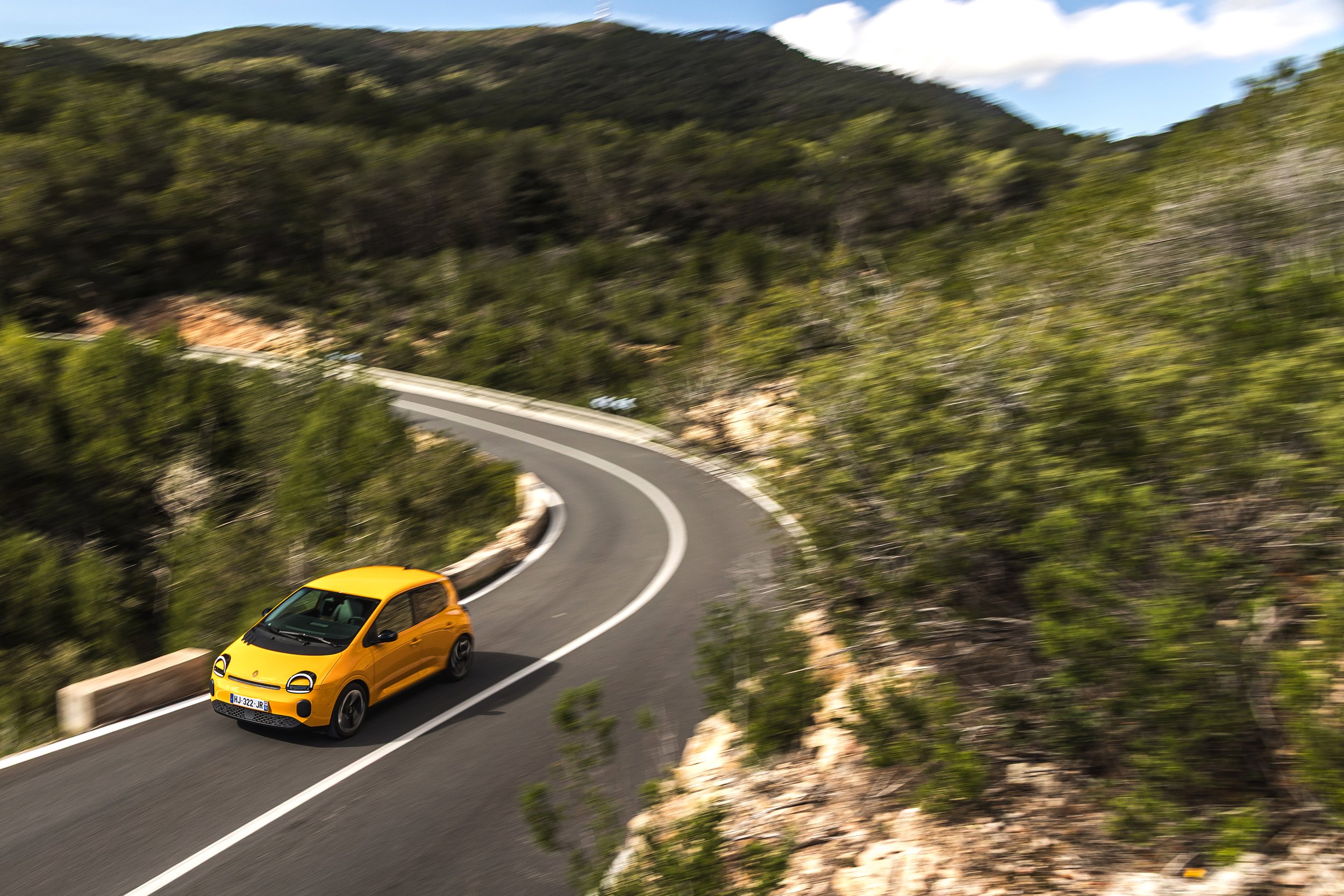
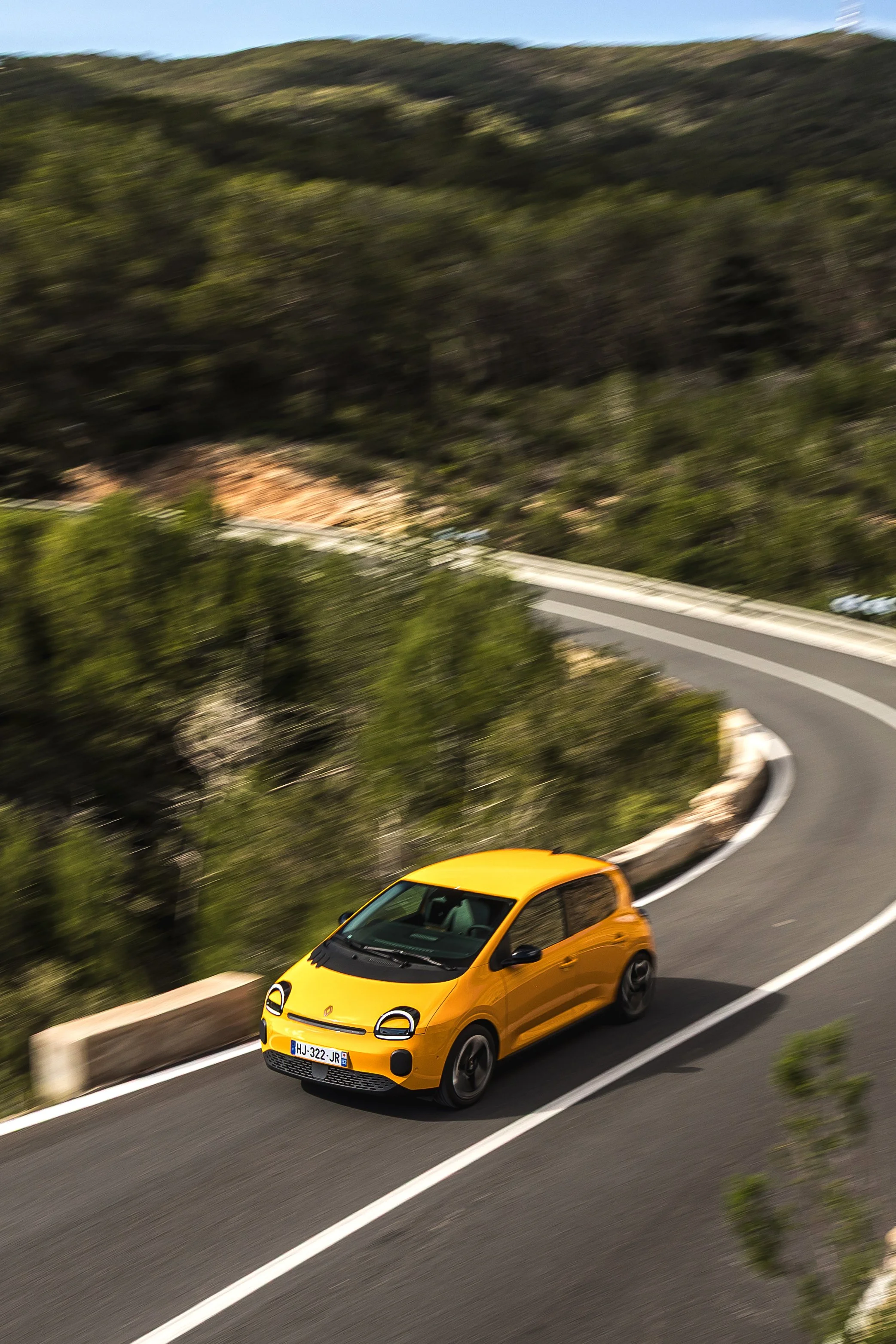
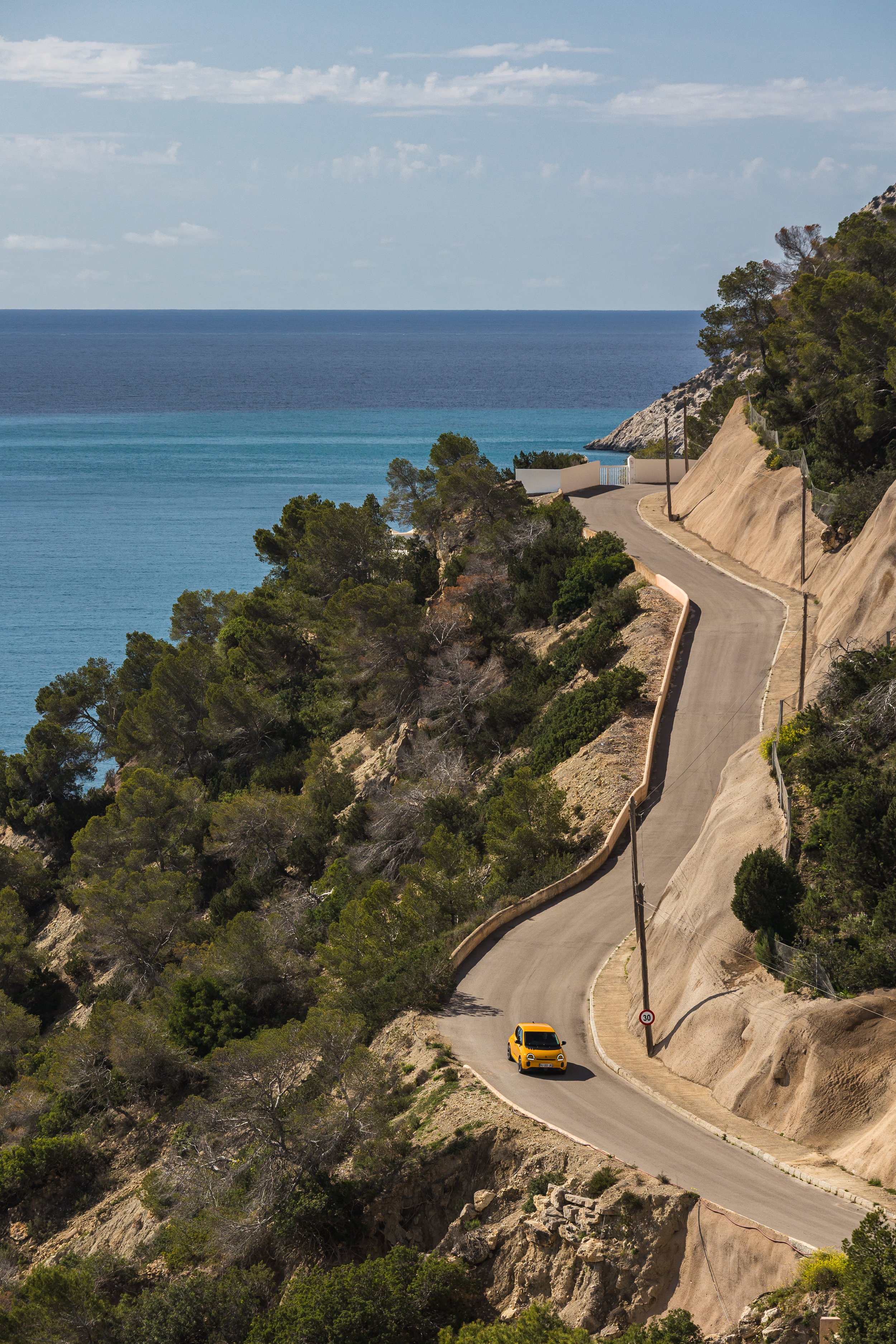
Given the expectations set by the battery, motor, and acceleration stats, I wasn't expecting much from the new Twingo; however, on the twisting, undulating roads of Ibiza, I was very pleasantly surprised. For an EV, the Twingo is relatively lightweight at around 1300kg. This means that the 82hp and 175 Nm feel especially spritely when put to use. Despite driving dynamics being a low point on the new Twingo's priority list, the new model is a huge amount of fun to drive and feels extremely agile.
The small chassis delivers a beautifully direct driving feel and gives the handling an almost hot-hatch feel. Whilst the Twingo certainly doesn't match the hot hatch handling with hot hatch power, you soon get a grasp on what's to be expected from the throttle pedal, and a lot of fun can be had.
The Twingo E-Tech can and will reach motorway speeds, but it will do so at the expense of range and efficiency. The city car design brief is where the Twingo will perform best, and the lower power output will be most welcome in urban environments.
One feature that really impressed was the 9.87 metre turning circle. On a wide section of road, the new Twingo can comfortably execute a turn in the road in one movement, which will make narrow streets and parking manoeuvres very simple.
Two Potential Negatives
I have absolutely no complaints about the way the Twingo drives; however, a couple of features beyond the drive may cause initial confusion and inevitable grumbles further down the line.
1 - Where is the 'Park' setting?
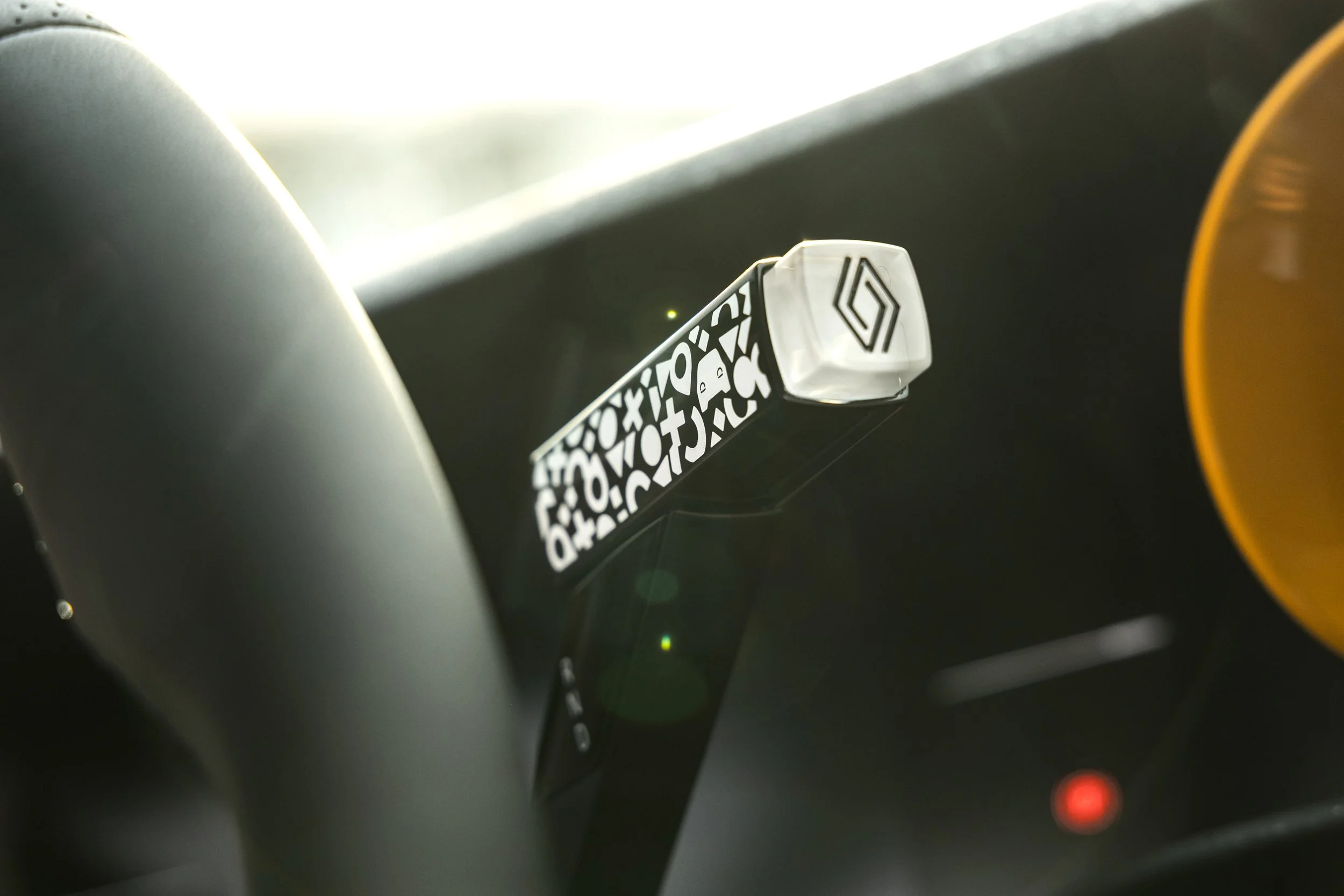
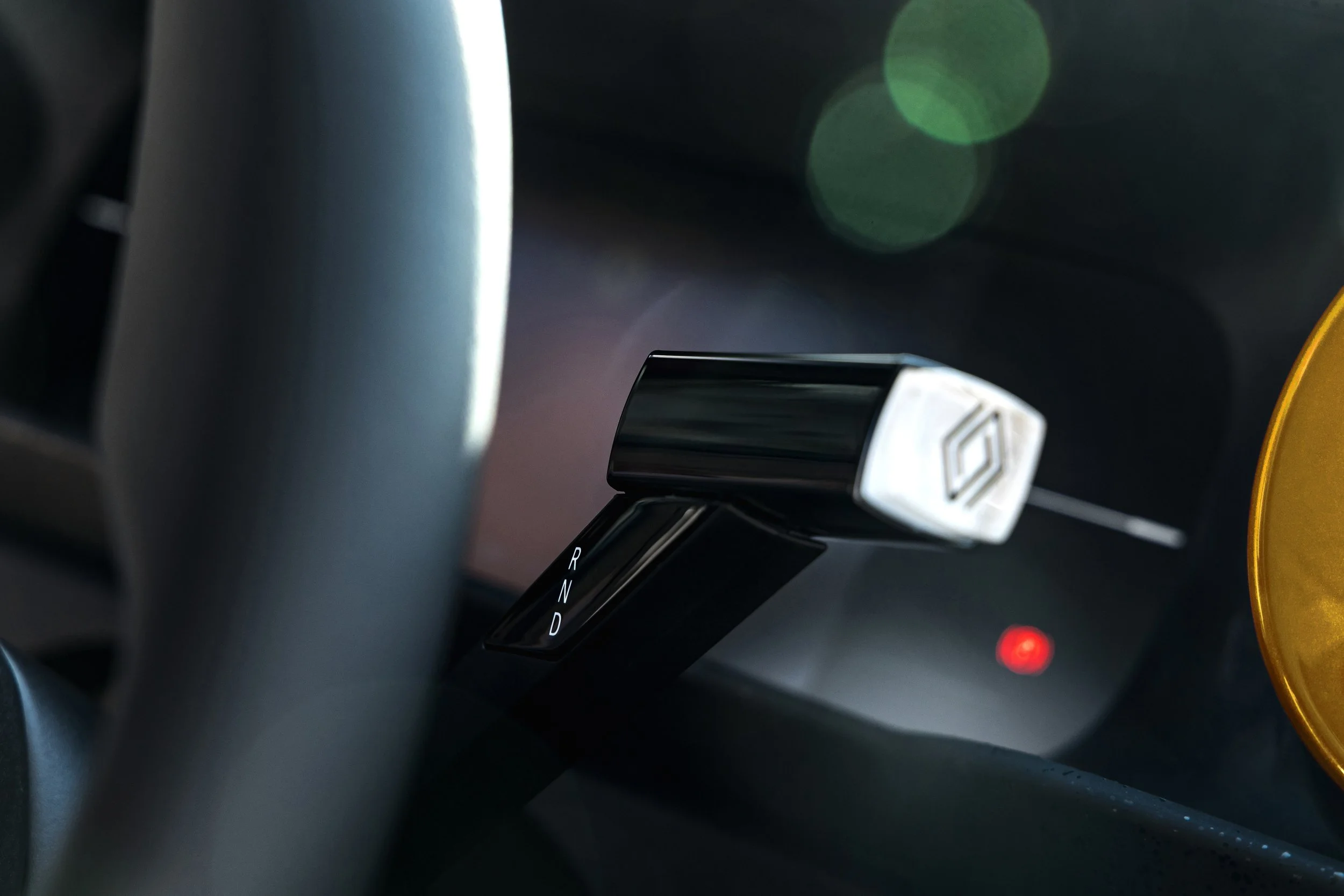
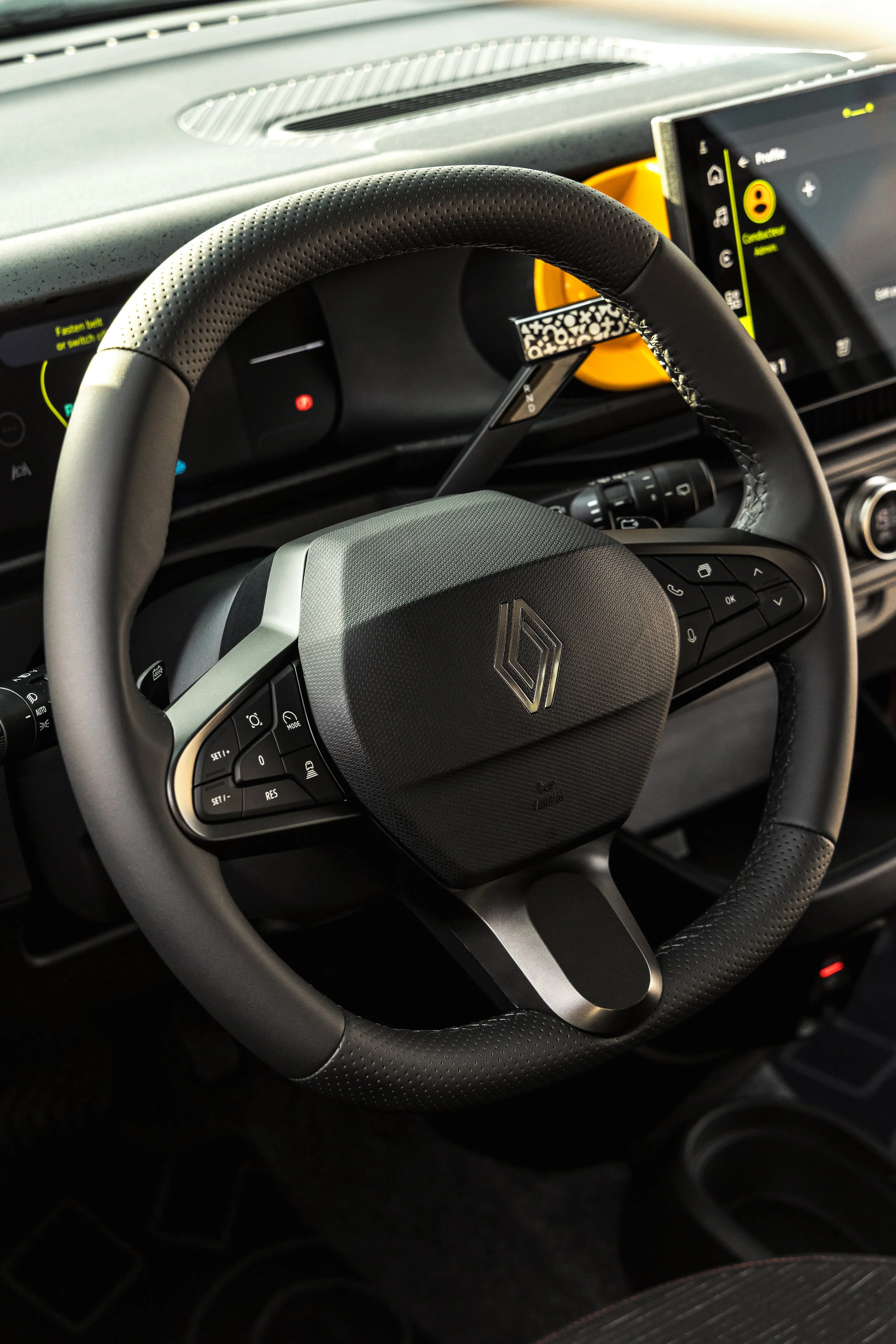
Like its 4- and 5-sibling models, the Twingo has no 'park' setting on the gear/drive selector. Neutral can be selected on the Chanel lipstick-inspired gear selector, but the electronic handbrake must be engaged to prevent the car from moving forward once stationary. Fortunately, some safety fail-safes have been added, such as disengaging the seat belt or opening the door, which automatically selects neutral and the parking brake, but this might take some getting used to, as the process of ending a drive by selecting 'park' is one most drivers are accustomed to.
2 - The Screenwash Filler Issue
Another niggle I foresee becoming a negative talking point on the Twingo E-Tech is the requirement to use a dedicated plastic tool to open the screen-washer fluid reservoir on the bonnet. The design of the filler cap is very clever, but the requirement to use a loose plastic key to unscrew the cap is surely a recipe for disaster. The small plastic tool is the sort of thing that will inevitably be lost and left on scuttle panels before rolling onto the road, never to be found again, making something that should be a quick and easy task somewhat of a pain.
Postive features
Niggles aside, the positives of the new Twingo E-tech far outweigh the negatives. The audio system inside the car has been tuned and adapted by French electronic music royalty Jean-Michel Jarre, and the sound quality is the best I've experienced in the segment for standard equipment.
An intuitive 10-inch central infotainment screen houses Renault's operating system developed in partnership with Google for mapping and Gemini AI assistance. Wireless smartphone connectivity is included as standard for programs such as Apple CarPlay and Android Auto. A smaller 7-inch screen serves as the instrument cluster ahead of the steering wheel, offering on-the-fly information on speed, range, and battery level.
UK Price and Availability
Being 'right-hand drive outliers', the UK will be one of the last markets to receive the Twingo, with first UK deliveries expected to start in Q1 2027. While firm and final pricing has yet to be announced, Renault has assured the UK press that pricing for the entry-level models will be under £20,000, with the same promise made to European markets, where pricing will be under €20,000.
Worth waiting for?
The A-segment EV market is suddenly looking quite popular, and with new models due to arrive immediately from the likes of Cupra, Citroën and Vauxhall, the consumer's final decision is likely to be swayed by final price and design, and this is where the Renault might just pinch the victory. Given the wait time, Renault has introduced the Twingo R Pass for UK buyers. For £100, it offers priority ordering, a dedicated Renault concierge service, and exclusive gifts to help ease waiting time.
Conclusion
I'm certain the new Renault Twingo E-Tech will be as much of a hit as the Renault 5 and 4 that have preceded it, even if we have to wait another 9 months for its arrival in the UK. The design, the drive and the standard features will all help keep Renault at the top of the leaderboard for small EVs and rightfully so, this is the proof that 'less' is indeed sometimes 'more'.
words by John Marcar
photography by Renault Press