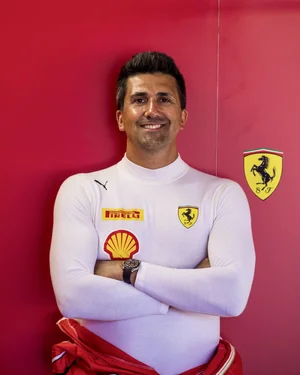
John Marcar loves learning, and his current fascination is mastering the art of riding off-road. After a couple of previous exploits (and injuries) with Zero and KTM earlier this year, he's opted to spend a day with Phoenix Trails to learn the basics of trail riding.
For the Love of Learning
For as long as I can remember, I've loved to learn. Annoyingly, I wasn't the most academic at school; the ideas were all there, but the practice of getting the information I'd calculated or summarised vocally rarely found its way onto the paper in the classroom. I can vividly remember my Year 5 teacher, Mrs Hunter, diplomatically explaining to my mother on a parent-teacher evening, "If John could get even a fraction down on paper of what he's able to articulate vocally, he'd possibly be top of the class." The problem for me was that writing down what I'd learned and concluded in the classroom felt like admin, and admin felt boring and slow, so I didn't embrace that part.
30-odd years later, I'm glad to say I've finally mastered the art of writing things down, but the core principle and preference of learning practically by doing over theory-based studying still stands. I still love learning new skills, unlocking abilities, and understanding how and why things do what they do, and with both driving and riding, there's always something to learn.
I got my car driver's licence just 4 months after turning 17. I didn't just want to learn lane discipline and how to master parking in a supermarket car park; I wanted to understand how fast drivers managed to get their cars to go faster than others. A year or two later, I found the world of track days and car control days and immediately spent every spare bit of time and money I had buying a Mazda MX-5 and learning the art of car control. I didn't necessarily want to be the fastest driver in the world, nor did I have my target set on an illustrious motorsport career; I just wanted to understand the art of car control to be a better driver. And so, I did. I'm glad I took this approach to driving. I do not doubt that it's steered me to my current career and, in part, laid the foundations that have led me to race competitively in an 800 HP Ferrari GT car, but there is still more to learn - especially on two wheels.
Starting on Motorbikes
For me, motorcycles came around 11 years after cars. I got my CBT, then my A1 and A2 licences, mostly out of frustration at not knowing how motorcycles worked. The first year or so riding bikes wasn't particularly enjoyable for me. On the road I felt vulnerable and exposed, and I even started to wonder if spending many thousands of pounds on obtaining a licence and a shiny 2nd-hand Ducati Monster 821 might have been a terrible idea after all.
Fortunately, with time and many sunny afternoons in the Surrey hills, I soon found motorcycling joyous and, with the same curious mind that made me want to learn more about driving cars, I wanted to learn more about riding bikes... but this time, the circuit wasn't where I wanted to learn more - it was off-road.
Learning to Ride Off-Road
Riding off-road has always captivated me. It's strange really, as I'm the first in my family to get the two-wheeled bug. Neither of my parents nor any of my grandparents rode motorcycles. There wasn't even a cool cousin or uncle that inspired me to give bikes a try. I simply decided at the age of 28 that I needed to add motorcycling to my skillset. And as for my desire to ride on the rough stuff - well, that's even more unusual, as I can't attribute that to anyone I know personally. If I'm completely honest, my desire to ride off-road is probably actually the fault of Charley Boorman and Ewan McGregor and their Long Way Round television series from 2004.
Watching Charley and Ewan navigate their way around the world on BMW GS adventure bikes in the early 2000s looked utterly gruelling. They fell off constantly, broke bikes repeatedly and even famously came close to calling the first adventure off whilst trying and failing to get through the Road of Bones in Siberia. I've no doubt that many people would have watched that series and thought, "This is great, but no thanks, it looks utterly miserable", but not me; I watched it and thought, "That looks great. I have to do that some day!"
As is the norm with life, aside from a few have-a-go sessions on borrowed bikes, I've been pretty lax in developing my off-road riding skill set. I've borrowed press bikes, including some of the best adventure bikes in the world and wobbled my way down some local greenlanes, but to say that I knew what I was doing, or that I was able to offer any genuine opinion on how good or bad a bike is off the tarmac would be a lie and that has at times left me feeling like a bit of an imposter.
Learning the Wrong Way
In April earlier this year, I attended my first ever 'proper' off-road riding day with KTM and Alex Snow Off-Road in Somerset. I very much enjoyed the day; however, I made it to the end of the event on a wing, a prayer and, as I'd later discover, with a couple of broken ribs. The day was organised primarily to showcase a range of new KTMs, and, as I'd soon discover, was aimed at people with more off-road experience than I had. While some basic guidance was offered throughout the day, I was mostly left to figure things out on my own, and that, as you might not be surprised to learn, isn't always the best way to learn new skills. This was neither the fault of KTM nor Alex Snow, but was a lapse in judgement on my part - and I still had an utterly fantastic day.
Learning the Right Way with Phoenix
Following my day with KTM, I decided it was time to learn how to do this properly. Fortunately, Phoenix Trails came to my rescue, offering a spot on an introductory trail riding course in Derbyshire.
Phoenix is a motorcycle training company that does it all. From obtaining road licences with CBT, A2 and A1 modules on the road through to trails and off-road training in more rural environments, Phoenix has training centres all over the UK, with a handful of off-road schools strategically dotted in areas with greenlanes and byways open to all traffic.
The Structure of the Day
For my introductory course, I wanted to go back to basics and learn the essentials to put me in a better position for future events. My day would involve learning everything from mounting and dismounting a trail bike (different to almost all road bikes), the best cornering practice on the road considering the use of knobbly tyres (again, different to almost all other riding styles) and the importance of weight positioning for riding on a multitude of different surfaces (crucial if you want to go home in the same working order as how you arrived.)
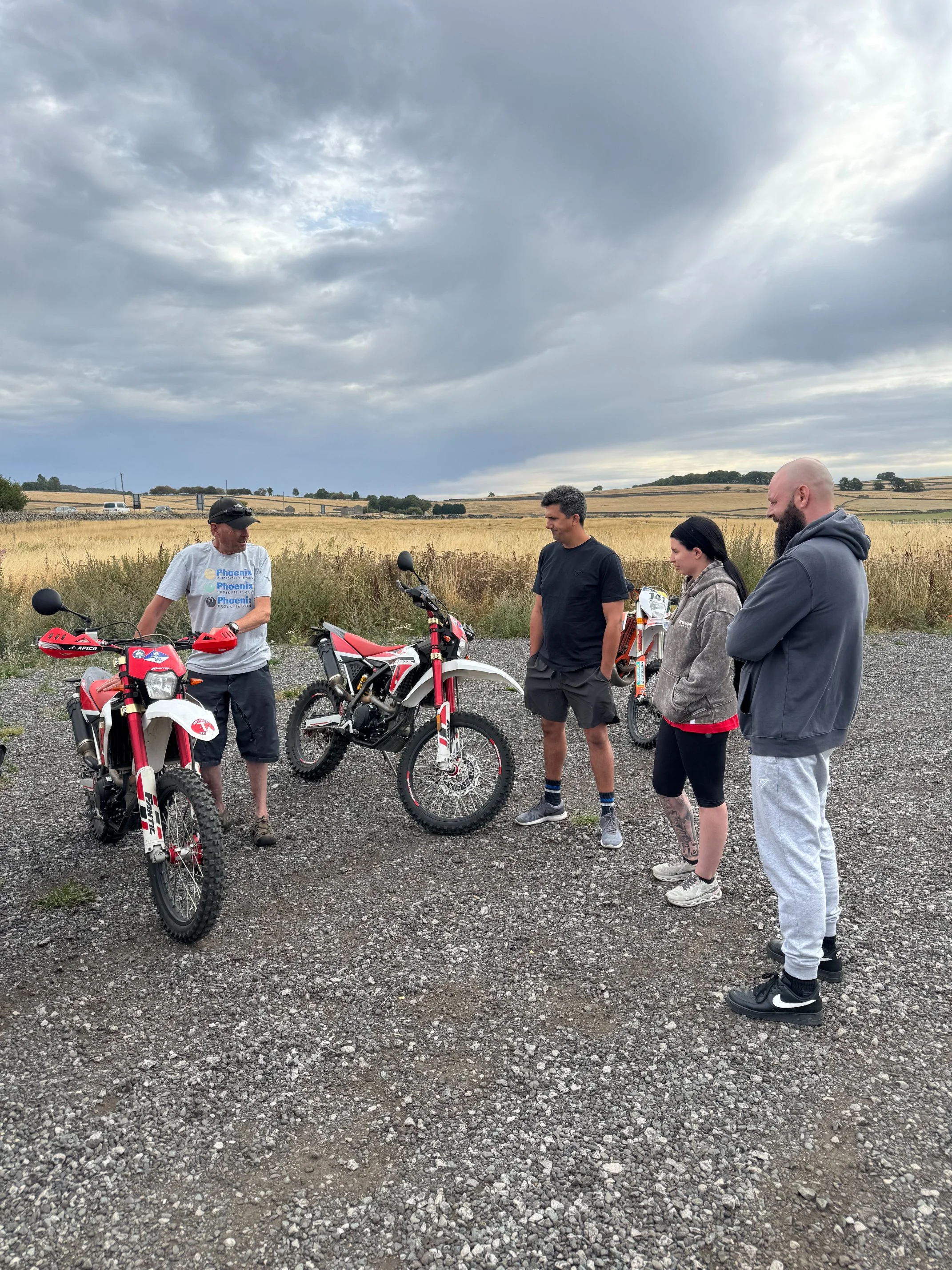
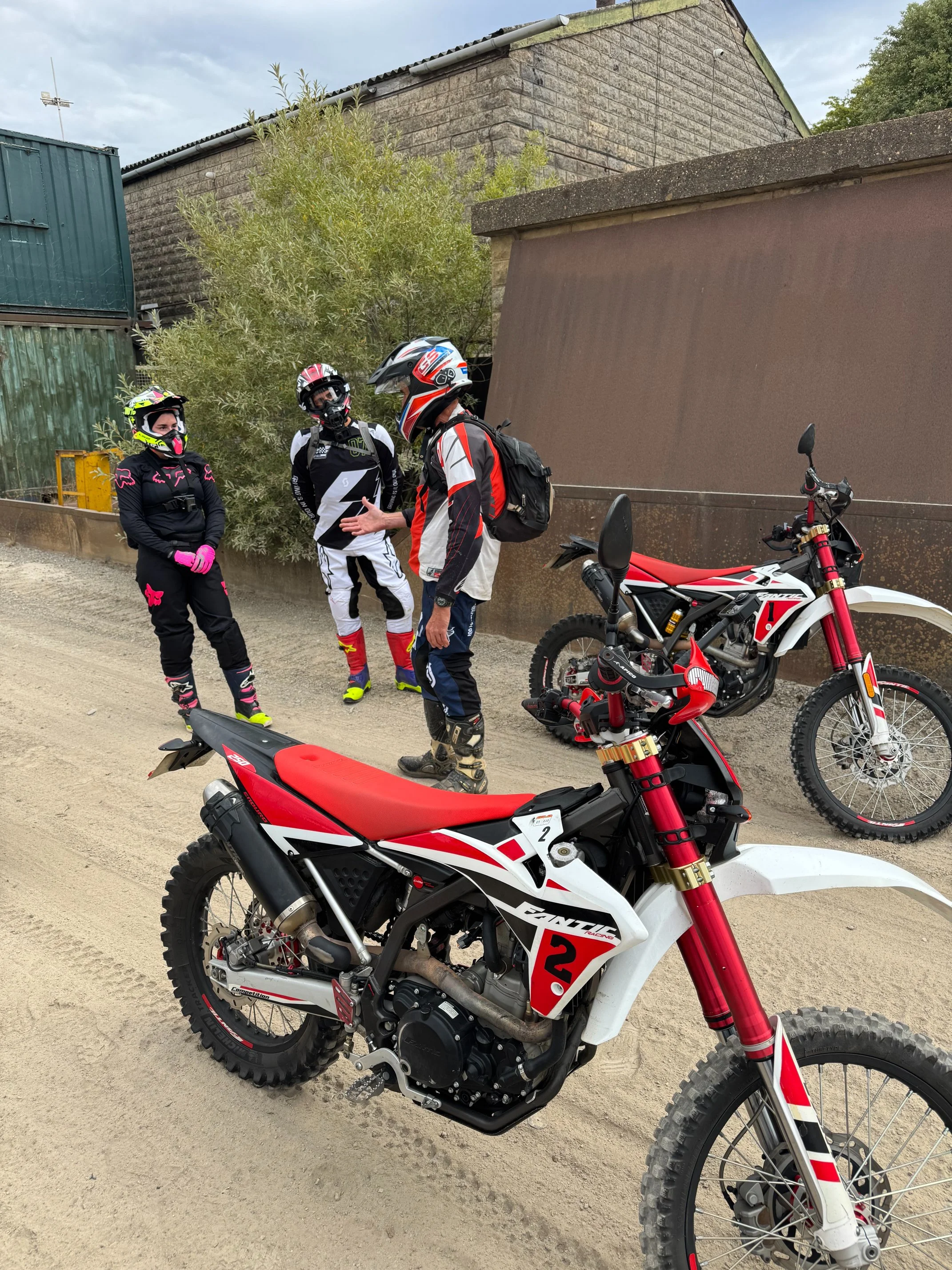
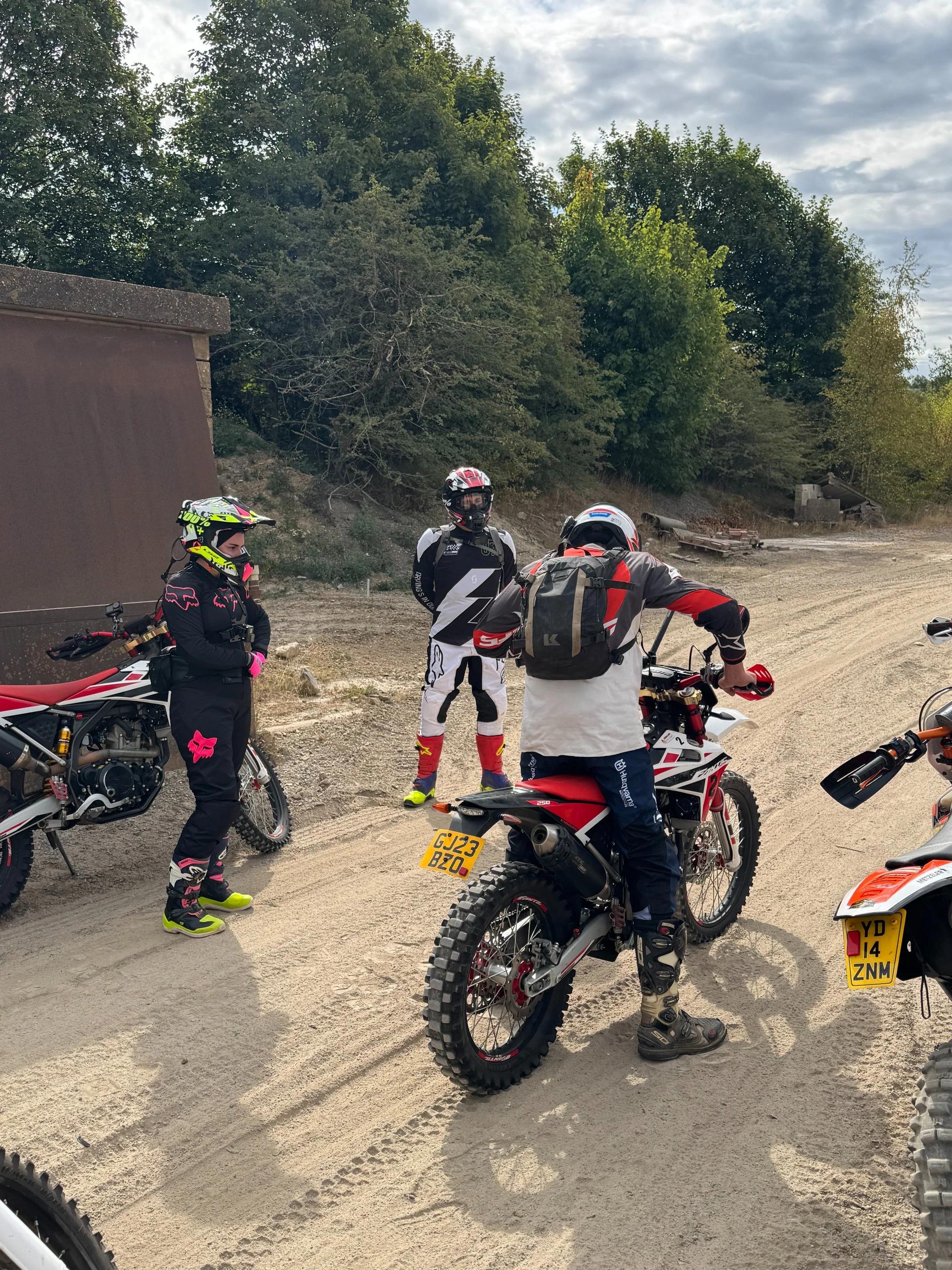
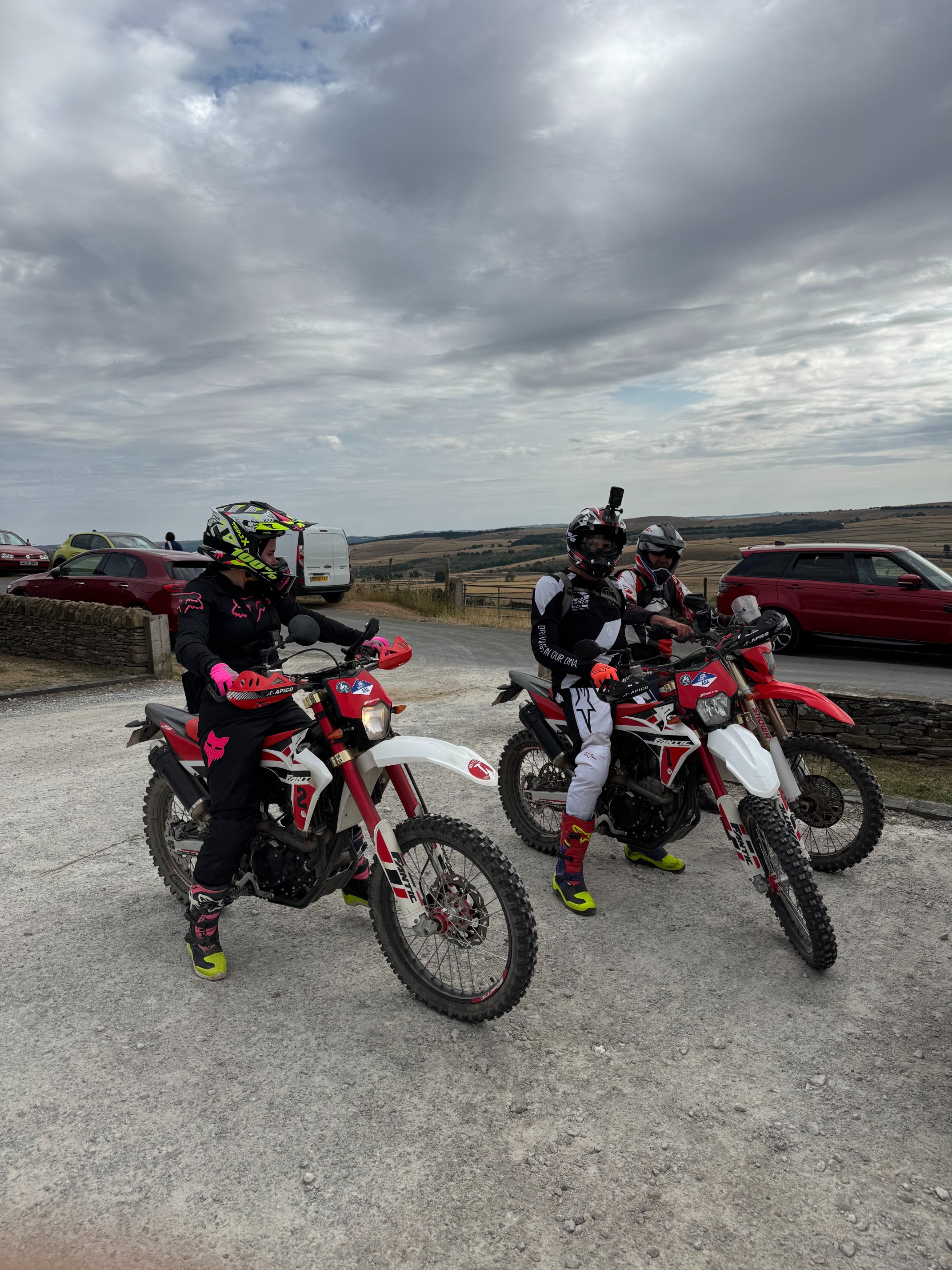
My day in Derbyshire started in a cafe close to the scenic village of Eyam. The start is reassuringly informal, with the instructor gaining a thorough understanding of current skills and abilities, as well as what each rider wants to get out of the day. I was joined on my day by Nikki, another rider and content creator with a similar off-road experience level to me. Both of us had tried a bit of off-road riding, but neither of us felt experienced enough to call ourselves competent. Our trainer 'JB' took the time to ask plenty of questions, learn about our previous off-road exploits and get an understanding of what we'd both like to work on ahead of the day. For me, I was happy to be taking it back to basics. I want to know what I am doing right and, crucially, what I am doing wrong.
Kit Included
A significant perk to Phoenix is the option to borrow kit, which is ideal for those starting out. Like all the best hobbies in life, purchasing the kit required to ride off-road doesn't come cheap, so fortunately Phoenix offers everything, including helmets, boots, body armour, and gloves, in addition to the bikes. The only thing required from you as a rider is a licence, which of course, they can help with too.
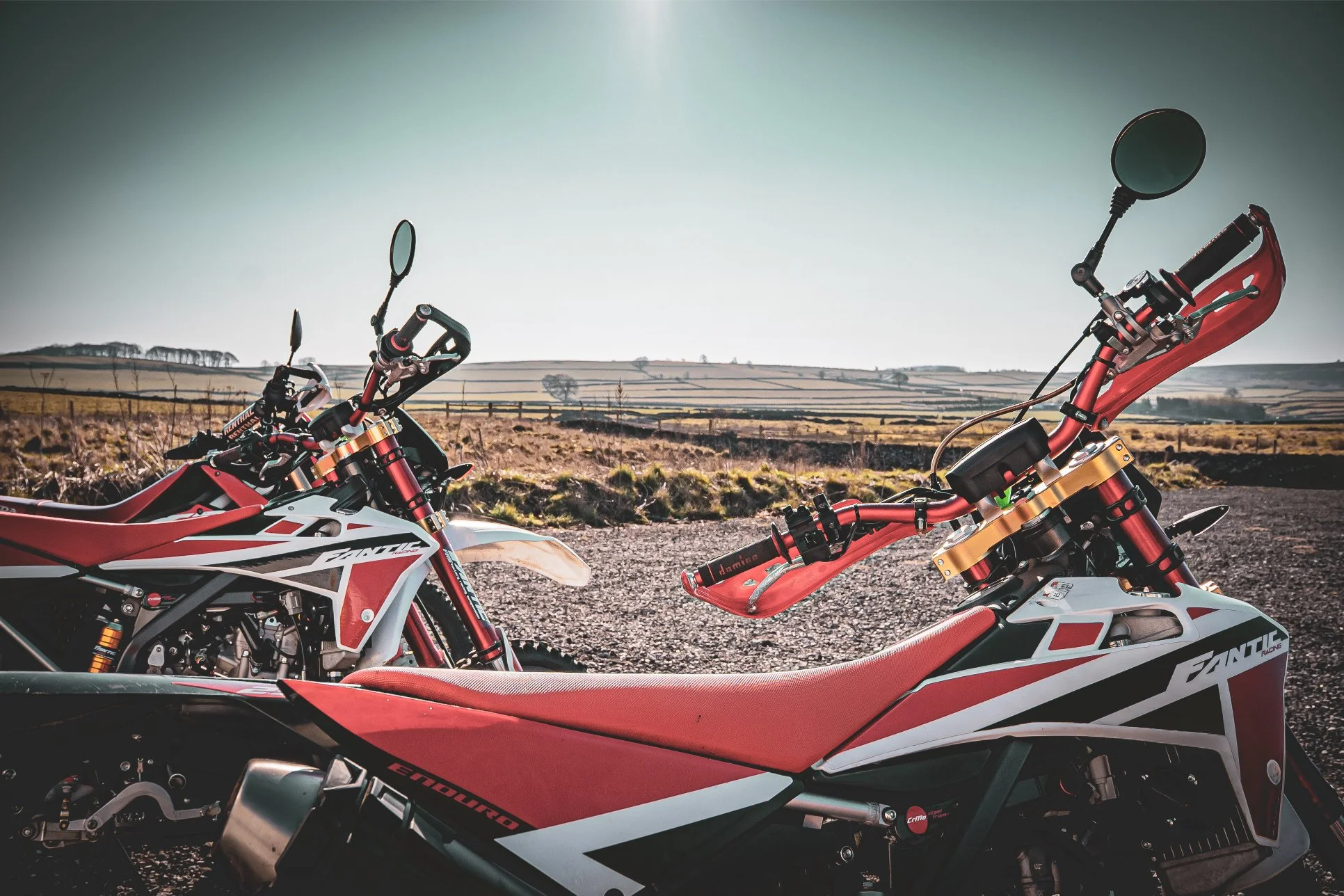
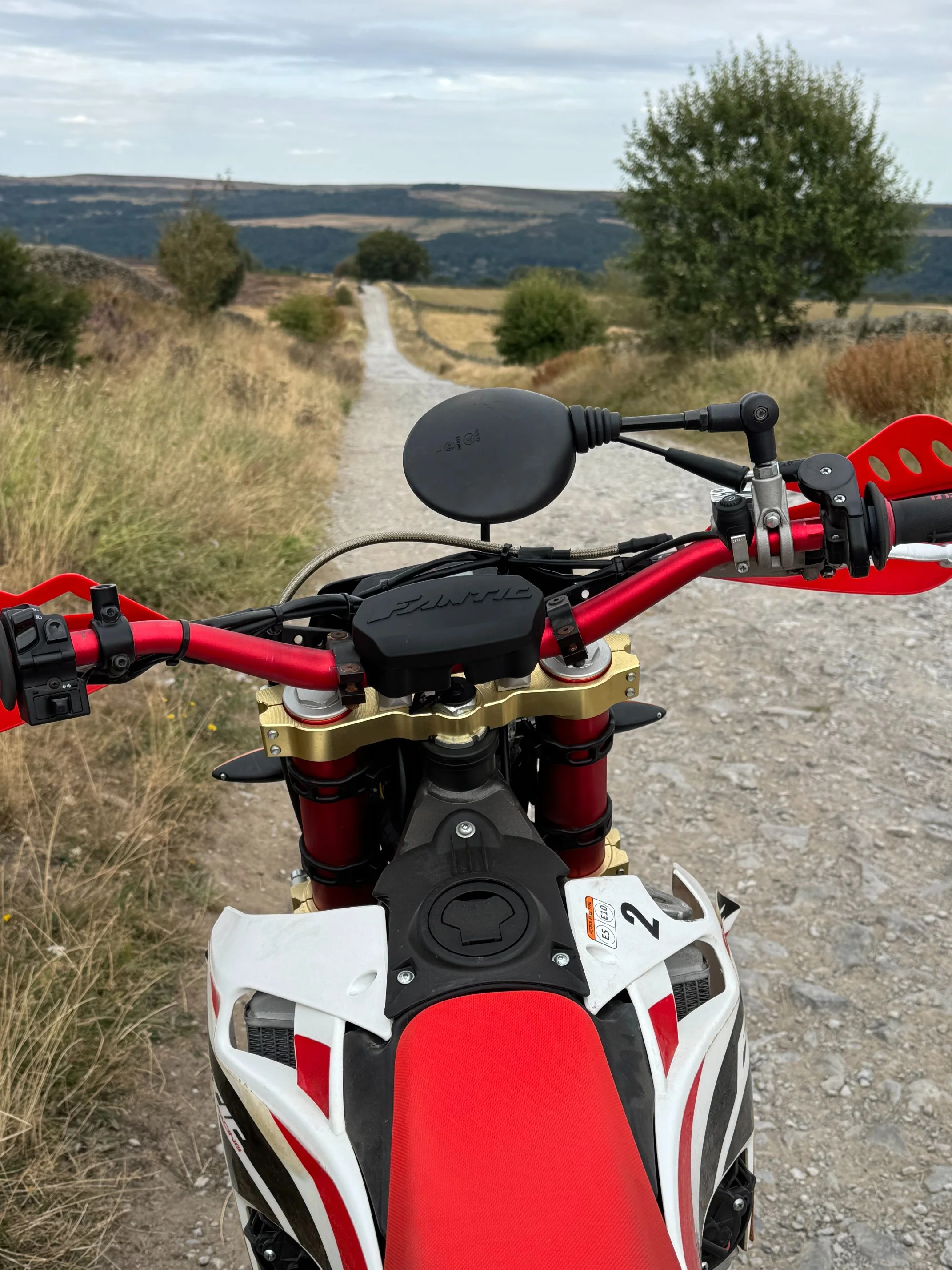
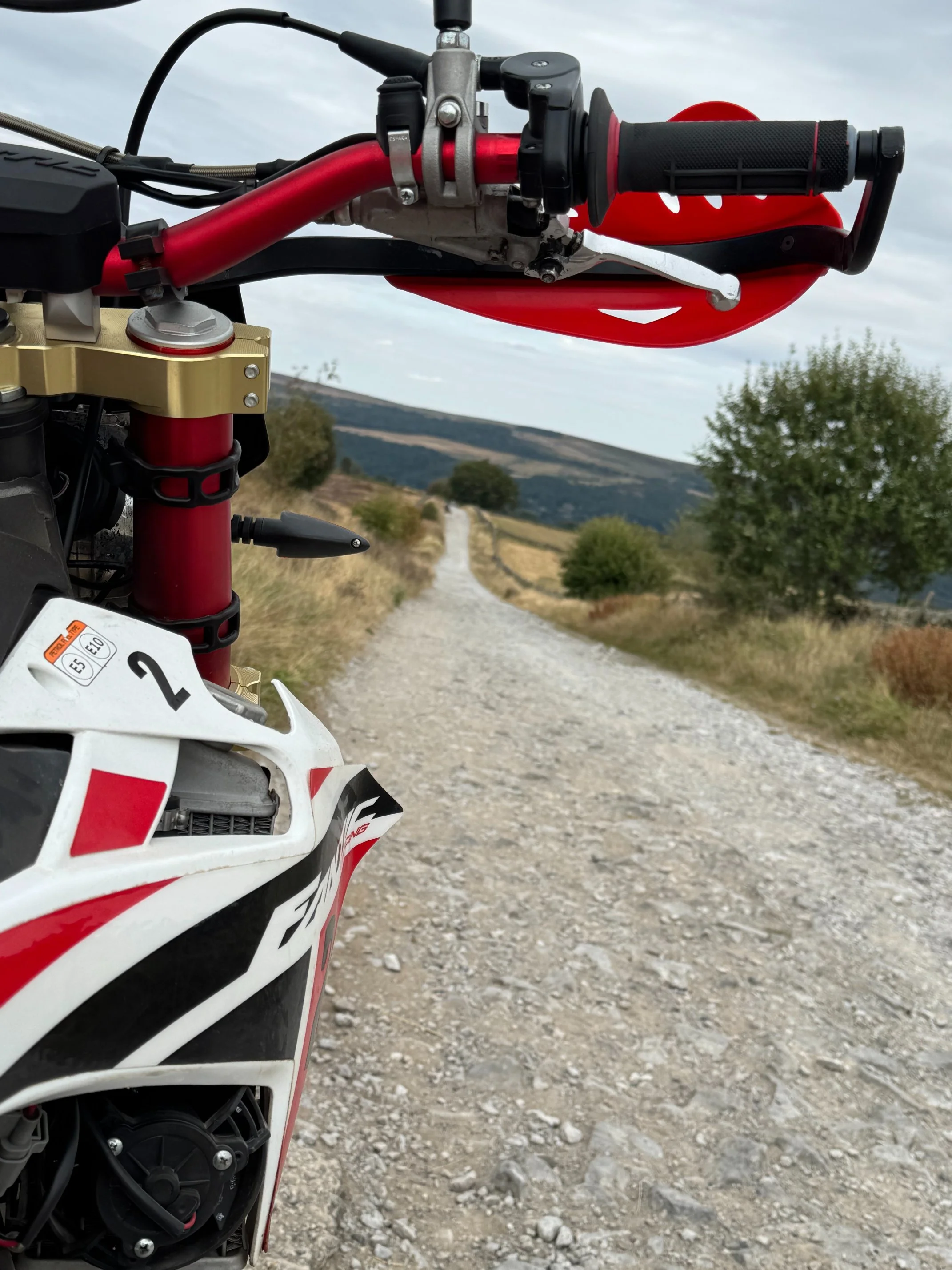
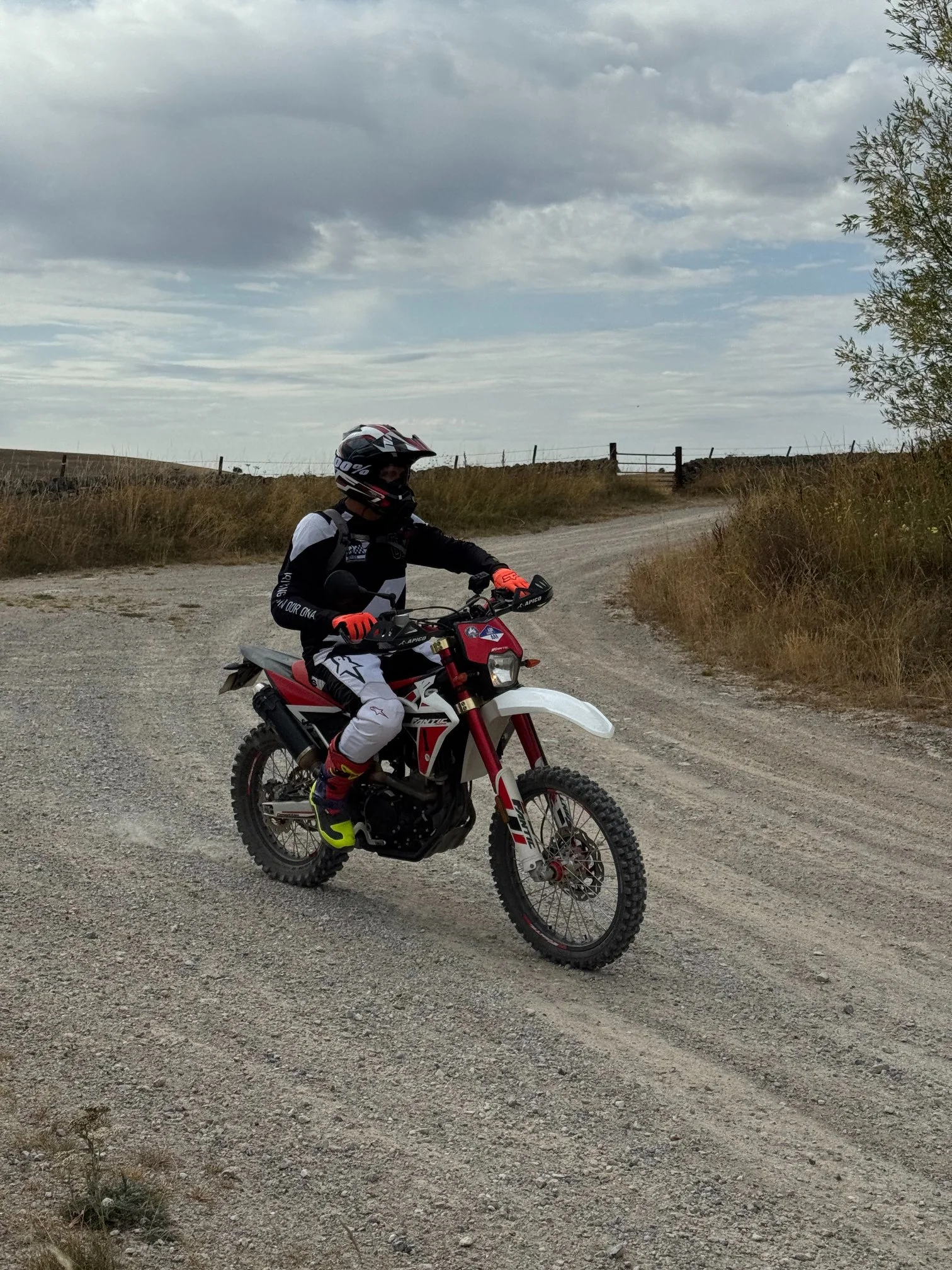
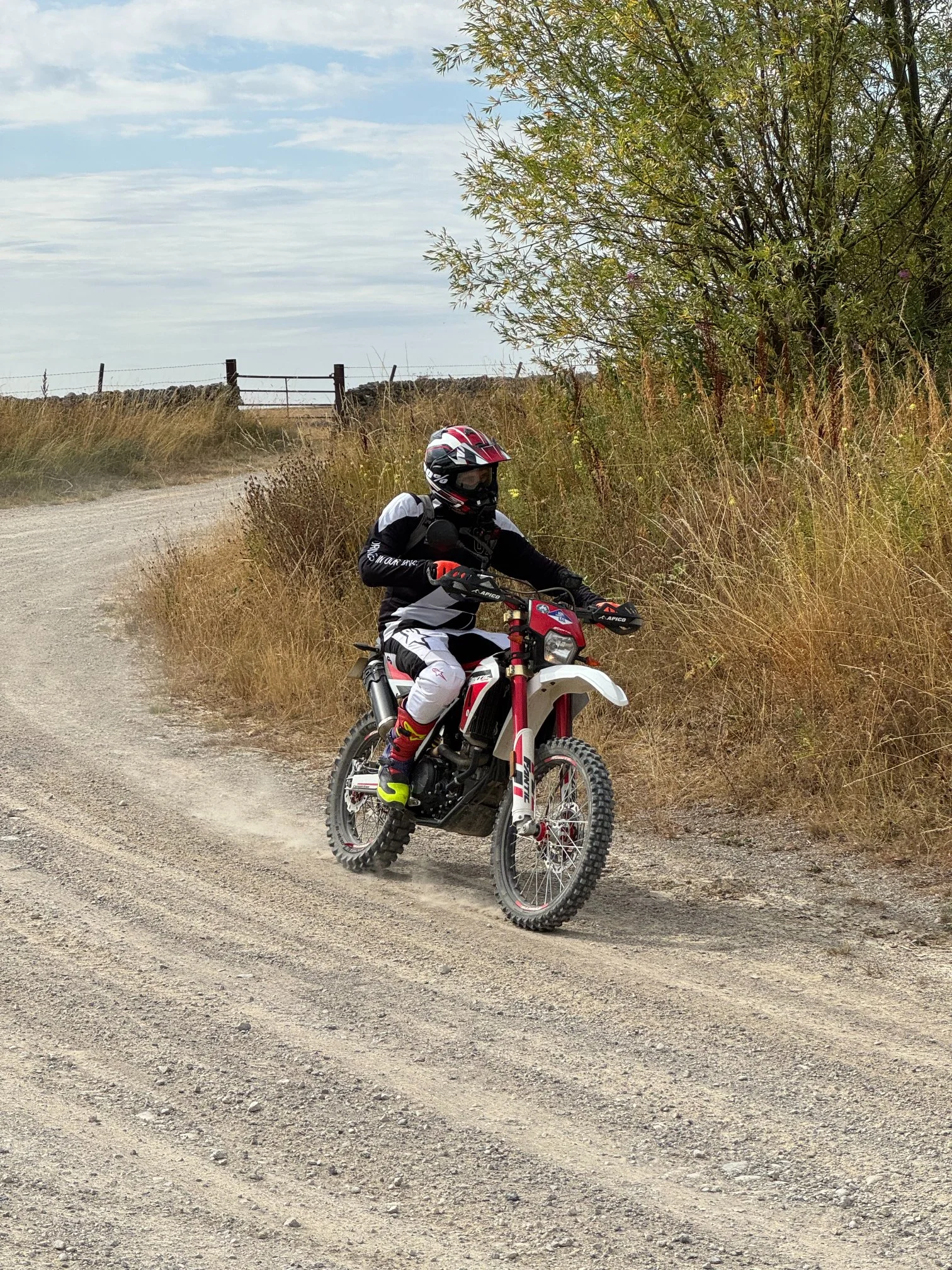
The bikes on offer vary by location. In Derbyshire, we had Fantic XEJ250 trail bikes, which can be ridden with an A2 licence. Smaller-capacity 125cc bikes are also available for anyone with a CBT licence. The Fantics are extremely rewarding bikes to ride, offering all the power you need and no more than you'd want while learning the ropes.
Following the informal chat in the cafe, it was time to get kitted up and to learn all about the bikes we'd be riding. In terms of detail, nothing is missed. Even the basic controls are recapped, which is essential for the stints of public road riding between the training locations and green lanes.
Body and Weight Positioning
The first bit of training takes place on tarmac roads on the way to the first off-road location; the focus is body positioning when cornering. On a sports bike and most other road bikes, riders are taught to shift their body weight into the corner, leaning in the same direction as the bike to maximise traction and grip. On a trail or enduro bike with knobbly tyres, you need to do the opposite. The bike still needs to lean into the corner, but your body positioning needs to go the opposite way. As the bike leans left, you shift your weight to the right, keeping your body upright and letting only the bike tilt and lean. This technique is good to master on the road, as it reduces the downward force on the tyres on looser surfaces. A basic understanding of physics will go a long way in helping you get the most out of off-road riding, and while some of the instruction might sound strange or even feel wrong at first, in practice it's essential.
Sitting vs Standing
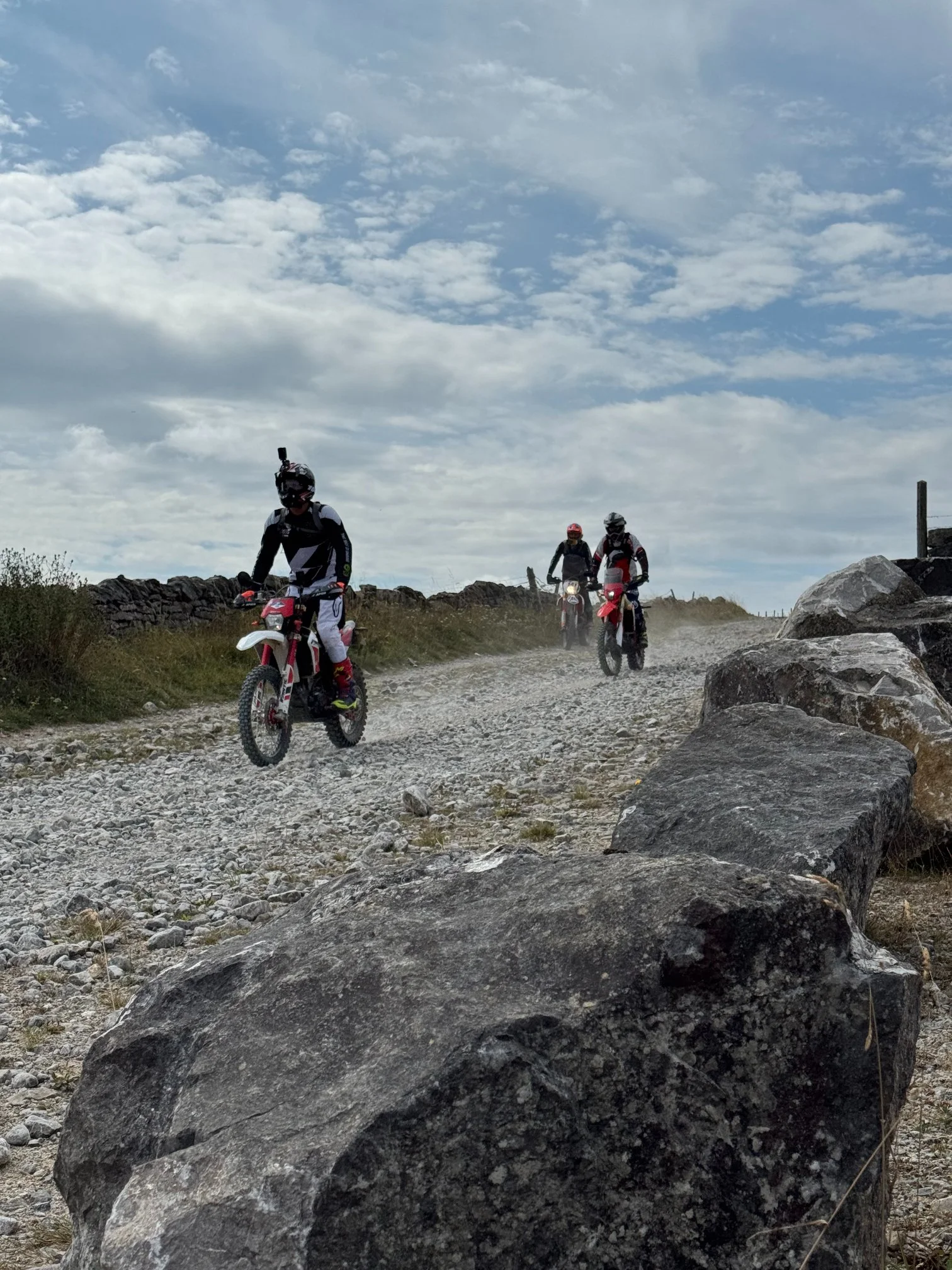
The first off-road location for my day was a dusty trail, where we learned the importance of body positioning while sitting and standing. Knowing where to sit on a trail bike might sound obvious, but for many, it isn't.
The key word once again is weight. Where you place your weight on the bike drastically changes how it feels under acceleration, braking, and cornering. The ideal position on a trail bike is as far forward as possible. This moves more of your weight to the middle of the bike, reducing the risk of the front end going light and losing grip when accelerating.
Managing your weight and positioning when cornering, as practised on the road, immediately makes sense on gravel, and in a short time, thanks to guidance from our tutor JB, transitioning from side to side quickly feels very natural.
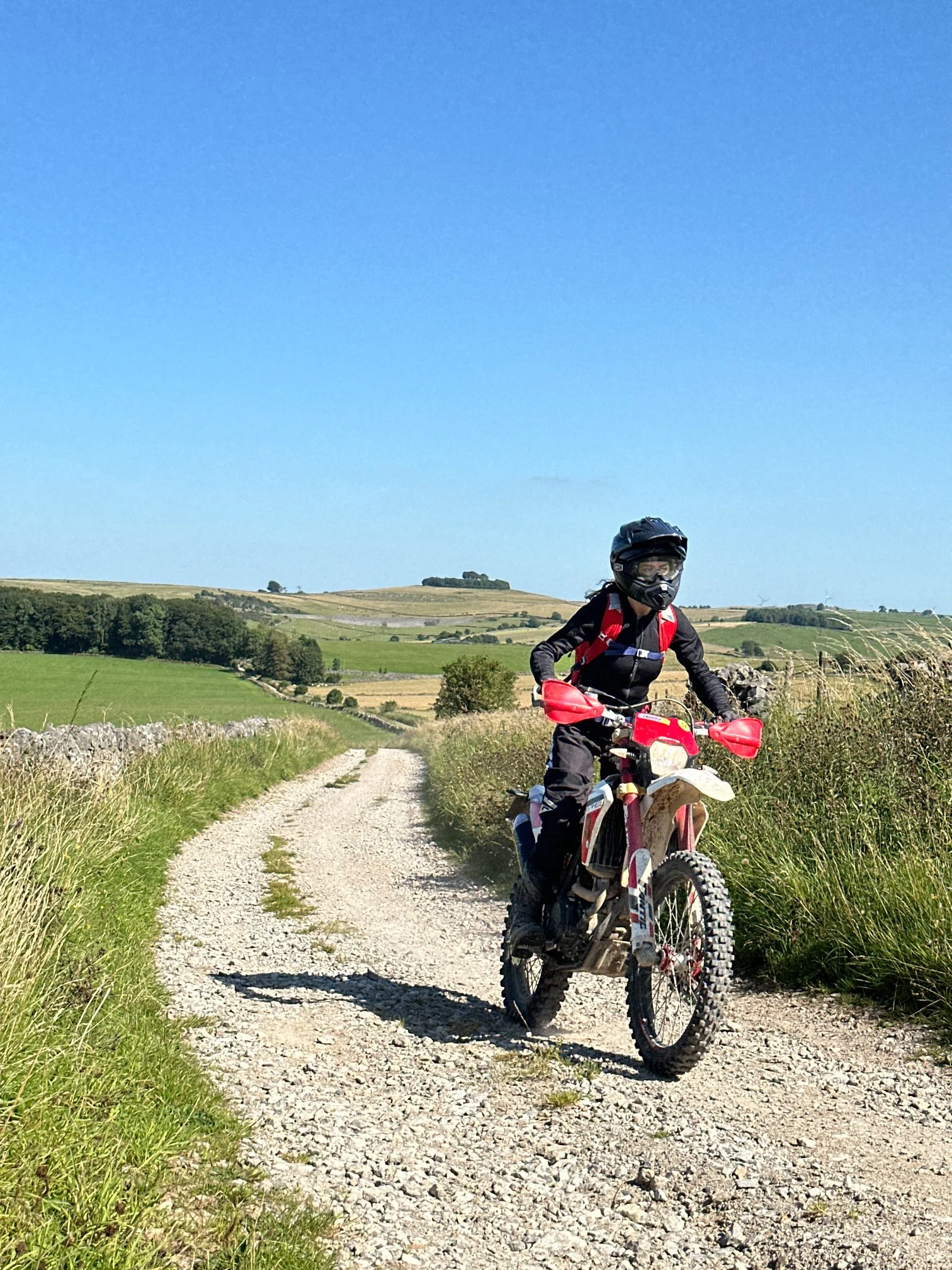
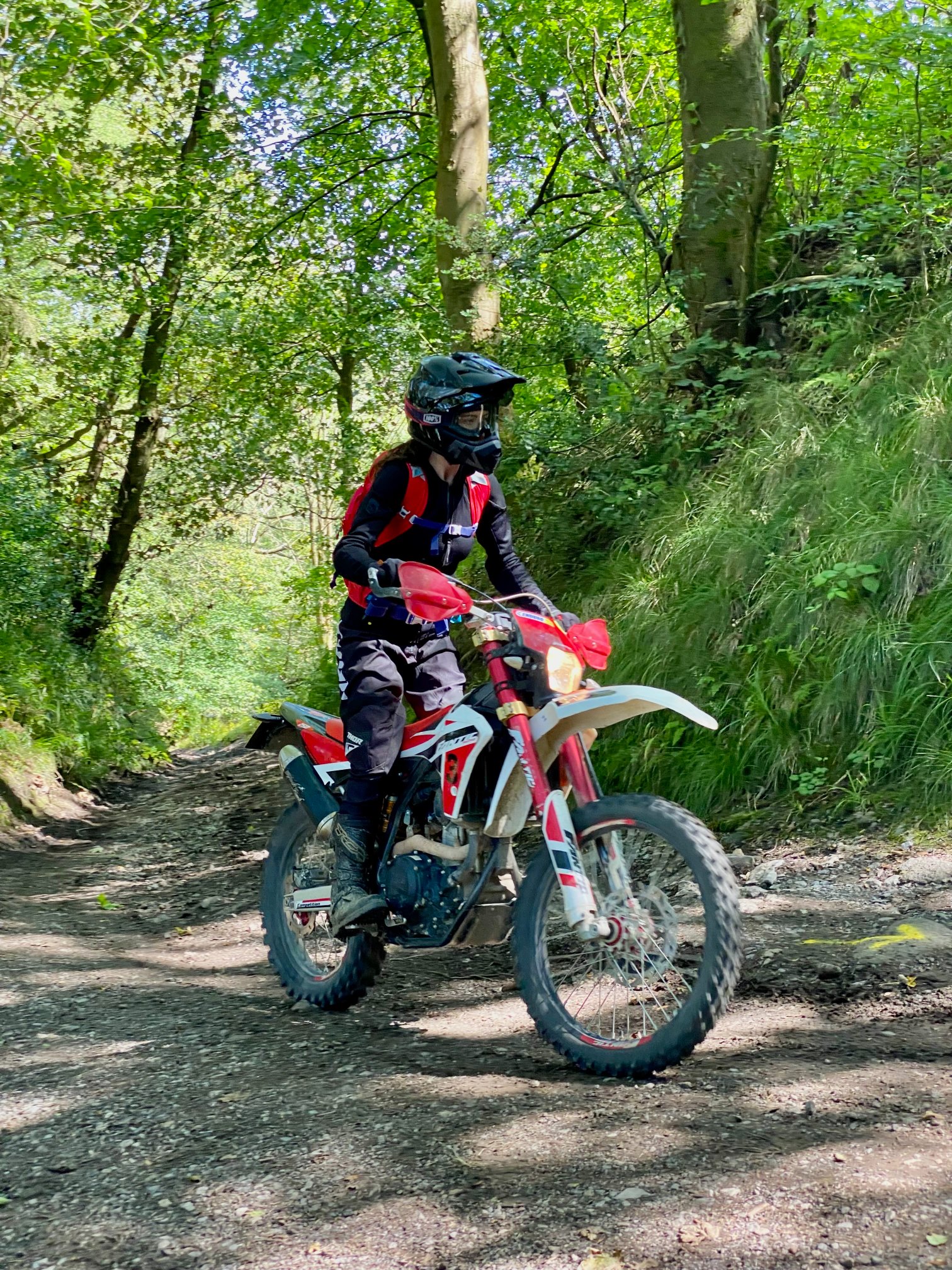
The next lesson was standing. Standing on the footpegs is essential to mastering off-road riding. By standing, you lower the bike's centre of gravity to your feet, which adds greater stability. Again, consider basic physics, and it all becomes clear. But like the seeming simplicity of sitting, there's plenty to consider when standing, too. Weight positioning is key for cornering and obstacle management, and the principle of shifting your body weight to the outside of the bike's lean angle is the same as when sitting. The bike leans left, so your weight shifts right. As a rider, your body stays mostly straight, with the bike doing most of the movement and leaning independently.
Foot Peg Positioning
Foot positioning when standing is another essential lesson. Typically, for road riding, we're taught to ride with our toes close to the footpegs. For off-road riding, managing how your weight works with your boots is key. If you've ever skied, you'll be familiar with the sensation of your body weight being supported by your ski boots. On a trails bike, the principle is the same. The footpegs are best placed under the arch of your foot, closer to the heel, which allows for a slightly bent knee and a boot that supports some of your body weight. The next key lesson beyond foot positioning is the direction they point. By pointing your toes toward the bike, your knees naturally fall when bent to grip the fuel tank, which takes weight off your upper body and arms on the handlebars. This is another crucial tip for enjoying your ride, as holding most of your body weight over lumps and bumps across a sequence of lanes gets tiring very quickly.
Each Phoenix tutor offers guidance throughout the day via a helmet intercom system, providing pointers and tips. JB stayed behind us all day to keep an eye on our riding and offer tips and reminders on positioning.
All of the Phoenix instructors have vast experience, with many of them being professional enduro competitors with years of experience. The guiding voice is a constant reassurance throughout the day, with information relayed only when it's needed most.
Facing Your Fears
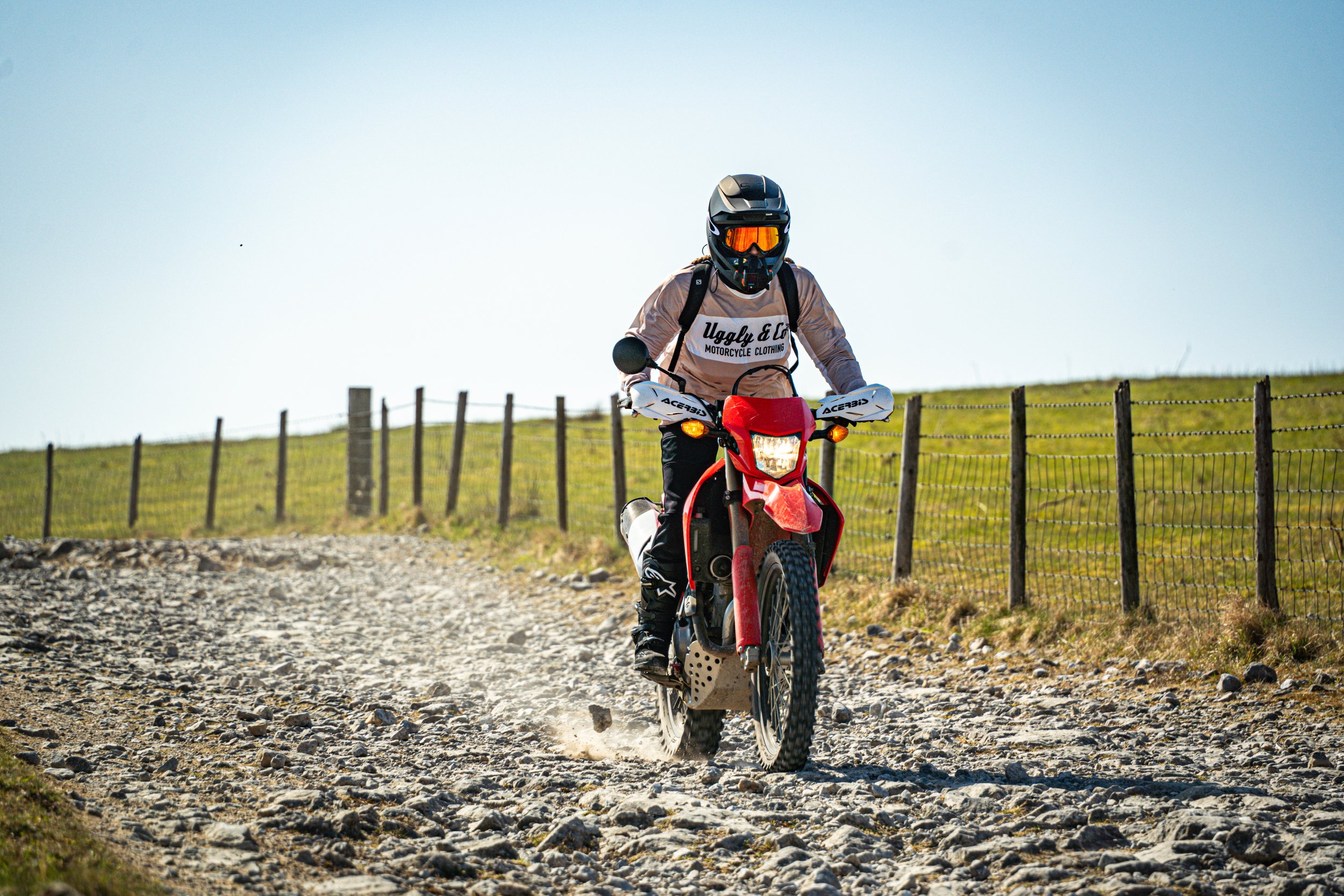
At the start of the day, JB asked about our previous riding experience and if there was anything we wanted to work on. For me, my nemesis is loose large rocks - especially on hills.
It was on a steep uphill climb in Somerset whilst riding a KTM that I had a small tumble in April. Loose rocks tend to move the bike around beneath you, often in a manner that feels utterly alien if you've spent your life on familiar and consistent road surfaces. On rocks, the front wheel moves left and right. In reality, the movement could probably be measured in centimetres, but in the moment, it feels like metres. The key to keeping upright is looking far ahead and keeping the vision up and away from the floor thats immediately ahead of you. When learning to ride bikes on the road, one of the most basic rules is that 'where you look is where you go' - and on a bumpy, challenging trail, the principle is no different.
I'd taken a tumble in Somerset because I'd become fixated on a big grass verge, on the other side of which was a long drop into a valley. Whilst riding up the hill over high rocks and boulders, my internal voice was shouting, "Whatever you do, don't go over that verge!..." So, no prizes for guessing what I ended up crashing into. Whilst I didn't go over the verge, I hit it because I kept looking at it, and with that in mind, I knew that for my training day, I needed to conquer that fear.
Riding on Rocks
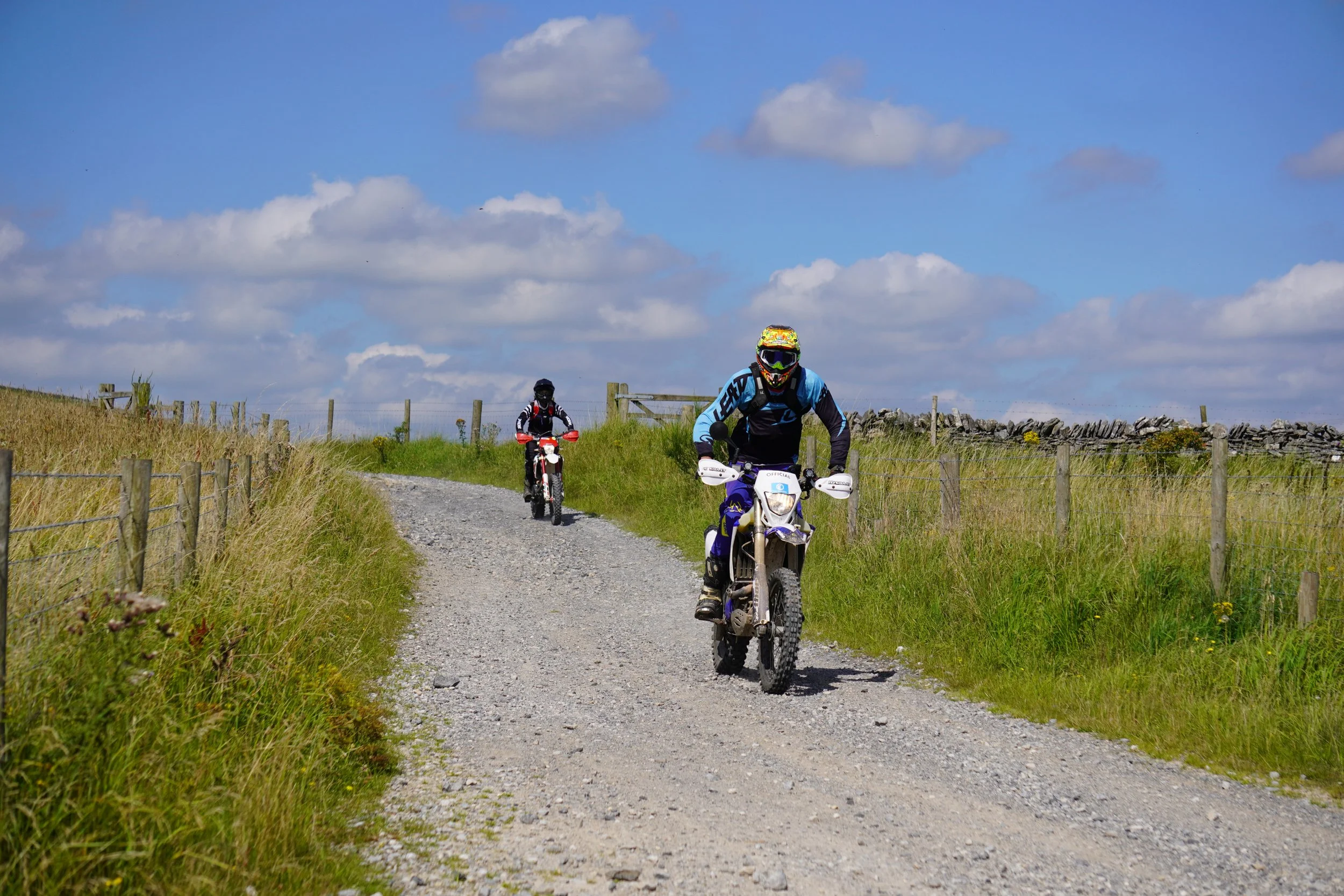
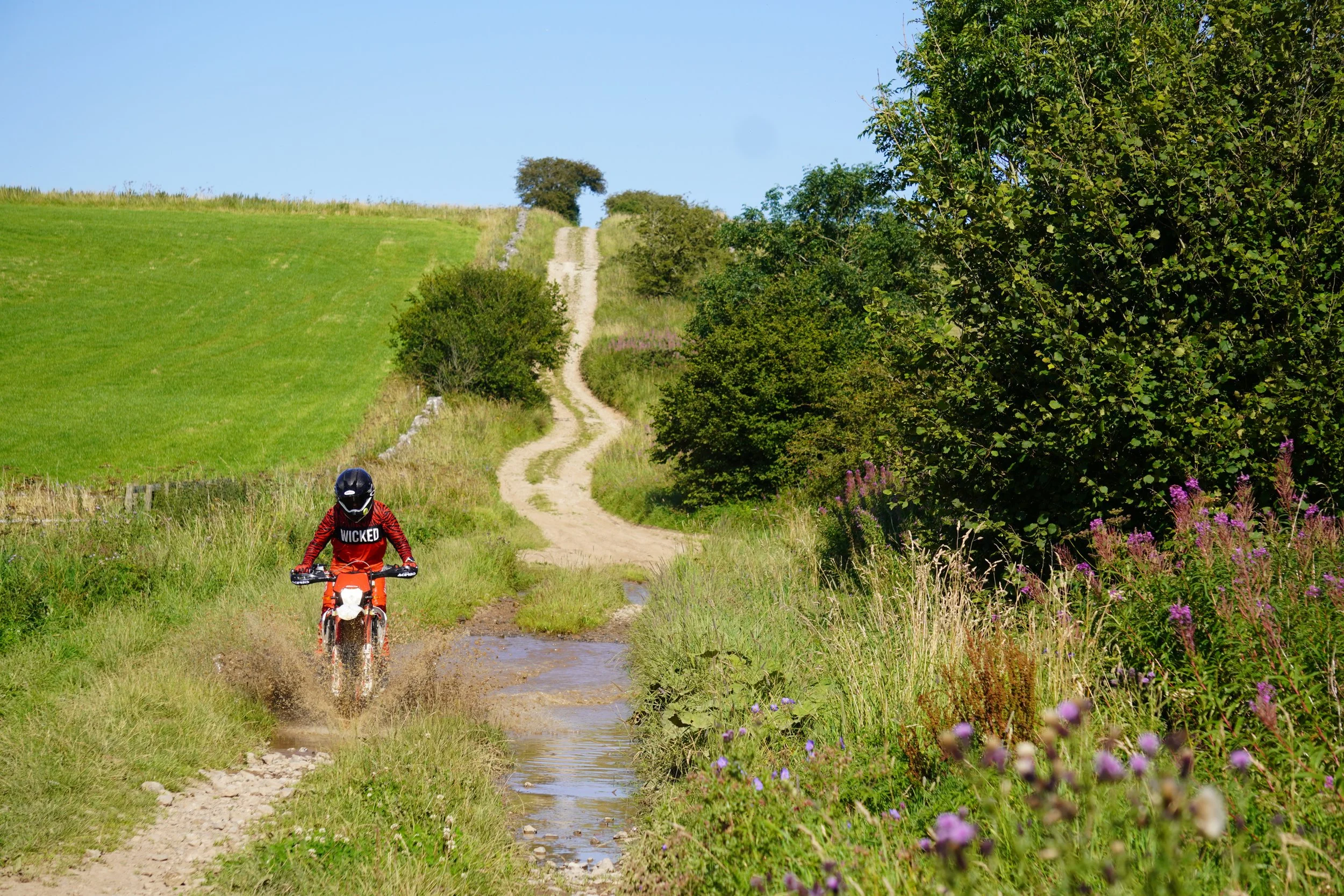
After a short road ride to the next lane, I found myself at the foot of a very steep uphill byway. The surface, you guessed it, was loose rocks. But with my newly learned skills, including the importance of body positioning and looking well ahead of where I was, it was time to face the fear and get on with it.
"Pull away, up to second, up on the pegs, toes in and lean forward" - I said all of these things out loud for nobody else's benefit but my own. Once I'd started bouncing over the first few metres of rocks, the next internal command was "look ahead!" and so, I did. The bike moved around, and there were a couple of sizable wobbles, but I stayed upright and reached the peak with a huge sigh of relief and a very proud, nervous chuckle.
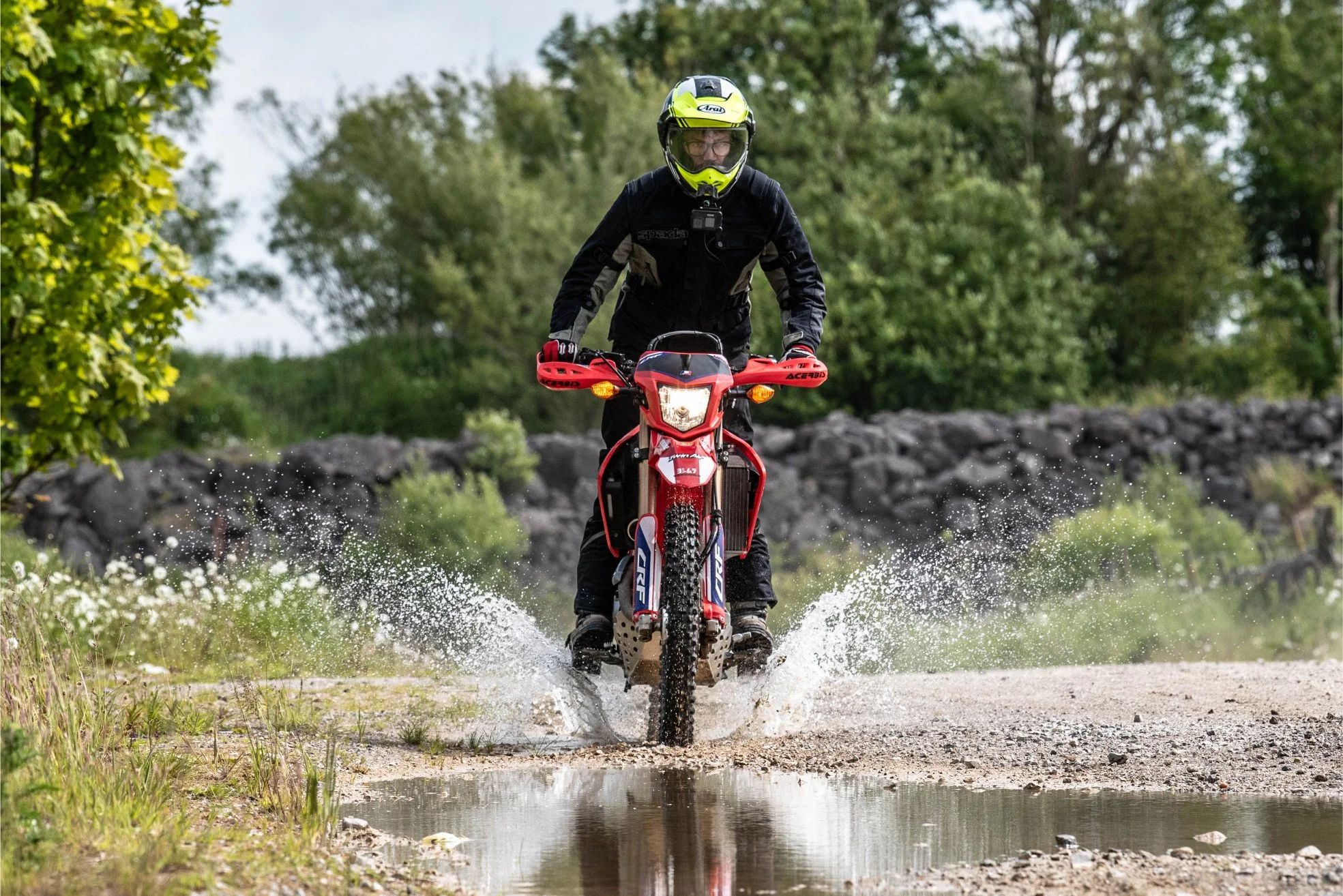
The rest of the morning consisted of riding on various loose surfaces, including dust, mud, gravel, and plenty more of the dreaded loose rocks, but each stage of the ride brought new lessons, unlocked skills, and fantastic guidance from JB over the radio.
Group Sizes
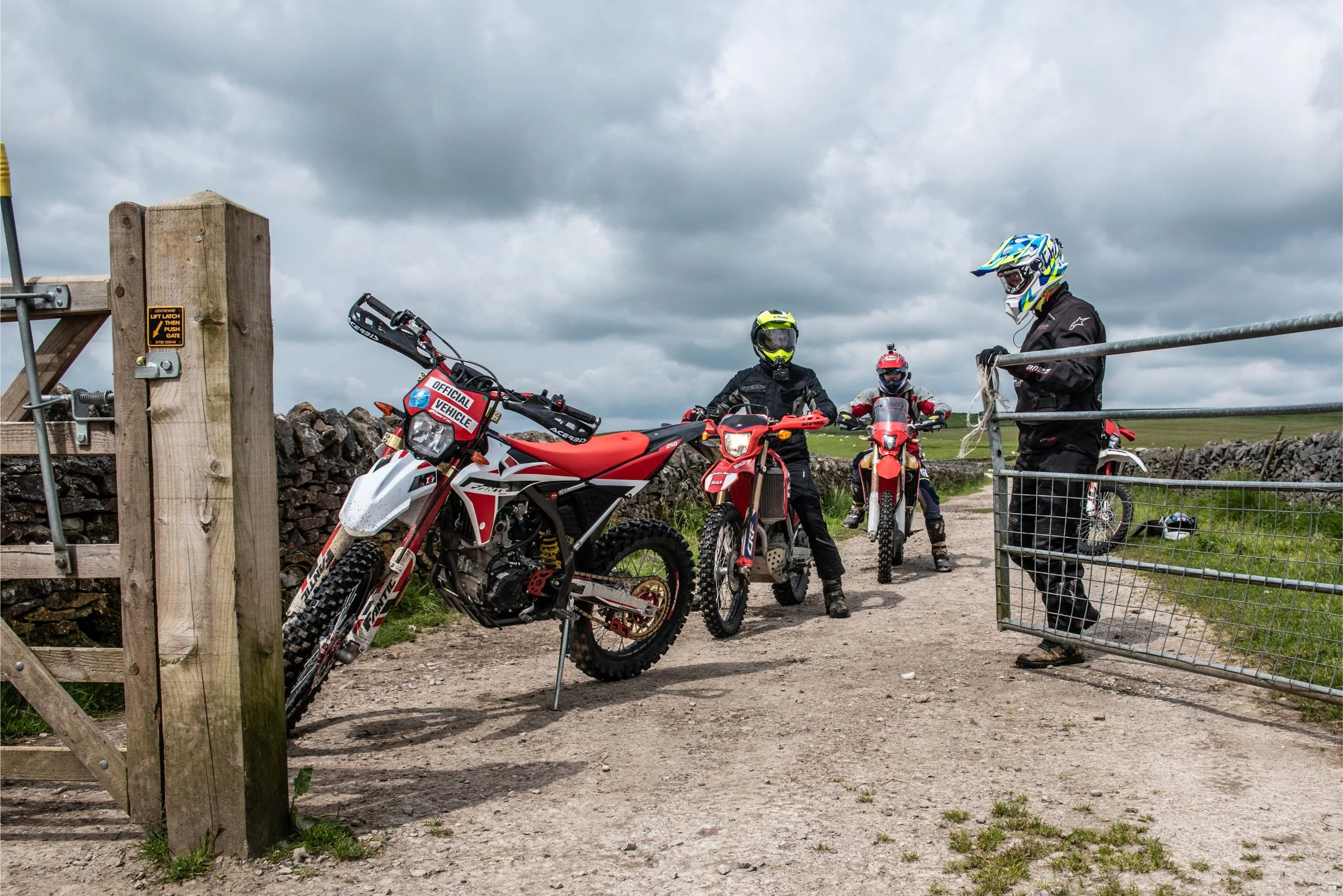
On the Phoenix Trail days, group sizes are limited to a maximum of 4, although larger groups can be discussed if you want to go with a particular group of friends. This smaller-than-average group size makes the event feel especially intimate, with plenty of 1-2-1 training and advice both on and off the bikes. As part of the day, we stopped for lunch in a pub which offered another great opportunity to discuss the ride so far and address any other points that we were struggling with.
Is it hard work?
It's worth considering a few things before taking on a day like this - the two obvious things to consider are fitness and experience. You may have been riding for years, with plenty of track days ticked off your list, but time on a road bike doesn't always translate to skill in a trail environment. Regardless of your perceived competence, going into the day with an open mind and a desire to learn is critical to getting the most out of the experience.
The second and less obvious factor to consider is fitness. Bouncing bikes in and out of bombholes and jumps is exceptionally good fun, but it's also a full-body workout. Your legs, upper body, shoulders and arms are all in for a shock if they don't get used all that often elsewhere, so be ready for some aches and pains the following day.
For each event, the group's pace is dictated by everyone's comfort level and fitness, so tiredness becomes a factor. The constant communication and check-ins from the tutors are priceless, as the team want to make sure everyone feels comfortable, confident, and in control of their riding at all stages of the day.
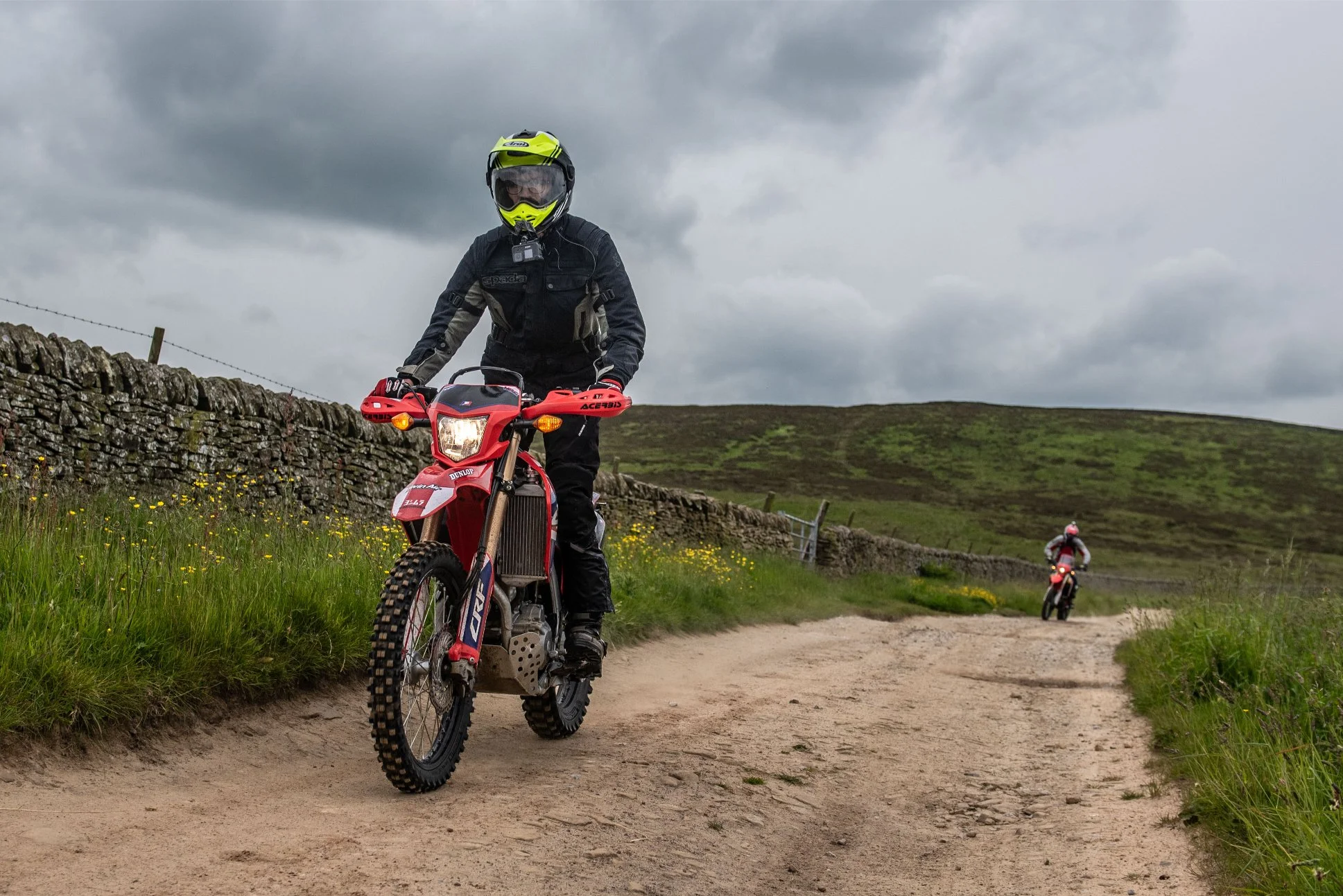
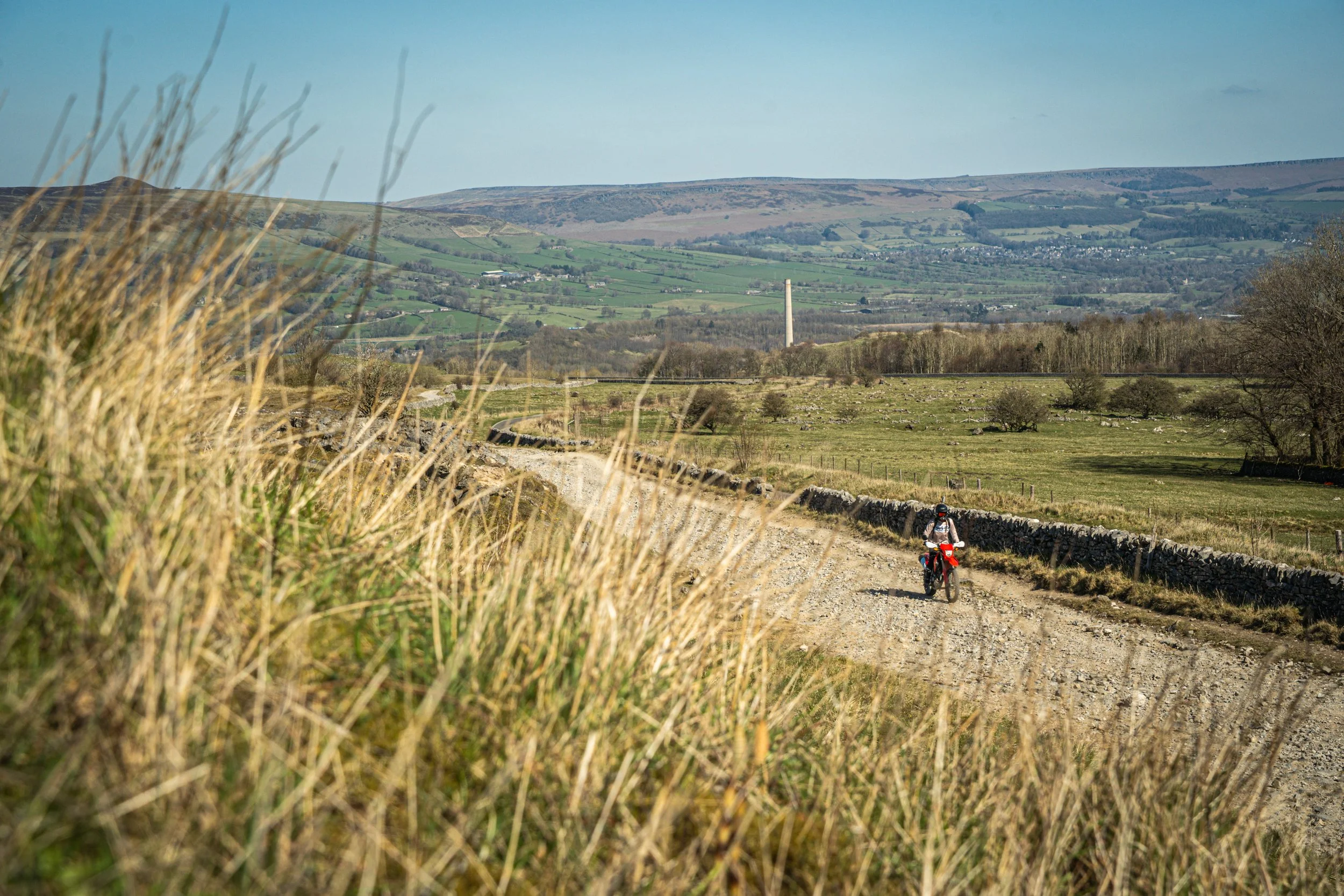
In the afternoon, we took in more trails, surrounded by spectacular views. Phoenix has multiple off-road riding locations in the UK, but if Derbyshire is within reach, I can wholeheartedly recommend it for the setting alone.
The Price
A day of riding with Phoenix is £299 per person and includes training, the bike, lunch, and use of kit. In terms of value for money, it's pretty difficult to beat and will almost certainly be the best modification to your riding that money can buy.
Conclusion
My day with Phoenix was genuinely one of the most valuable riding days of my life. Although it was ultimately just an introductory course, the tips and skills taught will undoubtedly be used going forward when riding off-road events. The pace of the day, level of tuition, and relaxed approach to learning are what will stick with me, and JP's encouragement will undoubtedly spur me on to do much more off-roading from here on out - including up and down the dreaded loose rock trails.
To find out more and to book onto an event, visit: https://phoenixmotorcycletraining.co.uk/course/trail-riding/
words by John Marcar
photography by Mikko Nieminen - Potski Media & Phoenix Motorcycle Training