
Jeep Compass - Rugged Nissan Qashqai rival offers plenty for families
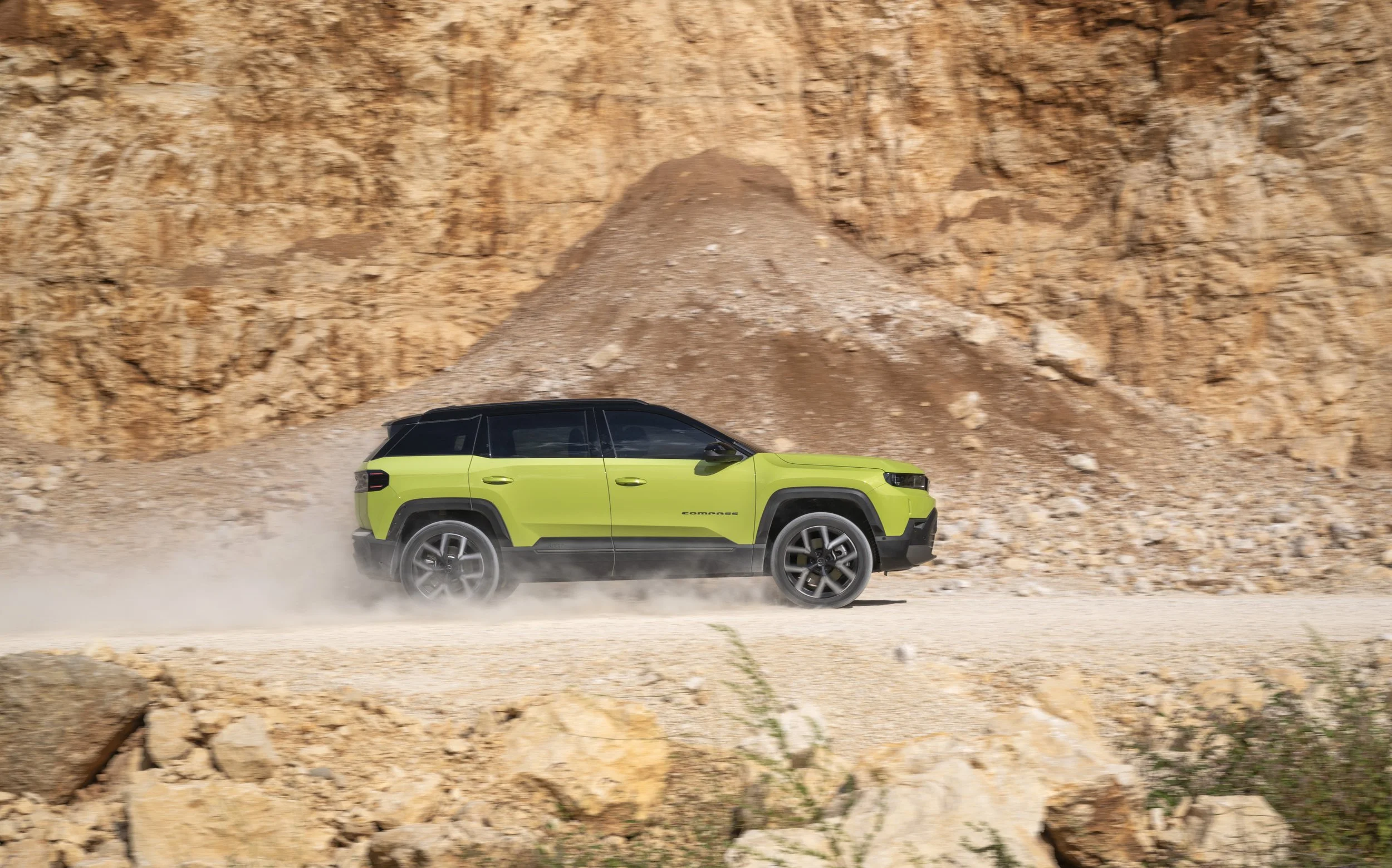
Buoyed by the success of its Avenger, Jeep's new Compass is here to lure buyers away from the Nissan Qashqai, Kia Sportage and even the VW Tiguan.
An increasingly popular choice
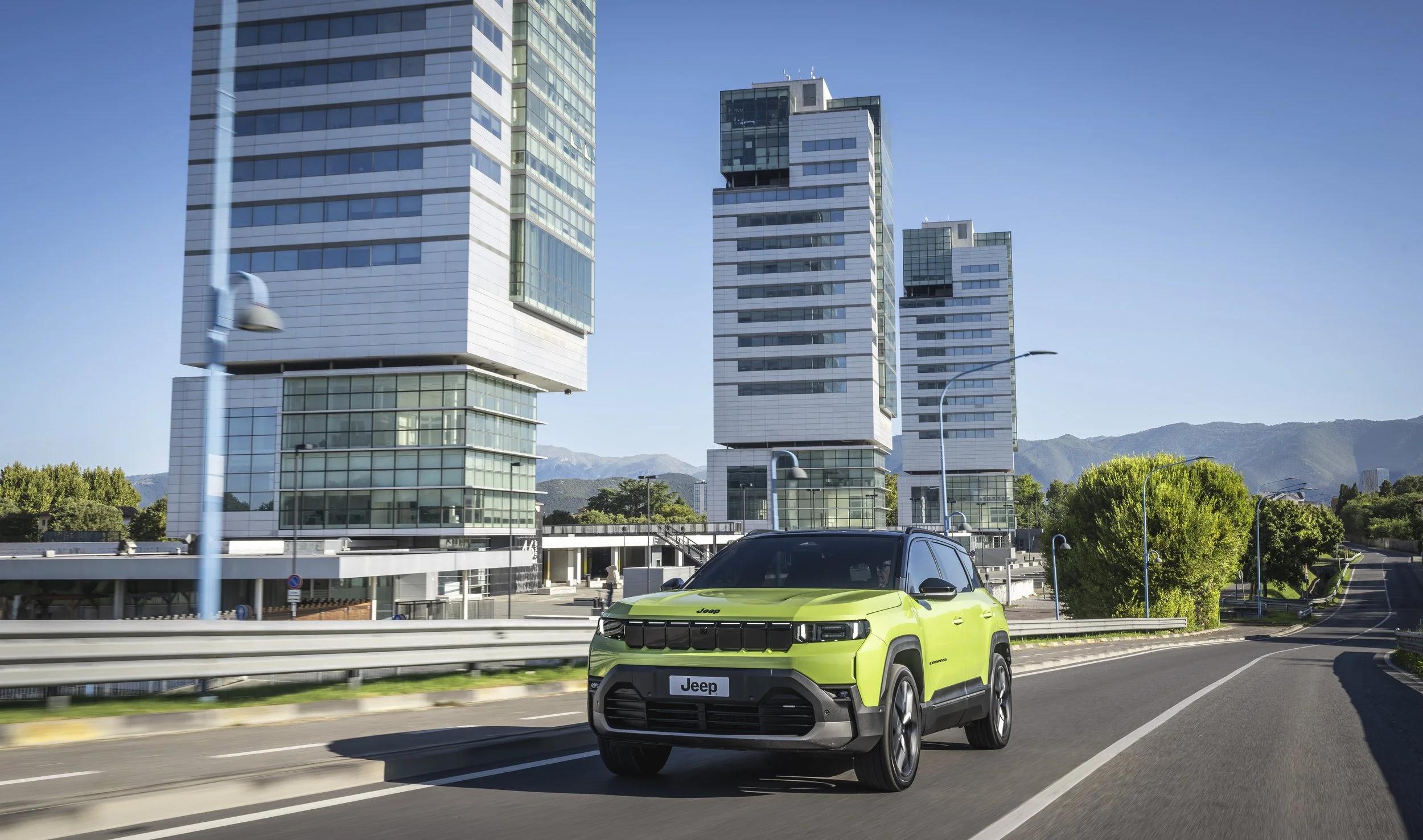
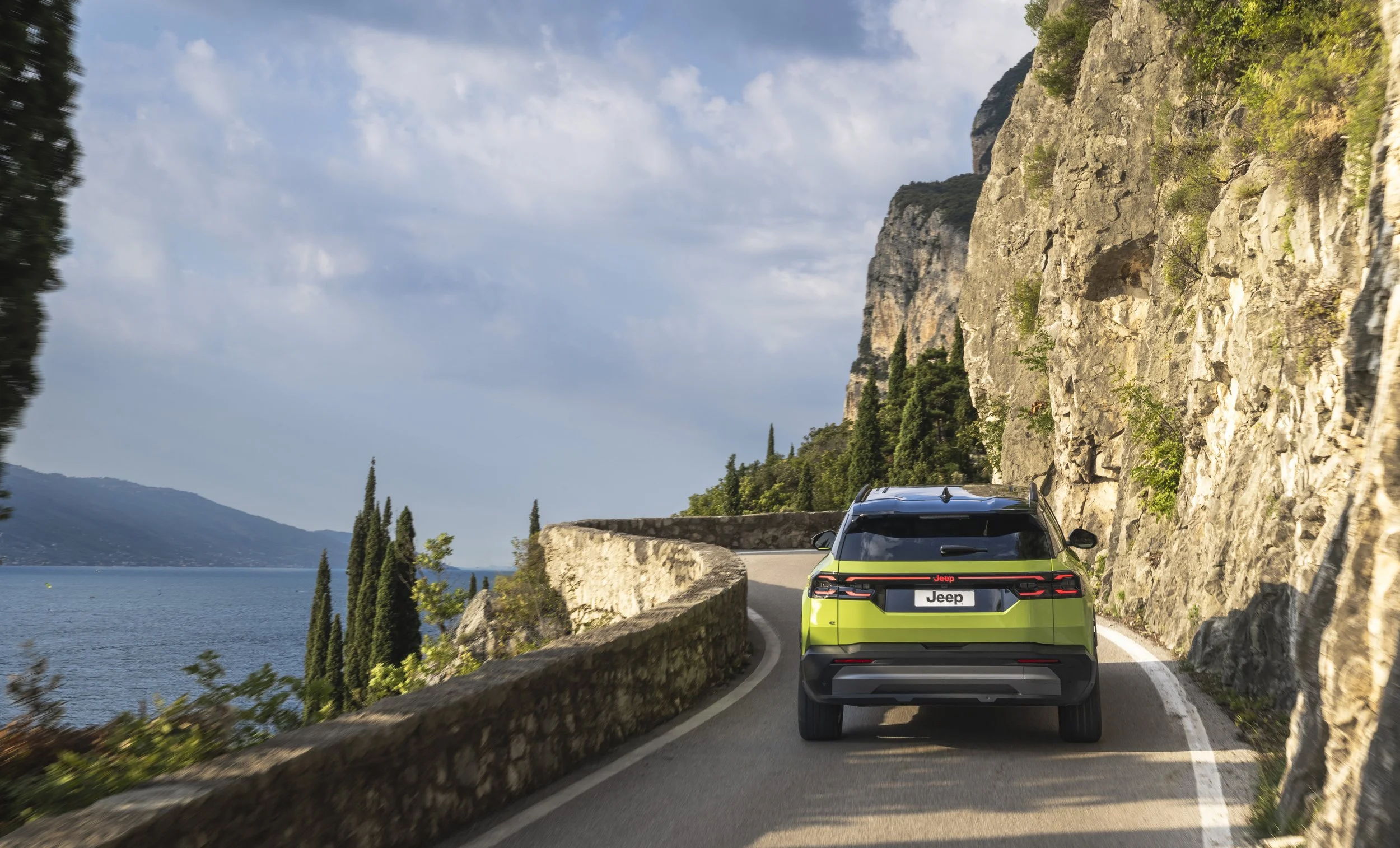
Jeep's gradual growth in the UK market has largely been driven by the Avenger, but this, the new Compass, could be the car to really get the brand moving because it slots into one of Britain's hottest segments. Not in the performance sense, of course, but in terms of sales - cars like the Nissan Qashqai and Kia Sportage have long been common sights on UK roads, and Jeep wants to grow its slice of this medium-sized SUV pie. To do that, the new Compass is being launched in mild- and full-hybrid forms, as well as in three fully electric trims, making it the broadest offering in this segment.
Mild Hybrid
It should also be priced competitively, although at this early stage we only have the elevated starting price of the 'First Edition' to go on, which is priced from £35,700 in e-Hybrid (mild hybrid) form. While starting prices will likely lower a little when the entry versions arrive, the Compass won't be able to claim bragging rights as the cheapest in the class. The Qashqai, for reference, starts from £30,615 in mild hybrid trim; although Jeep will have us believe that the Sunderland-made Nissan lacks a fair bit of the Jeep's ruggedness.
It's Rugged... but not necessarily AWD
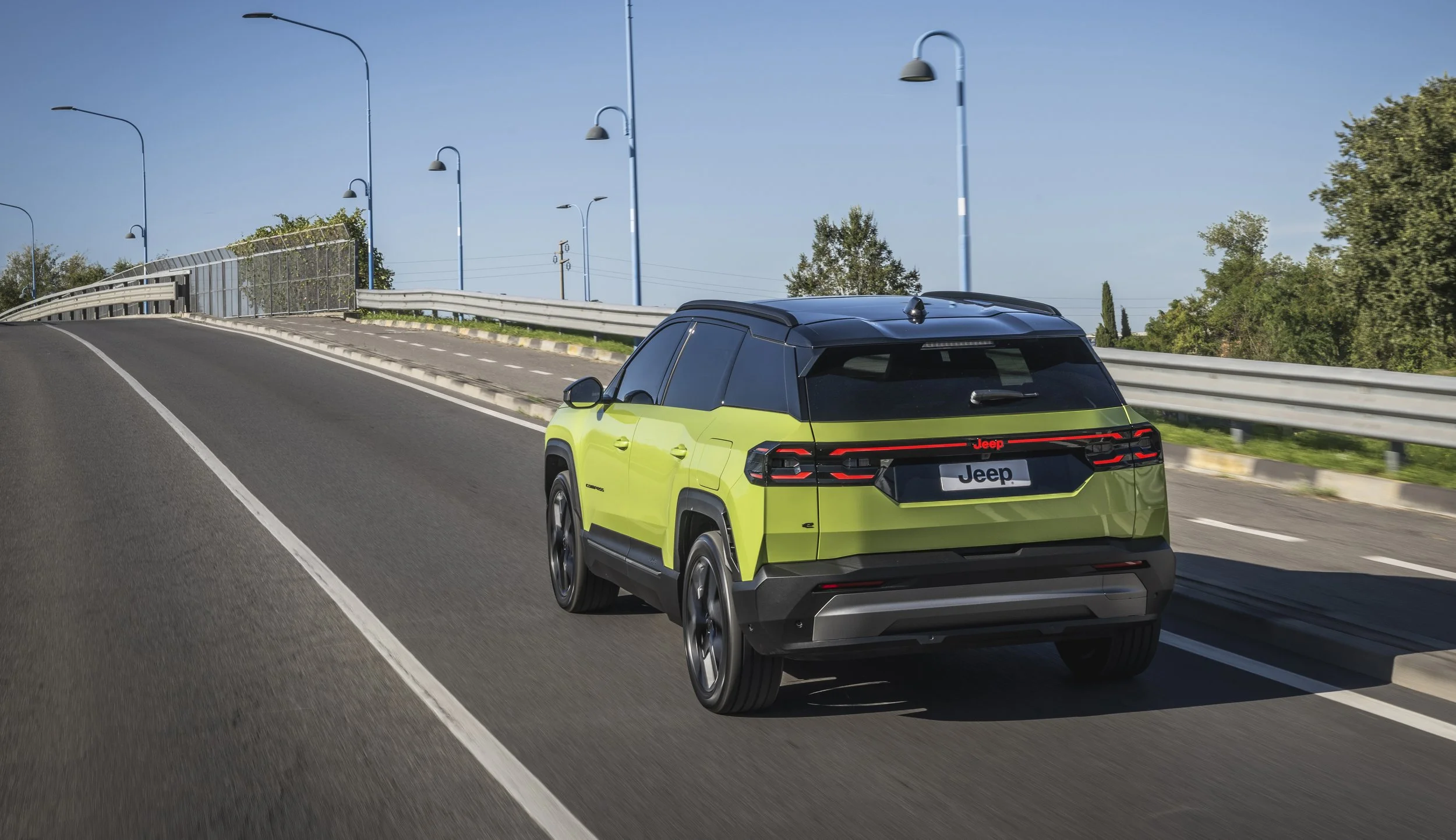
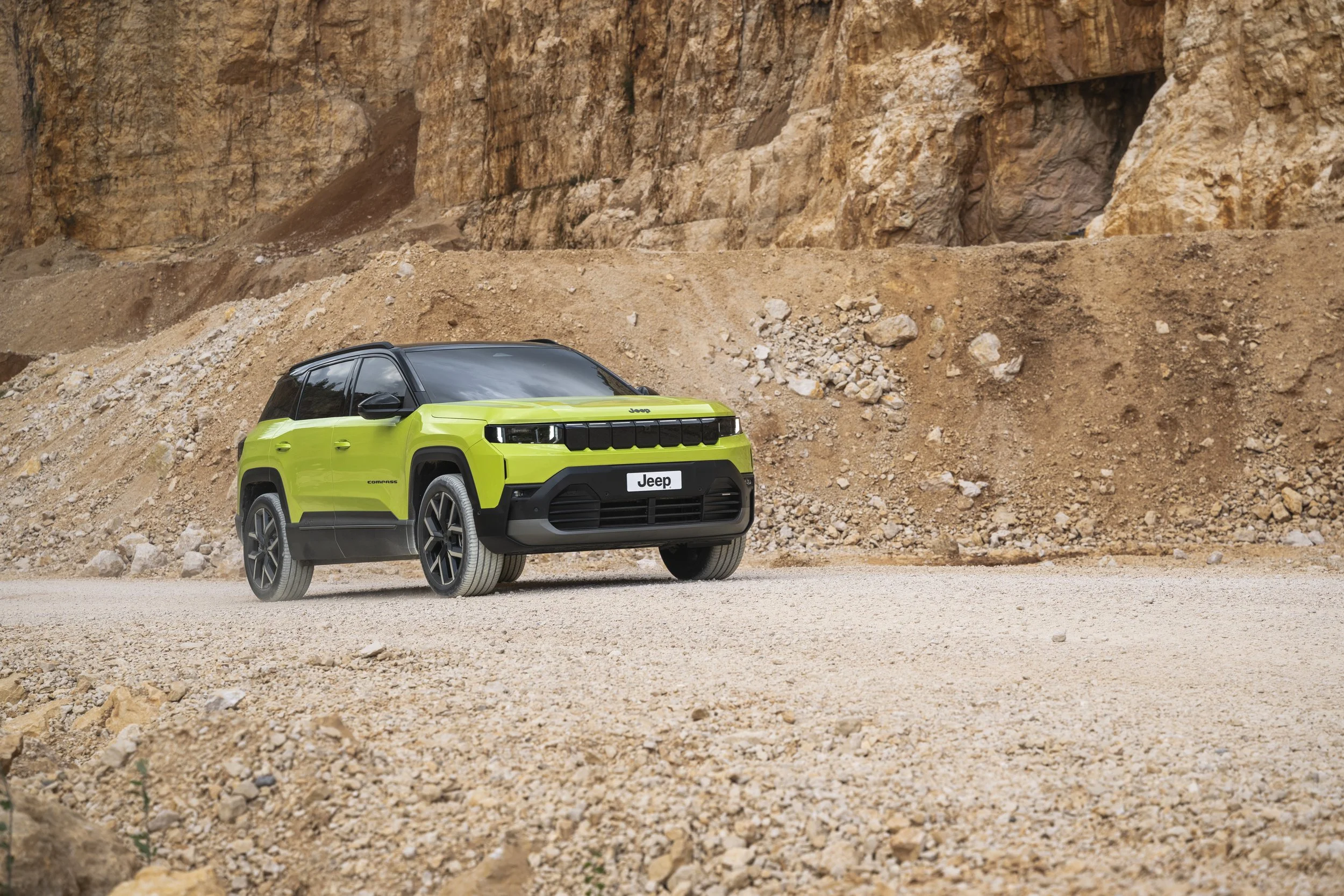
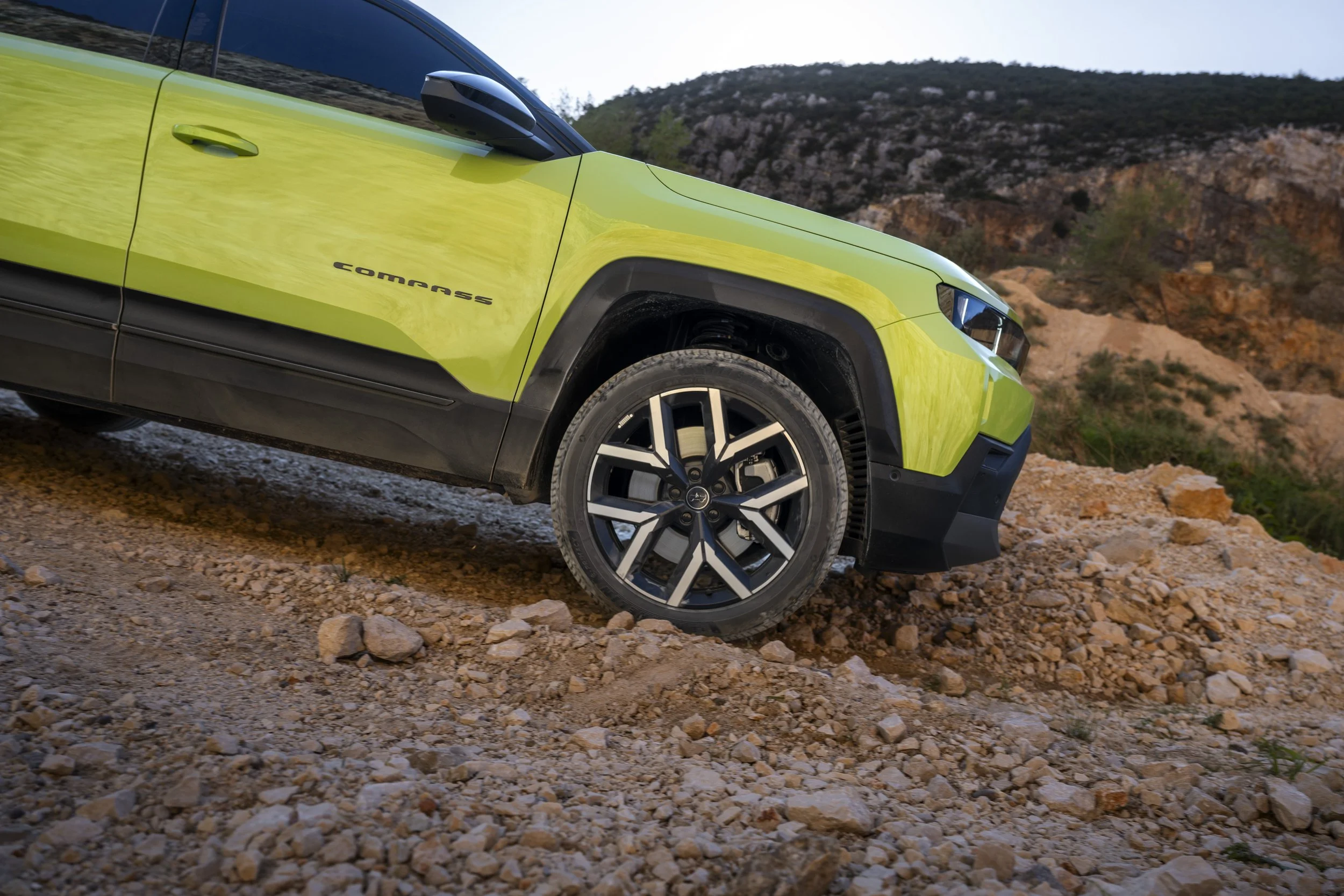
The Compass, even in entry-level front-wheel-drive form, is said to be developed for active-lifestyle types who may find themselves confronting slippery wintry surfaces or bumpy gravel driveways if they live out in the sticks. As such, the new Compass - which evolves the former version's design most obviously via higher-tech exterior lighting, as well as a not-insubstantial 150mm increase in length and 85mm increase in width - gets scratch-resistant cladding and even a scratch-resistant grille on the top-of-the-range 'Overland' models. However, somewhat surprisingly, only the electric Compass comes in all-wheel drive.
When I asked why no hybrid all-wheel-drive will be offered in the Compass line-up, like it is in the Avenger, an exec told me it's because of the higher demand for battery-electric vehicles in this bigger segment. An engineer later revealed to me that the hybrid setup couldn't match the '4xe' electric Compass's peak torque figure, which - get this - is barely believable at 3,100Nm. Unusually for an EV, peak torque isn't constant but rather just when the gearing spins at the right rpm, so there's no silly 0-62mph time to go with that. Still, that's a lot of muscle for when the going gets tough.
A Good Family Car
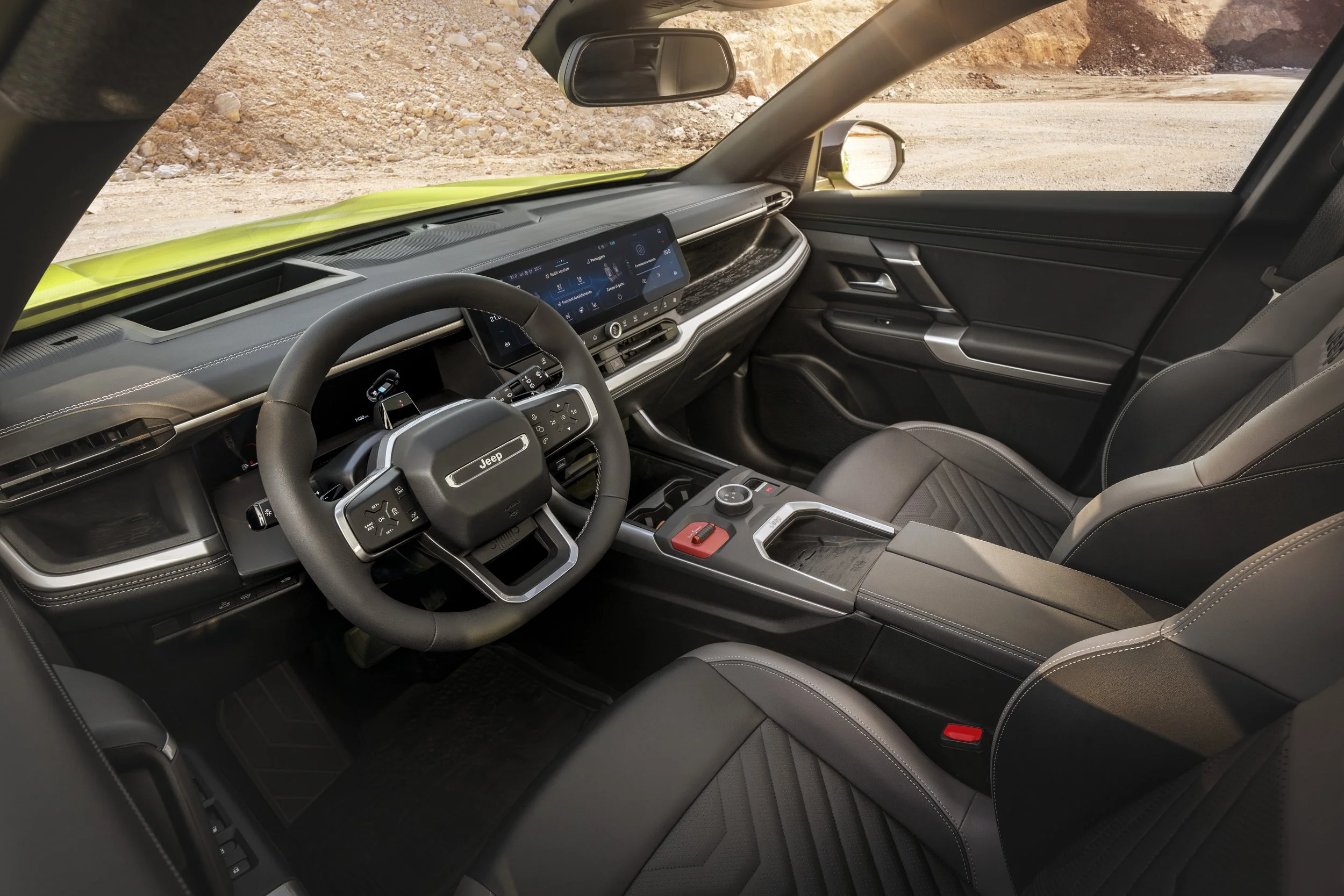
Before we get into how the battery electric Compass and its hybrid equivalent drive, let's consider the new car's usability as a family SUV, because even the most active of families need much of what the mainstream wants. The new Compass duly delivers, offering plenty of storage space on its rugged-feeling interior, which sports rubber mats and hard-wearing dash surfaces, as well as two digital screens. These screens will be familiar to anyone who's been in a Vauxhall or Peugeot of late (hashtag group siblings), but Jeep has sprinkled in some unique details while retaining the smartphone-like reactivity and simplicity.
There are buttons too. Not all are proper buttons, but rather touch capacitive ones, meaning they don't work with gloves. They are better than diving into touchscreen menus, though, meaning everything from tweaking the climate control settings to turning off the regulatory-required driving assistance beeps and bongs requires little more than a couple of taps. You get buttons on the steering wheel for media or adaptive cruise control, which is handy, and the front interior itself is easy to get comfortable with. There will be something reassuring about the butch bonnet that's visible ahead, beyond the screens and head-up display.
The kids are gonna love it
Kids, teenagers and even fully grown adults should be happy in the back, where there's decent head and legroom to rank the Jeep well against its rivals, while the tough and spill-proof vegan leathers mean things should hold up well. The boot is also spacious, having grown to 550 litres, 45 up from the last Compass, across the board, comfortably beating the Qashqai and just pipping the Sportage, although the Volkswagen Tiguan can still claim to offer more total space here.
The Drive
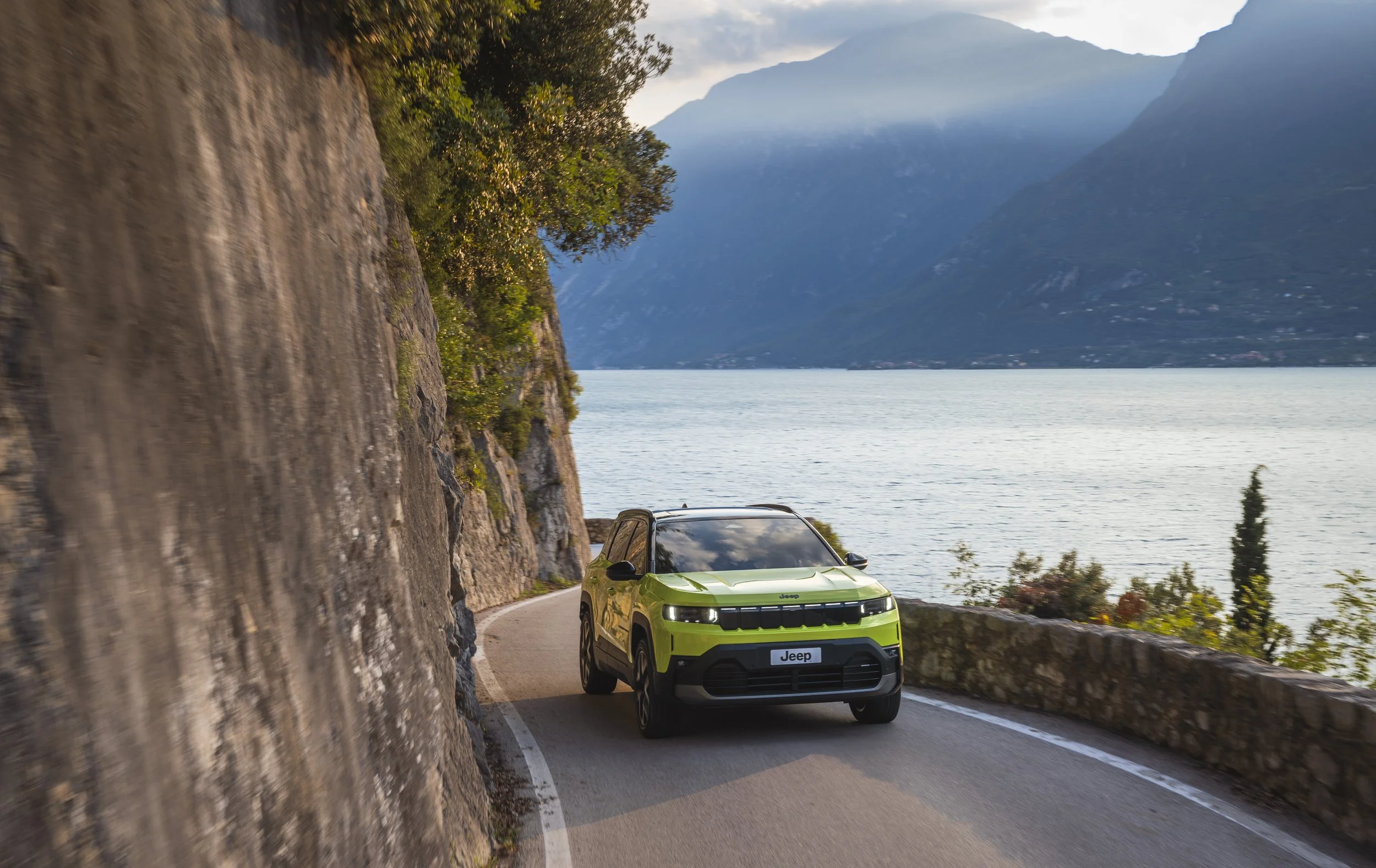
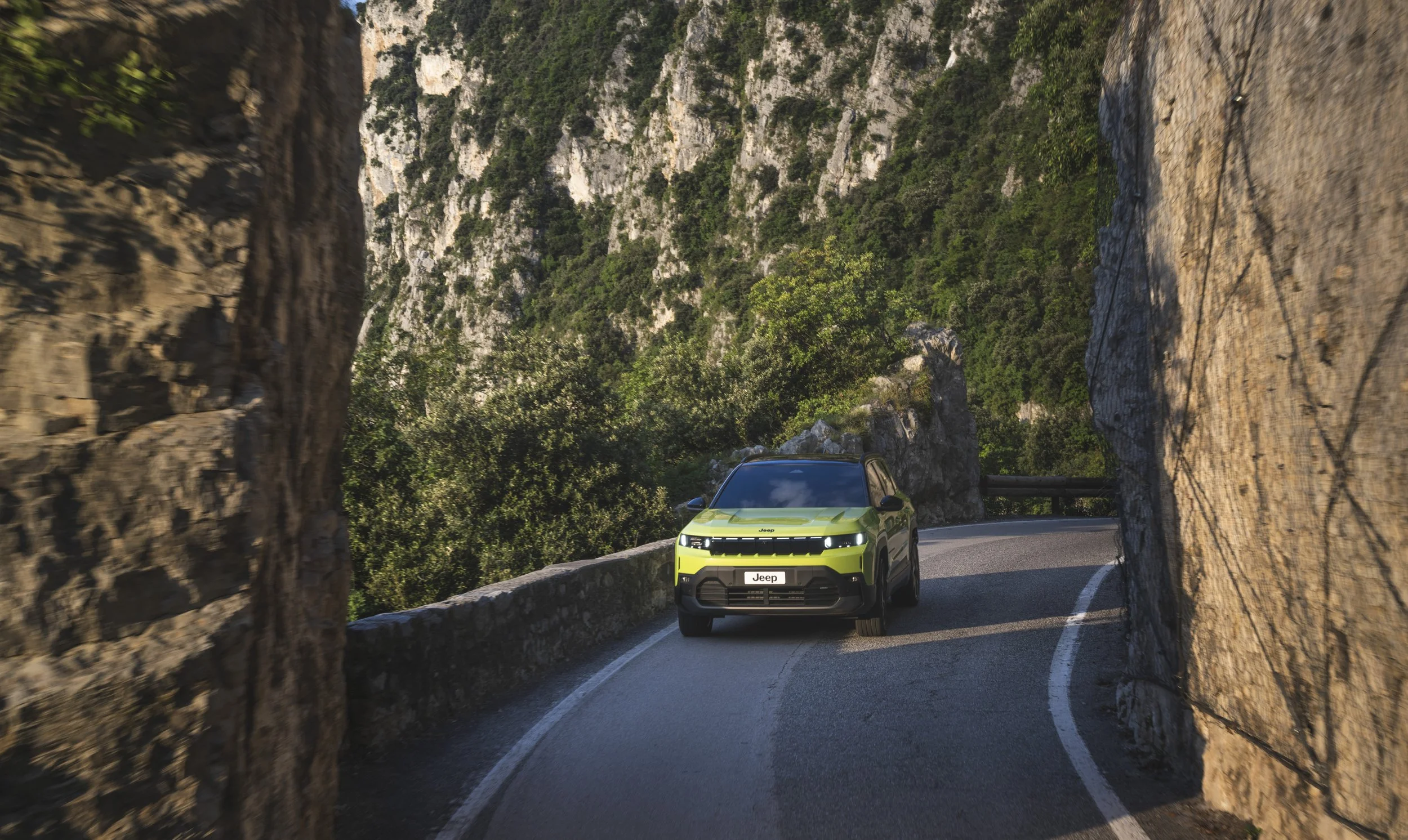
On the move, the e-Hybrid - which, like the rest of the range, only comes in automatic form - has a reassuringly tough ride, which means it's not the squishiest over city bumps, but feels quite happy hammering into speed humps or over bumpy gravel routes. With front-wheel drive, it's never going to be the most appealing offering in this segment to those who regularly venture onto wet mud or snow, but as a road SUV that can handle more than most, even the 145hp 1.2-litre-equipped Compass feels decent. It doesn't corner badly at all, too - in fact, it's keen to turn and can keep up progress in the bends.
It's only under sudden requests for power that the mild-hybrid setup feels a little weak, with the auto gearbox hesitating to kick down, and there not being enough electric muscle to mask the delay. It's nippy enough for everyday traffic, but don't expect torque-filling hybrid thrust here. It's a similar story with the car's regenerative braking tech, which isn't particularly strong, so you can't relax with one-pedal driving like other hybrids. Drive smoothly, however, and the setup is capable enough, returning miles per gallon in the forties to keep fuel costs sensible.
As for the EV versions, eventually there'll be three, with a 213hp base model, a 231hp mid-model and a top-of-the-range twin-motor 'Overland 4xe' with that aforementioned 1,300Nm peak. The lower-powered car is claimed to have a range of 310 miles, thanks to a 74kWh battery, whereas the middle one uses a 96kWh battery for 403 miles. Impressive. Not surprisingly, the twin-motor car shaves miles for muscle, offering 373 miles between charges with the same battery. Charging speeds are up to 160kW, so all versions should charge from 20-80% in about 30 mins. That's pretty competitive.
We only got to test the 74kWh EV (boo) as that's all that's initially available, with prices starting from £39,200, but the smoothness of the front-mounted electric motor and efficiency of the setup were evident enough. A one-pedal driving mode (quickly accessed via one of the touch-sensitive buttons) means regen is strong enough if you want it, bringing the car to a complete stop in traffic so you needn't use the brake pedal. If you do press it, the pedal's a little spongy, but there's no denying the strength of the anchors. It feels as reassuring as that ride, which remains tough and actually a little squishier, no doubt thanks to the EV's heavier weight - and the addition of multi-link rear suspension.
Function vs Form
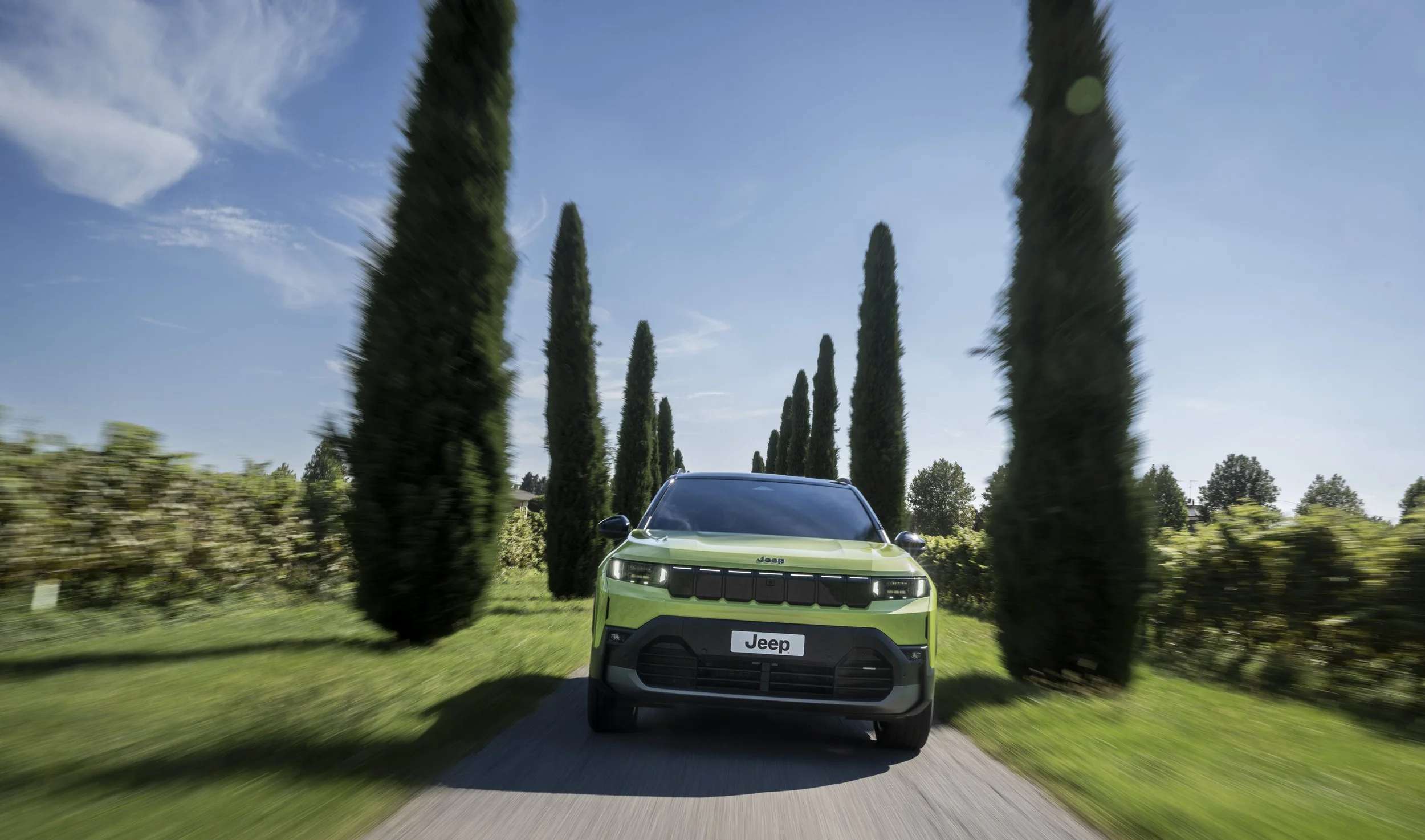
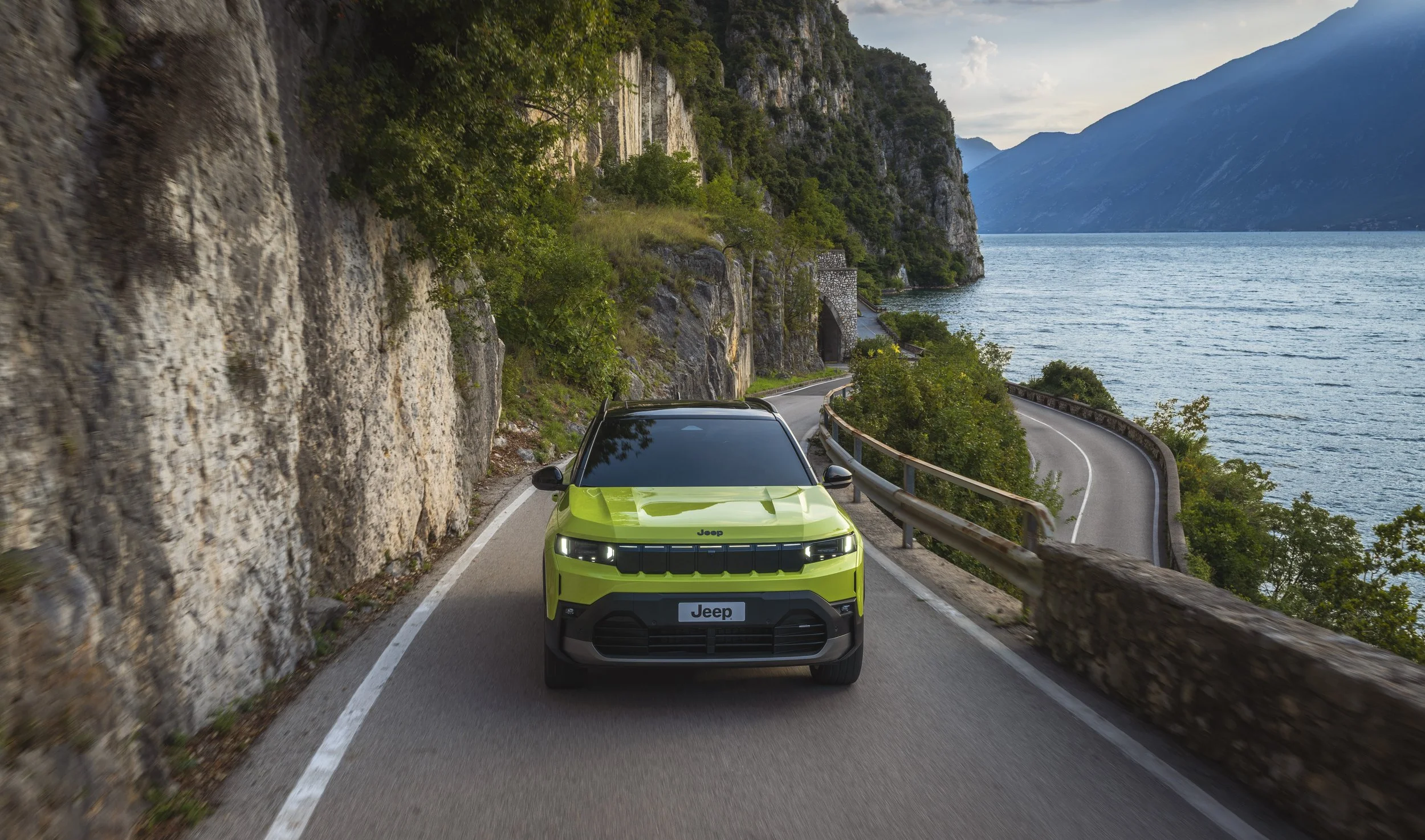
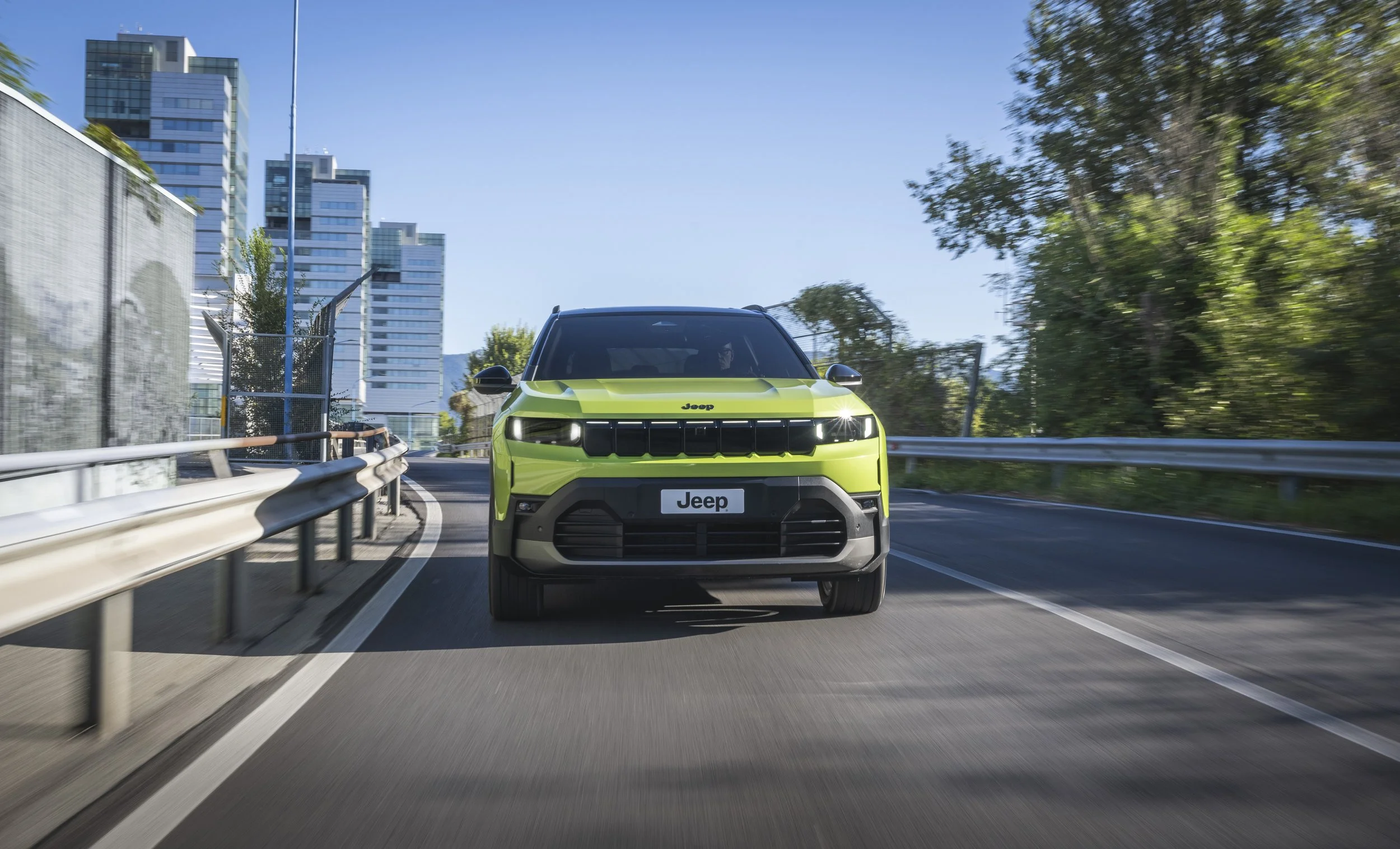
Jeep's designers worked hard to make the Compass's butch body shape as slippery as possible, not only ensuring those impressive claimed range figures but also resulting in a noticeably low level of wind noise. Road noise is low, too, adding to the car's rugged, insulating feel, meaning the Compass delivers where it needs to. It feels more 'Jeep' than rivals, because, erm…
The best is (probably) yet to come...
With a plug-in hybrid and those more powerful (and much more torquey!) electric variants on the way, the best of Compass is probably yet to come. But even at this early stage, it's clear the model takes a big step forward, and it's going to be likeable for more than just active lifestyle types. Still, I'll hold final judgment on Jeep's new arrival until I get to sample the full 1,300Nm.
words by Sam Sheehan
photography by Jeep