
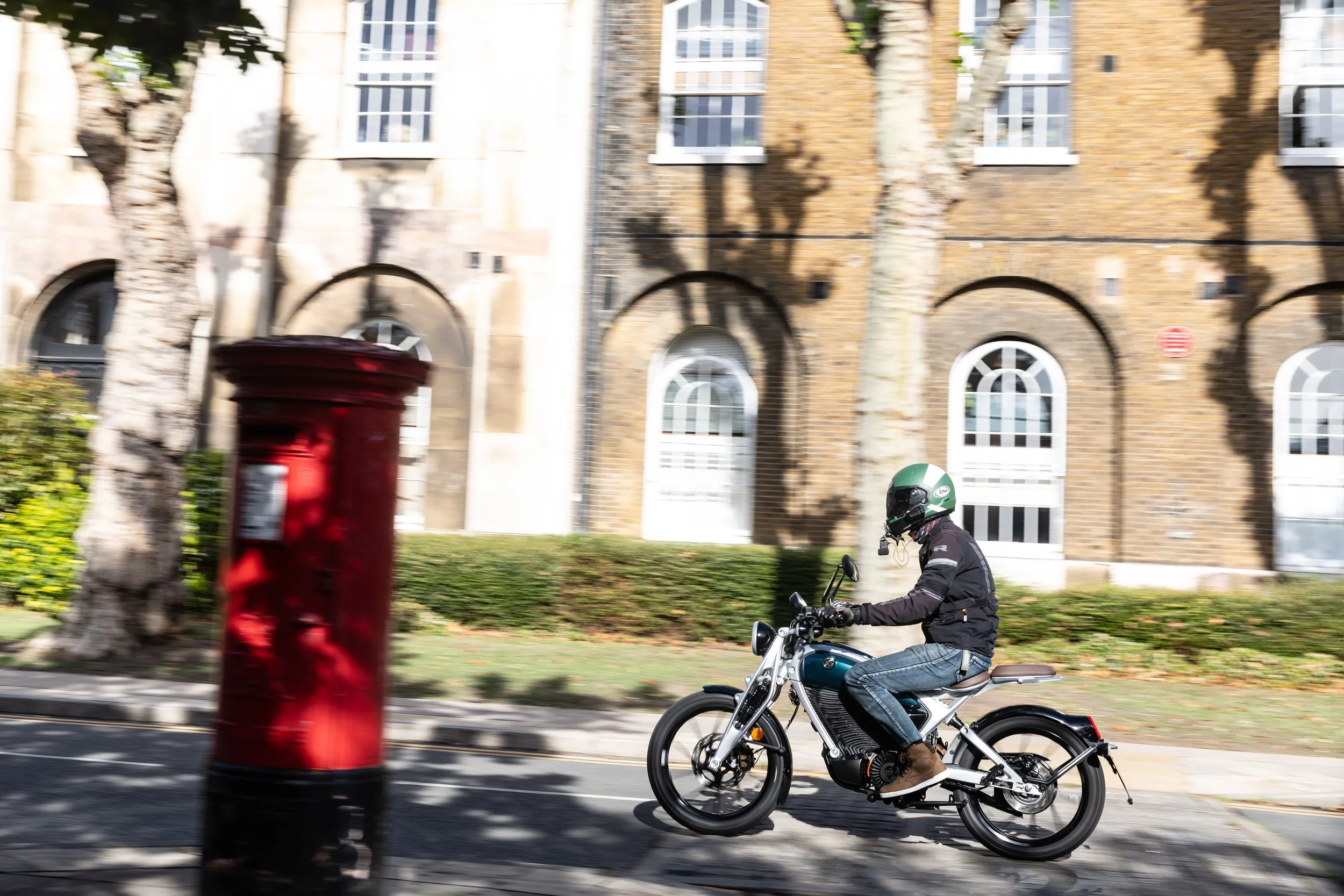
This learner-legal machine from the new Royal Enfield sub-brand should be of interest whether you’re on L-plates or not. It’s an ideal urban bike that’s fun and, at £5,300, is better value than any electric motorbike we’ve seen before, as Matt Robinson discovered
Flying what?
Flying Flea is a fresh sub-brand from Royal Enfield revolving around electric motorbikes, but a new name it is certainly not. It’s actually really old. Flying Flea was the nickname for the Royal Enfield WD/RE, an exceptionally lightweight 125cc motorcycle that spent its days being hurled out of Dakota transport planes during World War II. Upon landing, paratroopers would hastily assemble and roam the battlefield - that’s why you’ll find getting on for 30 parachute logos dotted around the C6.
Ironically, the original Flea was based on a German design, but that’s probably enough of a history lesson - we should fast-forward to 2026, when I found myself in outer South East London, not a battlefield, on the all-new partial namesake.
Powertrain
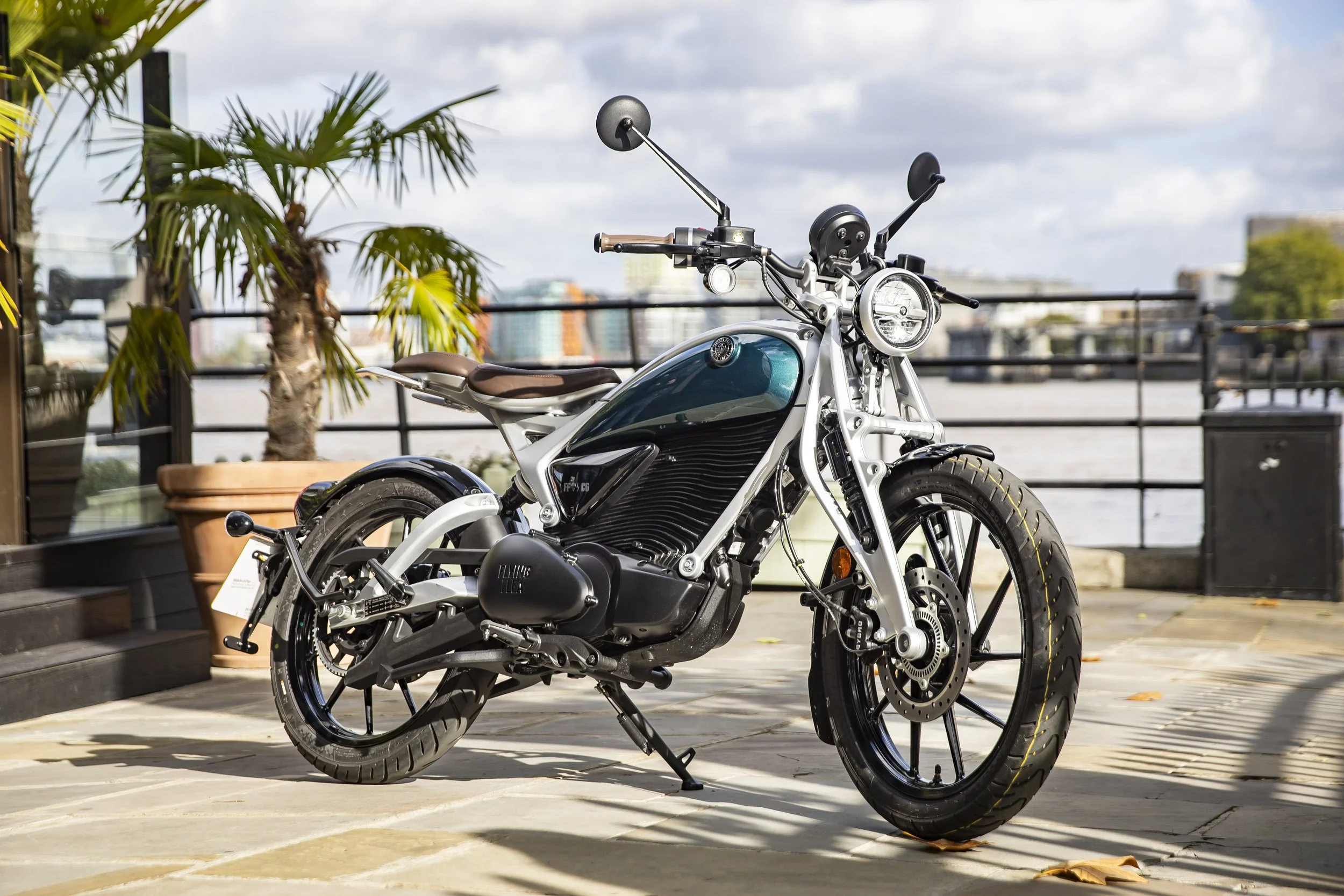
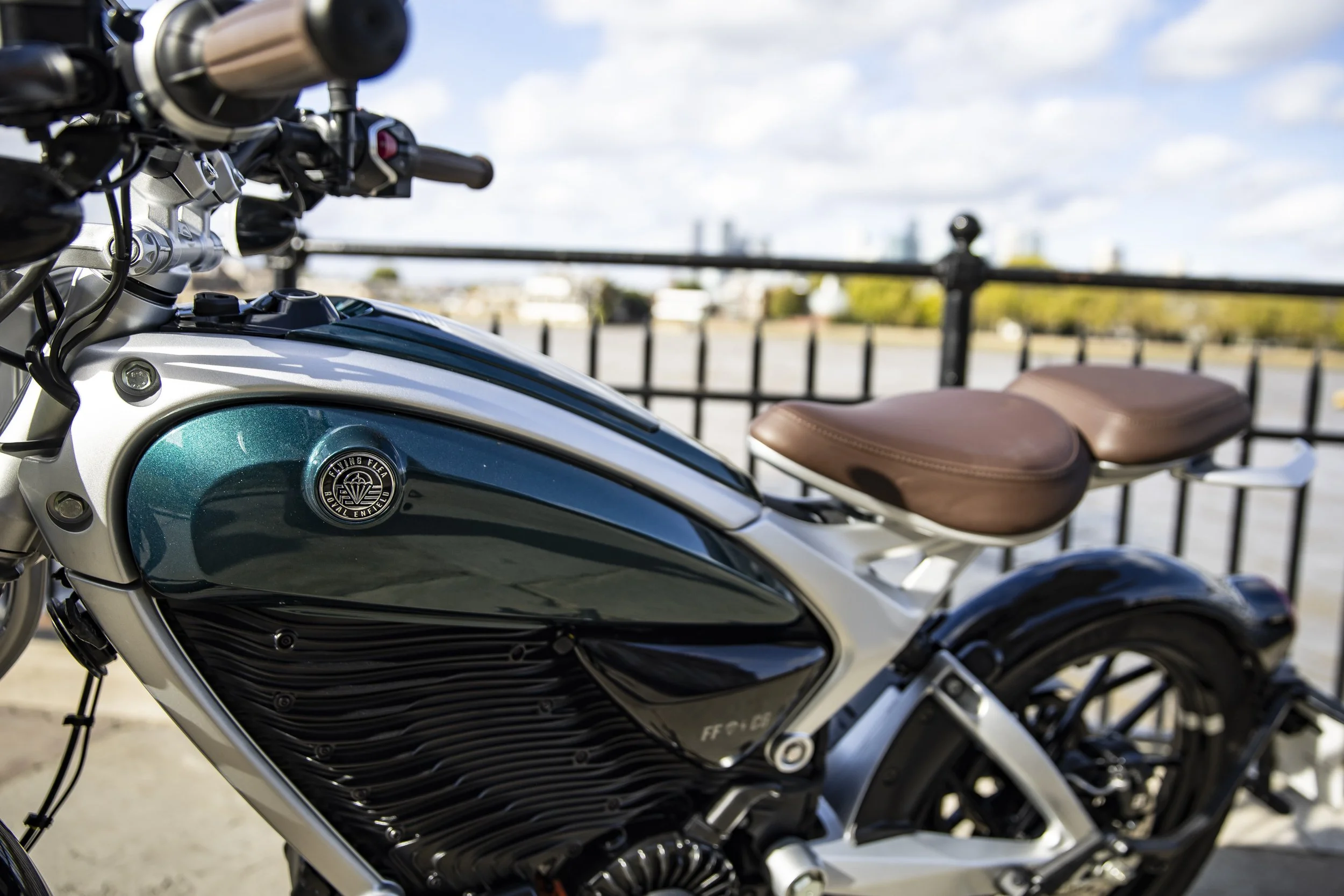
The C6 is quite literally built around a 3.91kWh lithium-ion battery. Packaged beautifully in a finned magnesium case (good for both looks and cooling), the pack is a stressed member of the chassis. It gives a range of up to 65 miles.
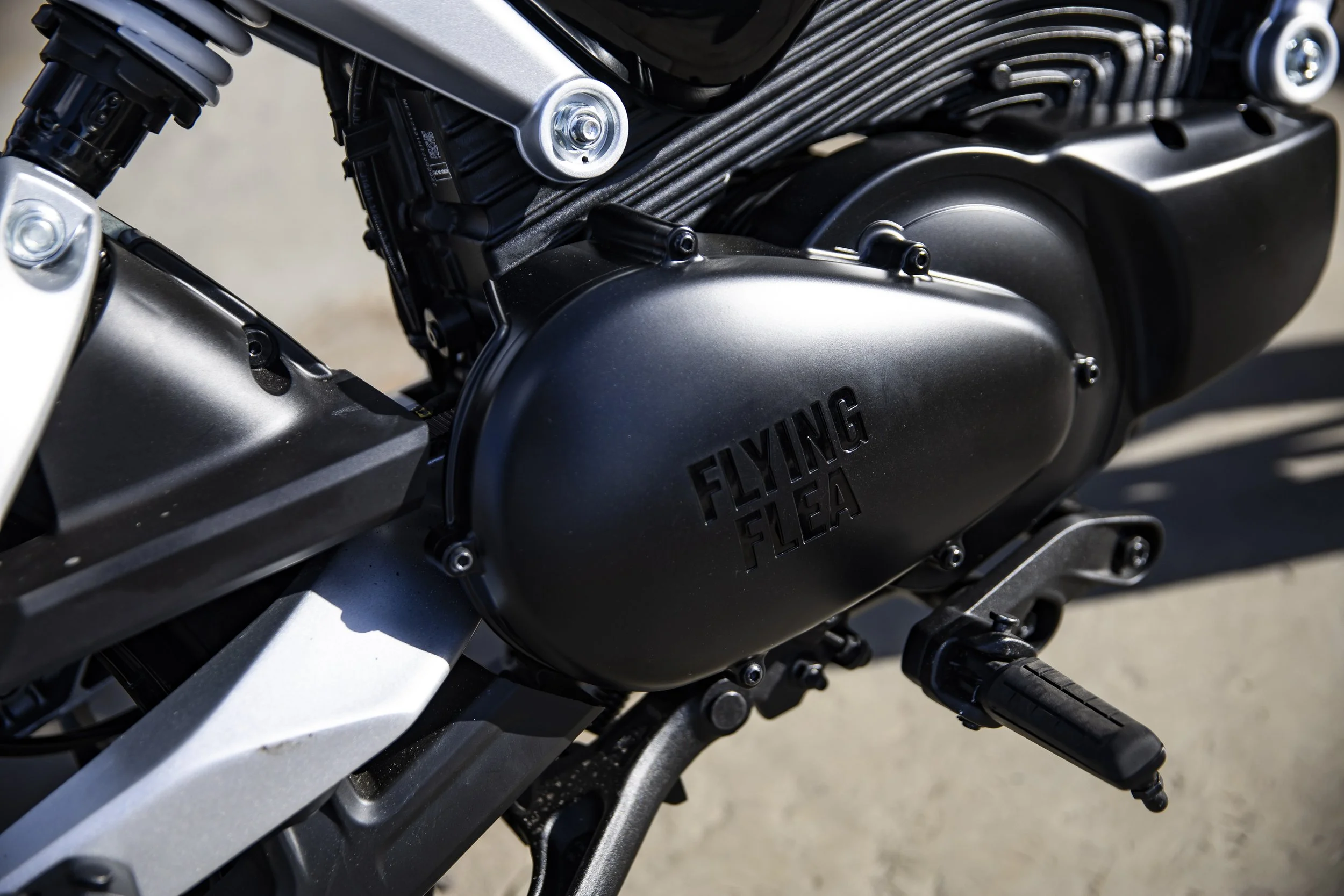
Nestled beneath the battery is an air-cooled, permanent magnet synchronous motor which moves the rear wheel via a two-stage belt drive system. Given that this is an A1 category machine, you might think you can guess the power output, but you’d be wrong. A quirk in the regulations means electric A1 bikes are only limited to 14.6bhp continuously.
They can make more than that for shorter periods, which the C6 certainly does: 20.65bhp, in fact, while the torque is rated at 60Nm. The latter sounds particularly fruity, until you realise it’s not the same as a petrol bike making that much due to the multiplying effects of a geared transmission. But as we’ll soon explain, the C6 feels plenty sprightly off the line.
Recharging the Flying Flea C6
It’d be unrealistic to expect any form of rapid charging on an electric bike this cheap and with such a small battery, and sure enough, there isn’t any. There isn’t a 7kW-capable Type 2 socket either, as seen on more expensive electric bikes, so you’ll have to make do with a maximum of 2.2kW from a conventional three-pin socket, fed into an IEC C13 (AKA ‘kettle lead’) socket hidden under a flap on the drive side.
You can limit the charge rate to 1.1kW and 0.5kW if you’re not in a hurry and want to preserve the battery, and also choose at which percentage the charge stops. But if you’re on the full 2.2kW ‘rapid’ mode and charging to 100% from empty, it’ll take about two hours and 15 minutes. 20-80% takes just over an hour.
Unlike the Maeving RM1 and RM1s, the batteries aren’t removable, so you won’t be able to take them into a flat to charge, for example.
Tech
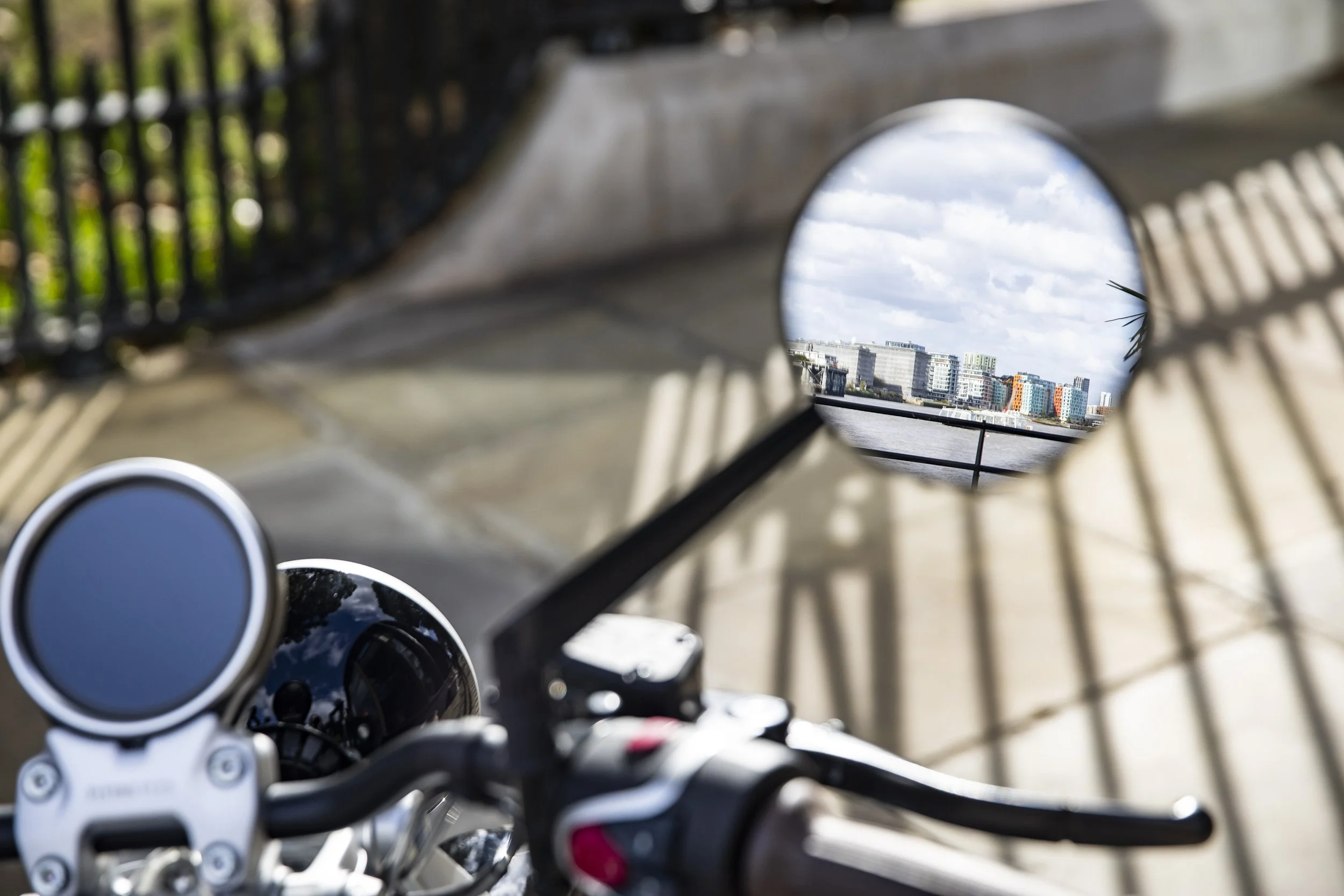
The level of snazzy features is incredible for the price. There’s a round, colour touchscreen, through which you can enter a five-digit code to unlock the bike, or use a paired smartphone. Speaking of which, there’s a wireless charging pad under a flap at the top of the ‘tank’.
It’s extremely impressive to see a motorbike this cheap with cornering ABS and traction control, and cruise control is a nice addition, too. Capping off a strong offering of rider aids is a set of five modes - city, highway, sports, rain and a custom setting. These are accessible via a rotary switch on the left bar.
Riding the Flying Flea C6
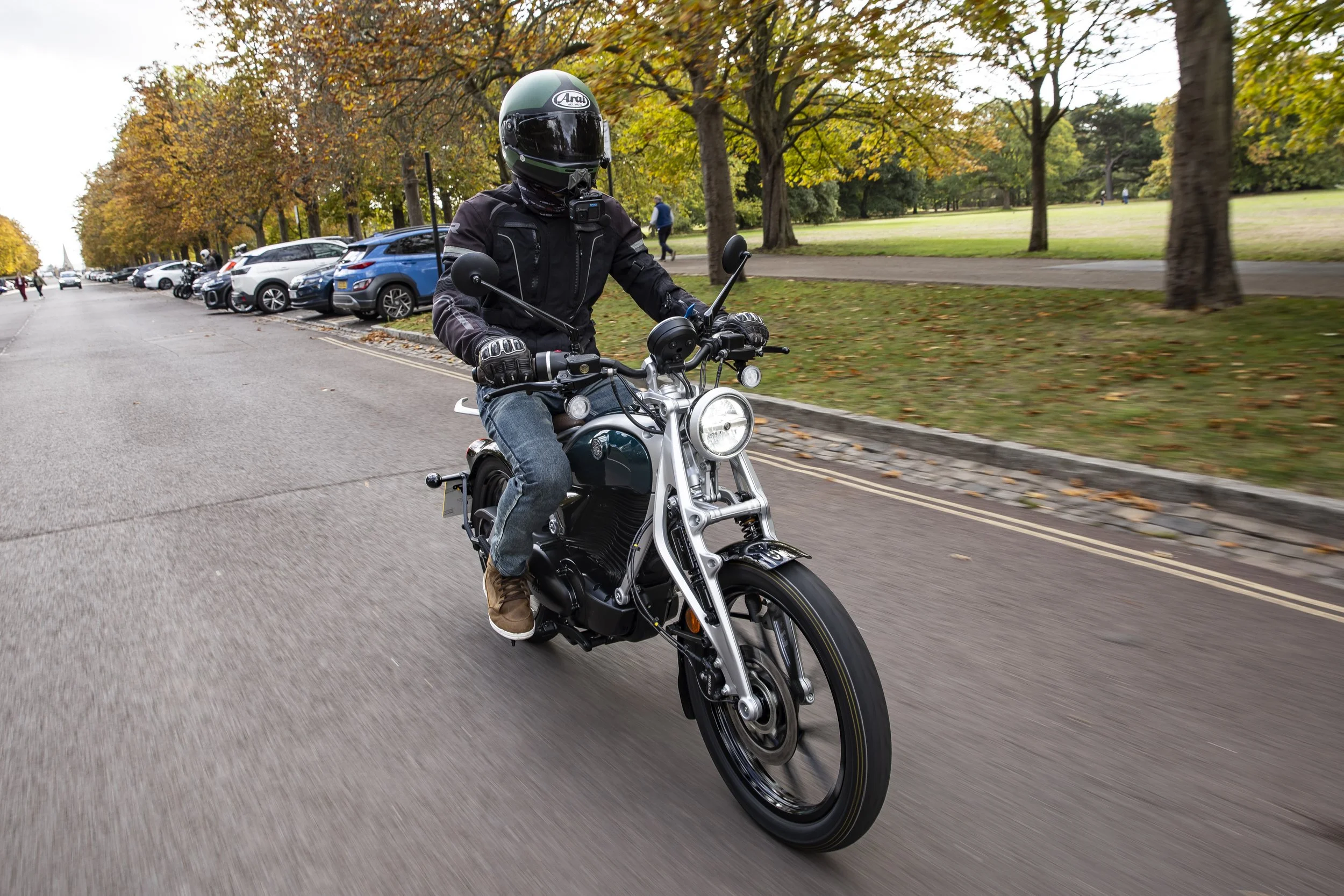
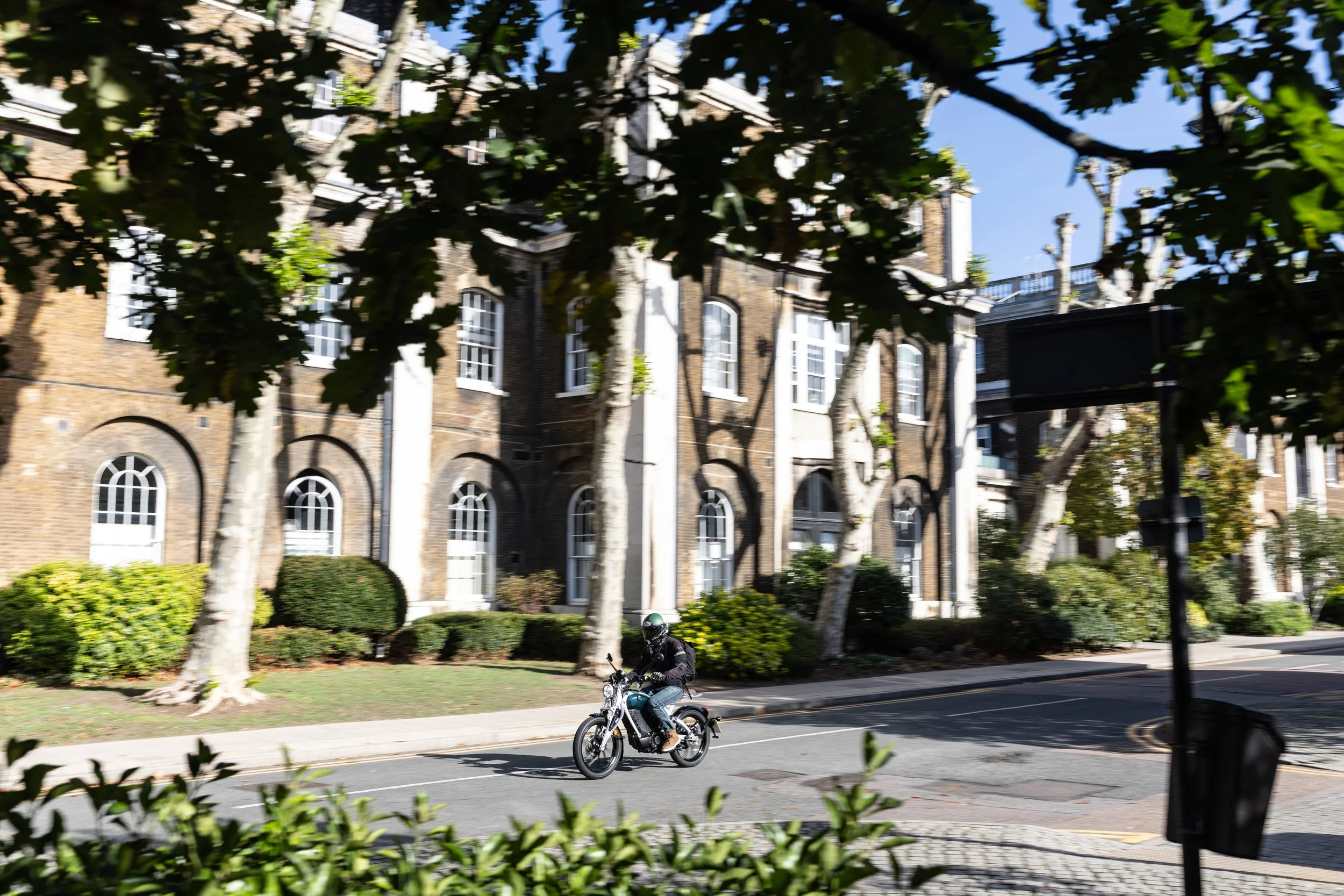
Our route took us from Krazy Horse in Welling, the first UK Flying Flea dealership, through suburban South West London via Greenwich Park Observatory and finishing up at the Cutty Sark before heading back again. The ideal environment to test what Royal Enfield/Flying Flea describes as the ‘city plus’ use case of the bike.
When you’re so used to testing petrol-powered bikes, it’s eerie to set off in a group of several electric machines making little more than a faint whirr. Give it some gas (is that the right term here?) and the motor is surprisingly vocal, though. It sounds like a cross between a milk float and a Tamiya R/C car I had as a kid.
In the sports mode, the Flying Flea C6 is boisterous off the line, with enough poke to make the bars go slightly light. You might even be able to pop a small wheelie, away from the public road, of course.
Then, when you’re coming up to the traffic lights, you can twist the throttle in the opposite direction to slow the bike with its regenerative braking system. The physical brakes are plenty strong, too.
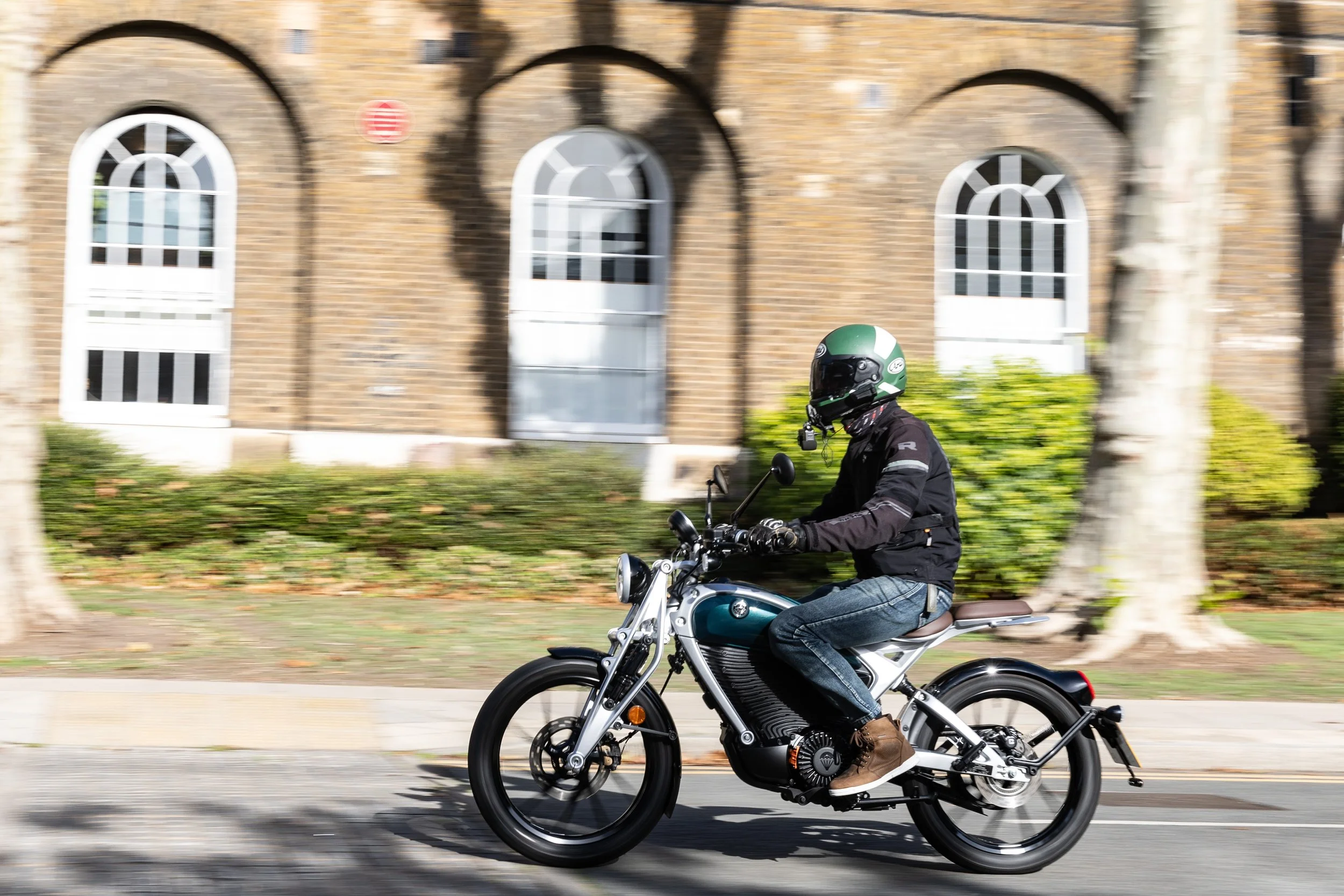
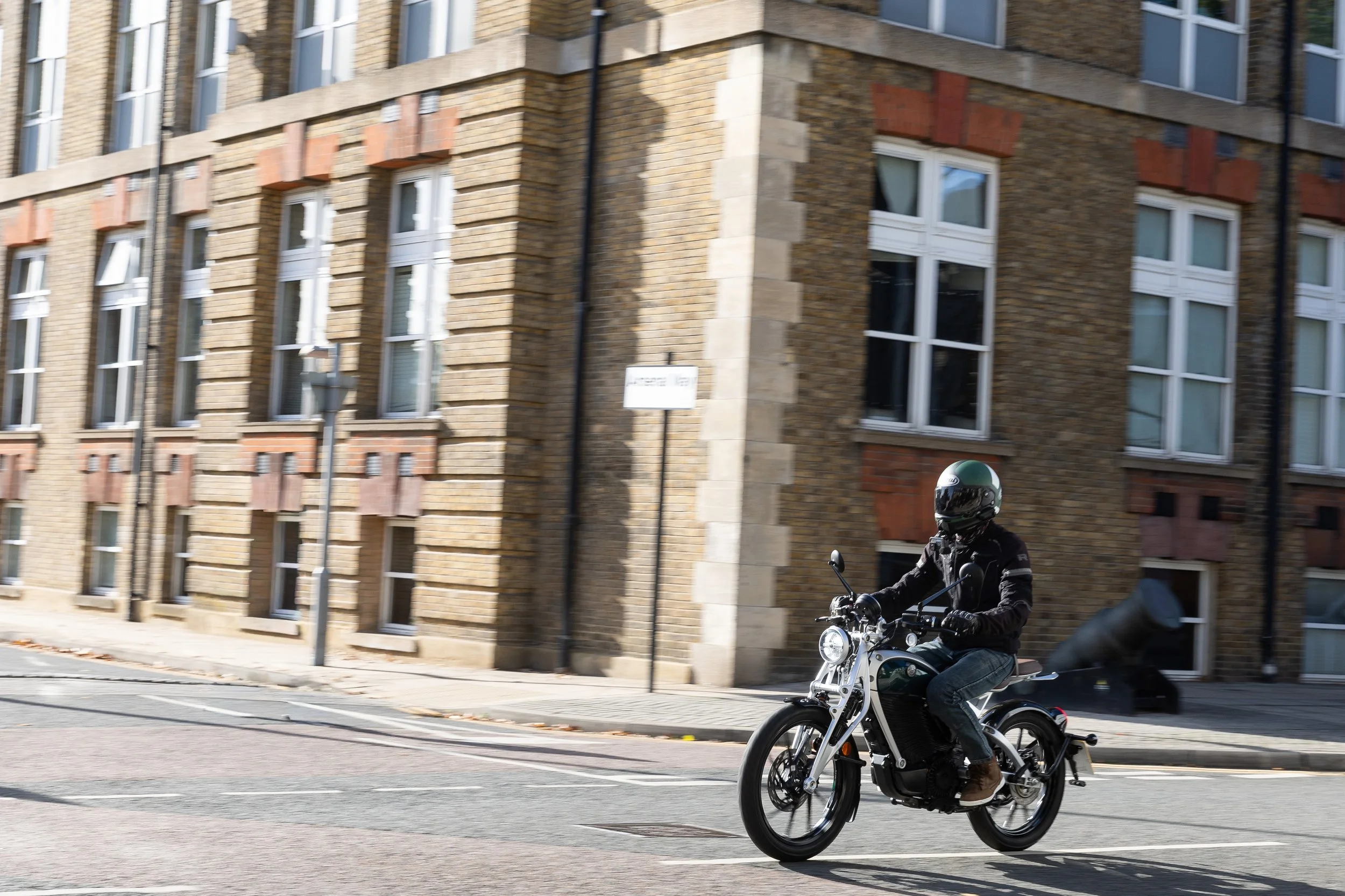
The C6 quickly gets up to 30mph, and a brief try on a dual carriageway showed that 50mph and beyond is no problem at all. It does all this without breaking a sweat, where a four-stroke, petrol 125cc would need to be noisily revving its little heart out.
The city and highway modes are a little more relaxed off the line, but there’s still a sense of effortless that makes urban riding an absolute breeze. Further helping you carve up the city streets, the 124kg C6 is a joy to throw around, confidently changing direction even though it’s on relatively large 19-inch wheels.
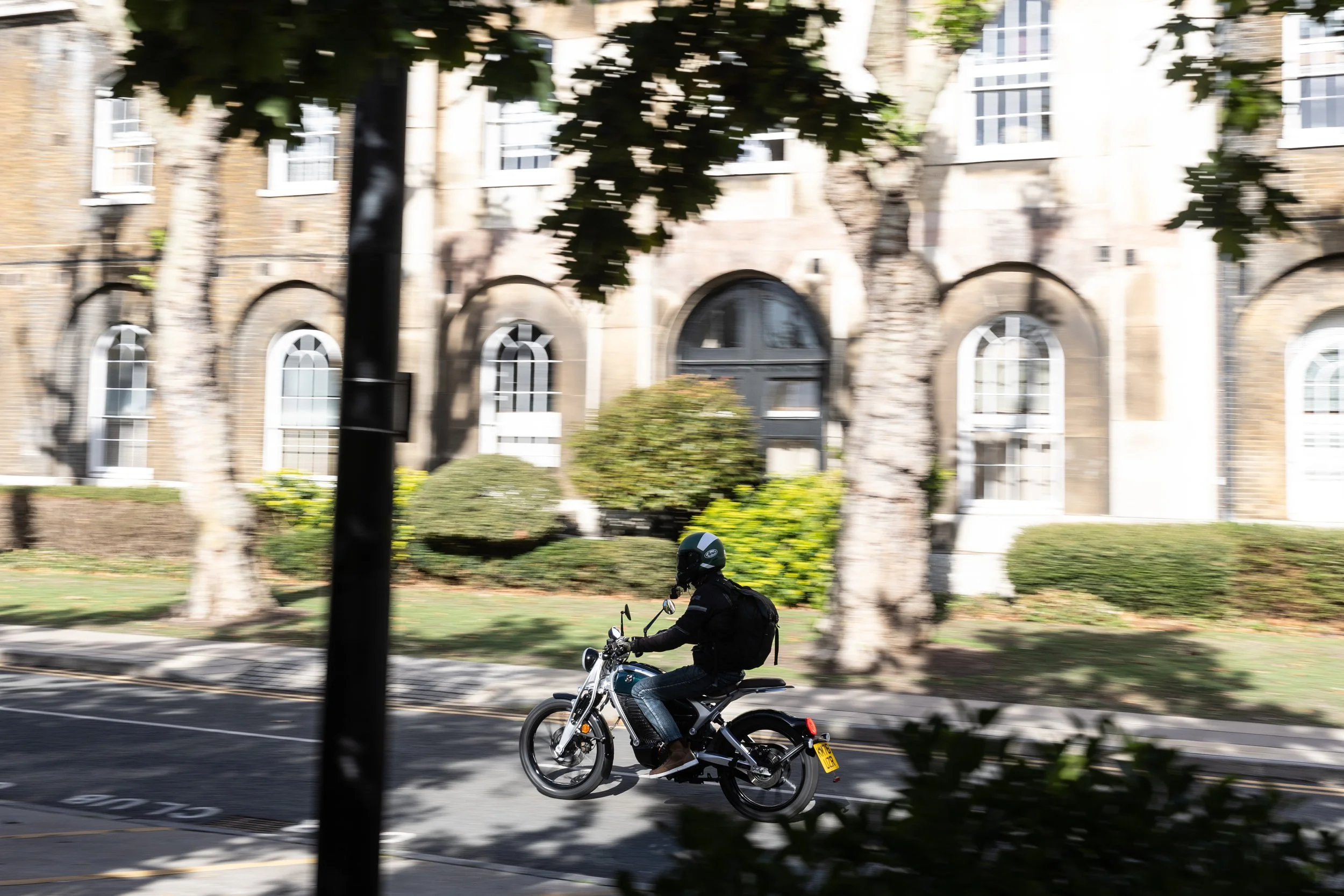
Those bigger hoops mean the C6 doesn’t get lost in bigger potholes, doing a great job of rolling over most imperfections in the road surface. With 100mm of travel up front and 110mm at the rear, there isn’t exactly an abundance of squish (on a Kawasaki ZE-1 it’s 120mm/133mm), and the setup feels a touch firm, but the Flea doesn’t crash over tarmac-based chunk. It’s also wonderful to see the beautiful linkage-style fork (a throwback to the original WD/RE Flying Flea’s girder fork, by the way) working through its travel.
Where the C6 gets particularly interesting is at your destination. Pressing both brake levers (it’s a scooter-style setup with no rear foot brake lever) for long enough enables an auto-hold function, while holding down the mode rocker puts the bike in a crawl mode. The bike will then travel at up to 4mph on the throttle, and if you wind the throttle back, it’ll very slowly reverse.
Conclusion: the electric motorbike we’ve been waiting for?
Electric motorbikes feel like they’ve gotten off to a wobbly start, with slow sales and disastrous depreciation (have a search for Kawasaki Ninja E-1 and Z-E1s and you’ll see what we mean). The Flying Flea C6 feels much more like it, though. It’s priced similarly to a lot of petrol-powered 125s, yet is far more enjoyable and ‘grown up’ to ride, to the point where those on A2 and full licenses would happily have one as a local biffabout. It doesn’t just feel like a pre-direct access stopgap.
As a cohesive product with its neo-retro design, it’s simply fabulous, with an innate desirability that might just prompt you to overlook its cost-based limitations in terms of range and charging technology.
Other manufacturers, take note - this is how you make a great electric bike.
words: Matt Robinson
pictures: Jamie Morris/Royal Enfield